
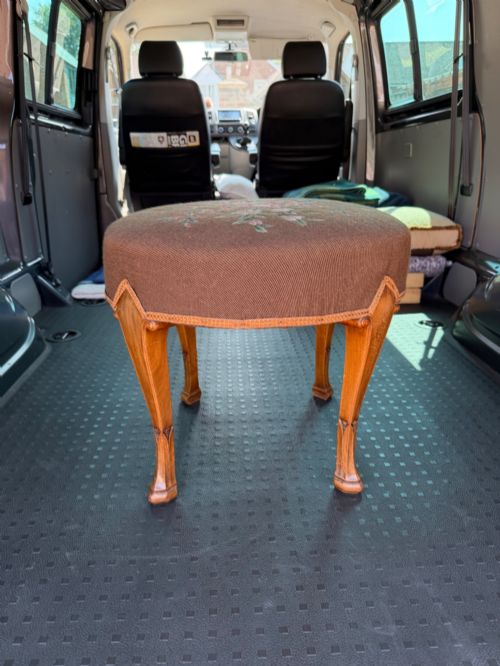
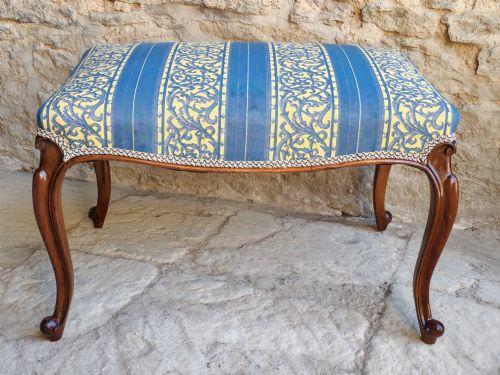
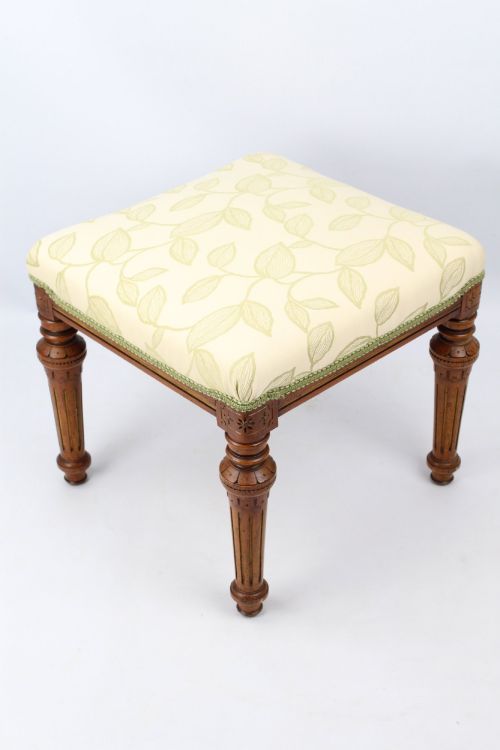
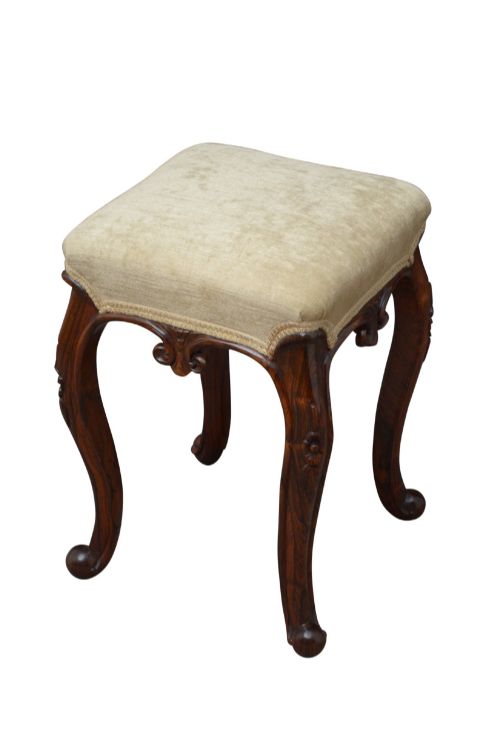
Carved Piano Stool
A carved piano stool is a solid, adjustable seat built for the keyboard, combining heavy timber frames with intricate woodwork.
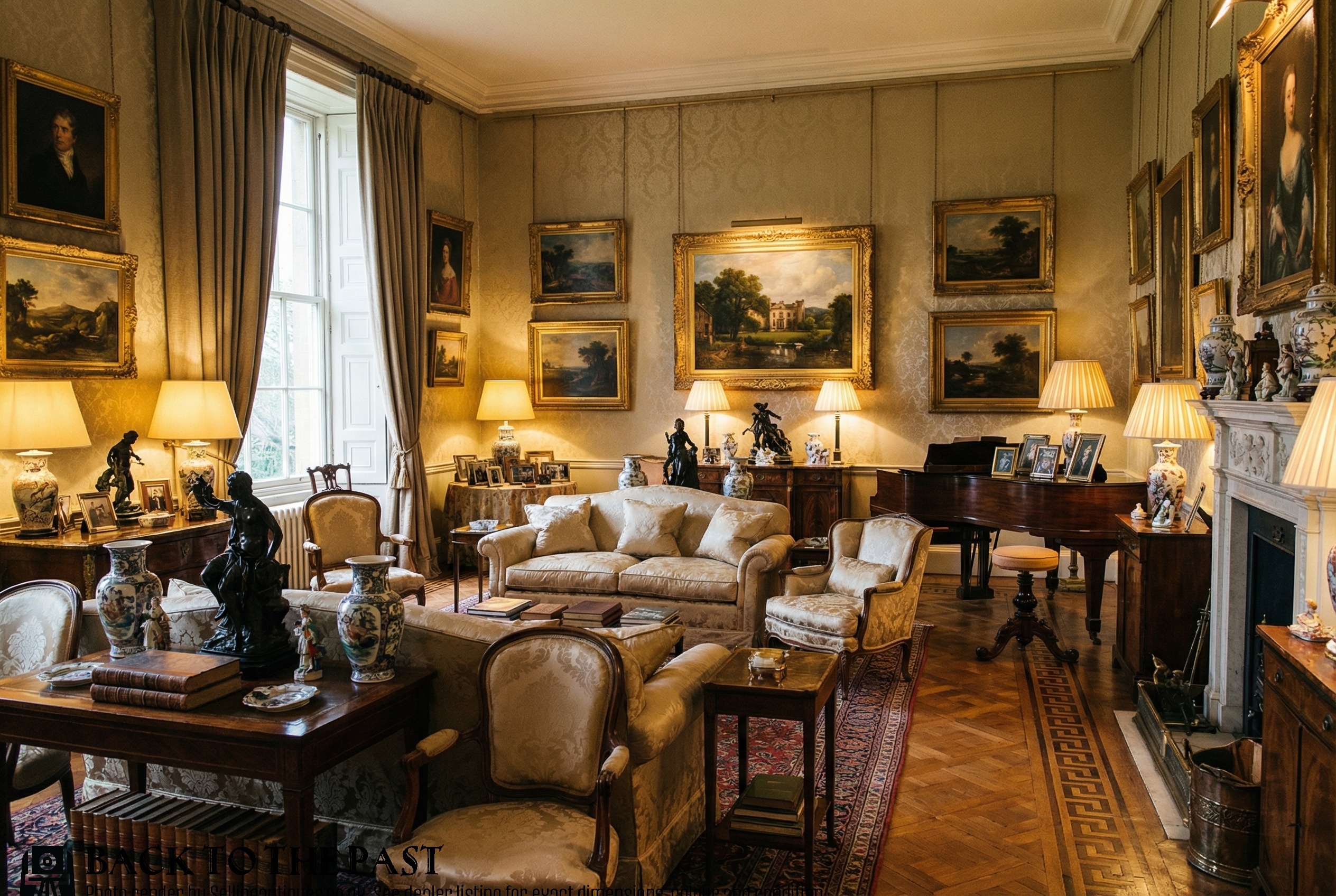
Carved Piano Stool
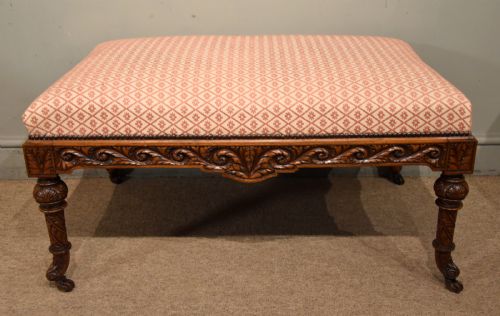
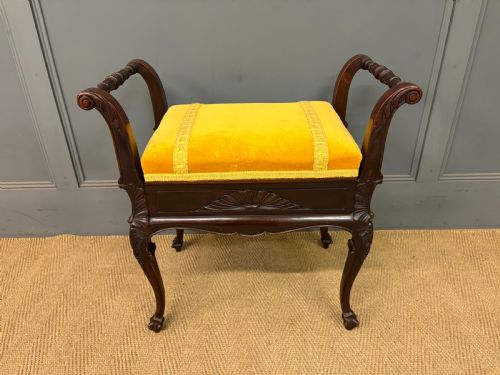
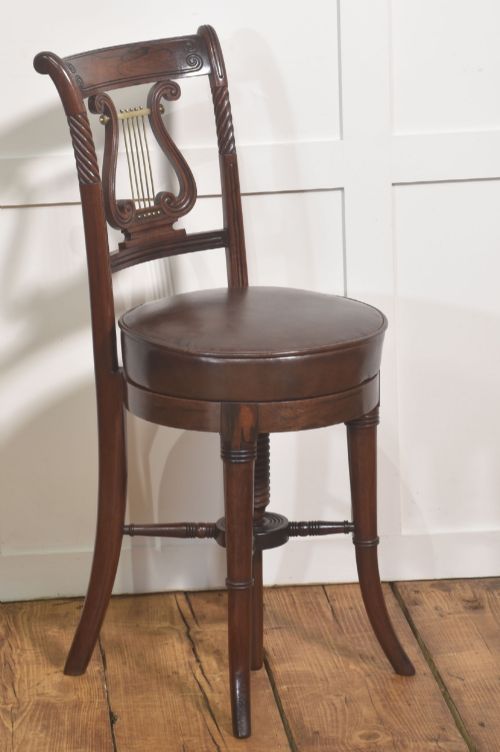
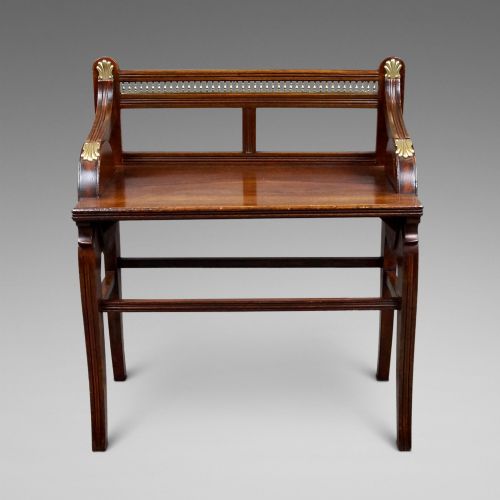
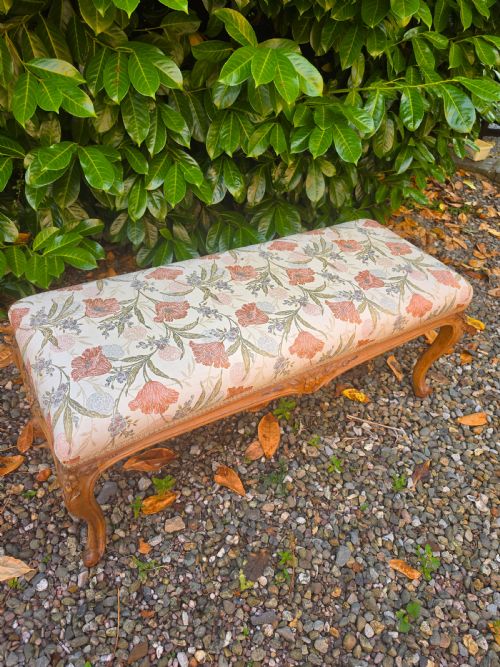
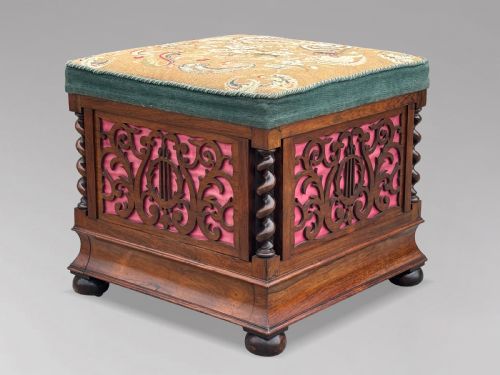
Beyond the standard music seat, the selection includes related forms like dressing table stools, window seats, and duet benches that share the same period styling and carved wooden frames. These pieces bridge the gap between functional seating and ornamental furniture, drawing on styles ranging from William IV and Regency to Edwardian and Chippendale revivals.
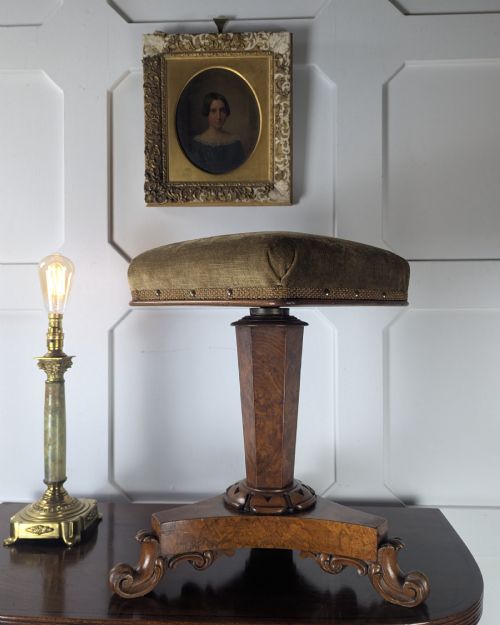
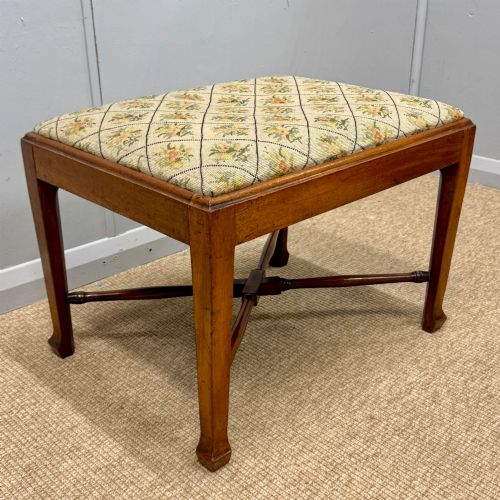
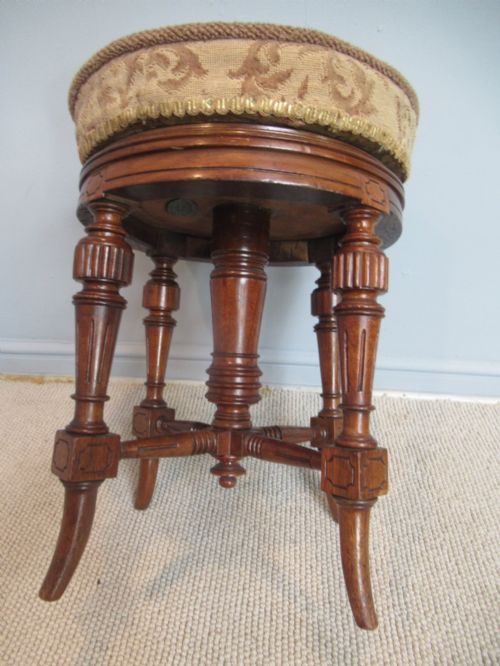
The materials span dense hardwoods paired with textured fabrics, incorporating needlepoint, tapestry, and velvet across the seat pads alongside brass screw adjustments. Whether mounted on a revolving tripod base or built with a fixed frame and cross stretcher, each piece reflects the domestic craftsmanship of the nineteenth and early twentieth centuries.
How they were made
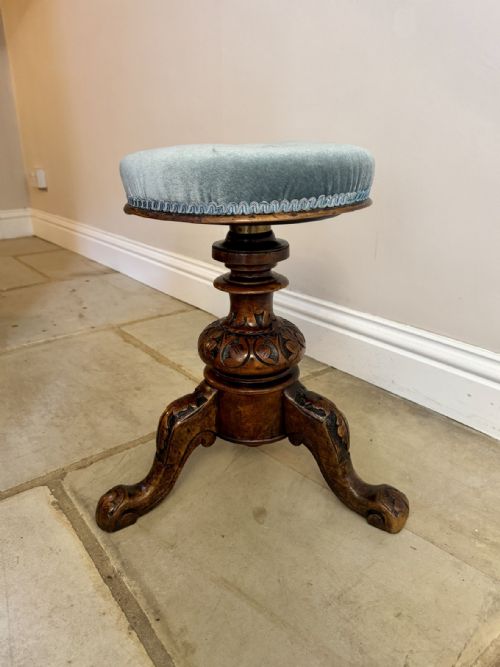
Makers relied on solid hardwoods such as walnut, mahogany, and rosewood, carving the cabriole legs, frames, and stretchers by hand to achieve deep relief and smooth curves. Secondary timbers and brass mechanisms formed the internal components, particularly in the screw-top and revolving designs that allowed the seat height to change.
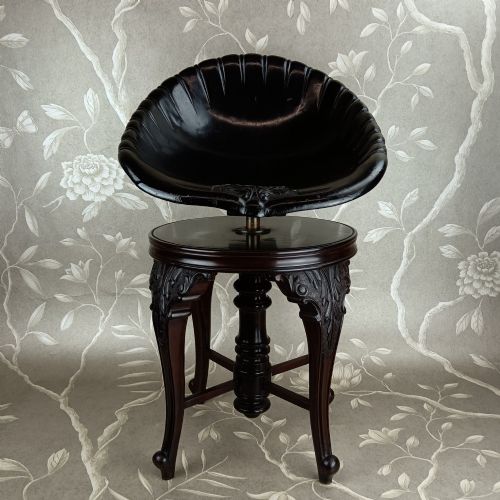
Upholstery was applied over webbed frames using traditional textiles, including needlework, tapestry, velvet, and standard fabric, secured with metal tacks. In certain instances, papier-mâché or ebonised finishes altered the surface texture, while adjustable wooden spindles and brass screws provided the mechanical movement.
Periods represented range from the Georgian era through William IV, Victorian, and Edwardian up to the 1930s.
What varies in quality
Quality rests in the crispness of the hand-carved detail on the legs and frame, the stability of the revolving or screw-adjustment mechanism, and the selection of the timber grain. Finer examples display deeply carved cabriole legs, solid walnut or rosewood construction without excessive veneer repairs, and smooth-turning swivel screws that hold their height securely.
The integrity of the upholstery and the inner padding also dictate the standard of a piece, with period needlepoint or intact tapestry retaining more character than modern replacement cloth. Structural soundness in the joints and stretchers ensures the stool withstands daily use at the instrument.
Jennens And Bettridge·Jas Shoolbred
The Carved Piano Stool Glossary
- Cabriole leg
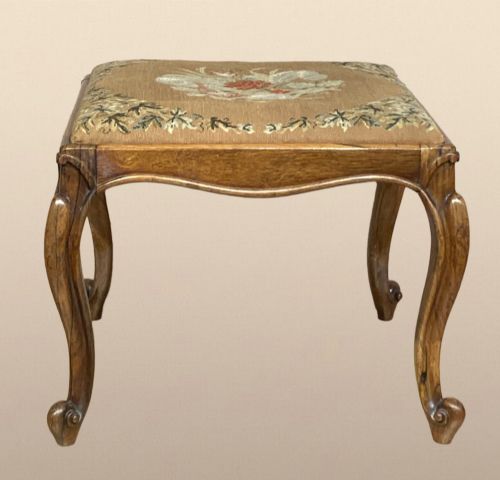
- A furniture leg that curves out and then in, resembling the leg of an animal. This form appears frequently on Victorian and Georgian revival seating.
- Revolving stool
- A seat designed to turn on a central axis or screw mechanism. This allows the player to alter their height simply by spinning the top.
- Cross stretcher
- Wooden rails connecting the legs near the base for added stability. They often feature a central finial or carved intersection.
- Goncalo Alves
- A dense, exotic hardwood with distinct dark brown and light golden-brown figuring. It provides a heavy, durable frame for specialty seating.
- Needlepoint
- Stitched textile work using wool or yarn over a canvas mesh. It frequently covers the padded tops of period music stools.
Carved Piano Stool: Frequently Asked Questions
How do adjustable piano stools work?
Many period examples use a central wooden or metal screw mechanism hidden beneath the upholstered top. Turning the seat clockwise or anticlockwise raises or lowers the height.
Other models employ a revolving swivel action or a side lever to secure the position for the musician.
What is the difference between a piano stool and a dressing stool?
Piano stools are traditionally engineered with height adjustment mechanisms or revolving seats to suit keyboard players. Dressing stools tend to have fixed heights matched to standard vanity tables.
Despite this original distinction, both share similar carved wooden frames and upholstered tops, making them interchangeable in modern interiors.
Are these stools suitable for daily use?
Solid hardwood construction and sturdy joinery make these pieces durable enough for regular seating. Checking the stability of the leg joints and the smoothness of the adjustment screw ensures safe daily operation.
Period upholstery may benefit from careful treatment or gentle cleaning to preserve the original fabric.
Which woods were commonly used?
Makers relied heavily on dense hardwoods like walnut, mahogany, and rosewood for their strength and rich grain patterns. Lighter woods such as oak and beech appear in specific regional or later pieces.
Exotic timbers like goncalo Alves and burr maple also feature in select decorative examples.