
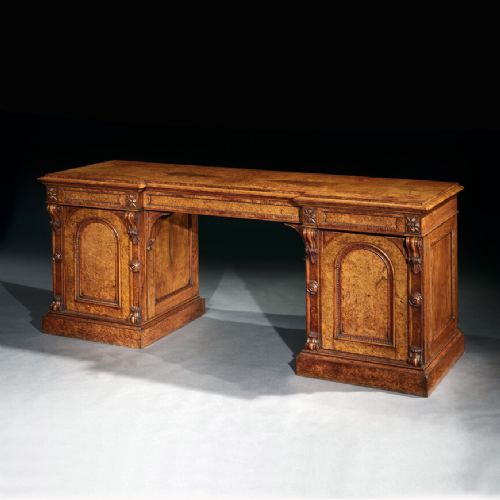
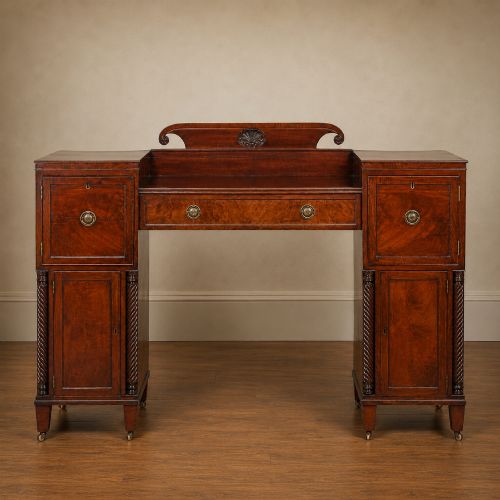
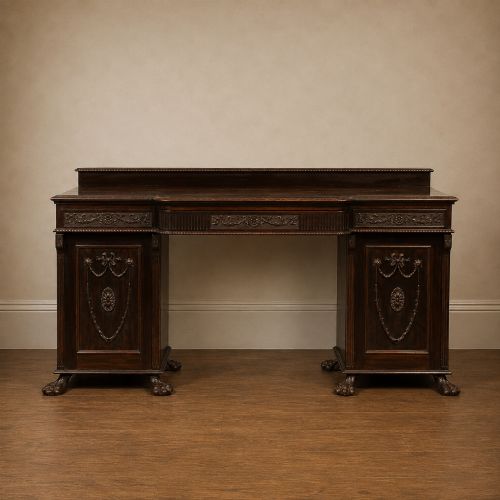
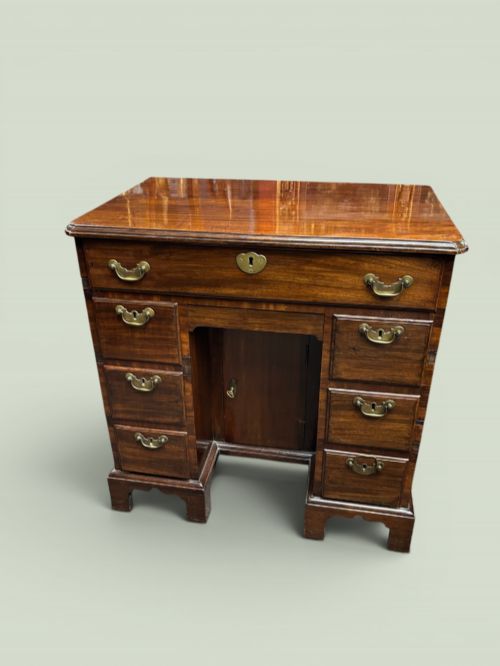


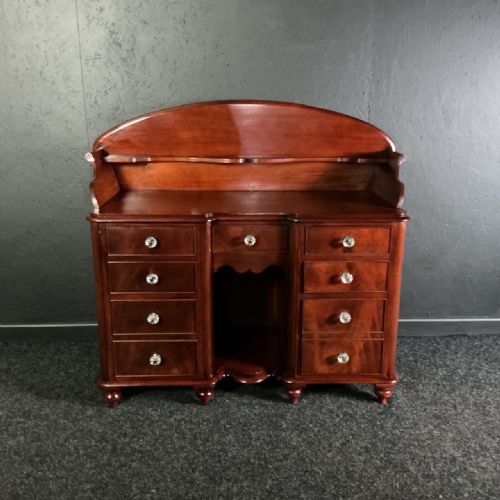


Carved Pedestal Sideboard
A carved pedestal sideboard brings substantial timber and deep relief moulding to a dining room, offering serious storage alongside classical proportion.
Carved Pedestal Sideboard
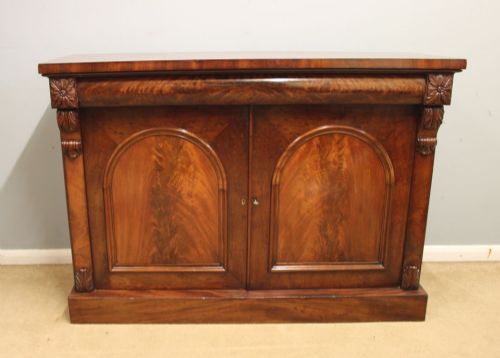
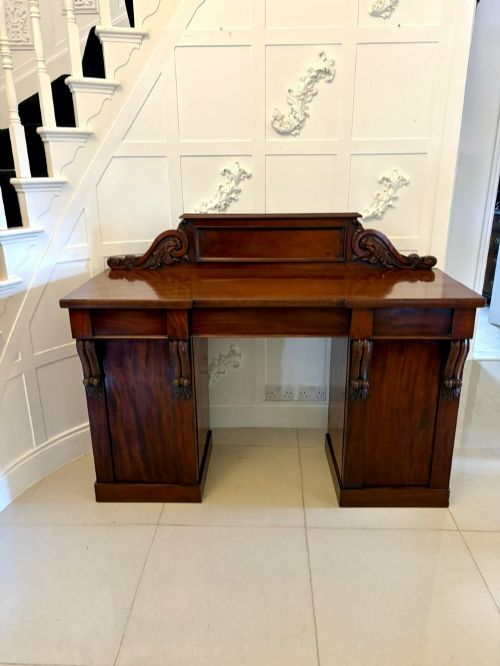
A carved pedestal sideboard stands as a heavy dining room storage piece featuring flanking cupboards or pedestals beneath a central counter. This page focuses primarily on nineteenth-century examples spanning Regency, William IV, and Victorian periods.
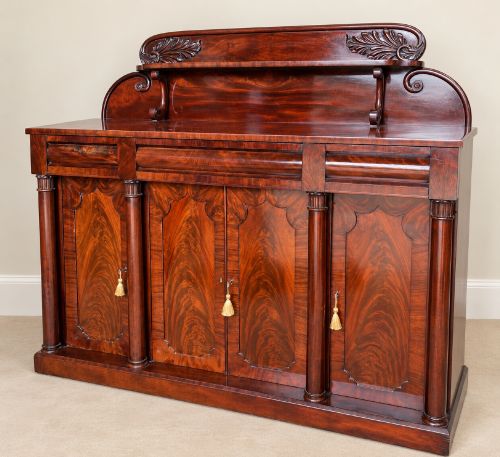
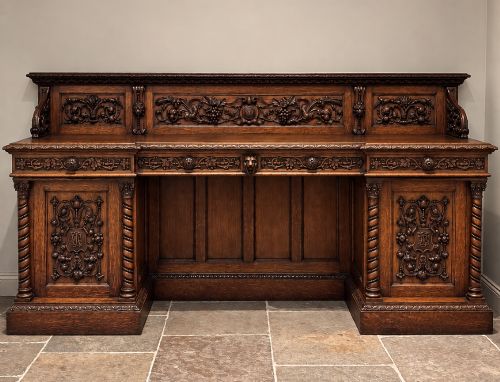
The layout generally comprises a central serving surface flanked by two pedestals, sometimes incorporating mirror backs, raised panels, and deep drawers. Oak and mahogany dominate the offerings, matched with revival styles from Gothic to Adam.
Makers adapted the pedestals to house cellarets, cupboards, or shelving, creating a balanced silhouette that anchors large dining spaces. Pieces range from formal Georgian proportions to heavily carved Victorian Renaissance revivals.
Materials and Construction
Cabinet makers built these pieces using solid timbers like oak, padouk, and mahogany, frequently applying flame mahogany veneer to large flat surfaces to highlight grain patterns. Brass hardware, mirrored glass panels, and marble tops appear on specific periods and forms.
Carving was executed by hand directly into the dense wood, producing deep relief scrolls, fruit motifs, and paw feet. Joinery relied on traditional methods such as dovetailing for drawers and mortise and tenon frames to support the heavy pedestals.
Several pedestals still conceal their original lead-lined cellarets, once packed with ice to keep aristocratic claret chilled.
Assessing Quality
Quality rests upon the selection of timber and the depth of the hand carving rather than the mere presence of decoration. Superior examples display symmetrical flame veneer matching across doors and drawers, indicating careful timber preparation.
The crispness of the carved mouldings and the substantial weight of the secondary timbers used in drawer linings distinguish finer workshops from standard production pieces. Integrated architectural details, such as pediments and turned columns, reflect higher design ambition.
John Gregory London·Étienne Kohlmann·Epstein
The Carved Pedestal Sideboard Glossary
- Pedestal
- A structural support base flanking the central counter, often enclosing a cupboard or cellaret. These form the defining architectural weight of the sideboard.
- Flame Mahogany
- Timber cut at an angle to the branch junction to produce a distinctive flickering flame pattern. This veneer is prized for optical movement on large door panels.
- Breakfront
- A cabinet front where the central section projects forward from the flanking pedestals. This configuration creates visual depth across the elevation.
- Cellaret
- A compartment housed within a pedestal designed originally to hold wine bottles. They often retain lead linings or bottle dividers.
Carved Pedestal Sideboard: Frequently Asked Questions
How do I date a sideboard?
Dating relies on combining the timber choice, hardware, and prevailing decorative style visible in the carvings and feet. Regency pieces show classical restraint, while Victorian examples lean towards heavier relief and mirror backs.
Secondary woods and construction methods inside the drawers offer further clues to the decade of manufacture. Comparing the stylistic motifs against documented revival periods helps narrow down the timeline.
What is an Anglo-Indian sideboard?
Anglo-Indian sideboards utilise exotic timbers such as padouk and satinwood, combined with intricate carved foliage distinct from European cabinet work. These pieces were constructed overseas for colonial officers and export markets.
The dense, dark padouk wood allows for exceptionally sharp, deep undercutting in the floral panels. They bring an unusual texture and heavier grain pattern compared to standard domestic mahogany.
Where should I place a pedestal sideboard?
These large items require a spacious dining room or hall with adequate wall space to support their considerable width and depth. Because the pedestals project forward, positioning them centrally against a main wall achieves the correct visual balance.
Ensure floor surfaces can bear significant weight, as solid oak and mahogany constructions combined with marble tops are extremely heavy. Keep them away from direct heat sources to prevent the flame veneers from lifting.
How do I care for mahogany surfaces?
Regular dusting with a soft, dry cloth prevents particulate build-up in the deep carved recesses of the woodwork. Avoid silicone-based polishes, opting instead for traditional beeswax applied sparingly to nourish the grain.
Protect the top surface from moisture and direct sunlight to preserve the rich reddish-brown tones of the timber. Periodic gentle buffing maintains the natural lustre of the polished finish.