




Heavy Carved Oak Dresser
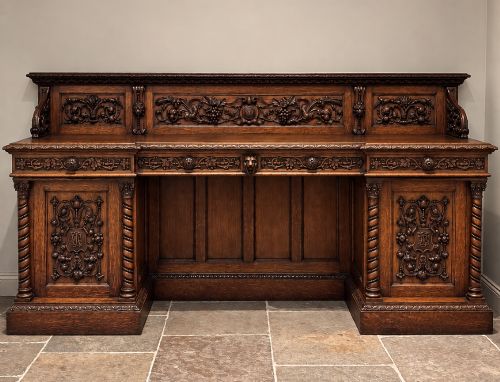
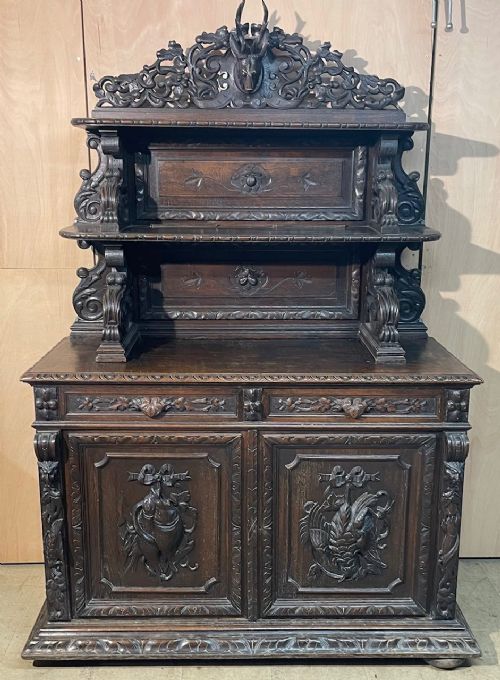
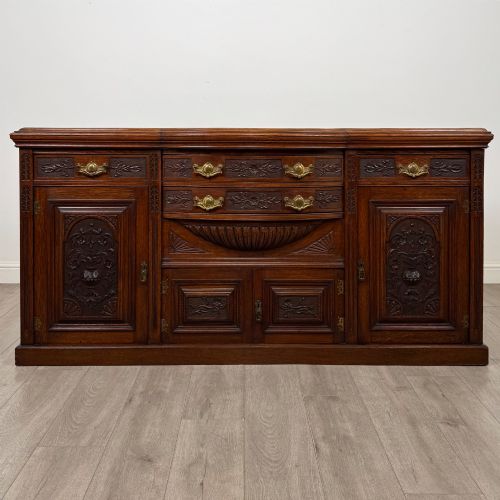
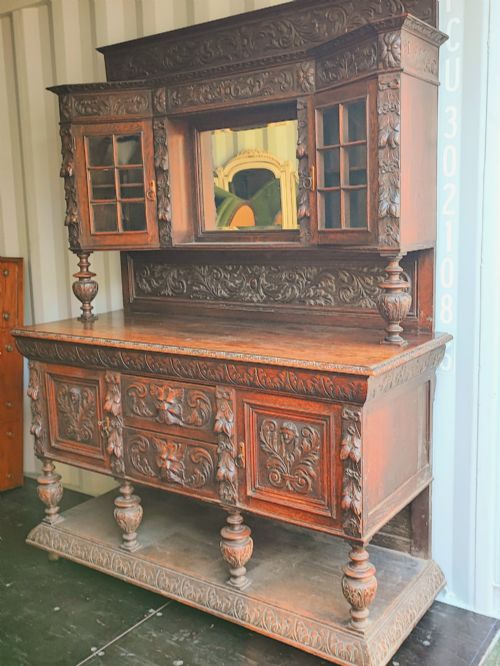
A heavy carved oak dresser brings enduring architectural presence to a room through deep relief work and robust timber.
Heavy Carved Oak Dresser
A heavy carved oak dresser anchors a dining space or hallway with substantial timber and functional storage. These pieces combine display surfaces, cupboards, and drawers within a single architectural footprint.
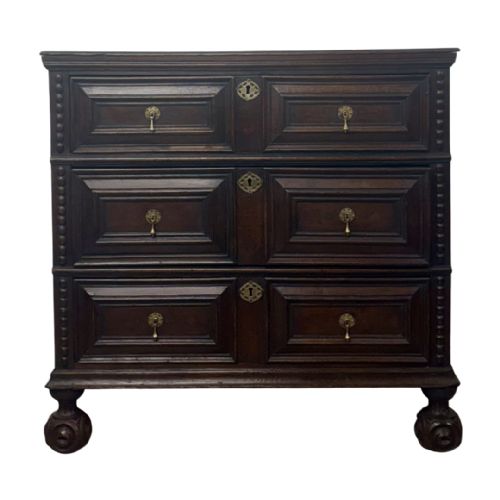
The selections available range from 17th-century chests and dresser bases to elaborate Victorian and revival sideboards. Victorian interpretations dominate the offerings, often featuring monumental proportions and deep relief carving.
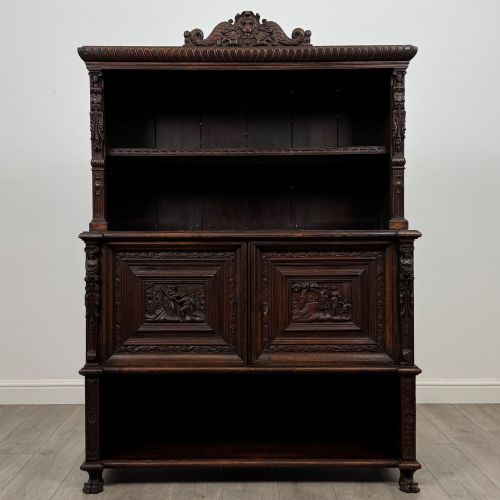
Forms vary from regional dresser bases and court cupboards to mirror-back buffets and tall library bookcases. Each variation serves the primary domestic need for secure storage and surface display.
Materials and construction
Makers utilised solid oak for its structural density and receptiveness to deep chisel work. Secondary metals such as brass, iron, and lead appear in hinges, handles, and glazing bars.
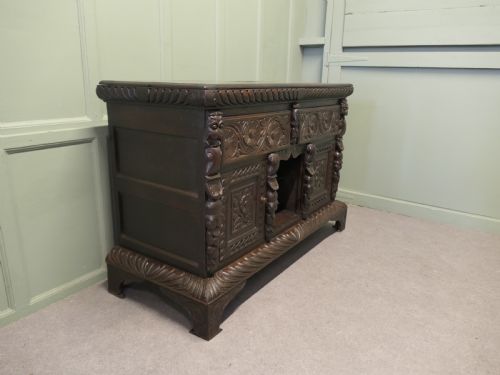
Joinery relied on traditional framing techniques to support the heavy timber doors and panelled backs. Surfaces received extensive hand carving, depicting motifs from foliate scrolls to figurative green man masks.
The listings span multiple centuries, uniting 17th-century vernacular chests with monumental Victorian Renaissance revival library bookcases and sideboards.
Assessing quality and craftsmanship
Superior examples exhibit crisp, deep-relief carving executed with clear definition across every panel and frieze. Lesser pieces rely on shallow stamping or repetitive machine routing that lacks tactile depth.
The integrity of the timber movement and the weight of the original brass or iron hardware signal high-grade execution. Well-balanced proportions and seamless integration of crown mouldings separate master workshops from provincial joinery.
The Heavy Carved Oak Dresser Glossary
- Dresser base
- A low cabinet featuring drawers above enclosed cupboards, historically used for food preparation and serving. This form provides a wide top surface and substantial under-counter storage.
- Green man
- A sculptural architectural motif depicting a human face disgorging foliage or vines. It symbolises rebirth and appears frequently carved into Victorian and revival woodwork.
- Renaissance revival
- A 19th-century design movement resurrecting 16th-century classical motifs, symmetry, and architectural orders. Furniture in this style displays heavy cornices, columns, and cartouches.
- Court cupboard
- A two-stage enclosed cupboard with a recessed upper section supported by heavy columns. These pieces provide compact storage with ornamental upper friezes.
- Bevelled glass
- Glass panes featuring an angled, polished edge designed to catch and refract light. This technique adds depth to cabinet doors and mirror backs.
Heavy Carved Oak Dresser: Frequently Asked Questions
How do I care for heavy oak furniture?
Feed the timber periodically with a traditional wax polish to prevent the grain from drying out in heated rooms.
Avoid placing these heavy pieces in direct sunlight or near heat sources to prevent the solid oak panels from splitting.
Where should I place a large dresser?
Position your piece against a load-bearing wall in a dining room, hallway, or spacious library where the monumental proportions fit comfortably.
Ensure the floor can support the substantial combined weight of the solid timber construction and its internal contents.
How do I identify revival styles?
Look for heavy proportions, dark patination, and architectural elements borrowed directly from 17th-century Jacobean or continental Baroque design.
Revival pieces often combine multiple historical motifs like strapwork, green man carvings, and turned columns within a single Victorian framework.
What is the difference between a sideboard and a dresser base?
A dresser base typically originates from earlier vernacular traditions, featuring deep drawers and low cupboards designed for utilitarian domestic tasks.
Sideboards evolved through the 19th century with more formal architectural styling, often incorporating mirror backs, cellarettes, and tiered display shelves.