





Carved Lion Mask Furniture
Carved lion mask furniture brings together bold domestic woodwork and classical symbolism, dominated here by Victorian and Regency pieces.
Carved Lion Mask Furniture
Carved lion mask furniture comprises heavy seating, sideboards, desks, and tables decorated with sculpted feline faces. These items derive their decorative impact from timber carving applied to structural elements like legs, drawers, and corners.
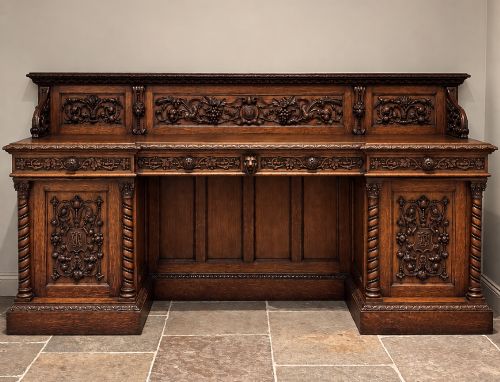
The pieces on this page are predominantly constructed from oak and mahogany, spanning periods from the eighteenth century through the Victorian and Edwardian eras. Sideboards and chests of drawers form the core of the selection alongside occasional tables and desks.
Regency and Victorian examples show distinct revivalist tendencies, incorporating Egyptian, Neoclassical, and Flemish motifs. Buyers encounter robust oak sideboards and refined mahogany chests bearing these forceful animalistic carvings.
How they were made
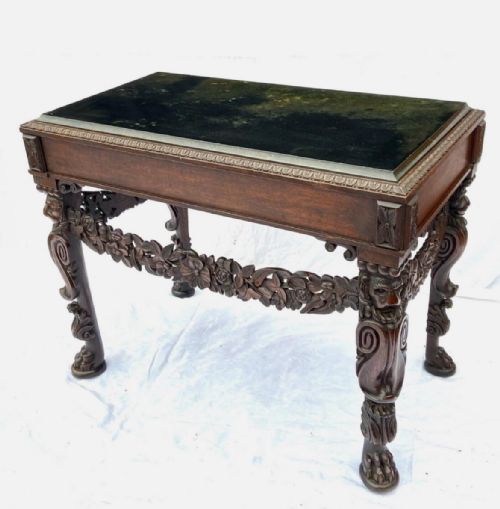
Secondary materials such as ebony inlay, boxwood inlay, and brass hardware added contrast to the primary dark woods. Leather upholstery and green marble tops appear on specific seating and table forms to complete the composition.
Carved Lion Mask Furniture Retail Price Guide 2026
Typical asking prices for carved lion mask furniture among the pieces listed under this phrase on Sellingantiques today, from the lower quarter to the upper quarter. They describe what is for sale here now, not the wider market.
Every fierce lion mask glowers silently from the parlour woodwork, standing guard over generations of forgotten domestic paperwork.
What varies in quality
Quality rests in the depth and crispness of the timber carving, distinguishing forceful, sculptural mask work from softer, summary incisions. The integration of the mask into the structural anatomy of the furniture, such as paw feet or corner brackets, dictates the success of the design.
The choice and figuring of the primary wood, whether polished mahogany or carved oak, alongside the precision of contrasting details like ebony inlay, separates standard production from finer cabinetmaking.
The Carved Lion Mask Furniture Glossary
- Lion mask
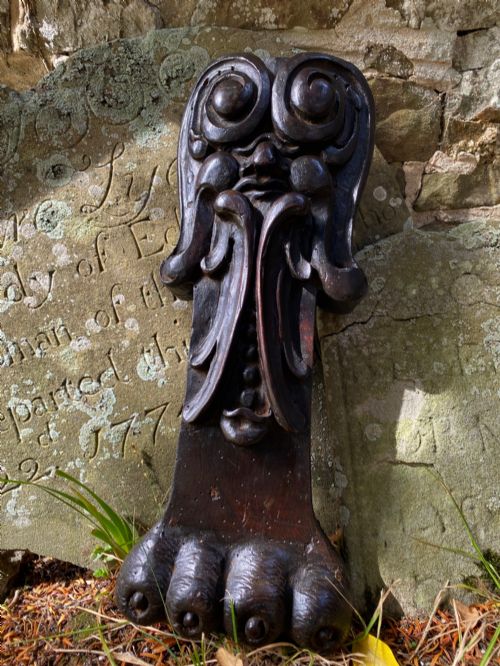
- A carved decorative motif depicting the face of a lion, frequently shown with bared teeth and a full mane. This element often terminates furniture legs or centres on drawer fronts.
- Paw feet
- Carved furniture supports shaped to resemble the paws of an animal, commonly appearing beneath console tables and heavy seating. They provide a visual anchor for sculptural designs.
- Cellarette
- A lockable container used for storing wine bottles near the dining table, often constructed in mahogany during the Regency period. These vessels frequently incorporate robust handles and decorative mounts.
- Dumb waiter
- A tiered piece of dining room furniture designed for holding dishes without servants present, constructed here in carved oak. Shelves are supported by central columns or carved frameworks.
- Davenport desk
- A compact writing desk featuring a sloping top above a bank of drawers, produced in forms that incorporate decorative wood carving. The compact footprint suited nineteenth-century domestic interiors.
Carved Lion Mask Furniture: Frequently Asked Questions
What periods do these pieces come from?
The selection spans the eighteenth century through the Regency, Victorian, and Edwardian periods. Most items date from the nineteenth century.
Craftsmen across these eras reinterpreted earlier classical styles, producing sideboards, chests, and tables with distinct sculptural details.
Which woods were used for this furniture?
Makers relied heavily on oak and mahogany to support deep sculptural carving. These timbers offered the density required for detailed mask and paw work.
Accents of ebony, boxwood, leather, and green marble frequently accompany the primary wood structures.
What types of items feature lion masks?
Sideboards, cabinets on stand, chests of drawers, console tables, and cellarettes commonly display these carved motifs. Seating and footstools also incorporate animalistic design elements.
These forms served formal reception rooms and dining spaces in period homes.