
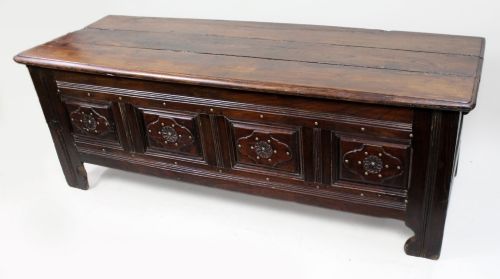
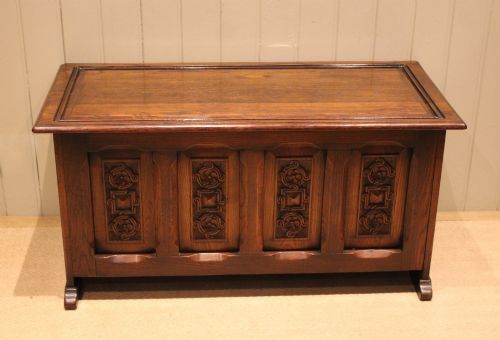
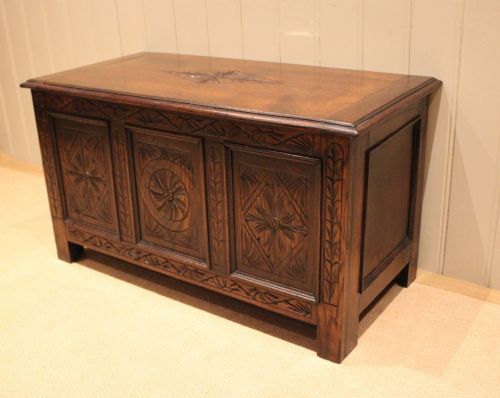
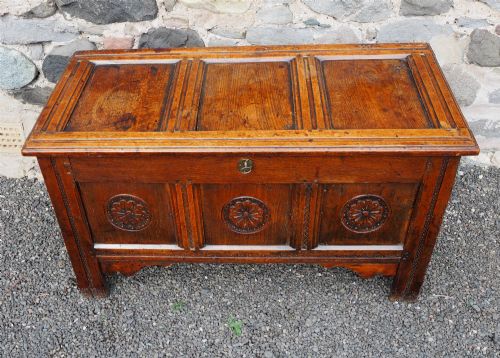
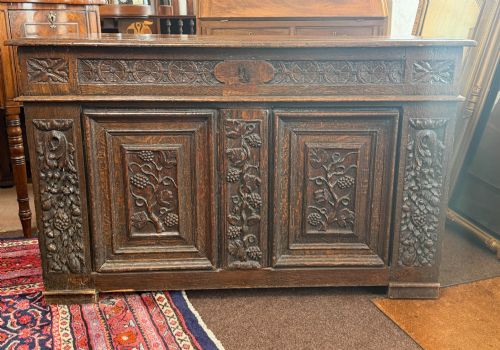
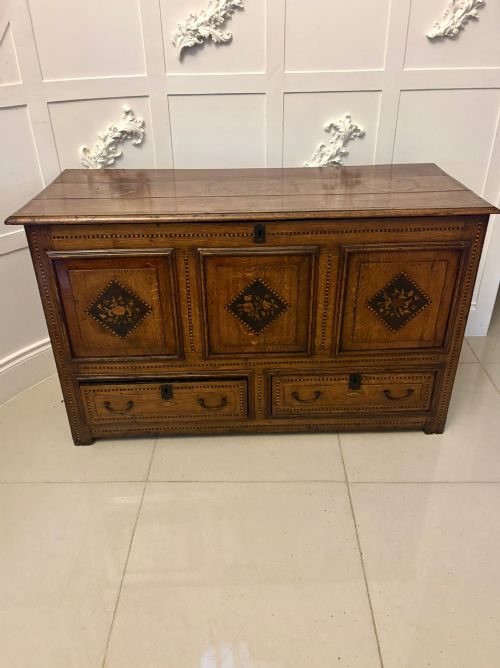
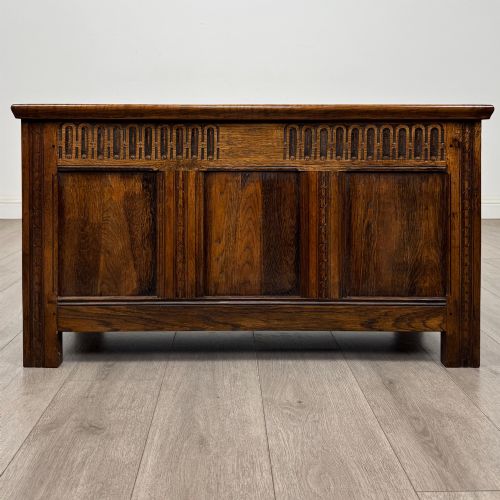


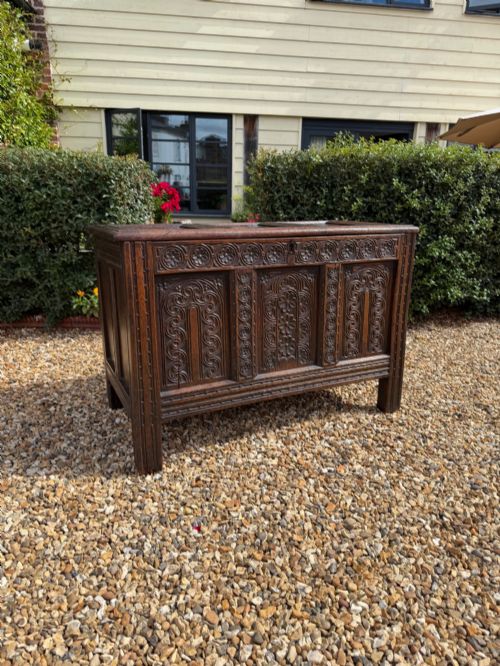
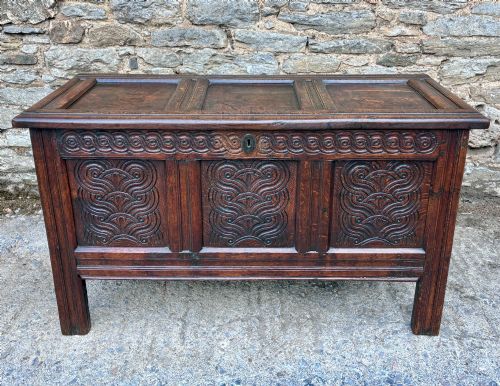
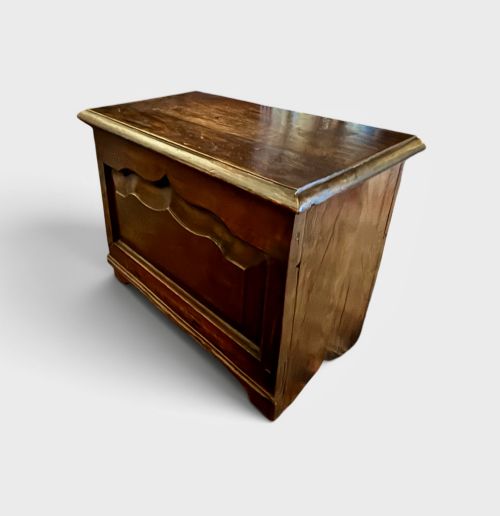
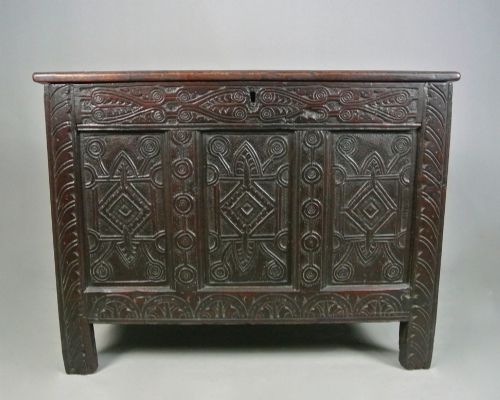
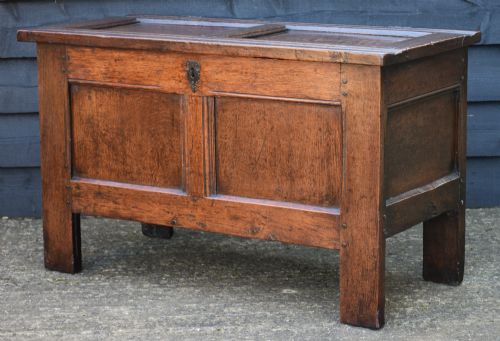
Carved Panel Storage Box
A carved panel storage box offers solid timber construction and period character, providing practical storage that anchors a room with historic charm.
Carved Panel Storage Box
A carved panel storage box brings centuries of domestic utility into a modern room, serving as a robust chest or coffer designed to hold household goods. When you search for a carved panel storage box, you encounter pieces spanning from the seventeenth century through the Georgian era and into later revival styles.
The most prevalent examples on this page are constructed from oak, appearing as coffers, blanket chests, and mule chests with hinged lids. These forms range from small proportions suited for hall seating to imposing chests originating from English, Welsh, French, and Portuguese colonial workshops.
How they were made
Solid timber forms the foundation of these pieces, with oak dominating the record alongside mahogany, pine, and ebonised wood. Joiners utilised frame-and-panel construction to allow the wood to expand and contract naturally without splitting.
Carving and inlay techniques define the decoration, utilising chisel work to create geometric and floral motifs on the panels. Iron and brass hardware, including hinges and lock plates, secure the lids and add structural reinforcement.
Listings feature oak as the primary material, alongside mahogany, pine, and brass hardware from the seventeenth century to the twentieth.
What varies in quality
The depth and crispness of the chisel work distinguish superior carved panels from simpler, more cursory ornamentation. The choice of timber grain and the integrity of the original joints determine the overall substance of the chest.
Proportion and surface patina elevate certain examples, where centuries of handling have mellowed the timber into a rich, tactile finish. Retaining original hardware and unmodified internal structures sets the finest pieces apart from later adaptations.
The Carved Panel Storage Box Glossary
- Mule chest
- A storage chest featuring one or more drawers beneath the main compartment. This form bridges the gap between the traditional coffer and the modern chest of drawers.
- Box settle
- A high-backed wooden seat incorporating a storage box beneath the hinged bench. These pieces combine seating with concealed household storage.
- Marquetry
- The art of applying decorative veneer pieces to a structure to form intricate patterns. It appears on select chests to provide ornamental contrast.
- Panel
- A distinct section of wood set within a surrounding frame. Carved decoration is typically applied directly to these central elements.
Carved Panel Storage Box: Frequently Asked Questions
What is a carved panel storage box used for?
These boxes serve as practical containers for blankets, linens, and household goods while functioning as stable furniture pieces. Their flat lids allow them to double as window seats or hallway benches.
Historically, they protected valuables from dampness and theft in domestic settings. Today, they integrate easily into living spaces to provide concealed storage.
How do I date a wooden coffer?
Dating relies on observing construction methods, timber species, and stylistic motifs carved into the panels. Seventeenth-century examples often display deep geometric carving and pegged frame joints.
Later pieces from the Georgian period or revival eras show shifts in proportion, smoother mouldings, and machine-cut timber elements. Comparing the hardware and internal surfaces helps confirm the period of manufacture.
Are these chests made of solid oak?
The majority of the pieces recorded here utilise solid oak as their primary structural material. Joiners selected oak for its durability, strength, and abundance in early British cabinet making.
Some examples incorporate alternative timbers such as mahogany, pine, or ebonised wood depending on their regional origin and period. Marquetry and wood inlay elements add contrasting tones to the primary timber body.
What is the difference between a coffer and a mule chest?
A coffer consists of a single enclosed compartment accessed exclusively through the top lid. It provides deep, open storage for bulky items.
A mule chest includes one or more drawers positioned beneath the main upper compartment. This addition allowed easier access to stored clothing without requiring items on top of the lid to be moved.