
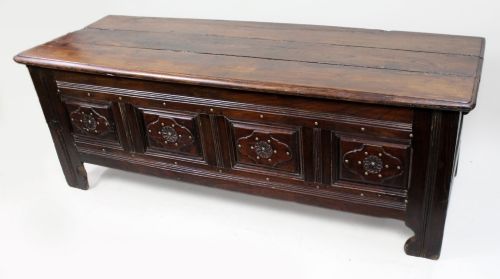
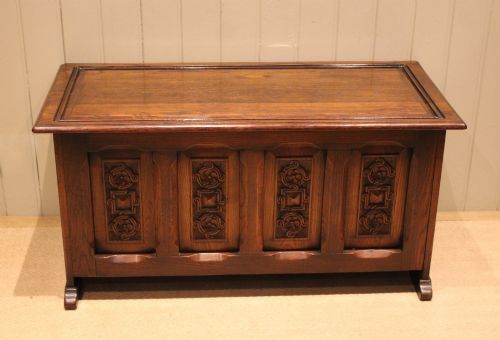
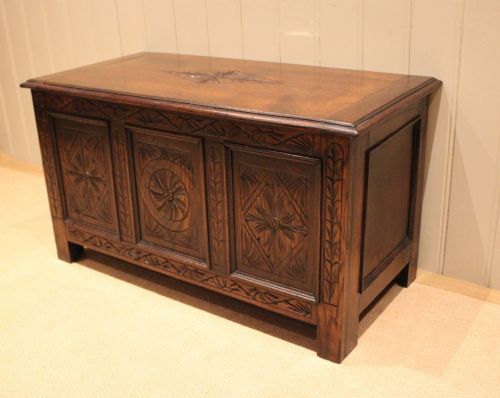
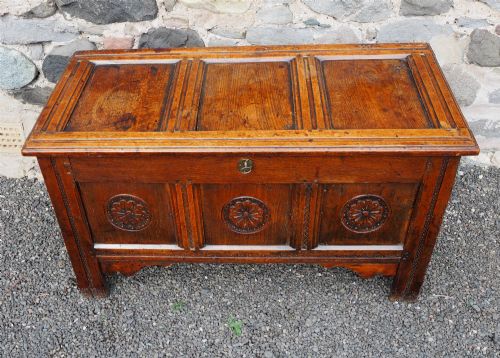


Carved Panel Blanket Box
A carved panel blanket box offers enduring utility alongside centuries of joinery skill, grounding a room with solid timber and carved detail.
Carved Panel Blanket Box
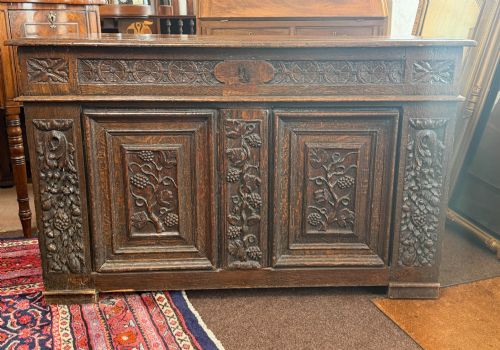
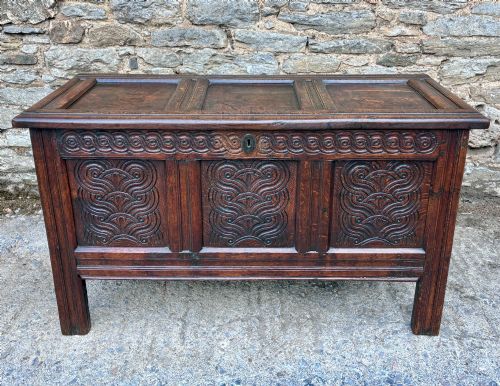
When you search for a carved panel blanket box, you enter a category dominated by heavy timber storage pieces traditionally known as coffers or chests. These items span from the seventeenth and eighteenth centuries through to later revival periods, built primarily for domestic storage and linen keeping.
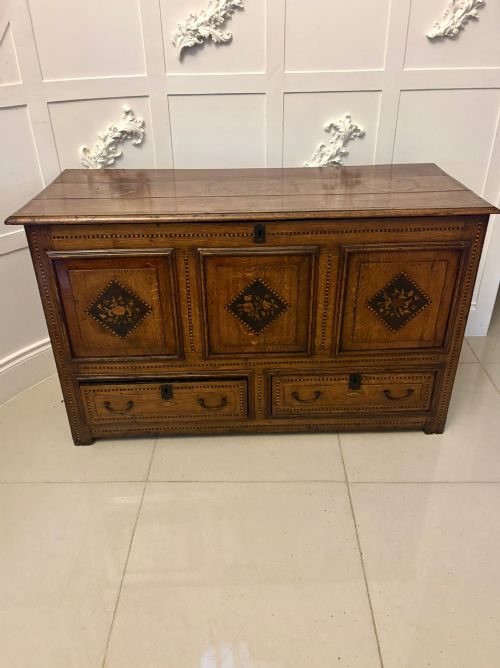
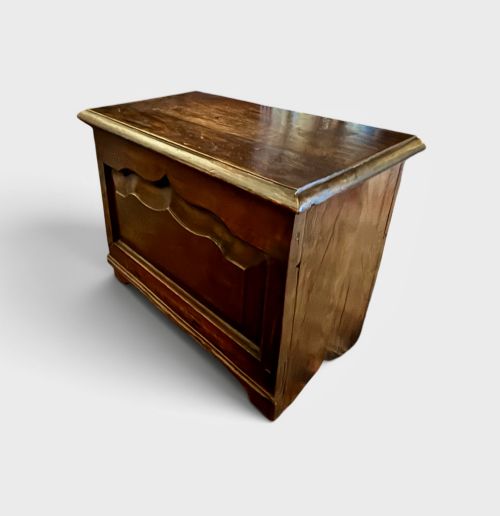
The most common examples you will encounter on this page are constructed from solid oak with panelled framing and carved fronts, often featuring regional British origins such as Wales or the Gower Peninsula alongside French provincial variations. Alongside standard blanket chests, you will find mule chests equipped with lower drawers and occasional seating forms like settles.
Earlier pieces from the 1600s and 1700s share shelf space with Edwardian and twentieth-century interpretations, showing styles ranging from Jacobean and Gothic carving to Georgian proportion. The core purpose remains consistent across these eras: providing robust, lidded containment using traditional carpentry.
How they were made
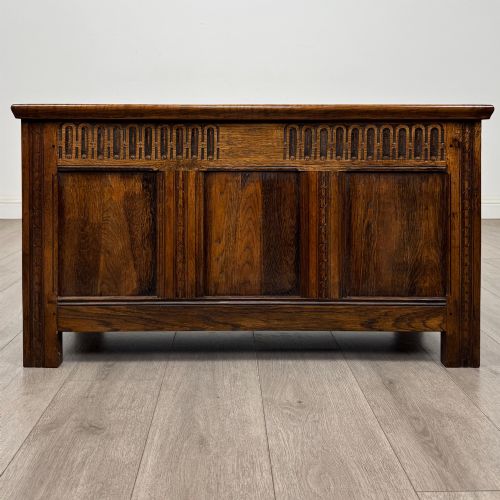
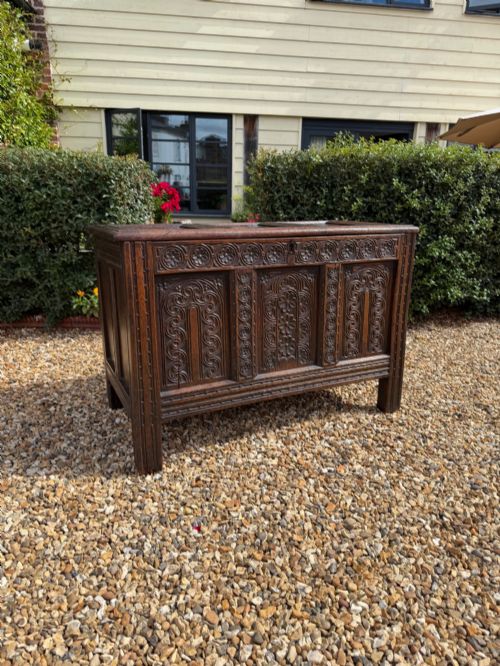
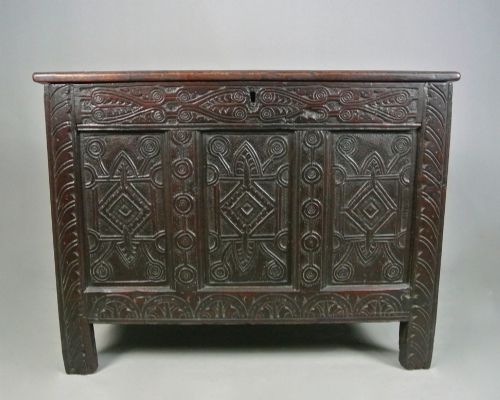
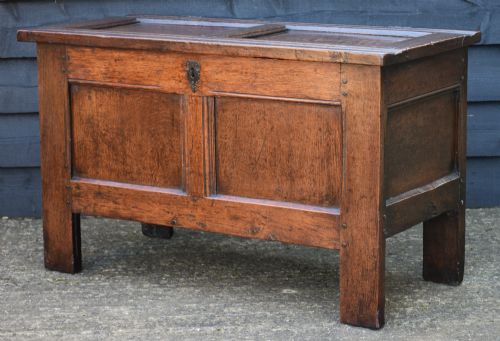
Construction relies heavily on frame-and-panel techniques using solid oak planks, held together with pegged mortise and tenon joints to allow the timber to expand and contract naturally. Carving is executed directly into the wood panels, frequently taking the form of geometric strapwork, roundels, or architectural motifs.
Secondary materials such as iron hinges, brass escutcheons, and occasional marquetry or wood inlay provide structural reinforcement and decorative contrast. Surfaces are finished with hand-planing and polishing, occasionally incorporating ebonised wood details or French provincial styling.
Carved Panel Blanket Box Retail Price Guide 2026
Typical asking prices for carved panel blanket box among the pieces listed under this phrase on Sellingantiques today, from the lower quarter to the upper quarter. They describe what is for sale here now, not the wider market.
Listings feature periods spanning from the late sixteenth century through the Georgian era, alongside Edwardian and 1930s revival pieces.
What varies in quality
Quality in these pieces is dictated by the crispness of the hand-carving and the integrity of the original timber framing rather than surface sheen alone. Superior examples display tightly fitted joinery with original pegged joints, while lesser or heavily restored pieces may show mismatched panels or replaced timber bases.
The depth and complexity of the relief carving separate standard workshop output from exceptional examples, such as ecclesiastical coffers with specific Gothic detailing or Welsh mule chests featuring fine marquetry inlay. The presence of period hardware, original lids, and untouched surface patination elevates a piece within the range.
The Carved Panel Blanket Box Glossary
- Coffer
- A large wooden chest traditionally used for storing valuables, linen, or documents. They often feature hinged lids and sturdy framed construction.
- Mule chest
- A storage chest fitted with one or more drawers beneath the main internal compartment. This form bridges the gap between a traditional coffer and a chest of drawers.
- Strapwork
- A carved decorative motif resembling intertwined leather bands or flat ribbons. It is frequently seen on seventeenth-century panels.
- Escutcheon
- A protective plate surrounding a keyhole, usually fashioned from brass or iron. It serves both a functional and a decorative role on the front of a chest.
- Panelled construction
- A method of joining wood where a central floating panel is set within a surrounding frame. This technique prevents the timber from splitting as humidity changes.
Carved Panel Blanket Box: Frequently Asked Questions
What is a mule chest?
A mule chest is a traditional storage piece that combines a top-opening blanket box with one or more drawers built into the base below. This design evolved to provide easier access to smaller items without requiring the user to lift the main lid.
In the listings, these pieces appear alongside standard coffers and trunks, sharing the same solid oak construction and panelled methods.
How do I date an oak coffer?
Dating relies on observing construction methods, timber characteristics, and carving styles. Seventeenth-century examples typically feature pegged mortise and tenon frames with hand-carved panels, while later Georgian and revival pieces show different moulding profiles and cleaner interior board widths.
Hardware such as iron strap hinges and brass escutcheons also offer clues to the period of manufacture or subsequent restoration work.
Where were these chests made?
These pieces originate from various regions across Britain and continental Europe, with distinct local styles appearing in areas like Wales, Cornwall, and France. Regional workshops often utilised native timbers such as local oak or fruitwoods, incorporating characteristic regional carving motifs.
Portuguese colonial examples also appear, showcasing exotic hardwoods like mahogany alongside brass fittings.
How should I use a blanket box at home?
A blanket box serves as practical storage for spare bedding, winter textiles, or household items while functioning visually as a solid focal point. Many people place them at the foot of a bed, in a hallway, or beneath a bay window to double as casual seating.
The sturdy flat lid also allows the surface to display books, lamps, or decorative objects when positioned against a wall.
What is marquetry inlay?
Marquetry inlay involves embedding contrasting pieces of wood veneer into the primary surface to create decorative patterns and pictures. On chests, this technique is typically applied to the front panels to add visual complexity to the timber.
It appears alongside carved woodwork on select seventeenth-century and revival pieces, elevating the decorative finish.