


Carved Oriental Nest Tables
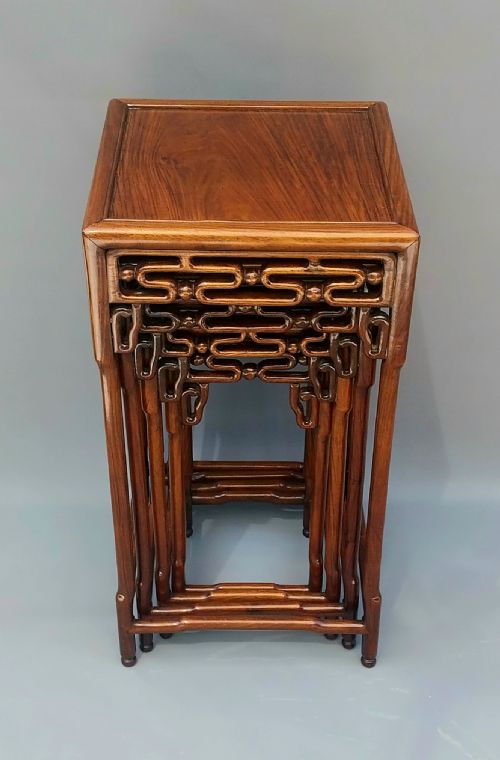
These carved oriental nest tables are interlocking sets of graduated tables designed to slide neatly together when not in use.
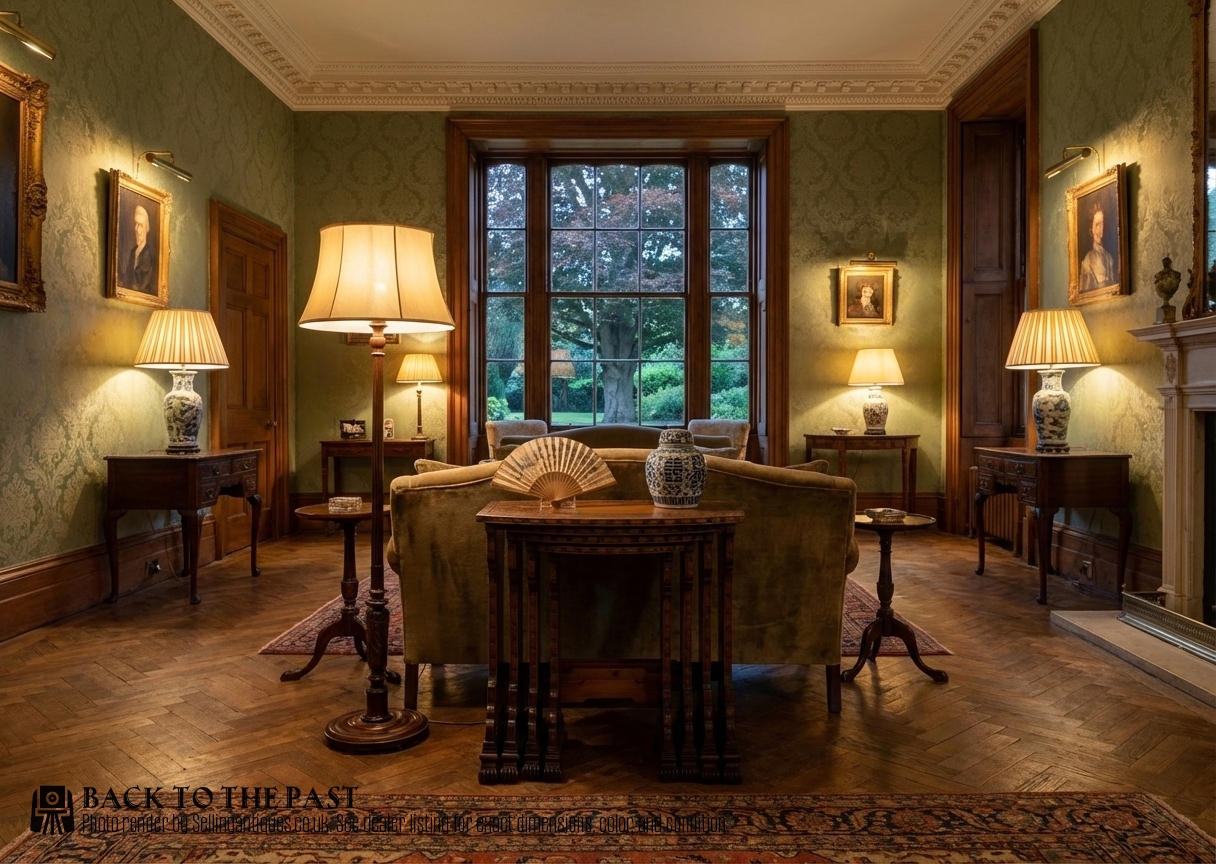
Carved Oriental Nest Tables
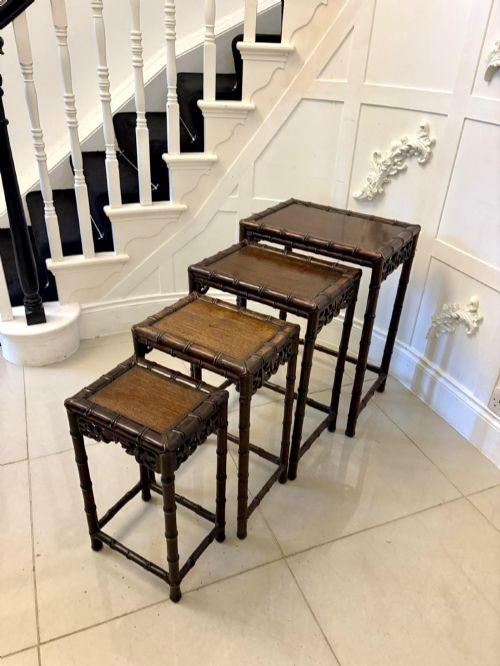
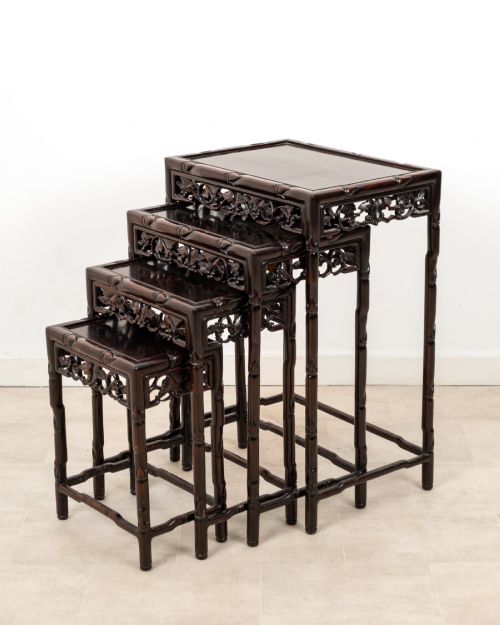
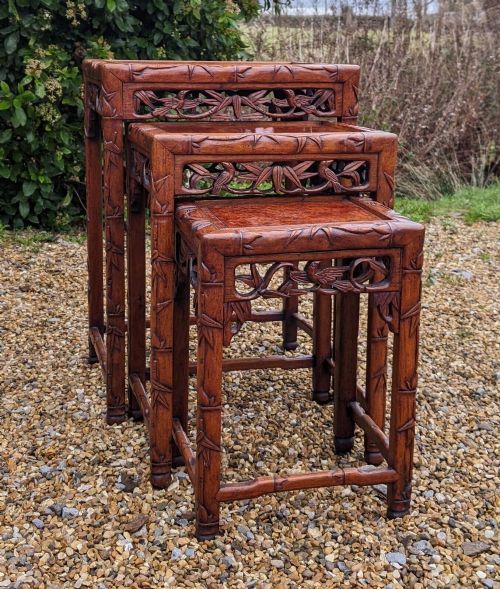
When you examine carved oriental nest tables, you are looking at sets of three or four tables built to fit sequentially beneath one another. These sets originate from periods such as the nineteenth century, the Edwardian era and the nineteen-twenties, appearing in forms like coffee tables and occasional tables. The pieces you meet most frequently on this page are Chinese hardwood and rosewood tables featuring carved surfaces.
The practical design allows the smaller tables to slide out for serving tea or displaying items and disappear into a compact single block afterwards. Hardwood versions from the Qing dynasty and later export periods dominate the selection, often arranged in sets of four graduated sizes. They serve as functional furniture that conserves floor space while providing multiple tabletops.
Origins span nineteenth-century workshops through to nineteen-thirties production, with Chinese export styles and Chinoiserie interpretations well represented. You will find both sets of three and complete sets of four tables constructed to stand independently or nest tightly. The timber choice typically includes dense native woods like hongmu, huanghuali and teak.
How they were made
Maker workshops utilised dense timbers such as rosewood, hongmu, teak and huanghuali wood to build these tables for strength and durability. These heavy hardwoods permitted deep surface carving on the aprons and tops without compromising the structural integrity of the slender legs.
Joinery techniques involved precise mortise and tenon frames to support the graduated sizes that must slide smoothly into one another. Artisans carved floral motifs, figures and geometric patterns directly into the solid wood surfaces using traditional chisels and gouges.
Some sets abandon traditional florals entirely for nineteen-twenties teak coffee tables carved specifically with marching elephants.
What varies in quality
Quality rests primarily in the density of the timber and the crispness of the hand-carved detail across the set. Superior examples display deep, deliberate carving that remains sharp and clean, whereas lesser pieces show shallow, mechanical tooling.
The structural alignment of the nest determines how smoothly the tables slide and whether they sit flush when stored. Finer sets maintain matching grain patterns and rich natural colour across all four graduated tables without mismatched timber replacements.
The Carved Oriental Nest Tables Glossary
- Hongmu
- A dense, dark tropical hardwood traditionally utilised in fine Chinese furniture manufacturing. It is prized for its weight and ability to hold intricate carved details.
- Graduated
- Describing a set of tables where each piece decreases in dimensions to slide beneath the next larger one. This sizing system ensures the complete nest occupies the footprint of the largest single table.
- Quartetto
- A traditional term for a set of four small occasional tables designed to nest together. The word reflects nineteenth-century cataloguing habits for nested furniture.
- Chinoiserie
- European decorative style reflecting Chinese artistic influences, popular during various periods. It appears on furniture through imported motifs and stylistic interpretations.
Carved Oriental Nest Tables: Frequently Asked Questions
How were nest tables used originally?
These tables were pulled out from beneath one another to serve tea, hold books or display ornaments as needed during gatherings. Once the visitors left, the smaller tables slid back into the frame of the largest table to save space.
Their modular design made them adaptable for entertaining in parlours and drawing rooms where permanent large tables would crowd the floor. The graduated sizing ensured multiple surfaces appeared from a single footprint.
How do I identify Qing dynasty pieces?
Qing dynasty pieces usually feature dense hardwoods like hongmu or huanghuali combined with deep, traditional hand carving. The construction relies on traditional joinery without modern metal fasteners.
Examining the underside and the interior joints reveals hand-cut tenons and the natural ageing of the timber. Stylistic markers include traditional Chinese motifs carved into the aprons and leg supports.
What is the difference between sets of three and four?
Sets of four tables offer an extra tier of graduation, resulting in a taller stack when nested together and a wider span of surface options when deployed. They require more precise carpentry to ensure all four pieces fit sequentially.
Sets of three provide a slightly more compact stack and often appear in twentieth-century production or specific coffee table formats. Both configurations follow the same sliding principle for storage.
How do I care for hardwood nest tables?
Keep these hardwood tables away from direct heat sources and strong sunlight to prevent the dense timber from splitting or drying out. Dust them regularly with a soft, dry cloth rather than applying heavy liquid polishes.
Applying occasional natural wax helps maintain the lustre of rosewood and teak surfaces. Ensure the tables are lifted rather than dragged across floors to protect the lower leg joints.