



Asian Nesting End Tables
These asian nesting end tables combine clever space-saving design with rich traditional timber, offering practical elegance for any room.
Asian Nesting End Tables
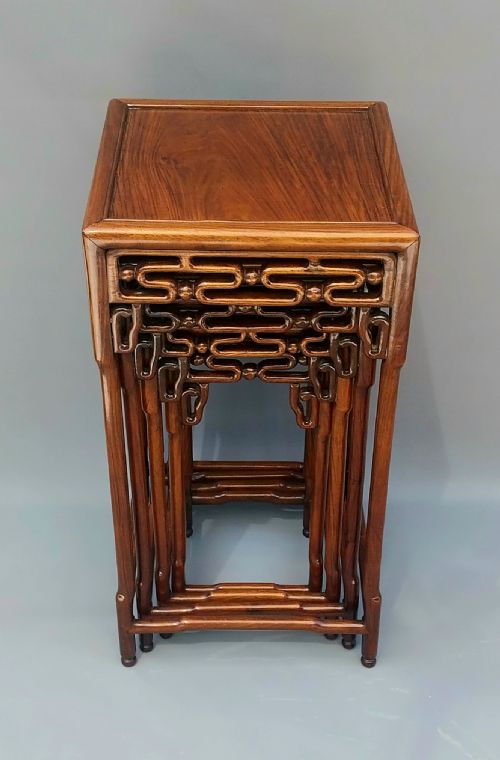
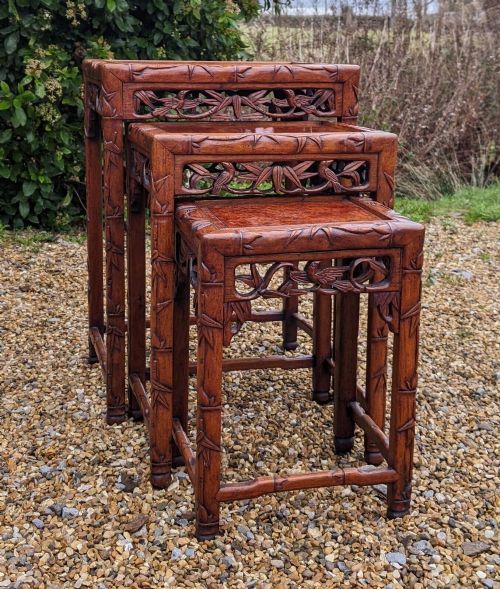
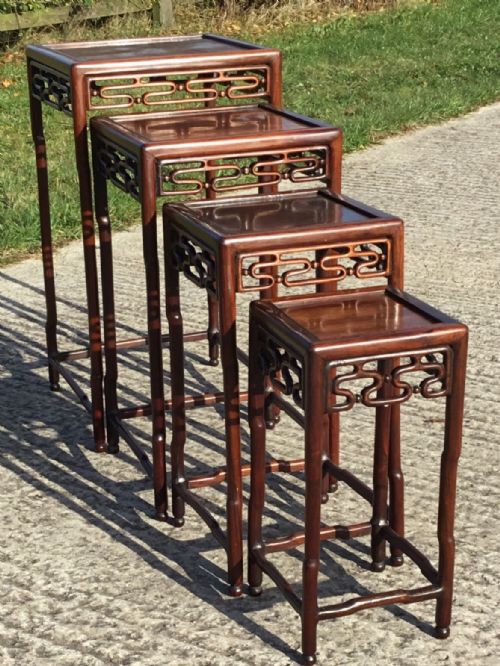
Asian nesting end tables form graduated sets of graduated tables that slide neatly beneath one another when not in use. These pieces appear primarily in sets of three or four, designed to maximise floor space without sacrificing surface area.
The selections span the nineteenth century and the early twentieth century, taking the form of traditional Chinese designs and export pieces. Common configurations range from simple hardwood surfaces to intricately carved sets from the late Qing dynasty period.
Construction and Materials
Cabinetmakers utilised dense timbers such as hongmu, huanghuali wood, rosewood, and teak to build these sturdy frames. These heavy hardwoods provide the structural integrity required to support smaller tables sliding repeatedly into the larger main frame.
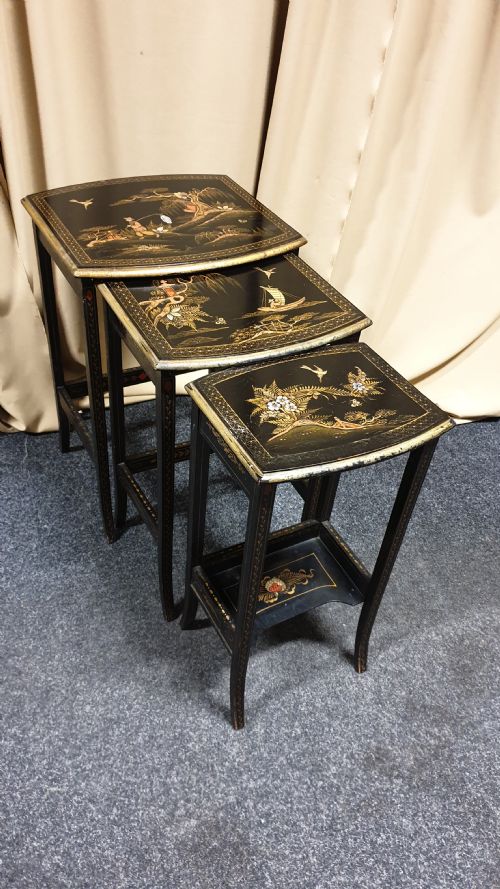
Workshops employed traditional joinery techniques alongside detailed hand carving, rendering elaborate motifs into the hardwood surfaces. Lacquered wood and mother-of-pearl inlay also appear on selected examples, adding contrasting textures and decorative depth.
Several sets include tiny hidden ledges just large enough to hold a pocket watch.
Judging Quality
Quality rests heavily on the selection of timber and the natural grain pattern visible across the surfaces. Dense rosewood and figured huanghuali display superior depth and colour compared to plain utility timbers.
The crispness of the hand carving and the precision of the graduated fit dictate the tier of craftsmanship. Tables that slide smoothly into each other with minimal clearance demonstrate superior workshop execution.
The Asian Nesting End Tables Glossary
- Hongmu
- A traditional Chinese term for dense, heavy hardwoods prized for dark reddish tones and durable grain. Furniture built from this material often shows exceptional weight and resilience.
- Quartetto
- A set of four matching tables designed to nest together in descending order of size. This term frequently appears in nineteenth-century British records for nested sets.
- Qing Dynasty
- The final imperial dynasty of China, spanning from sixteen-forty-four to nineteen-twelve. Pieces from this era often feature traditional motifs and dense carved hardwoods.
- Chinese Export
- Objects manufactured in China specifically for Western markets during the nineteenth and early twentieth centuries. These items blend traditional Eastern construction with styles suited to European homes.
Asian Nesting End Tables: Frequently Asked Questions
How do nesting tables work?
These tables are built in graduated sizes so that each smaller table slides neatly underneath the next largest one. This arrangement allows four tables to occupy the floor space of just one single table.
Owners can easily pull out individual tables as needed for serving tea, holding books, or placing lamps, then push them back together when floor space is required.
What woods are used?
Cabinetmakers primarily constructed these sets from dense Asian hardwoods including hongmu, huanghuali, rosewood, and teak. These heavy timbers provide the strength needed for daily use.
Some examples also feature lacquered surfaces or decorative inlays like mother-of-pearl, adding visual contrast to the natural grain of the timber.
How do I date an antique set?
Dating relies on examining the timber type, joinery methods, and the style of any carved decoration present on the frame. Nineteenth-century pieces often display hand-cut joinery and dense, aged hardwoods.
Comparative study of Qing dynasty styles and early twentieth-century export pieces helps narrow down the decade of manufacture based on prevailing workshop traditions.
Where should I place them?
These tables suit sitting rooms, studies, and bedrooms where surface space needs to adapt quickly throughout the day. They function effectively beside armchairs or sofas as flexible end tables.
Keeping the stacked set in a corner allows the individual tables to be distributed around the room when guests visit.