


Carved Oak Writing Slope
A carved oak writing slope brings tactile history to a room, offering sturdy timber surfaces designed for correspondence across centuries.
Carved Oak Writing Slope
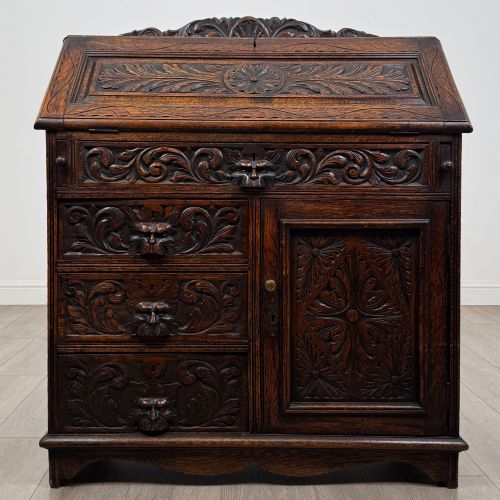
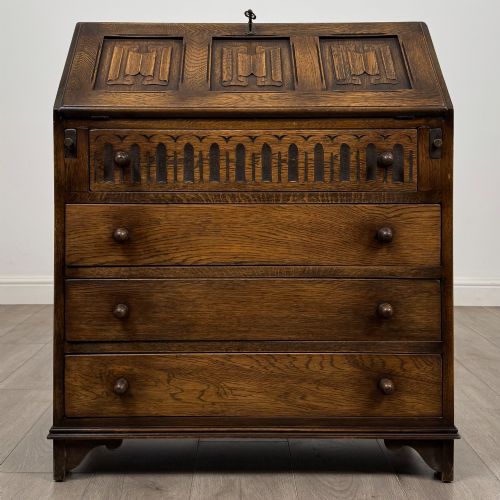
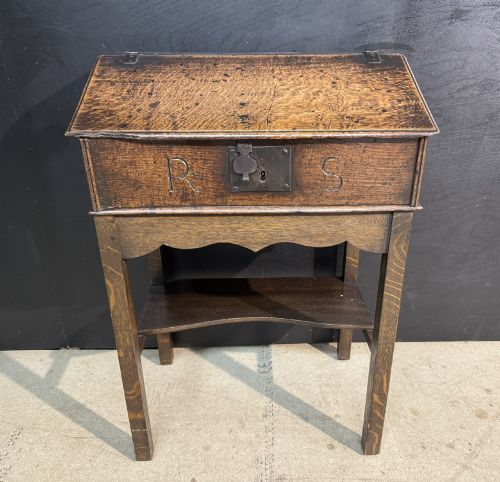
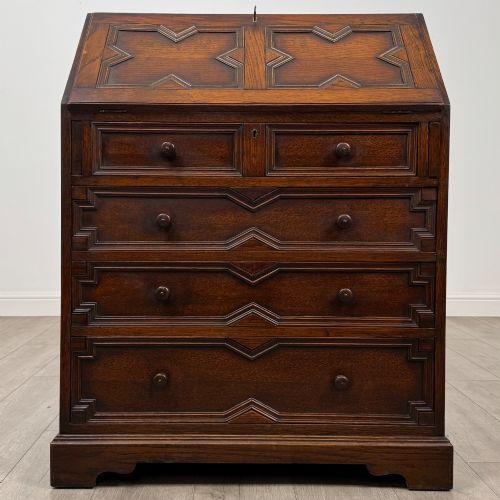
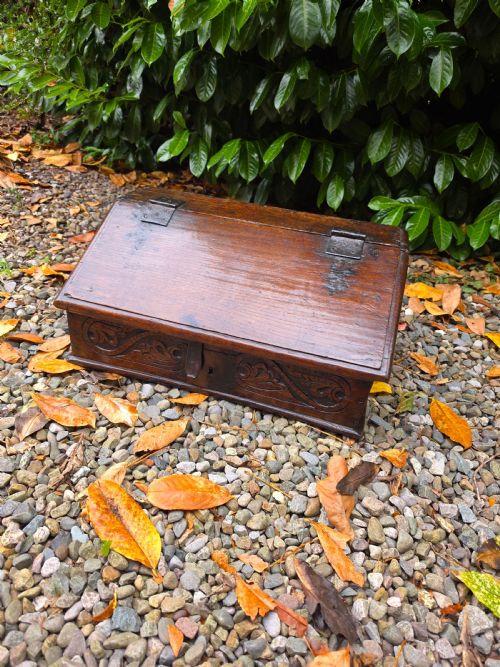
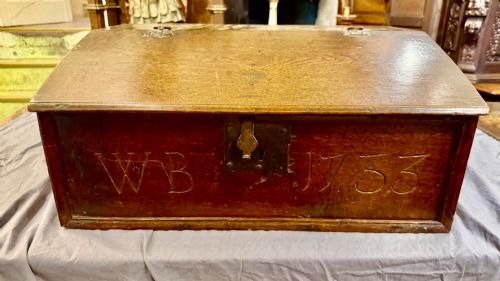
When searching for a carved oak writing slope, buyers encounter a robust category of portable desks, slant-front boxes, and stationary bureaux spanning the seventeenth century through the Edwardian era. The pieces range from simple seventeenth-century vernacular oak bible boxes and deed boxes to ornate Victorian Green Man carvings, Jacobean revival styles, and compact Davenport desks.
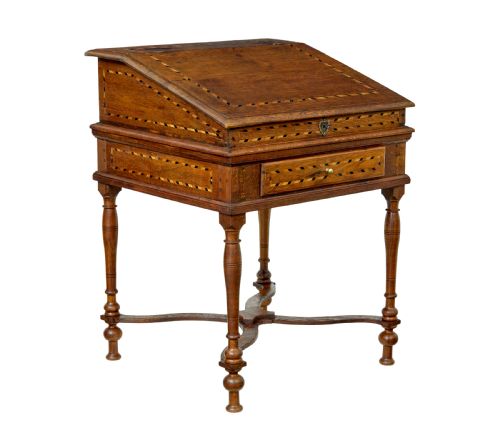
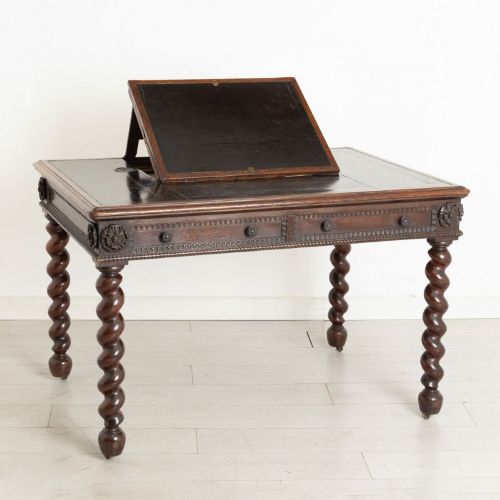
Most examples originate from British workshops, though Dutch inlaid variants and Welsh table desks appear alongside standard English forms. Buyers frequently meet pieces featuring fitted interiors, internal drawers, and occasionally leather writing surfaces or specialised compartments for ink stands.
The historical span represented in these items covers early seventeenth-century utilitarian boxes up to early twentieth-century revival pieces, demonstrating a continuous domestic and ecclesiastical utility for writing and storage.
What varies in quality
Quality diverges significantly between utilitarian vernacular items and elaborately carved statement pieces, resting heavily on the depth and crispness of the woodwork. The complexity of the internal configuration, such as hidden drawers and specialised pigeonholes, separates standard boxes from exceptional examples.
The preservation of original timber patination, authentic brass hardware, and unaltered structural stands dictates the standing of a piece within its period category.
Carved Oak Writing Slope Retail Price Guide 2026
Typical asking prices for carved oak writing slope among the pieces listed under this phrase on Sellingantiques today, from the lower quarter to the upper quarter. They describe what is for sale here now, not the wider market.
Materials paired with the timber include brass, iron, leather, glass, and inlaid holly.
Thomas Turner
The Carved Oak Writing Slope Glossary
- Bible Box
- A small hinged box originally designed for storing sacred texts, frequently utilised as a desk surface in early periods. These compact containers often feature sloping lids and carved fronts.
- Davenport
- A small pedestal desk featuring a sloping writing surface mounted over a bank of drawers. This form became popular during the nineteenth century for domestic correspondence.
- Green Man
- A sculptural architectural ornament depicting a human face disgorged from foliage or vines. This motif recurs frequently in Victorian carved oak furniture.
- Linenfold
- A style of wood carving that imitates folded parchment or linen fabric. It appears commonly on panels of seventeenth-century and revival pieces.
- Slant Front
- An angled writing lid that folds down to provide a flat desk surface while concealing internal compartments and drawers. This configuration defines many bureaux and slope desks.
Carved Oak Writing Slope: Frequently Asked Questions
How do I date a carved oak writing slope?
Dating relies on examining the construction methods, hinges, and lock mechanisms alongside stylistic indicators such as linenfold or Green Man carving. Earlier seventeenth-century pieces display pegged joinery and vernacular hand-tool marks, whereas later Victorian and Edwardian examples utilise standardised hardware and revival ornamentation.
Secondary woods, nail types, and the presence of interior configurations like secret drawers further clarify the exact period of origin.
What is the difference between a slope and a bureau?
A writing slope is typically a portable box with an angled lid designed to sit upon a table or lap for writing. In contrast, a bureau is a larger stationary piece featuring a slant-front lid that opens down onto built-in supports above a chest of drawers.
Both forms share the characteristic sloping writing surface, but their scale and structural integration into domestic spaces differ substantially.
Where were these pieces used?
These items served functional writing and storage roles in homes, merchant offices, and ecclesiastical settings such as churches and vestries. Table desks and bible boxes accommodated the daily recording of accounts, correspondence, and religious texts.
Their portable nature allowed owners to move them between rooms or take them on travels before fixed desks became standard household furniture.
How should I care for antique oak?
Maintaining antique oak involves keeping the timber away from direct heat sources and sudden humidity fluctuations to prevent wood splitting. Regular dusting with a soft, dry cloth preserves the natural patination without stripping historical wax finishes.
Occasional application of microcrystalline wax feeds the dry wood and protects the carved surfaces from atmospheric wear.