
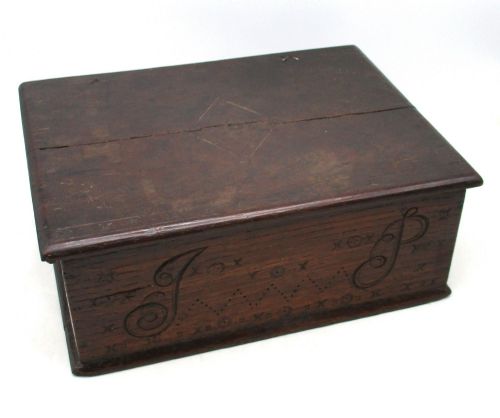
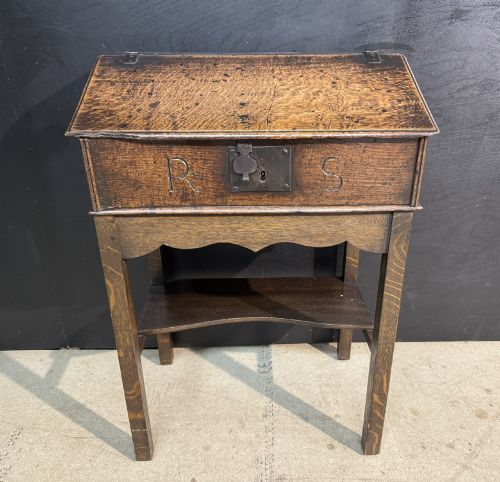
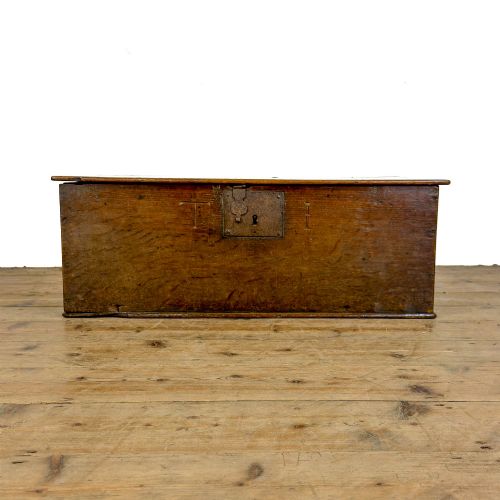
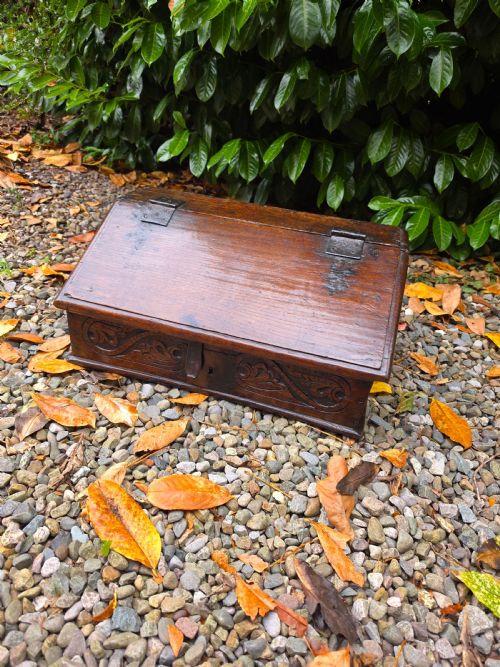
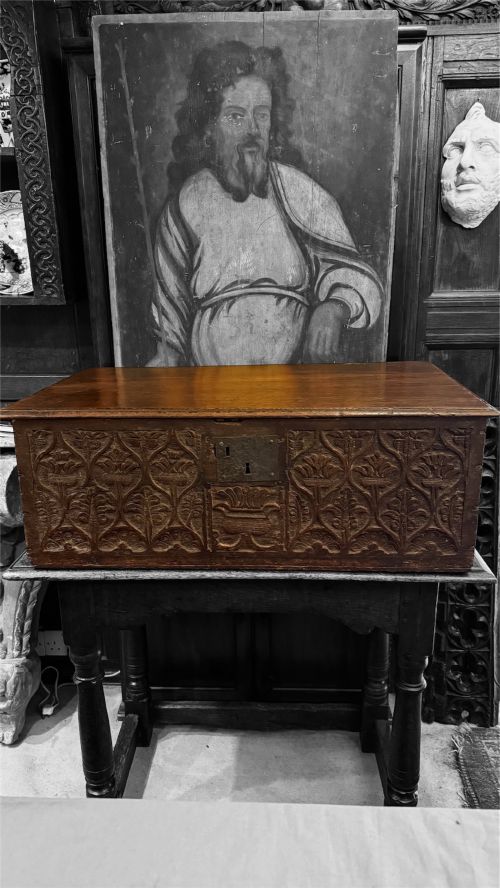
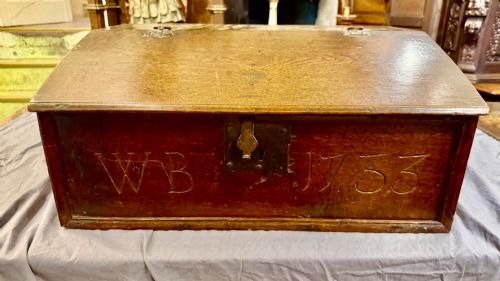
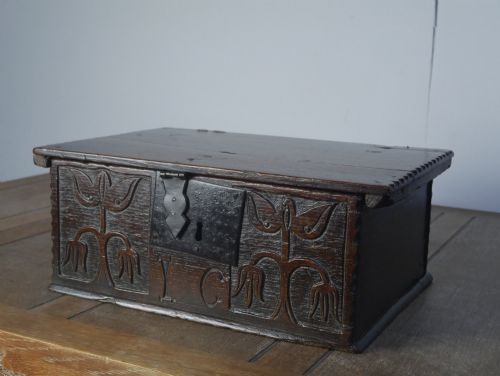
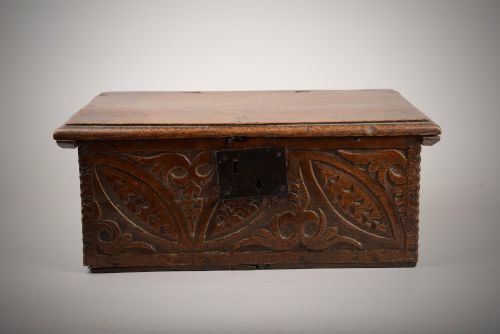
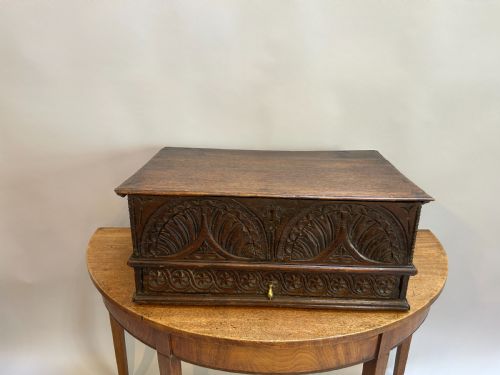
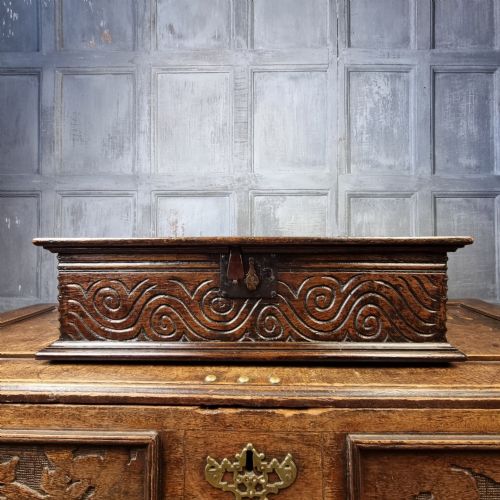


Carved Oak Writing Box
A carved oak writing box is a sturdy portable desk that brings centuries of history and rich timber grain straight into a modern home.
What these pieces are
A carved oak writing box offers a portable writing surface and secure storage for letters and documents. These pieces appear in forms such as Bible boxes, desk boxes, writing slopes, and deed boxes.
The selections on this page span the seventeenth century and the eighteenth century, including English country oak and Georgian styles. Pieces range from plain utility items to elaborate seventeenth century Jacobean and Charles II examples featuring detailed carving.
Buyers frequently encounter compact Bible boxes and writing slopes fitted with internal drawers or resting upon later stands. The construction relies on solid timbers like oak and elm, often paired with iron and brass hardware.
How they were made
Craftsmen built these boxes using solid oak boards joined with traditional methods, often incorporating elm for secondary timbers or internal elements. Surfaces display hand-carved decoration, including friezes and demi-lune front panels executed with chisels and gouges.
Hardware such as hinges, latches, and lockplates utilise wrought iron or brass, forged and fitted by hand to secure the heavy lids. Interior arrangements frequently include small fitted drawers constructed with simple joints to hold ink and quills.
Retail Price Guide 2026
Typical UK retail prices for carved oak writing box, calculated from the Sellingantiques database of over a million retail prices indexed since 2003. This retail price guide relies exclusively on Sellingantiques data; no external sources or auction records are used, so the figures do not describe the wider market.
Some seventeenth century boxes still retain faint traces of old ink spills inside their tiny hidden drawers.
What varies in quality
Quality rests upon the depth and crispness of the hand carving, the thickness of the solid oak boards, and the retention of original iron or brass fittings. Early seventeenth century examples with well-defined Charles II or Jacobean motifs command attention for their sculptural presence.
The survival of internal drawers and original stands distinguishes superior boxes from those stripped of their fittings over centuries of use. Patina and timber selection also play a part, as tight, well-figured oak surfaces develop a deeper warmth over time.
The Carved Oak Writing Box Glossary
- Bible Box
- A small desktop box originally designed to store a family Bible or important manuscripts. These pieces typically feature a sloping lid.
- Deed Box
- A secure container built to house legal documents, land indentures, and valuable papers. They often include robust iron locks.
- Writing Slope
- A box with an angled lid that provides an ergonomic surface for writing letters. Inside, they frequently conceal compartments for stationery.
- Demi-lune
- A half-circle decorative motif often carved into the front panels of seventeenth century boxes. This shape adds geometric relief to the timber surface.
- Frieze
- A broad horizontal band of carved ornamentation running across the front or sides of a box. These decorative zones often display guilloche or scrolling patterns.
Frequently Asked Questions
What is a carved oak writing box?
A carved oak writing box is a portable desk used historically for storing writing materials, letters, and important books. These sturdy wooden containers date from the seventeenth and eighteenth centuries.
They feature hinged lids, often sloped for writing, and frequently display intricate hand-carved panels. Many include small internal drawers for organisation.
How were they used historically?
These boxes served as portable desks for literate households, merchants, and clergy before permanent writing furniture became common. People placed them on tables or laps to write correspondence.
They also protected valuable texts like family Bibles from dampness and damage. The secure lock kept private papers safe from prying eyes.
How do I live with one today?
A carved oak writing box makes a functional accent piece on a sideboard, desk, or table. The interior provides convenient storage for modern stationery or keepsakes.
Keep the box away from direct heat sources and sunlight to protect the aged oak timber. Occasional waxing maintains the rich patina of the wood.
How do I tell seventeenth century boxes apart from eighteenth century ones?
Seventeenth century boxes often display deeper, bolder carving styles such as Jacobean or Charles II motifs. The construction relies heavily on pegged joints and hand-rived oak boards.
Eighteenth century Georgian examples tend to feature lighter proportions, finer mouldings, and sometimes simpler carved friezes. Elm is also occasionally mixed into the secondary timbers of earlier pieces.