
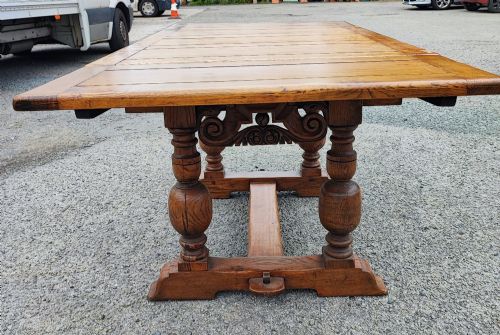
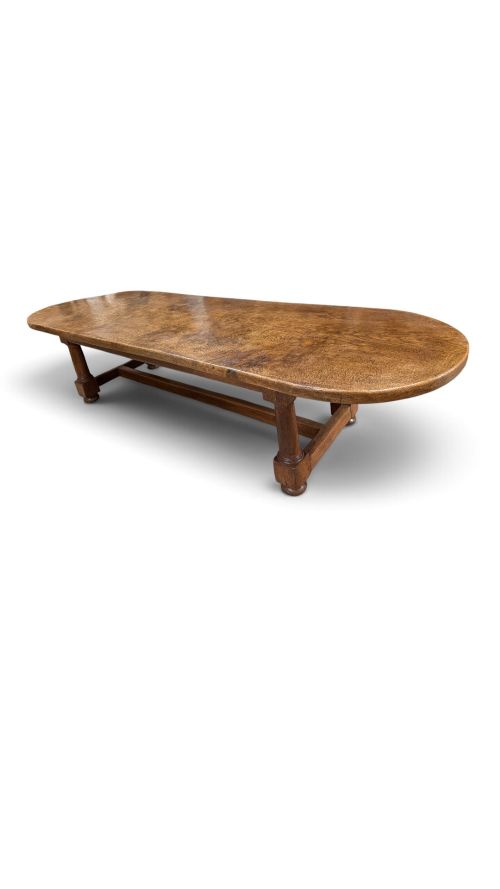
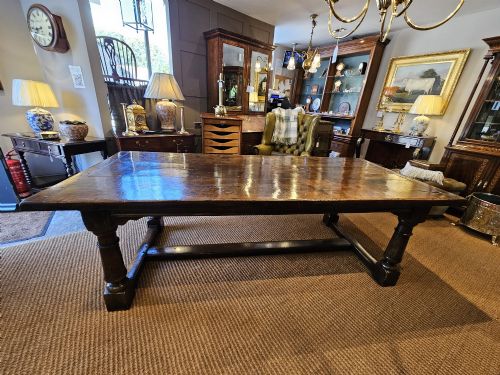
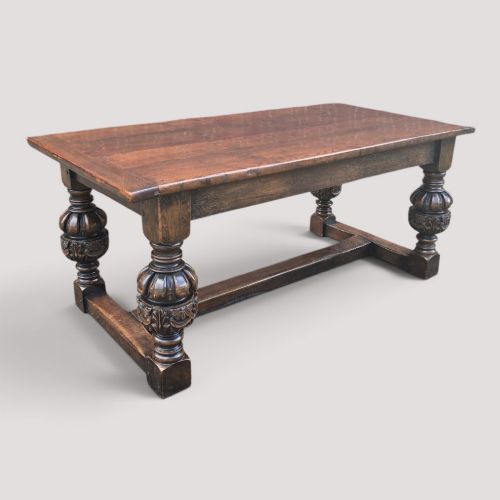
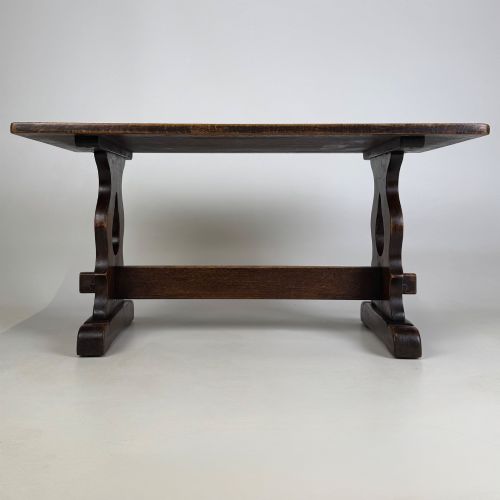
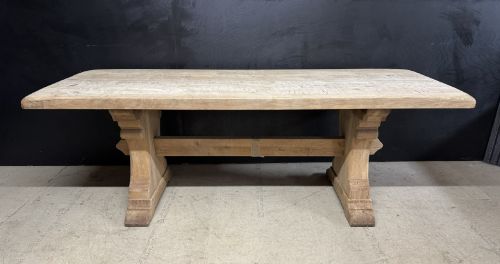
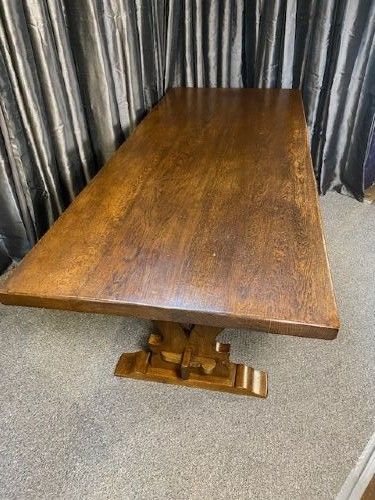
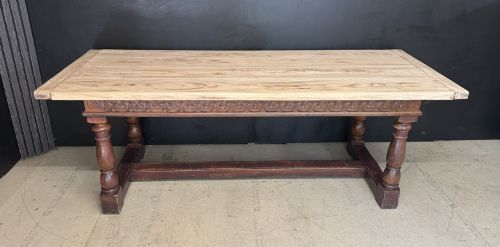
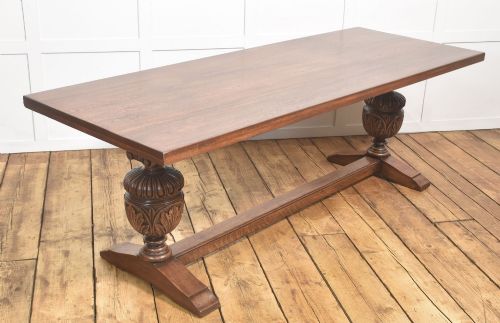
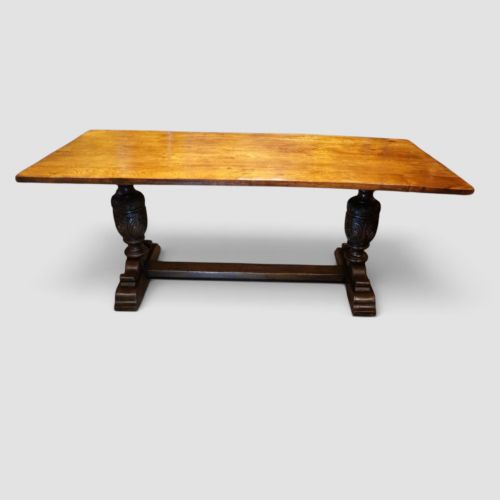
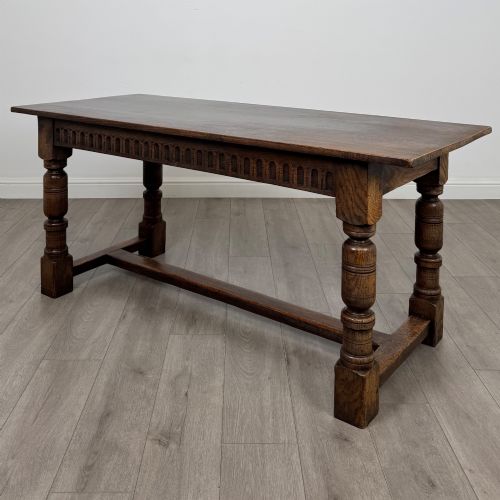
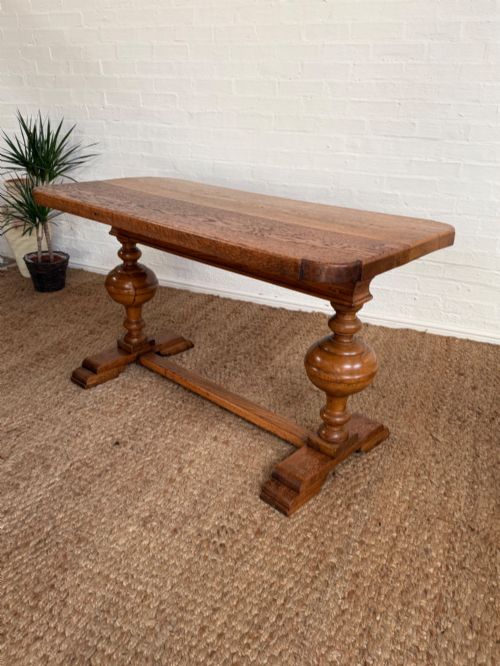
Carved Oak Trestle Table
A carved oak trestle table brings sturdy timber and historic form into a room, offering a lasting surface for dining and daily work.
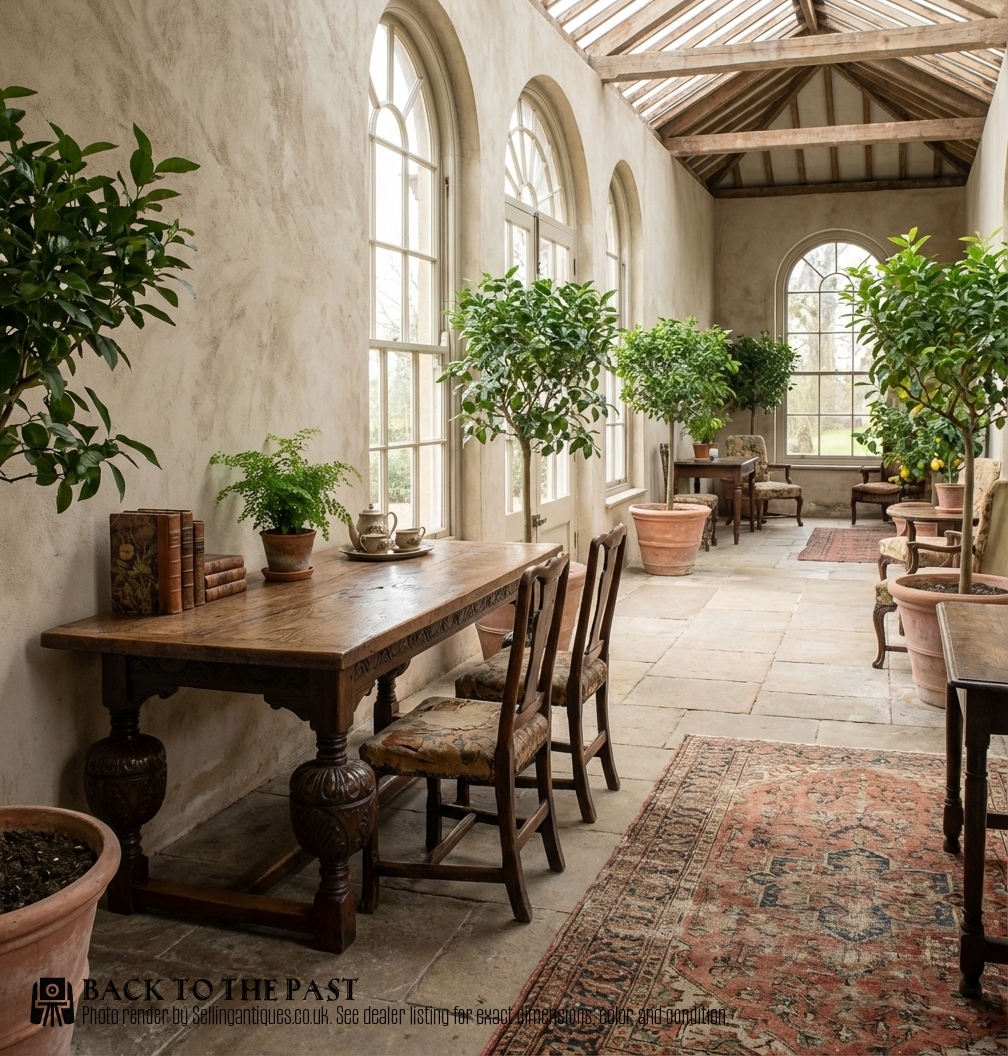
Carved Oak Trestle Table
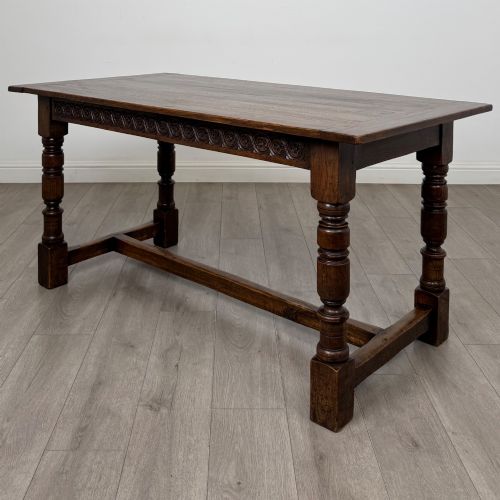
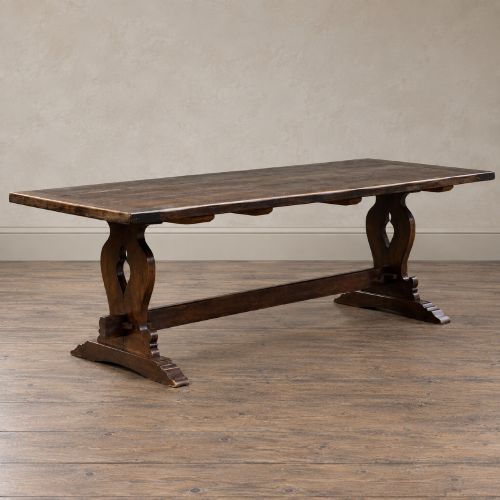
A carved oak trestle table provides a solid wooden surface supported by upright ends or trestles rather than standard corner legs. Buyers seeking a carved oak trestle table will find pieces ranging from early seventeenth-century examples to later revival interpretations and farmhouse designs.
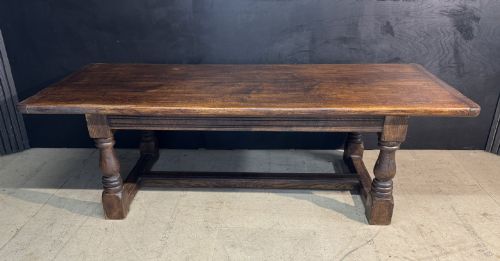
The selection includes long refectory formats, draw-leaf extending variants, and compact coffee tables. Many pieces show regional influences such as French provincial or Spanish rustic styles alongside domestic Jacobean and Tudor revivals.
Earlier centuries supply single plank or multi-plank tops paired with heavy supports, while twentieth-century examples often adapt these historic proportions for modern domestic spaces.
What varies in quality
Quality rests in the selection of the timber, particularly the use of single plank tops and quarter-sawn oak showing natural grain figuring. The crispness and depth of hand-carving on the friezes and trestle ends distinguish finer commissions from simpler utilitarian pieces.
Structural integrity depends on the tightness of the original joints and the stability of the heavy timber over centuries of environmental changes. Tables retaining their original surface patination and uncompromised structural bracing command greater attention from discerning buyers.
Carved Oak Trestle Table Retail Price Guide 2026
Typical asking prices for carved oak trestle table among the pieces listed under this phrase on Sellingantiques today, from the lower quarter to the upper quarter. They describe what is for sale here now, not the wider market.
Listings span from the seventeenth century through to the Edwardian era, incorporating styles such as Gothic Revival, Arts and Crafts, and French Provincial.
The Carved Oak Trestle Table Glossary
- Refectory table
- A long, narrow dining table traditionally used in monastic dining halls. These pieces form a significant portion of the larger dining formats seen in this category.
- Draw leaf table
- An extending table with two sliding leaves stored beneath the main top that pull out to lengthen the surface. This mechanism allows the table to expand for guests without removing the central top.
- Pollard oak
- Timber taken from trees that have been pollarded, producing tightly grained wood with distinctive decorative knots and swirls. It appears frequently on nineteenth-century writing tables and desks.
- Jacobean revival
- A nineteenth and twentieth-century style imitating the heavy, geometric carved decoration of the early seventeenth century. Pieces in this style often feature deeply carved friezes and bold turned supports.
- Single plank top
- A tabletop fashioned from one wide board of timber rather than multiple boards joined together. This feature indicates the use of mature trees and adds considerable weight and value to the piece.
Carved Oak Trestle Table: Frequently Asked Questions
What is a refectory table?
A refectory table is a long, narrow dining table designed originally for communal dining in monasteries or large country houses. They provide generous seating down both long sides.
In this collection, refectory tables appear across seventeenth, eighteenth, and twentieth-century periods, often featuring trestle ends or substantial central stretchers.
How do I seat guests comfortably?
Selecting a table requires measuring the length against your available dining space and considering the placement of the trestle ends. Trestle designs often allow more flexibility for chair placement than standard four-legged tables.
Several listings specify seating capacities, ranging from compact six-seater formats up to large refectory tables accommodating twelve diners.
How do I care for oak furniture?
Solid oak benefits from regular dusting with a dry cloth and occasional treatment with appropriate natural waxes to nourish the grain. Avoiding direct heat sources and excessive moisture prevents timber movement and splitting.
Historic surfaces retain their character best when harsh chemical cleaners are kept away from the original patination.
How can I tell the period?
Dating relies on observing construction marks, timber selection, joinery techniques, and the style of any carved ornamentation. Seventeenth-century examples show hand-worked pegged joints and deep patination, while revival pieces from the Victorian and Edwardian eras often employ machine assistance alongside traditional hand-finishing.
Comparing the board thickness, edge profiles, and fastener types helps clarify whether a piece dates to its original era or a later revival.