


Carved Oak Storage Seat
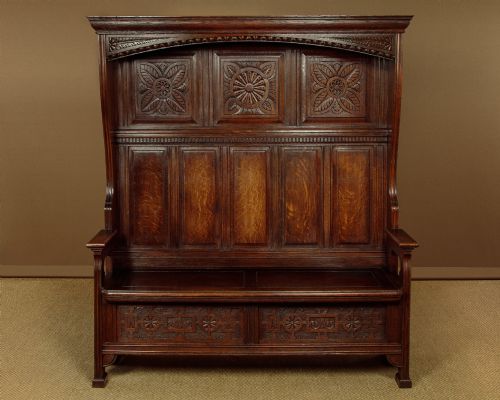
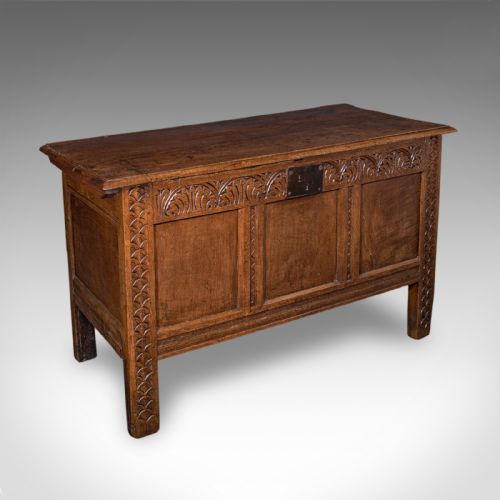
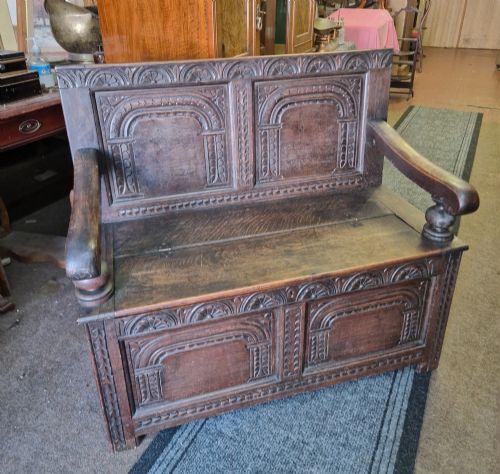
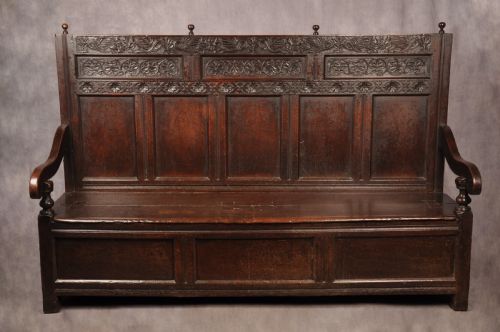
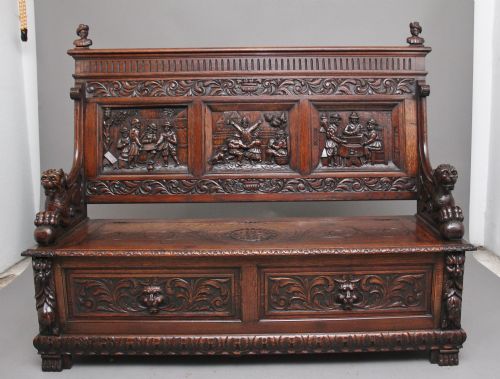
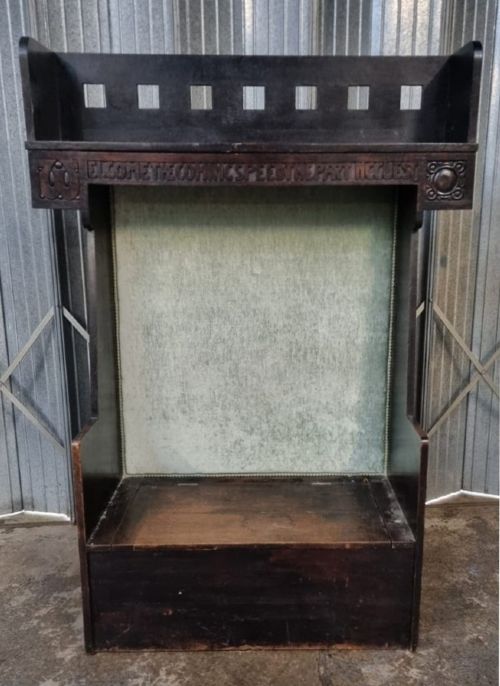
A carved oak storage seat offers a practical bench with a hidden compartment below, combining seating and utility.
Carved Oak Storage Seat
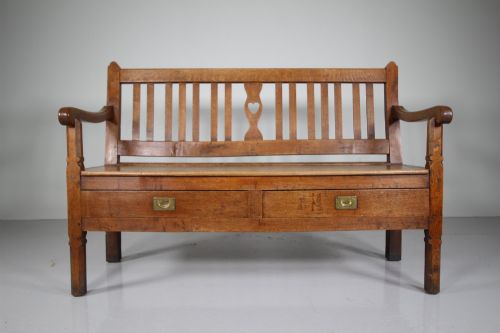
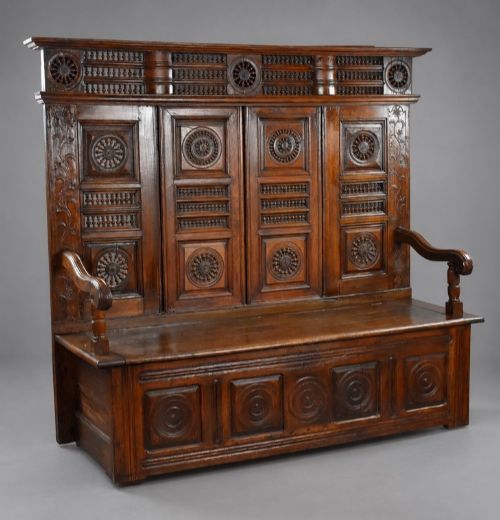
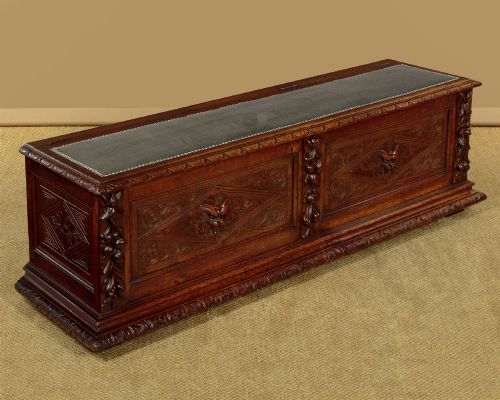
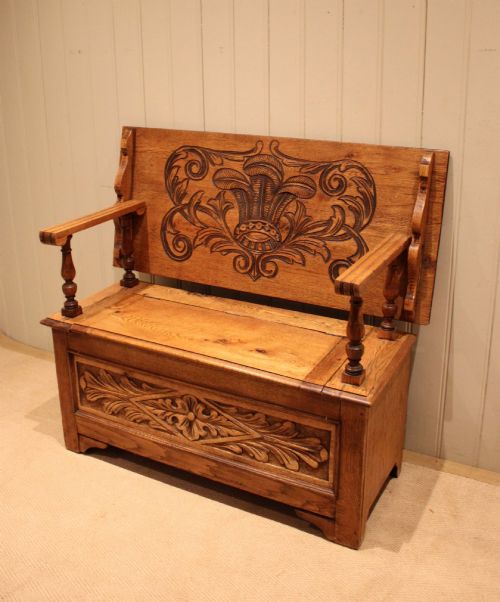
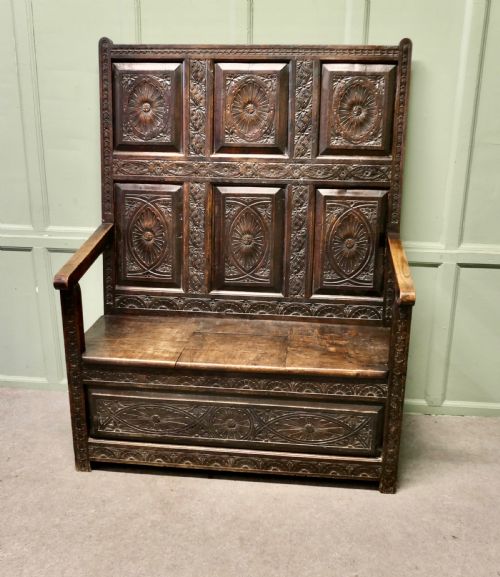
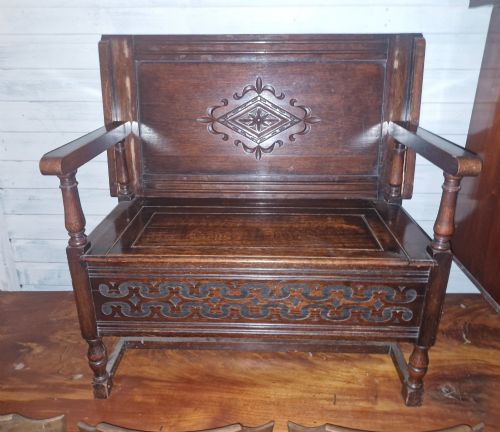
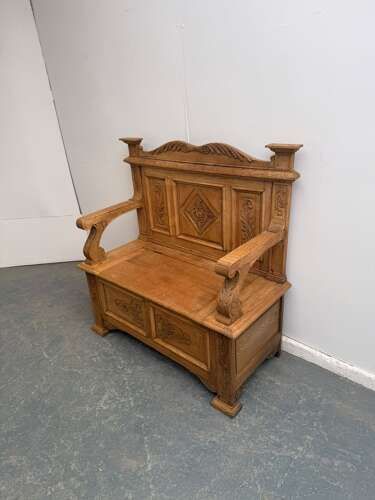
A carved oak storage seat brings together robust timber construction and a dual purpose, serving as both a resting place and a chest for household goods. Buyers searching for a carved oak storage seat encounter various forms, most frequently Victorian and twentieth-century box settles, monks benches, and hall seats with lift-up lids.
The historical span extends from seventeenth-century provincial pieces through eighteenth-century Georgian designs to revival styles of the Victorian era and the nineteen-twenties. Settles feature high panelled backs and enclosed bases, while smaller hallway seats and folding monks benches adapt the same timber storage concept for compact spaces.
Regional variations appear across English, Welsh, and Scottish examples, often incorporating vernacular carving, linenfold panelling, or figural motifs such as the Green Man. These dual-purpose items originated to keep draughts at bay in large hallways or to store blankets and boots near the hearth.
What Varies in Quality
Quality rests upon the crispness of the timber carving and the structural integrity of the oak box base, where inferior examples suffer from loose joints or replaced panels. The depth of colour and the preservation of the original surface patination distinguish superior historic pieces from later, heavily restored, or purely decorative revival items.
Several pieces conceal storage compartments originally intended to hide damp boots or keep winter woollens smelling faintly of woodsmoke.
Shapland and Petter·Liberty
The Carved Oak Storage Seat Glossary
- Settle
- A wooden bench with a high back, solid arms, and a box seat compartment beneath the hinged lid. This form kept draughts away from inhabitants in older houses.
- Monks bench
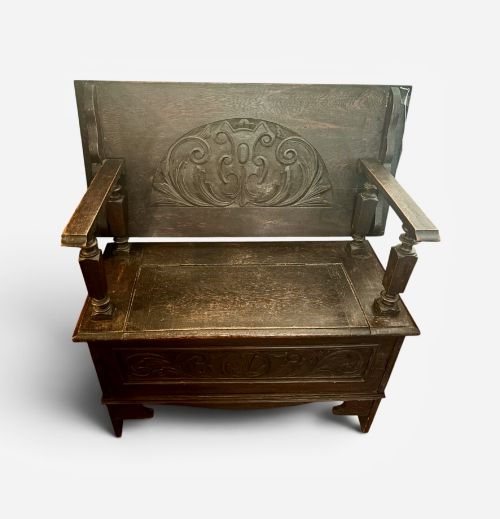
- A convertible seat featuring a folding back that tilts forward to form a table top above a box base. These items appeared frequently in twentieth-century revival interiors.
- Coffer
- A large wooden chest used for storing valuables or textiles, which often doubles as a window seat or hallway bench in domestic settings.
- Green Man
- A sculptural motif depicting a human face surrounded by or disgorging foliage, symbolizing rebirth. Carvers applied this symbol widely to Victorian furniture.
- Linenfold
- A style of wood carving that imitates vertical folds of fabric, commonly found on sixteenth-century panels and later revival pieces.
Carved Oak Storage Seat: Frequently Asked Questions
What is a monks bench?
A monks bench is a dual-purpose item of furniture featuring a hinged back that flips forward over the arms to create a table top. Beneath the seat sits a concealed storage compartment.
Cabinet makers produced these pieces extensively during the late Victorian and early twentieth-century revival periods, adapting older seventeenth-century forms for modern entrance halls.
How do I clean a carved oak seat?
Maintain the timber by applying a traditional beeswax paste sparingly and buffing it gently with a soft bristle brush. Avoid modern liquid polishes containing silicones that degrade historic patination.
Keep the wood away from direct heat sources and dramatic humidity shifts to prevent the solid oak panels from splitting or warping over time.
Are these seats comfortable?
Original storage benches have rigid wooden seats and upright high backs designed for upright posture in hallways rather than lounging. Many owners add loose cushions, tweed pads, or upholstered squabs for seating comfort.
The firm timber platform serves primarily as a stable lid for the blanket or boot chest concealed directly beneath.
How old is my oak chest?
Determine the age by examining the joinery marks, tool impressions, and the nature of the timber shrinkage within the oak panels. Hand-sawn boards, pegged joints, and forged iron strap hinges typically indicate eighteenth-century or earlier craftsmanship.
Revival pieces from the Victorian era and the nineteen-twenties often feature machine-sawn components, standardised brass fittings, and cleaner, sharper surface carving.