
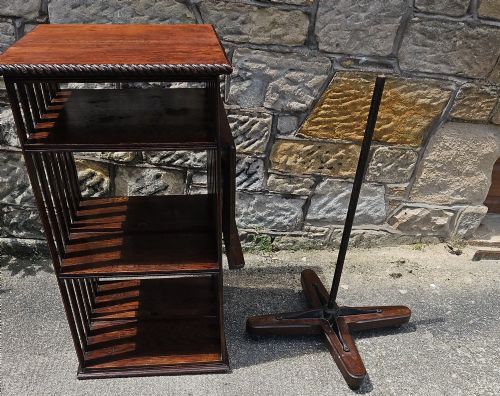


Carved Oak Standing Bookcase
A carved oak standing bookcase holds volumes with architectural presence, grounding a room through heavy timber and period relief.
Carved Oak Standing Bookcase
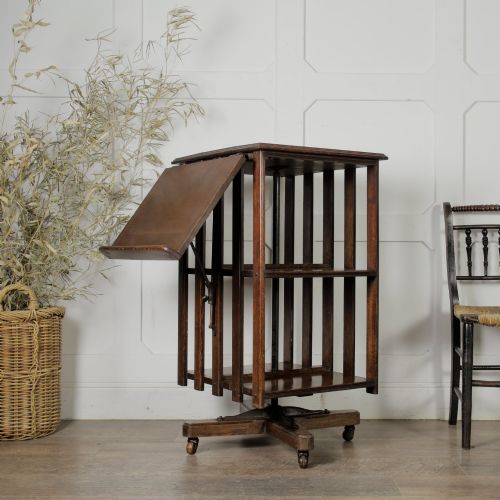
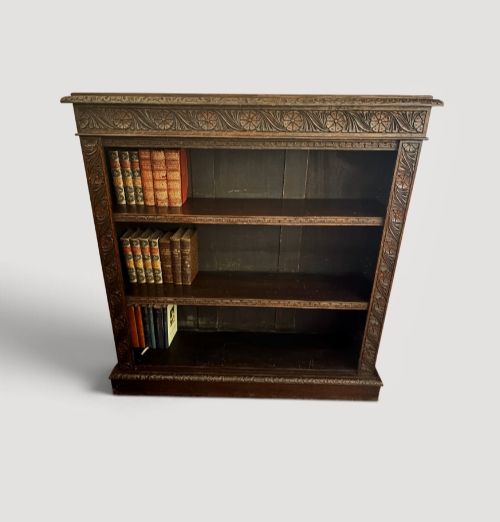
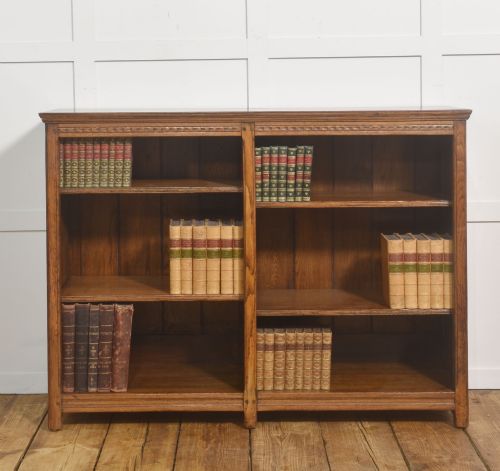
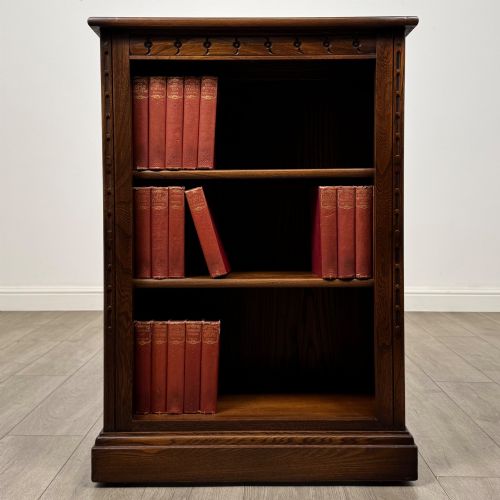
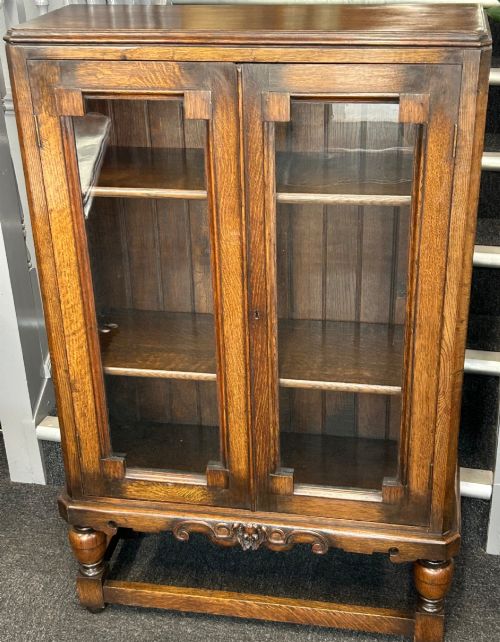
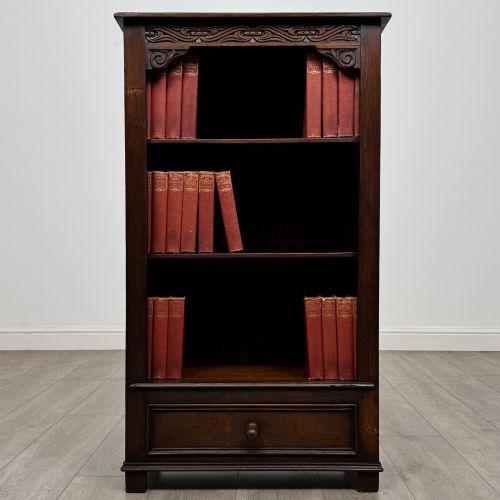
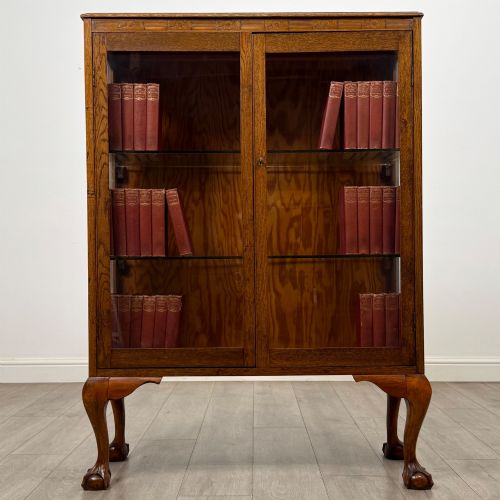
A carved oak standing bookcase is a substantial piece of furniture designed to rest directly on the floor while housing collections of books behind open shelves or glazed doors. These items emerge primarily from the Victorian and Edwardian eras, alongside pieces reflecting Jacobean Revival, Arts and Crafts, and Tudor Revival movements. The versions met on this page range from tall, two-part library cabinets with lower drawers to compact open standing shelves.
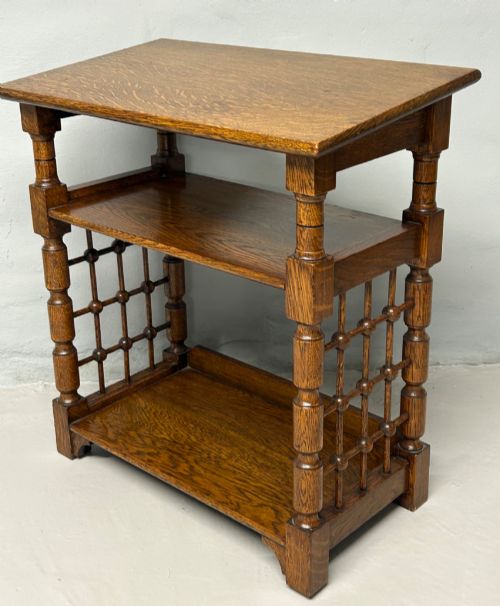
Makers and workshops construct these items to stand independently against a wall, utilising the natural density of solid timber to support heavy volumes. The surface decoration relies on chiselled floral motifs, geometric strapwork, and fret-cut details applied directly to the framework. Collectors encounter both simple open formats and complex glazed cupboards fitted with brass or cast iron hardware.
Materials and construction methods
Cabinetmakers select solid oak for its durability and prominent grain, often quarter-sawing the timber to produce characteristic medullary ray patterns. Panels and shelves are joined using traditional methods that accommodate wood movement over time, ensuring the upright structure remains stable under the weight of books.
One heavily carved nineteenth-century cabinet arrived bearing later sign-written emblems dedicated entirely to German beer.
Distinctions in execution and design
The degree of hand-carved detail distinguishes standard utilitarian furniture from exceptional library pieces. Finer examples display crisply undercut foliage, deep linenfold panels, or intricate fret-cut sides rather than shallow, mechanically stamped ornamentation.
Structural complexity also dictates the standing of a piece, separating simple open shelves from tall, multi-part cabinets equipped with adjustable shelving systems, functional drawers, and fitted glazed doors.
Waring and Gillows
The Carved Oak Standing Bookcase Glossary
- Quarter-sawn oak
- Timber cut radially from the growth rings to produce a distinctive flecked grain pattern that resists warping.
- Fret-cut
- Ornamental openwork pierced through thin boards using a saw, commonly seen on the sides of lighter bookcases.
- Stile
- The upright vertical member of a frame in cabinet doors and panelled sides.
- Adjustable shelf
- A movable horizontal board resting on movable supports, allowing the interior height to alter for different book sizes.
- Strapwork
- Flat, interlaced band ornament resembling leather straps, frequently carved into Jacobean Revival panels.
Carved Oak Standing Bookcase: Frequently Asked Questions
How do I adjust the shelves?
Many period bookcases feature adjustable wooden shelves supported by pins, ratchets, or traditional track systems housed within the interior uprights. Users simply lift the shelf to clear the supports and relocate them into adjacent slots.
Care must be taken with older timber rails, which can stiffen over decades. Gently easing the shelf straight upward prevents binding against the interior walls.
Where should I place a heavy oak bookcase?
Position the piece against a sturdy load-bearing wall away from direct heat sources and strong sunlight, which can dry out and split the oak timber. Ensuring the floor is level helps the tall frame distribute weight evenly.
Because these bookcases are heavy, securing the upper back frame to the wall using discreet brackets prevents tipping, particularly in rooms with heavy foot traffic.
How do I clean carved oak?
Dust the carved surfaces regularly using a soft, dry brush to lift particles from deep recesses without abrading the aged patina. Periodic application of quality beeswax feeds the dry timber.
Avoid silicone-based sprays or modern household detergents, as these leave residues that attract dust and degrade the traditional finish over time.
How do I tell Victorian from Edwardian bookcases?
Victorian examples tend to display heavier proportions, darker finishes, and dense Gothic or Renaissance Revival carving. Edwardian pieces often incorporate lighter Arts and Crafts influences, featuring simpler lines and brighter oak tones.
Examining the internal construction, hardware styles, and carving depth provides clear clues to the manufacturing decade.