
Edwardian Oak Display Cabinet
When searching for an edwardian oak display cabinet, you enter a world of glazed shop fittings, domestic vitrines and library bookcases built to exhibit treasured objects.
Edwardian Oak Display Cabinet
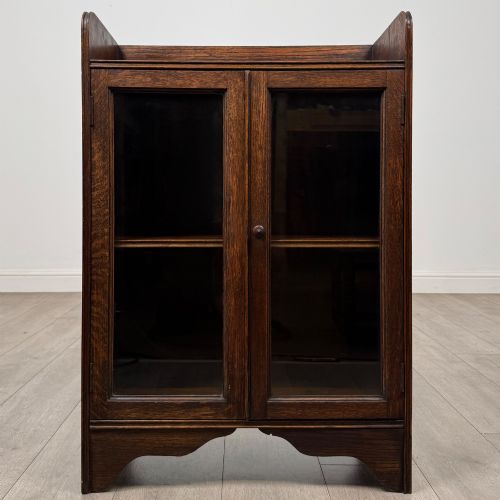
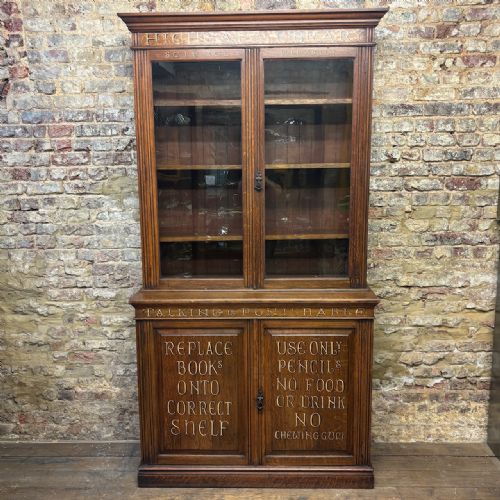
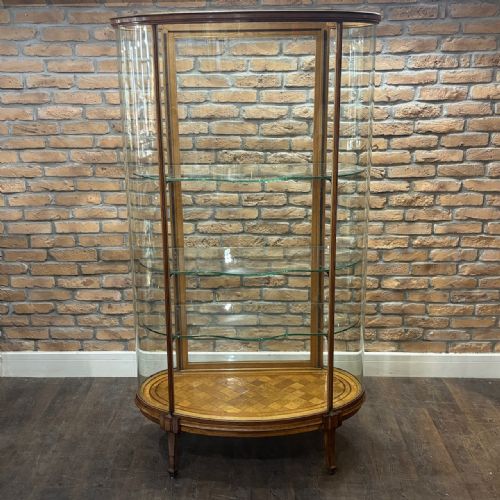
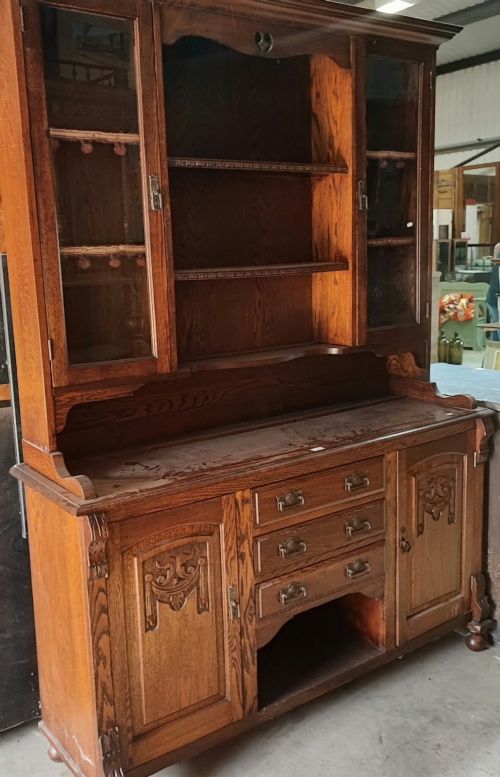
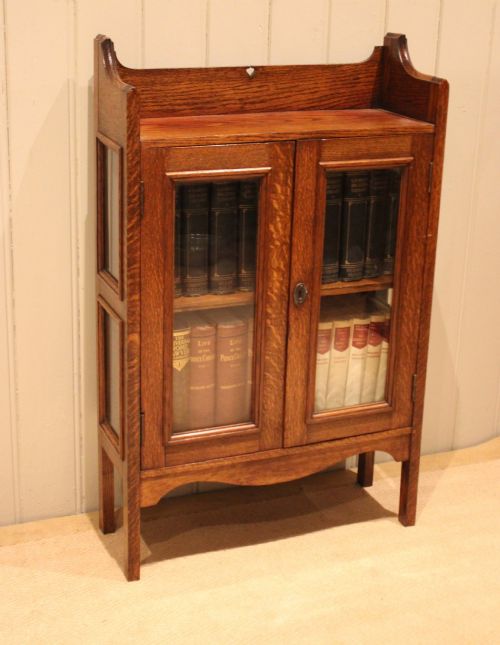
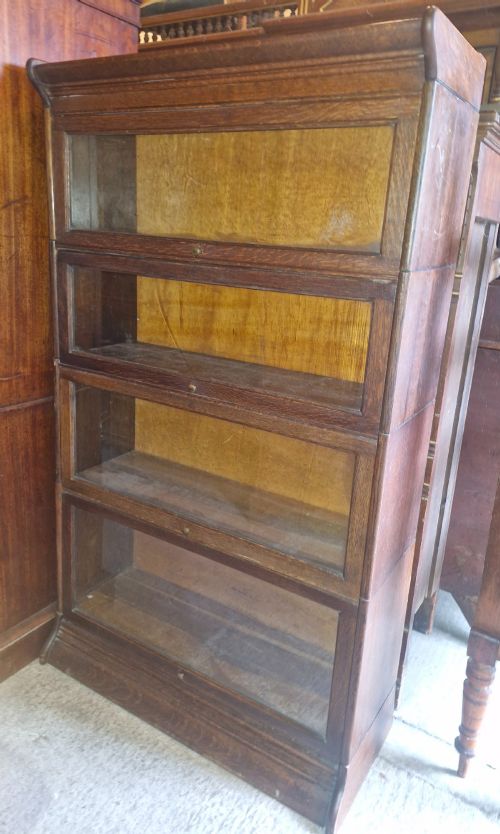
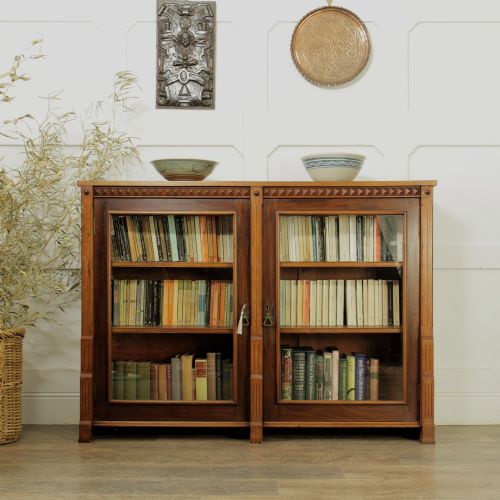
An edwardian oak display cabinet serves primarily to protect and showcase collections behind glass panels, merging domestic utility with decorative display. These pieces range from modest tabletop vitrines and wall-mounted smoker's cabinets to substantial floor-standing bookcases and retail shop counters.
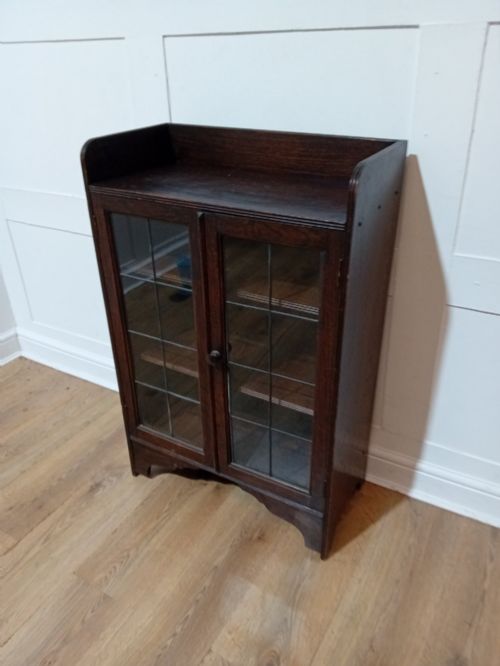
Domestic versions often feature honey-coloured or golden oak timber, sometimes decorated with subtle inlay or leaded glass details. Commercial shop-fitting variants also appear frequently, reflecting the robust construction required for haberdashery and retail environments during the early twentieth century.
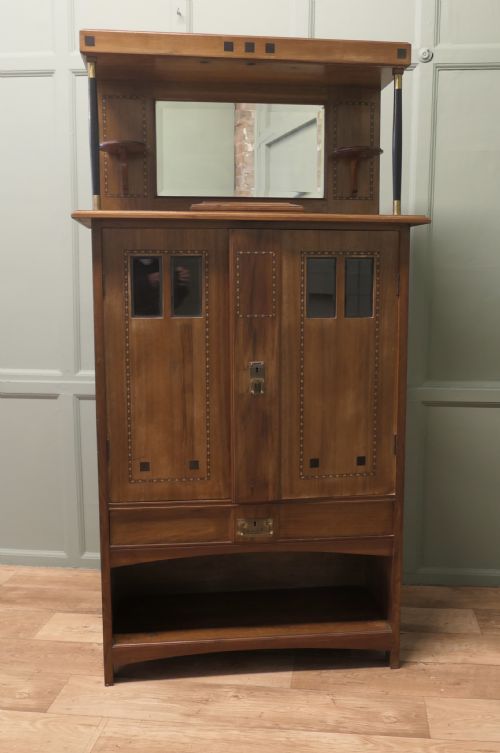
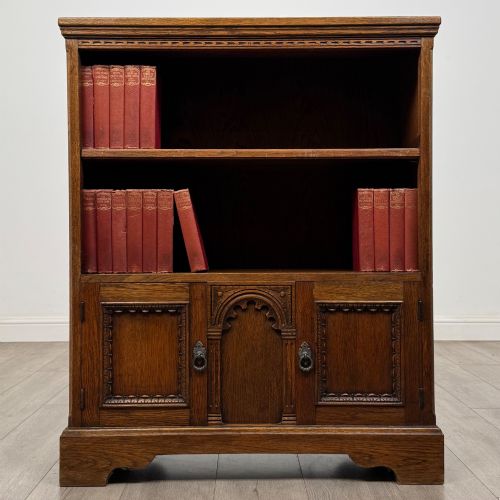
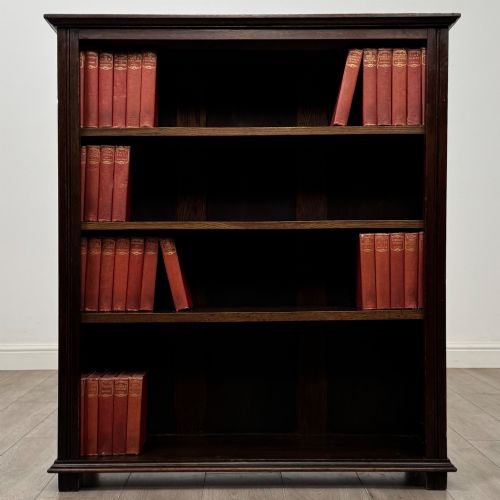
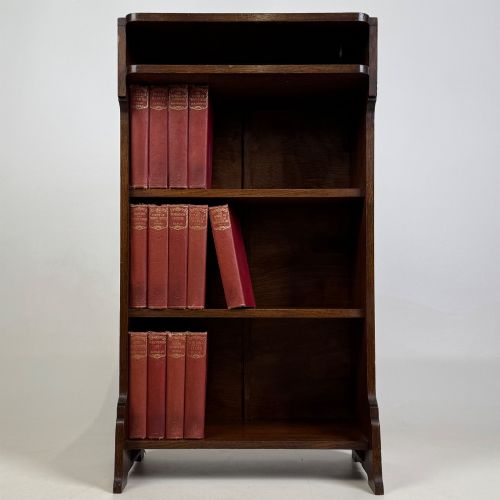
Stylistic influences span traditional Edwardian forms, Jacobean Revival massing and the simplified linear emphasis of the Arts and Crafts movement. Open library bookcases and bureau combinations share shelf space with fully enclosed glazed cabinets across the available selection.
Materials and Technique
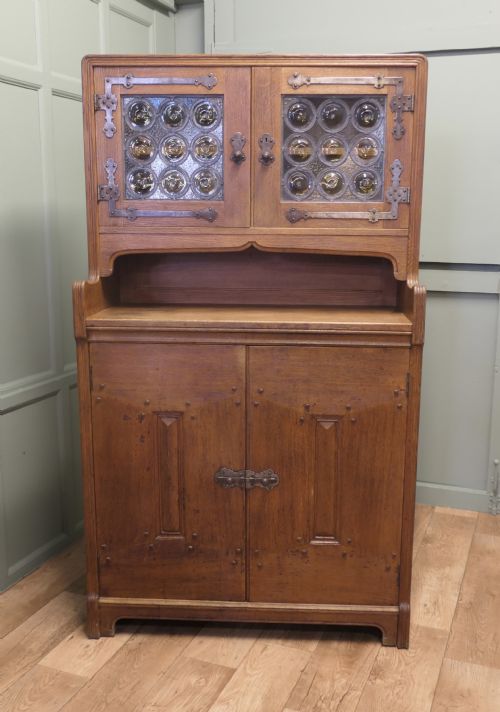
Cabinetmakers relied heavily on solid oak and tiger oak, often housing float glass panels within sturdy frames. Brass hardware, iron fixtures and occasionally lead cames secure the glazing while adding structural and decorative contrast.
Joinery techniques prioritised durability, employing tongue-and-groove backing, dovetail joints in drawers and adjustable timber shelving. Exterior surfaces received wax or French polish finishes to highlight the natural grain patterns of the wood.
The archive includes specialised shop fittings alongside domestic bureau bookcases and corner cabinets.
Evaluating Craftsmanship
The distinction between standard utility furniture and superior pieces rests on timber selection and decorative restraint. Master craftsmen utilised quarter-sawn oak with prominent medullary rays, applying hand-carved elements, delicate inlay work or distinctive leaded glass rather than relying on mass-produced ornamentation.
Structural integrity also separates the tiers, seen in the weight and thickness of the glass, the precision of the door alignment, and the presence of original brass or iron fittings. Pieces designed by notable retail firms demonstrate a more ambitious architectural presence and superior interior finishing.
Liberty and Co·F Sage and Co
The Edwardian Oak Display Cabinet Glossary
- Vitrine
- A glass-sided cabinet designed specifically for the display of curiosities and ornaments. These glazed enclosures protect delicate objects from dust while maximising visibility from multiple angles.
- Quarter-sawn oak
- Timber cut radially across the growth rings to produce distinctive figuring known as medullary rays. This cut yields greater dimensional stability and a highly decorative surface pattern.
- Lead cames
- The slender strips of cast lead used to hold small panes of glass together in leaded windows and cabinet doors. They form geometric or organic patterns across the upper sections of glazing.
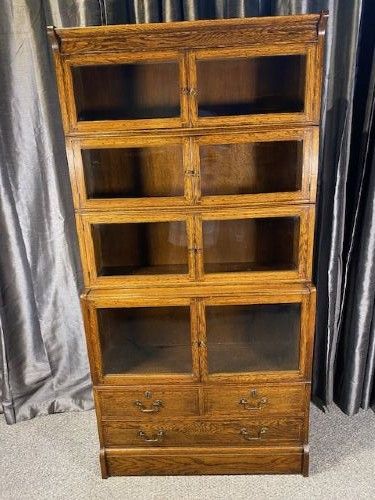
- Globe Wernicke
- A proprietary system of modular, stackable barrister bookcases featuring upward-sliding glass doors. These sectional units allowed libraries to expand vertically by adding matching tiers.
- Arts and Crafts
- A design movement advocating traditional craftsmanship, simple forms and honest materials. Cabinets from this style often emphasise structural joinery and natural wood finishes over applied decoration.
Edwardian Oak Display Cabinet: Frequently Asked Questions
How were edwardian oak display cabinets used originally?
These cabinets served dual purposes in both domestic and commercial settings during the early twentieth century. Homes utilised them to exhibit prized ceramics, books and curiosities while keeping them free from dust.
Shops and retail establishments employed glazed variants as vitrines and counter cases to display jewellery, tobacco, and confectionery to prospective buyers.
What is the difference between a bookcase and a display cabinet?
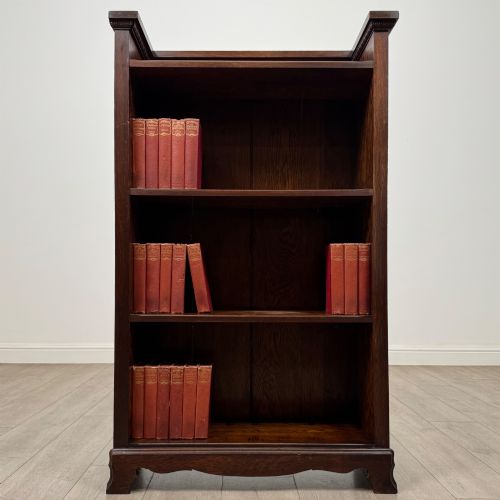
Bookcases generally feature open shelving designed for book storage, though many Edwardian variants incorporate glass doors to protect valuable volumes. Display cabinets focus entirely on exhibition, featuring glazed sides and mirrored backs to illuminate stored artefacts.
Hybrid pieces combining lower wooden cupboards with upper glazed display shelves appear frequently in the record.
How do I distinguish Arts and Crafts examples from standard Edwardian pieces?
Arts and Crafts pieces place emphasis on plain solid timber, exposed construction methods, and subtle handcrafted details like hammered copper hardware. Standard Edwardian cabinets often lean towards lighter, golden oak finishes with symmetrical proportions and classical inlay decoration.
The former prioritises structural honesty, whereas the latter embraces refined domestic elegance.
Can adjustable shelves be expected in these cabinets?
Many surviving examples feature interior tracks or pin supports that allow shelves to be adjusted for height. This adaptability made them practical for housing books of varying sizes or assorted decorative objects.
Fixed shelving remains common in smaller table-top and wall-mounted variations.