
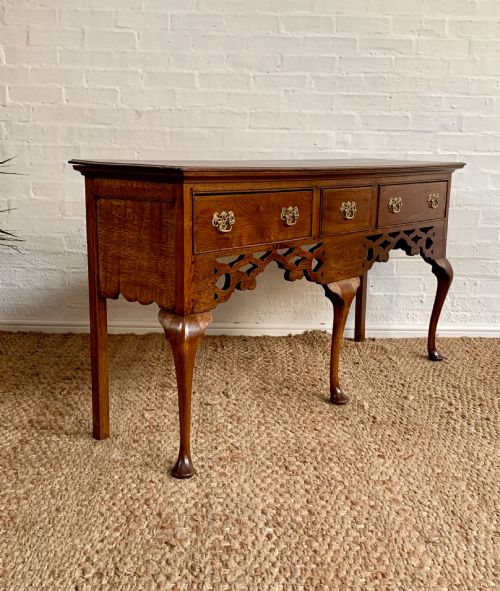
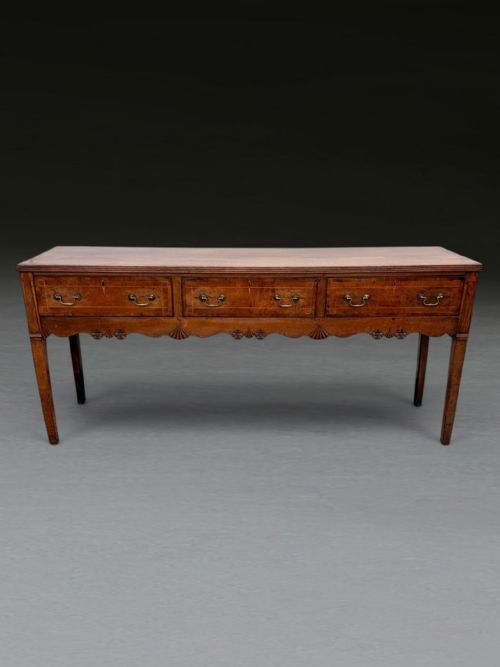
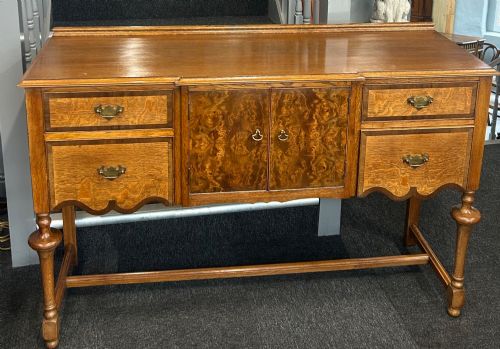
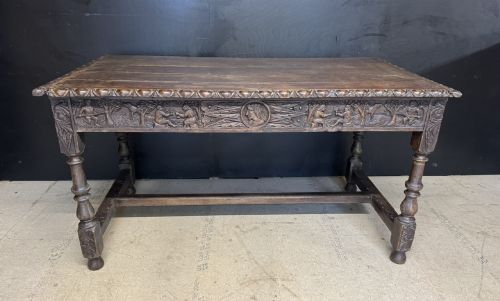
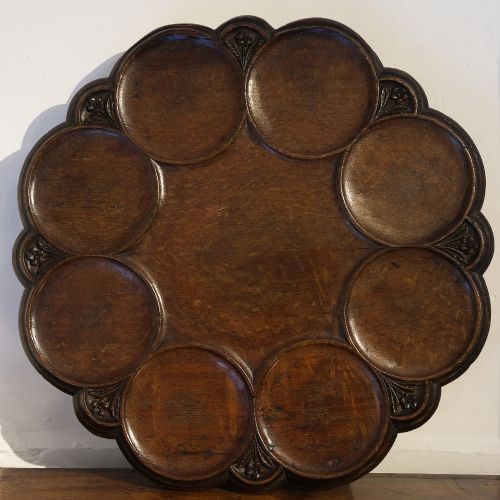
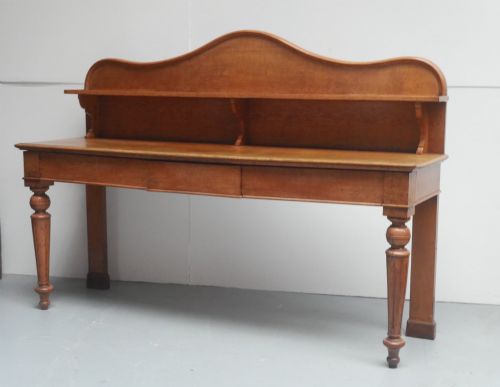
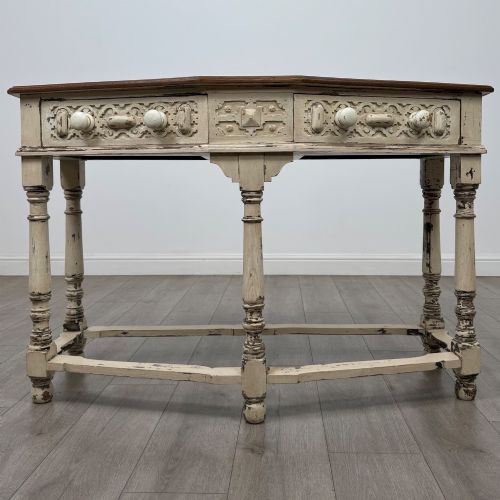
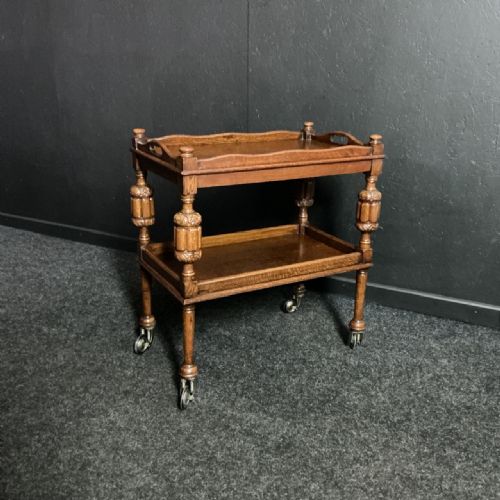
Carved Oak Serving Table
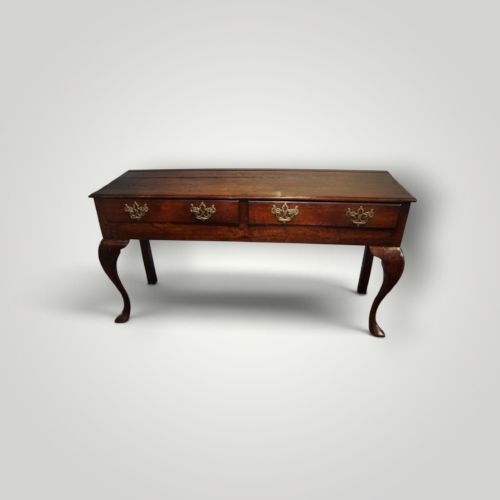
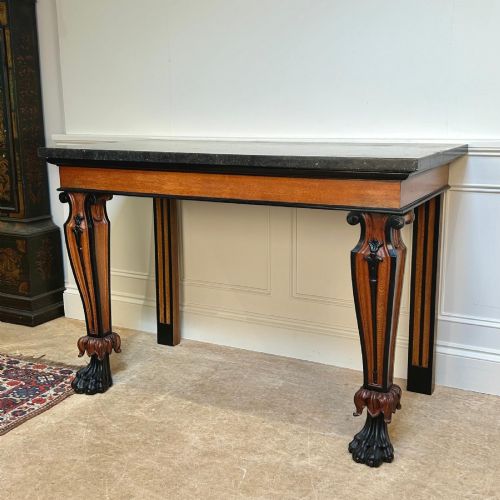
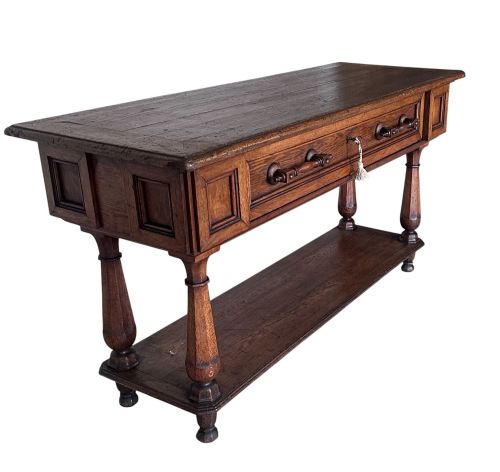
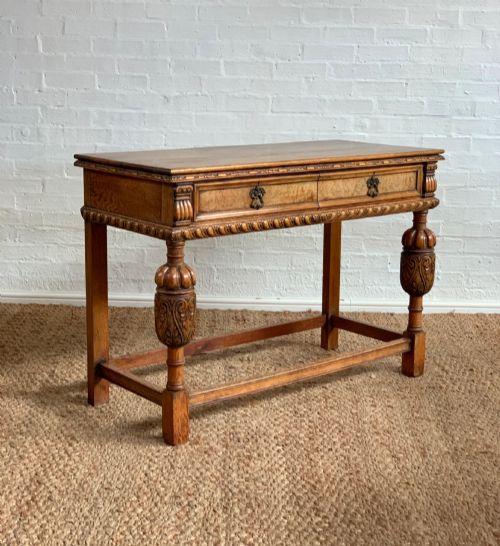
These carved oak serving table examples bring centuries of dense grain, deep relief, and heavy timber into a room.
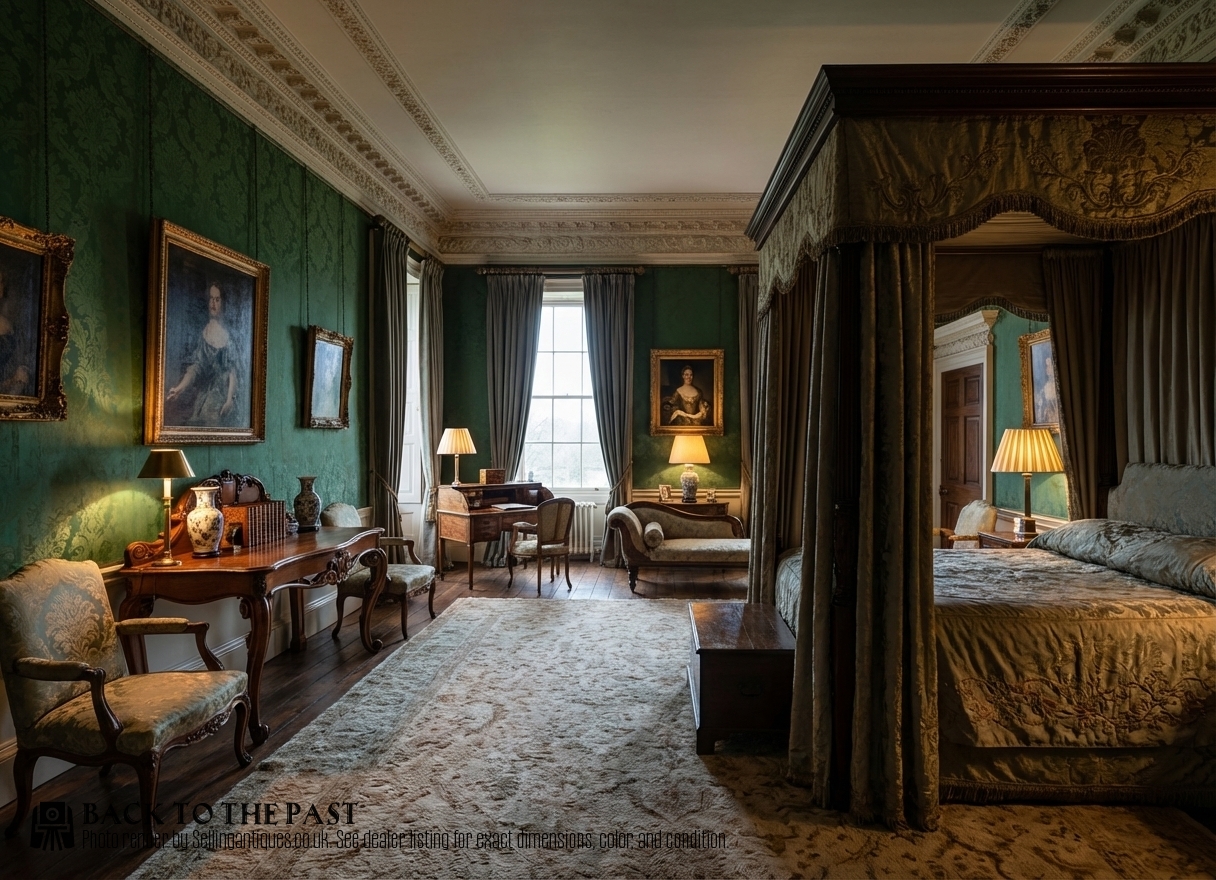
What a carved oak serving table is
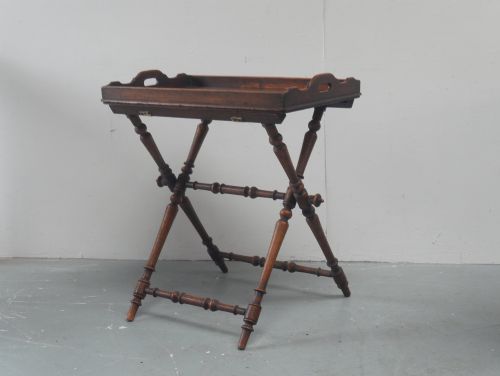
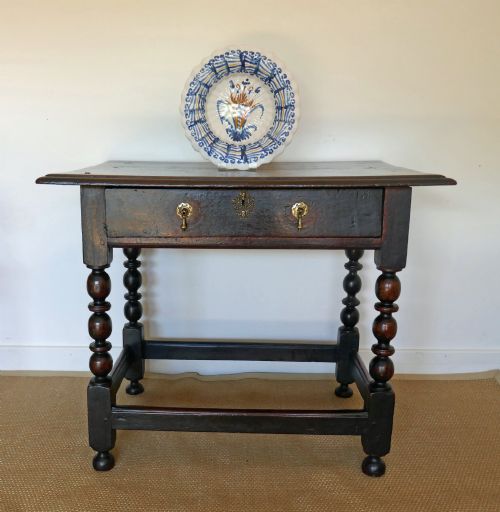
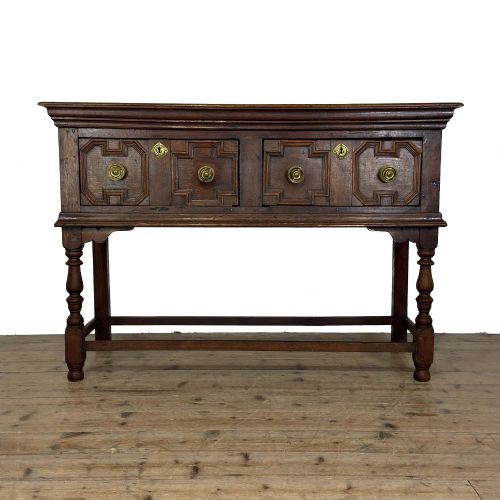
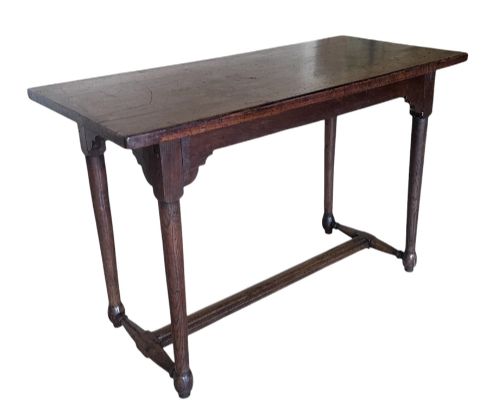
A carved oak serving table is a sturdy, heavy piece designed for display and service, appearing across centuries from the seventeenth century onward. You encounter these surfaces in console forms, sideboards, buffets, credences, and dumb waiters.
The versions most likely to meet you on this page span the seventeenth century, the Victorian era, the Edwardian period, and the early twentieth century. They adopt styles ranging from Gothic Revival and Jacobean to Country House, Spanish Baroque, and Edwardian Revival.
Makers and workshops utilised these formats to anchor dining rooms and halls with substantial timber presence. The forms shift from simple bobbin-turned legs to elaborate green man reliefs and burr walnut combinations.
How they were made
Makers constructed these pieces primarily using solid oak, often combining it with burr walnut veneers, iron hardware, and brass details. Some surfaces also feature painted wood elements alongside the exposed timber grain.
Construction relied on traditional joinery techniques capable of supporting heavy loads of food and plate. Carvers worked directly into the dense oak to execute deep relief panels, scrolls, and figural motifs.
Retail Price Guide 2026
Typical UK retail prices for carved oak serving table, calculated from the Sellingantiques database of over a million retail prices indexed since 2003. This retail price guide relies exclusively on Sellingantiques data; no external sources or auction records are used, so the figures do not describe the wider market.
Listings feature oak, burr walnut, brass, and iron across seventeenth-century, Victorian, and Edwardian periods.
What varies in quality
Quality rests in the crispness and depth of the carved ornament, separating mechanical execution from fluent chisel work. Pieces bearing named workshop attribution or sophisticated regional proportion stand apart from simpler utility items.
The selection of timber grain dictates visual weight, particularly where burr walnut accents or choice quarter-sawn oak figure into the construction. Integrated brass fittings and iron mounts also indicate the original tier of production.
Edwards and Roberts
The Carved Oak Serving Table Glossary
- Console table
- A table designed to stand against a wall, frequently supported by brackets or ornate legs.
- Credence table
- A folding or fixed wooden table historically used for holding sacramental elements or dishes.
- Bobbin turned
- A style of furniture leg or stretcher shaped on a lathe to resemble a string of beads or bobbins.
- Green man
- A sculptural motif of a human face carved with leaves, branches, or vines sprouting from the mouth.
- Burr walnut
- A highly figured wood veneer taken from walnut tree growths, prized for its swirling grain patterns.
Frequently Asked Questions
How do I date a carved oak serving table?
Dating relies on examining the construction methods, tool marks, and stylistic vocabulary present in the carved decoration. Seventeenth-century examples display different joinery and patination compared to Victorian revivals.
Hardware, timber selection, and secondary woods also provide clues to the period of manufacture. Comparing the piece to documented examples helps confirm its era.
Where should I place a serving table?
These tables suit dining rooms, hallways, and large living spaces where their substantial depth and weight anchor the room. They function well against plain walls that allow the carved details to stand out.
Ensure the floor space accommodates the heavy timber frame without overcrowding the surrounding furniture. Keep them away from direct heat sources to protect the oak.
How do I care for antique oak?
Maintain the timber by dusting regularly with a soft, dry cloth and applying occasional quality beeswax to nourish the grain. Avoid modern liquid polishes that can build up and dull the historic finish.
Protect the surface from moisture and direct sunlight to prevent warping and fading. Gentle handling preserves the original patination built up over centuries.
What styles are common in these tables?
Jacobean, Gothic Revival, and Country House styles dominate the aesthetic of these heavy oak pieces. These designs feature dark finishes, strapwork, heraldic motifs, and deep relief carving.
Later Victorian and Edwardian interpretations often blend these historical motifs with more refined domestic proportions. Each style reflects the taste of its specific period of production.