
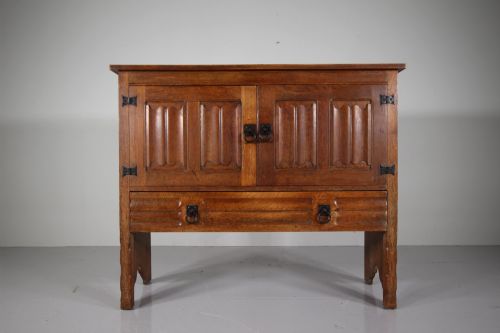
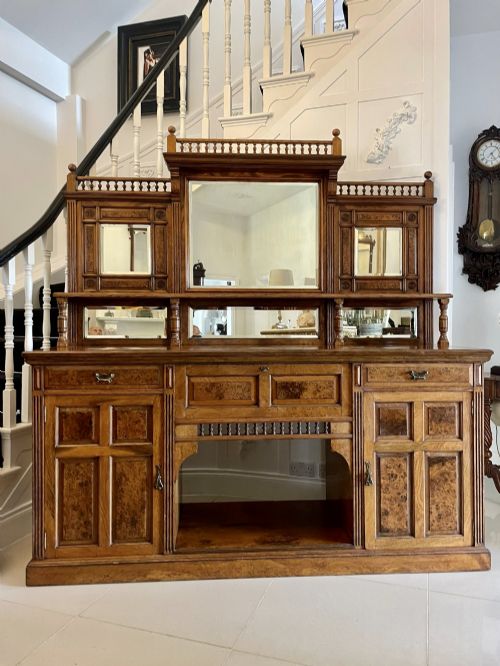
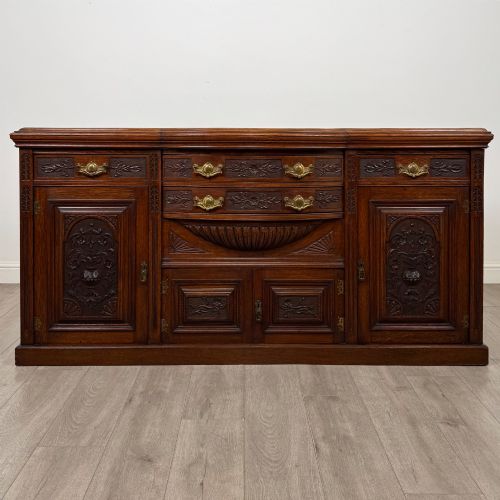
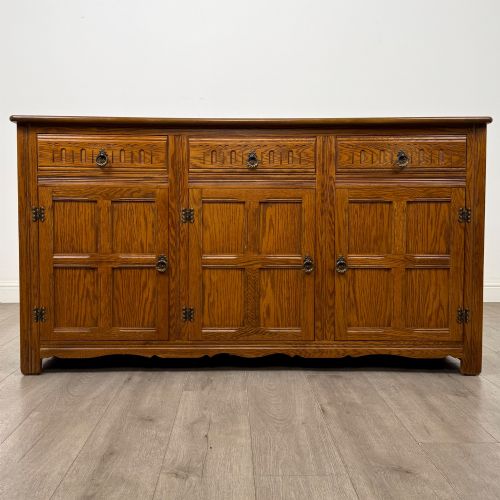
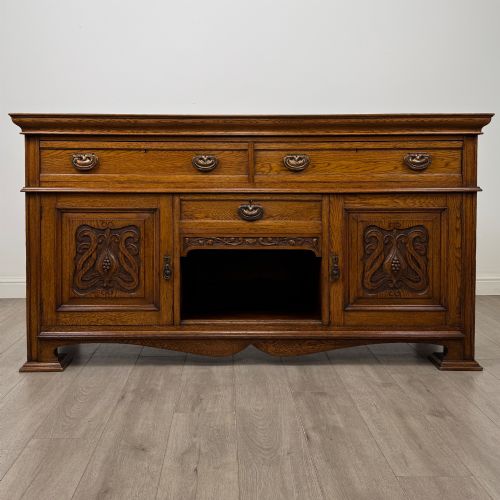
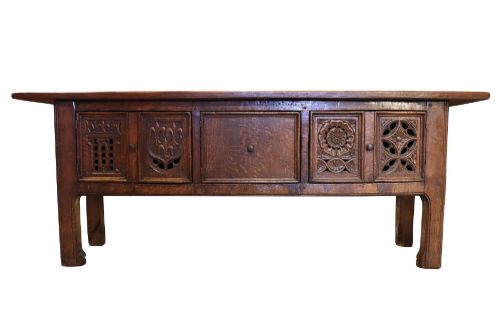
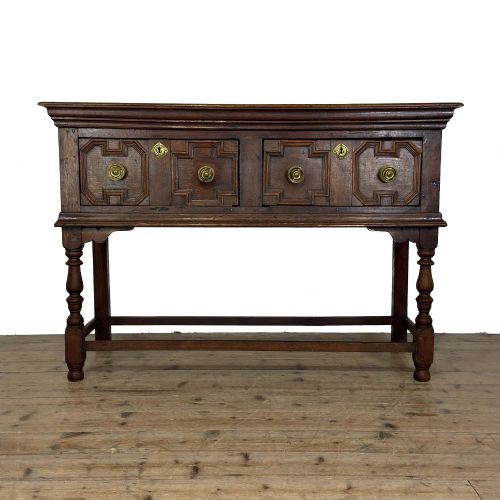
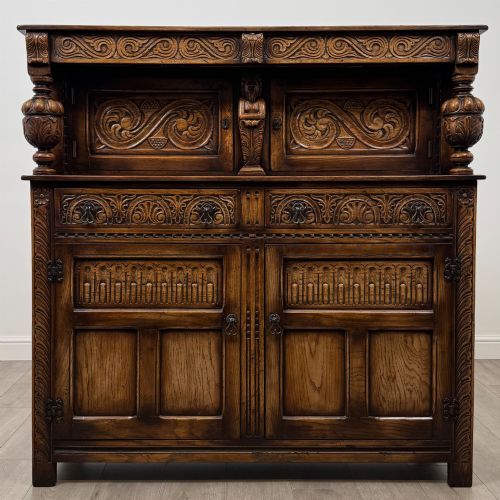
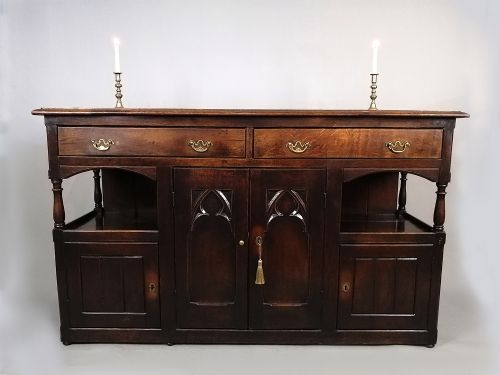
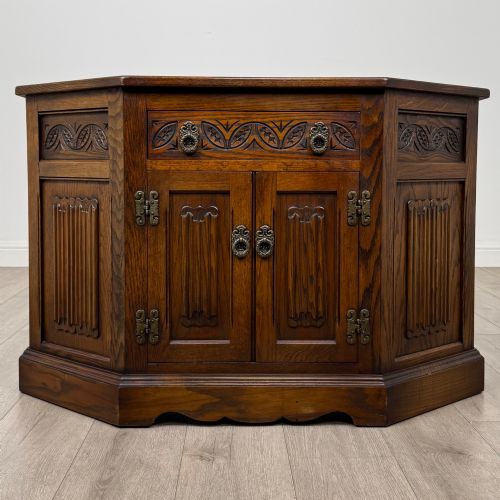
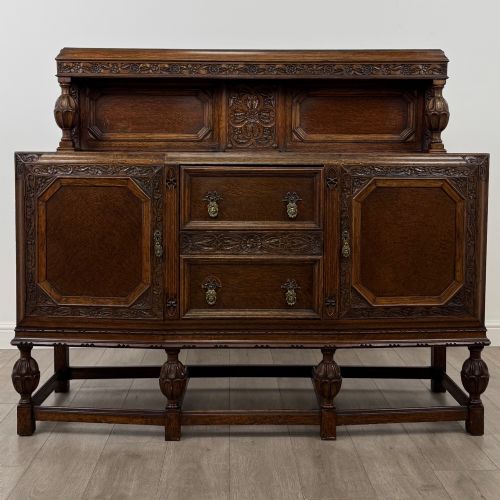
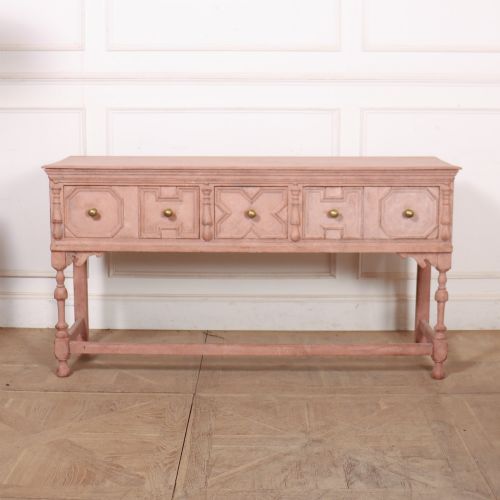
Carved Oak Server Base
When you search for a carved oak server base, you are looking at substantial timber furniture designed for serving and storage.
Carved Oak Server Base
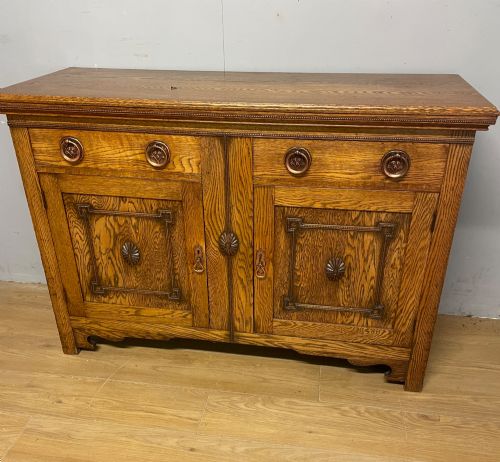
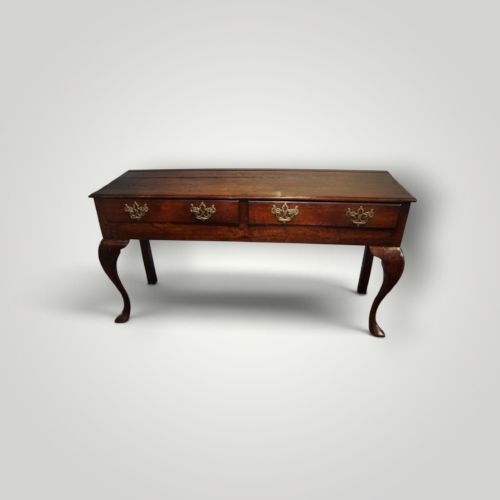
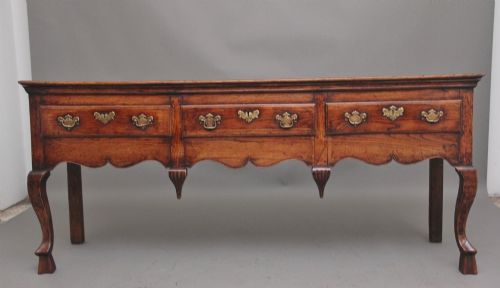
A carved oak server base is a sturdy piece of domestic furniture used historically for storing and serving food in dining rooms and halls. The pieces appearing in this category span several centuries, reaching from the seventeenth century through to the Edwardian period and the early twentieth century.
Buyers will encounter various forms under this heading, including traditional dresser bases, sideboards, serving tables, and court cupboards. These items frequently display regional characteristics such as narrow proportions or potboards, reflecting the diverse domestic needs of past households.
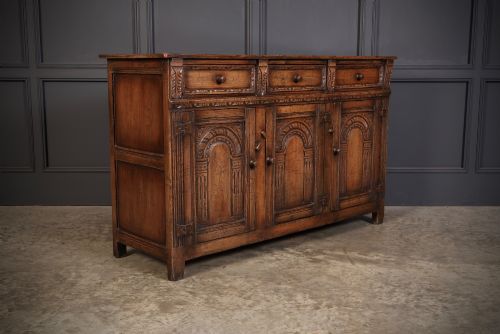
The aesthetic of a carved oak server base is shaped by period revivals and regional designs. Examples range from early block front and geometric moulded pieces to later interpretations in the Jacobean, Gothic Revival, and Arts and Crafts styles.
Materials and construction
The primary material across these pieces is solid oak, sometimes supplemented by specialised timbers such as pollard oak to create visual contrast in panels and drawer fronts. Hardware and structural reinforcement incorporate brass, iron, copper, and mixed metals for hinges, pulls, and mounts.
Construction techniques rely heavily on traditional timber framing and joinery suitable for heavy hardwood. Surfaces are frequently embellished with deep relief carving, linenfold panelling, barley-twist supports, and applied mouldings that define the decorative character of each period.
Listings feature oak server bases spanning from the seventeenth century through to the Edwardian era, incorporating metal and glass elements.
Assessing quality and proportion
Quality in a carved oak server base rests on the crispness and depth of the timber carving, the balance of proportions, and the integrity of the structural elements. Finer examples display carefully selected grain patterns and robust construction that withstands centuries of use.
The distinction between standard utility items and exceptional pieces lies in the sophistication of the revival style applied, the presence of original brass or iron hardware, and the harmony between the decorative motifs and the fundamental architecture of the furniture.
The Carved Oak Server Base Glossary
- Dresser base
- A low wooden storage unit featuring drawers and sometimes a lower shelf, used primarily for serving food and holding dining utensils.
- Court cupboard
- A heavy enclosed wooden cabinet used for storing food and valuables, often featuring carved upper tiers or recessed sections.
- Potboard
- An open lower shelf fitted between the legs of a dresser base, traditionally used for storing pots and heavy kitchenware.
- Linenfold
- A style of wood carving that imitates folded linen cloth, frequently seen on panelled cupboard doors from the sixteenth century onwards.
- Barley-twist
- A turned column or support shaped like a spiral rope, popular in seventeenth-century furniture and later revival periods.
Carved Oak Server Base: Frequently Asked Questions
What is a carved oak server base used for?
These pieces function primarily as low storage units and serving tables in dining spaces. They provide surface area for presenting food and deep drawers or cupboards for organising tableware.
Historically, households utilised them in kitchens, halls, and dining rooms for daily domestic service. Today, they serve similar practical storage roles while anchoring a room with traditional timber character.
How do I date a carved oak server base?
Dating relies on identifying the construction methods, tool marks, and stylistic ornament present on the timber. Early pieces from the seventeenth and eighteenth centuries often feature hand-cut joints and simpler board construction.
Later items from the Victorian and Edwardian eras frequently display machine assistance alongside historical revival motifs like Jacobean carving or Arts and Crafts simplicity.
Are these pieces made of solid oak?
Most listings in this category consist of solid oak timber, occasionally paired with specialised decorative veneers such as pollard oak on prominent surfaces. Secondary woods may appear in hidden structural areas like drawer linings.
The heavy hardwood construction provides the durability and weight characteristic of traditional British and European dining furniture.
How do I fit a server base into a modern interior?
A carved oak server base works well in contemporary spaces by introducing natural grain, texture, and historical depth. Their narrow proportions allow them to sit against walls in hallways, living rooms, and modern kitchens without occupying excessive floor space.
Pairing them with minimalist surrounding decor lets the carved details and rich patination of the oak stand out as a focal point.