
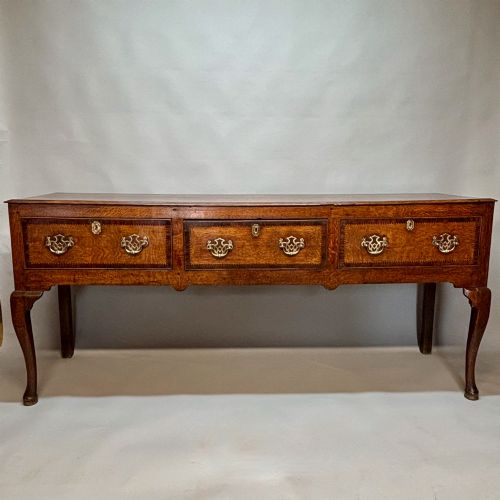
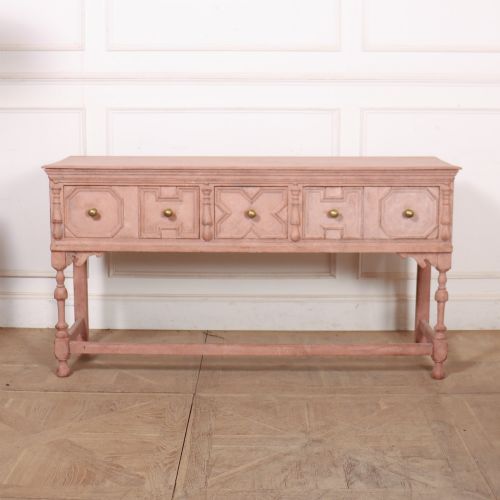
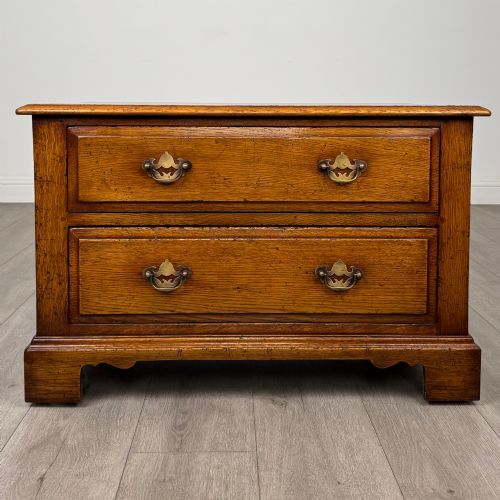
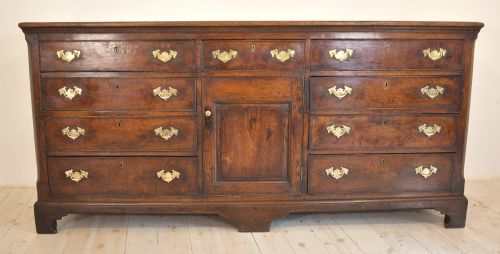



Vintage Low Sideboard Table
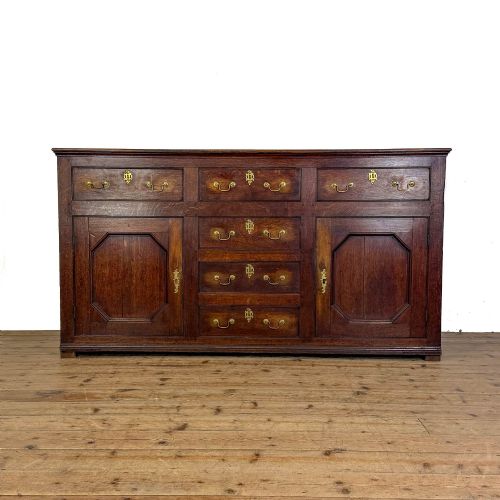
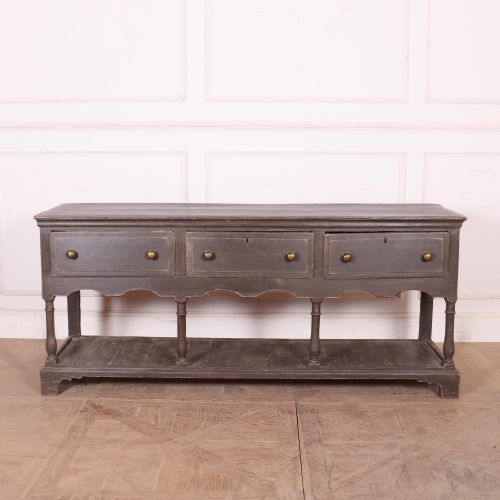
These vintage low sideboard table options are solid timber pieces designed to anchor a room while serving as practical storage.
Vintage Low Sideboard Table
A vintage low sideboard table encompasses low-slung oak dresser bases, painted timber serving pieces, and low chests from periods ranging from the eighteenth century to the early twentieth century. Buyers seeking this phrase encounter sturdy regional forms such as Lancashire and Scottish country pieces alongside refined Queen Anne revival walnut versions.
The selection leans heavily toward robust oak examples featuring potboards and low drawers, alongside occasional Art Deco cabinets and walnut designs. These low formats provide long, low surfaces suited to modern living spaces while retaining traditional joinery.
How they were made
Construction relies primarily on solid oak, walnut, and painted timber, often enhanced with burr walnut veneer or inlay timber details. Brass hardware frequently furnishes handles and escutcheons across these historical items.
Cabinetmakers utilised traditional pegged joinery and turned legs to support heavy timber tops and potboards. Painted finishes and natural wood surfaces demonstrate the hand-worked nature of these earlier regional and formal workshops.
Materials appearing across the inventory include solid oak, walnut, brass fittings, and painted timber surfaces.
What varies in quality
Quality rests upon the selection of timbers, such as figured burr walnut veneer versus plain painted softwood, and the crispness of turned legs and inlay timber work. Regional country pieces display varying degrees of rustic charm compared to London workshop output.
The integrity of original brass hardware, timber patination, and the retention of structural potboards distinguish finer examples from altered or heavily restored alternatives.
Hille of London·Bowman Brothers
The Vintage Low Sideboard Table Glossary
- Dresser base
- A low freestanding table with drawers, used historically for food preparation and serving. It forms the lower section of a traditional kitchen dresser without the upper plate racks.
- Potboard
- An open slatted lower shelf fitted between the legs of a dresser base. It provided space for storing heavy pots and pans.
- Burr walnut veneer
- A thin slice of highly figured walnut timber applied to a carcase surface. It creates a decorative, swirling grain pattern highly prized in cabinetry.
- Turned leg
- A leg shaped on a lathe to create cylindrical or decorative profiles. These support the weight of heavy timber serving bases.
Vintage Low Sideboard Table: Frequently Asked Questions
What is a low dresser base?
A low dresser base is a sturdy wooden table featuring multiple drawers and often a lower shelf, built primarily for serving and storage.
These pieces originate from country workshops and domestic settings where low working heights suited daily tasks.
How do I style a low sideboard?
A low sideboard functions well against a dining room wall to hold tableware or in a living space as a low media surface.
The long, low proportions allow lamps and decorative objects to sit comfortably at eye level without crowding the room.
How do I date an oak dresser?
Dating relies on observing construction methods, timber choice, handle styles, and leg turnings characteristic of specific centuries.
Eighteenth-century examples often display pegged joints and heavy oak boards, whereas later revivals incorporate different internal framing.
Are these pieces made of solid wood?
Most examples utilise solid oak, walnut, or painted timber for their primary structures, frames, and tops.
Some later or decorative versions incorporate veneers such as burr walnut applied over secondary timber carcases.