



Geometric Carved Dresser Base
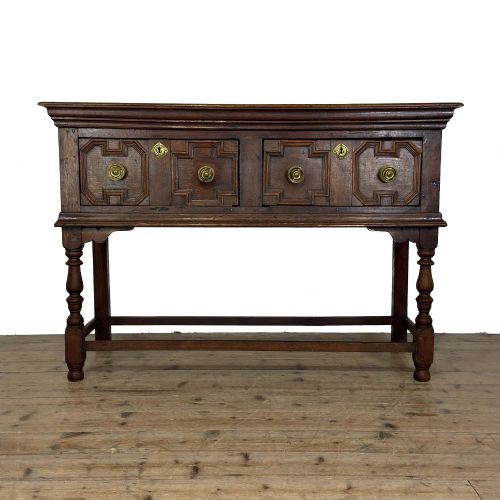
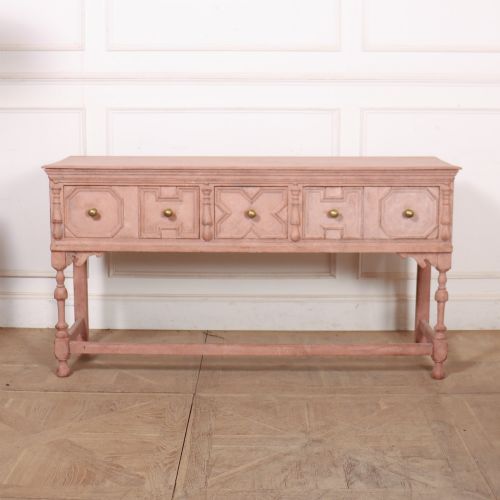
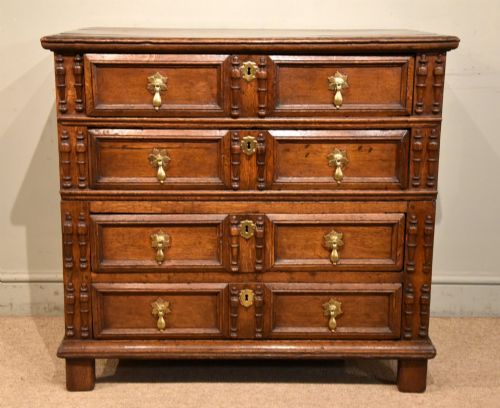
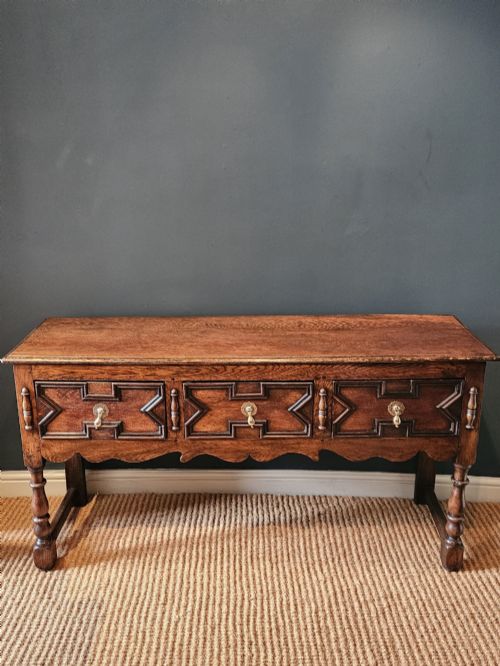
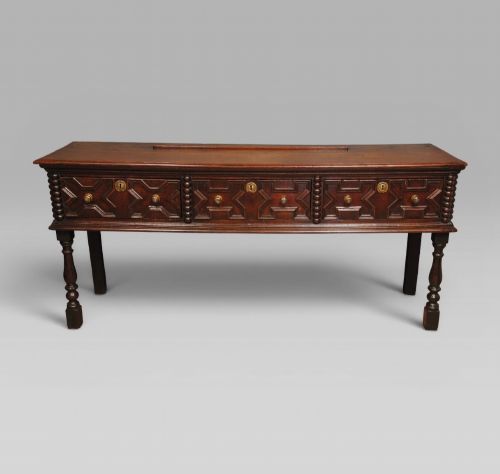
A geometric carved dresser base is a heavy timber storage piece built to anchor a room, prized for its panelled drawers and block-front geometry.
Geometric Carved Dresser Base
A geometric carved dresser base provides low-level storage through a series of drawers set into a sturdy timber frame. These pieces emerge primarily from seventeenth century workshops, alongside later revival interpretations from the nineteenth and early twentieth centuries.
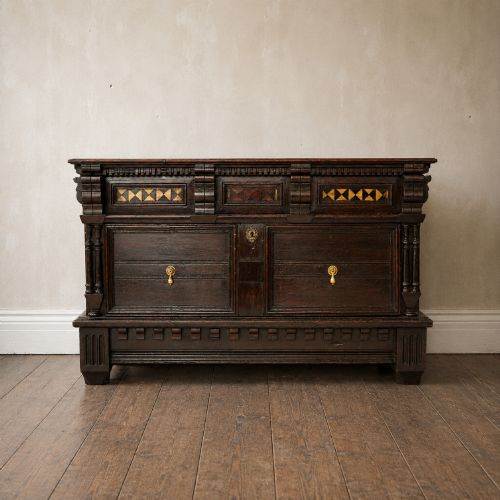
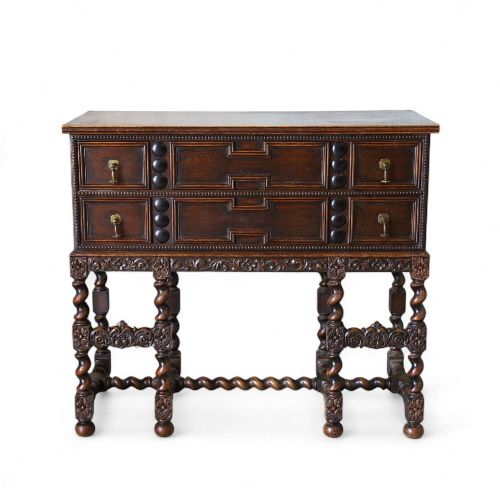
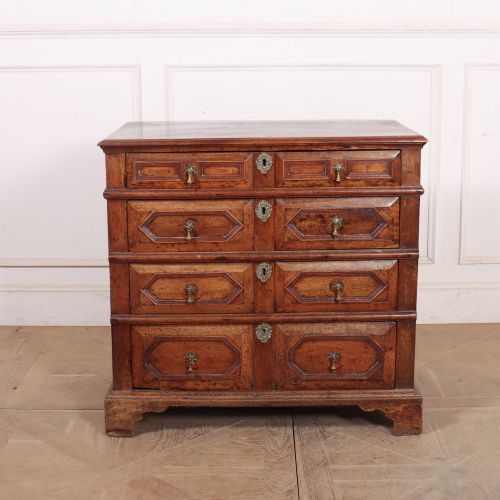
The layout typically takes the form of a low horizontal cabinet, featuring panelled fronts, geometric mouldings, and occasional variations such as chests on stands or serving dressers. Oak serves as the foundational timber across the primary and revival periods represented here.
How they were made
Construction relies upon solid oak, joined using traditional methods and finished with applied wood mouldings to create raised panels and geometric drawer fronts. Subsidiary elements incorporate brass hardware and iron fittings.
Surface treatments range from natural waxed timber to historic paint layers and inlaid wood details, while later revival pieces integrate decorative turnings such as barley-twist supports.
Listings span from the seventeenth century through Georgian and Victorian periods up to nineteen-thirty revival pieces, constructed primarily in oak with brass and iron hardware.
What varies in quality
Depth and precision of the geometric carving distinguish finer examples from simpler vernacular iterations. The crispness of applied mouldings and the integrity of the original timber frame dictate the overall character.
Survival of early brass handles, original drawer linings, and untouched surface patination elevate a piece far above heavily restored or later altered examples.
The Geometric Carved Dresser Base Glossary
- Dresser base
- A low storage unit with drawers, designed without the upper plate racks associated with full dressers. These serve as practical sideboards in dining rooms and halls.
- Geometric moulding
- Raised wooden strips applied to drawers and doors in repeating angular patterns. This technique defines seventeenth century joinery.
- Block front
- A cabinet front divided vertically into three sections, with the outer sections projecting forward and the central section recessed. It creates strong shadow lines.
- Barley-twist
- A column or support turned in a continuous helical spiral. This form appears frequently on revival furniture from the nineteenth and twentieth centuries.
- Chest on stand
- A case piece raised above the floor on an independent frame with legs. This configuration lightens the visual weight of heavy oak storage.
Geometric Carved Dresser Base: Frequently Asked Questions
What is a geometric carved dresser base?
A low timber storage unit featuring drawers decorated with applied angular mouldings and panelling. These pieces originate mainly from the seventeenth century or later revival periods.
They function as practical sideboards or serving surfaces, offering substantial storage capacity within a compact height.
How do I date an oak dresser base?
Dating relies upon examining construction methods, timber grain, and joinery details such as hand-cut dovetails and pegged joints. Seventeenth century pieces show distinct tool marks and construction traits compared to nineteenth century revivals.
Hardware and lock mechanisms also provide clues, though handles are frequently replaced over centuries of use.
Where should I place a dresser base at home?
These robust cabinets suit dining rooms as serving surfaces, or hallways where their shallow depth allows them to sit against a wall without obstructing passage. Their strong linear decoration anchors large wall spaces.
Pair them with plain walls to let the timber texture and geometric fronts remain the focus of the room.
How do I care for antique oak furniture?
Maintain the wood by applying a quality beeswax periodically to nourish the dry timber and preserve the natural sheen. Avoid placing furniture near direct heat sources or strong sunlight.
Dust regularly with a dry, soft cloth and avoid modern silicone sprays that can penetrate the historic grain.