
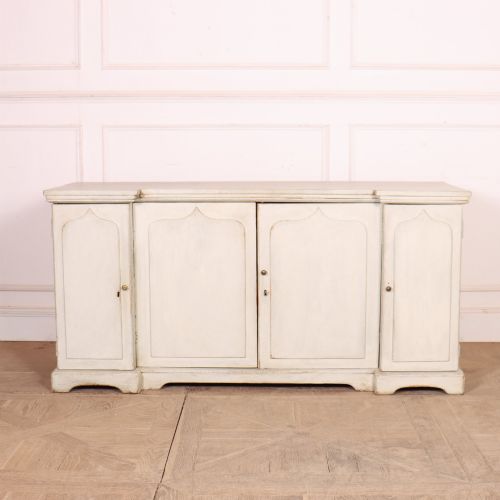
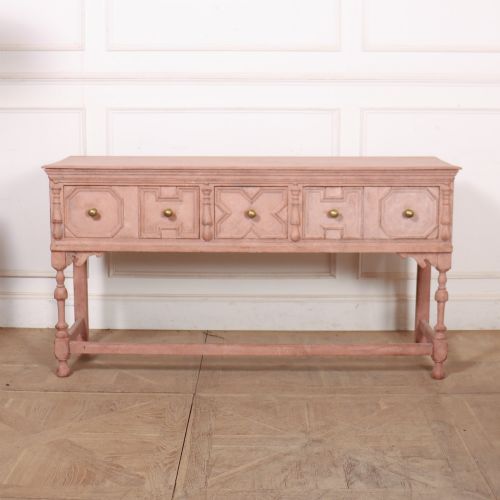
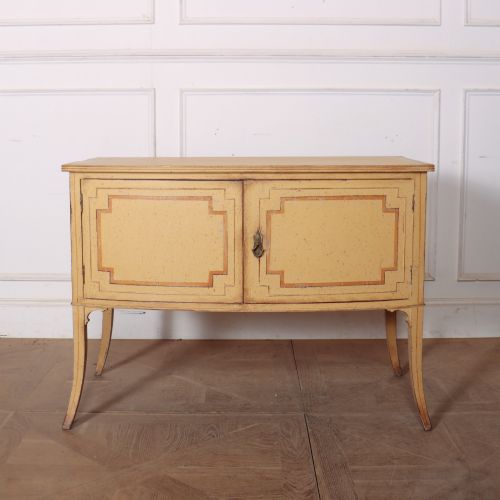
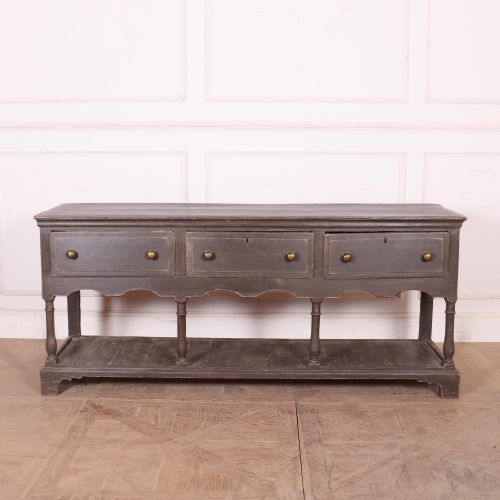

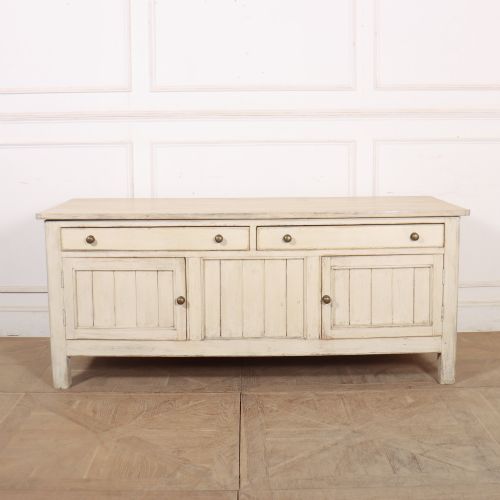
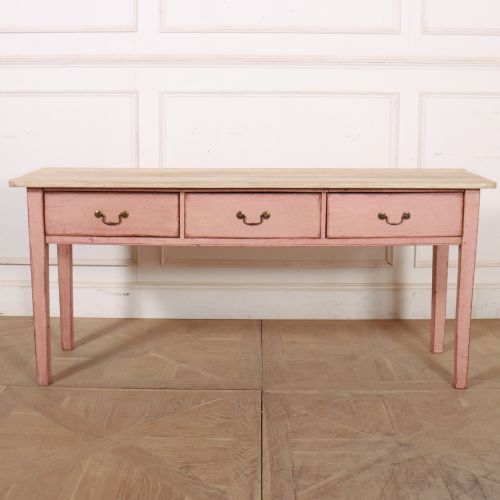
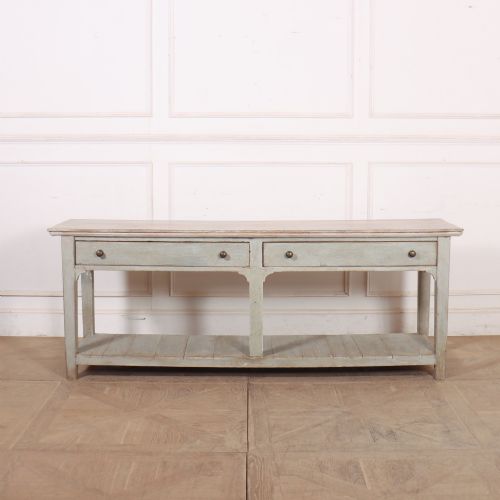


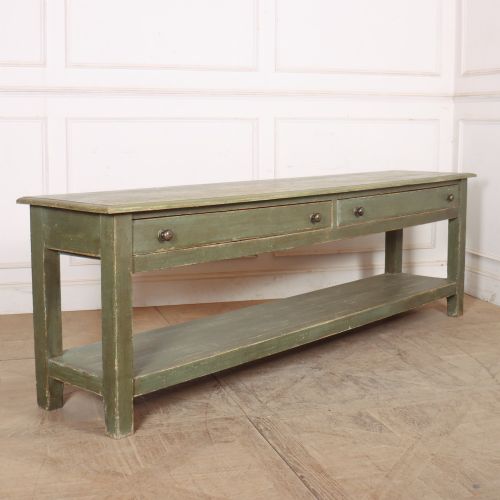

Painted English Sideboard
A painted English sideboard brings domestic history into a room through generous proportions and layered colour.
Painted English Sideboard
A painted English sideboard encompasses robust dresser bases, serving tables, and side cabinets dating from the seventeenth century through to the Victorian era. These utilitarian pieces originate primarily from domestic country houses and farmhouses, designed for serving food and storing household provisions.
The most common forms on this page are nineteenth-century dresser bases and kitchen dressers finished with historic painted surfaces. These items balance sturdy construction with the softer visual texture of accumulated layers of paint.
The selection ranges from early oak potboard bases to later pine and timber cupboards reflecting regional English cabinet-making traditions. Each form serves as a functional surface while displaying the distinct character of its period.
How they were made
Construction relies on solid timbers such as oak, pine, and mixed woods, joined using traditional methods suited to heavy domestic use. Potboards, drawers, and boards are integrated to create stable frameworks that support daily household tasks.
Surfaces are finished with coats of paint applied over timber, often weathered and worn through generations of domestic application. Brass hardware such as handles and escutcheons are fitted to drawers and doors, complementing the painted wood structure.
Keep a small tin of matching linseed oil nearby to soothe dry seventeenth-century oak when the central heating kicks in.
What varies in quality
Quality rests upon the integrity of the timber frame and the survival of early or original paint surfaces. Pieces retaining genuine historic pigment layers display greater character and authenticity than later or heavily restored coatings.
Proportion and structural balance separate standard utility items from finer country house examples. Well-proportioned mouldings, original brass fittings, and undisturbed joinery distinguish the superior pieces in this tradition.
Melissa White
The Painted English Sideboard Glossary
- Potboard
- An open lower shelf built into a dresser base, traditionally used for storing pots and heavy kitchen utensils. This architectural feature raises the main body off the floor.
- Breakfront
- A cabinet or sideboard whose central section projects forward from the flanking outer sections. This formation adds depth and architectural presence to larger serving pieces.
- Pot Board Dresser
- A traditional storage unit featuring an open plate rack or flat top above a lower base with a potboard shelf. These items formed the centre of the historic English kitchen.
- Demi-lune
- A half-moon shape used for the top and base of specific side cabinets and serving tables. This curved profile allows the furniture to sit snugly against a wall.
- Linen Cupboard
- A tall storage piece designed specifically for domestic textiles, featuring internal shelving or hanging space. These cupboards often anchor the storage walls of country houses.
Painted English Sideboard: Frequently Asked Questions
What is a painted English sideboard?
A painted English sideboard is a historic utility item, such as a dresser base or serving table, finished with a painted surface. These pieces originate from English country houses and farmhouses.
They provide surface space and storage while introducing traditional colour and texture into modern interiors.
How were these sideboards used?
Historic households utilised these pieces for food preparation, serving meals, and storing kitchen provisions or dining linens. The drawers and cupboards kept household goods close to hand.
Today, they function as sideboards in dining rooms, living spaces, or kitchens, offering practical surface area and deep storage.
How do I date an antique sideboard?
Dating relies on examining the timber species, construction joints, and hardware style. Earlier pieces from the seventeenth and eighteenth centuries often feature heavy oak frames and hand-cut joinery.
Nineteenth-century examples frequently incorporate pine or mixed timber alongside softer painted finishes. Comparing these structural clues reveals the period of origin.
How do I care for painted wood?
Maintenance requires keeping the furniture away from direct heat sources and sudden temperature shifts to protect the historic timber and paint. Dusting with a soft cloth preserves the surface without introducing moisture.
Avoiding harsh chemical cleaners ensures the original or aged paint layers remain stable and intact over time.