


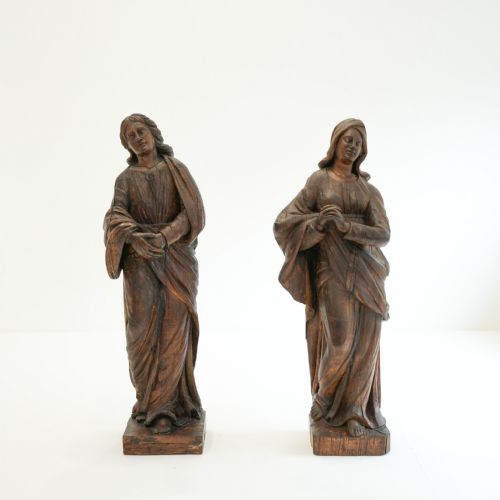


Carved Oak Saint Sculpture
A carved oak saint sculpture brings centuries of devotion into a room, shaped from timber by hands that worked long before our time.
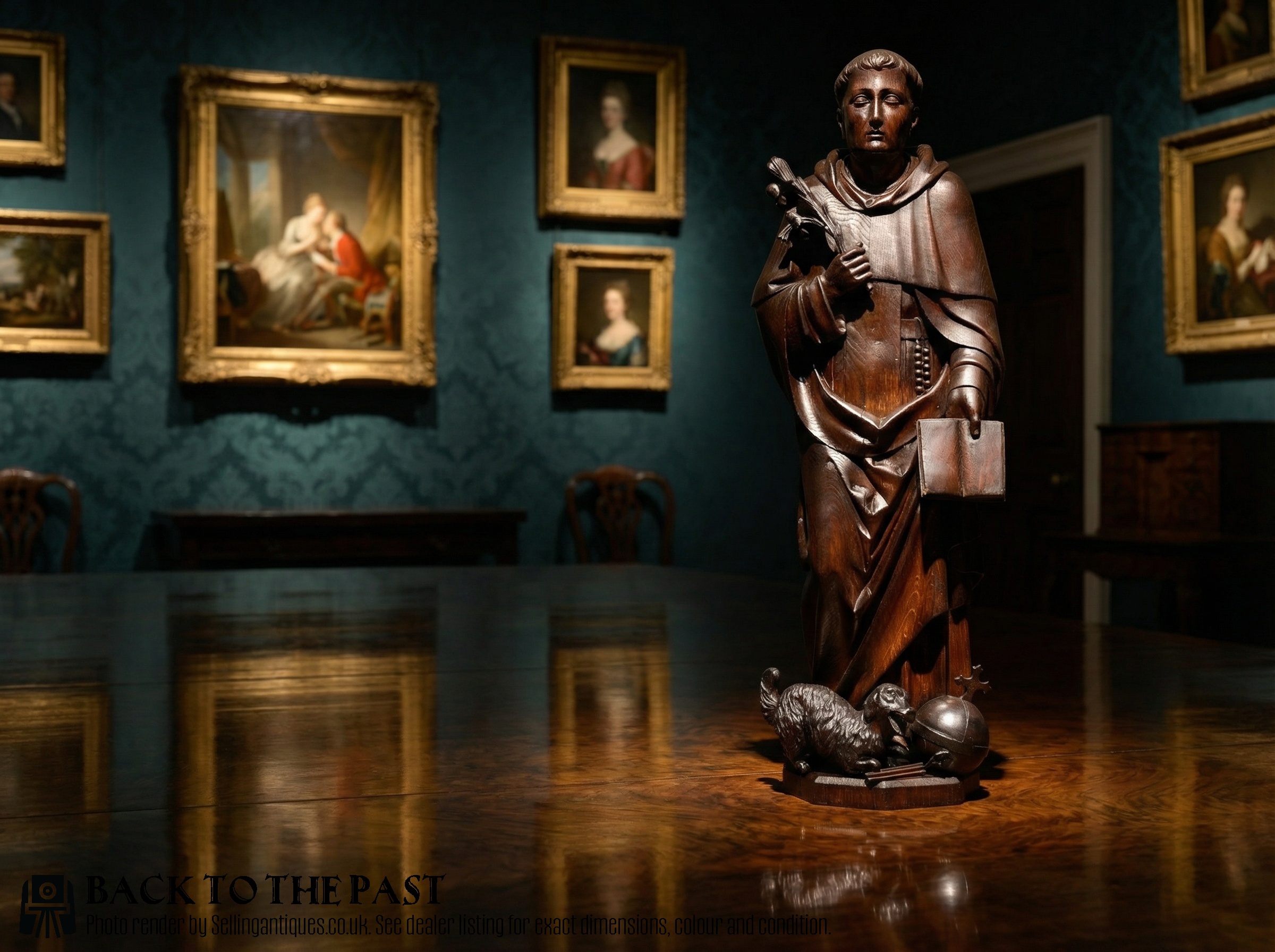
Carved Oak Saint Sculpture
A carved oak saint sculpture represents holy figures from Christian history, created across periods ranging from pre-sixteenth century Gothic workshops to nineteenth-century revivals. You will encounter pieces depicting figures such as St Paul, St Jerome, St Catherine, and the Virgin Mary, originating from regions including Germany, France, Flanders, and Croatia.
The forms vary from substantial early Flemish carvings and Upper Rhine donor figures to pairs of saints and smaller nineteenth-century interpretations. Many survive as fragments or isolated statues once housed in larger altarpieces or church architectural schemes, bearing the distinct marks of their ritual function.
Assessing Quality and Hand
Quality rests entirely in the anatomical conviction and the confidence of the cutter's chisel. Superior examples display rhythm in the fall of fabric and psychological weight in the posture, whereas lesser work feels stiff and perfunctory.
The handling of the material reveals the maker's mastery, with expert pieces showing sensitive undercut work that separates hair, hands, and vestments from the main block of timber.
Listings feature oak carvings spanning from pre-sixteenth century Gothic work through to nineteenth-century Gothic Revival pieces.
Franz Keller
The Carved Oak Saint Sculpture Glossary
- Polychrome
- Painted decoration applied to wood sculpture. This surface treatment was standard in medieval and Renaissance workshops before many pieces were stripped down to bare oak.
- Donor figure
- A sculpture depicting the patron who commissioned a religious work, shown kneeling or in prayer. These figures frequently appear alongside saints in altarpieces from the Upper Rhine and Flanders.
- Anna Selbdritt
- An iconographic representation showing Saint Anne with the Virgin Mary and the Christ Child. This subject appears in late medieval carving and devotional groups.
- Gothic Revival
- An architectural and decorative style popular in the nineteenth century that imitated medieval forms. Many nineteenth-century carvings on this page date from this revival period.
Carved Oak Saint Sculpture: Frequently Asked Questions
Were these figures originally painted?
Most medieval and Renaissance figures were covered in gesso and brightly painted or gilded to enhance their visual impact in dim churches. Over time, many lost their polychromy through cleaning or deliberate stripping.
Traces of pigment hidden in crevices often confirm that a piece was once fully coloured. The presence of original paint significantly affects the character of the sculpture.
Why do many figures survive as fragments?
Many sculptures formed part of large altarpieces, rood screens, or architectural shrines that were dismantled during periods of religious reform or redecoration. Individual saints and angels were separated from their original context and circulated independently.
Losses to hands, attributes, and bases are common due to this history of removal and transit. These losses do not diminish the sculptural merit of the surviving core.
How should I display a wooden saint at home?
Place the sculpture away from direct heat sources, radiators, and strong sunlight to prevent the oak from splitting or warping. A stable indoor humidity level protects the dry timber and any remaining historic surface finishes.
Mount the figure securely on a stable surface or bracket, keeping in mind its weight and balance. Many collectors prefer simple, neutral placement that allows the carved form to stand on its own.