




Dark Oak Saint Statue
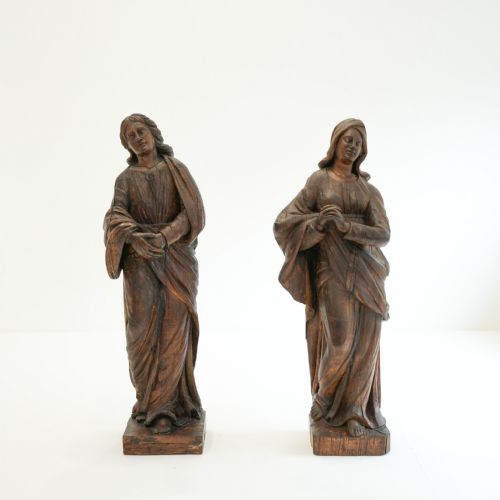
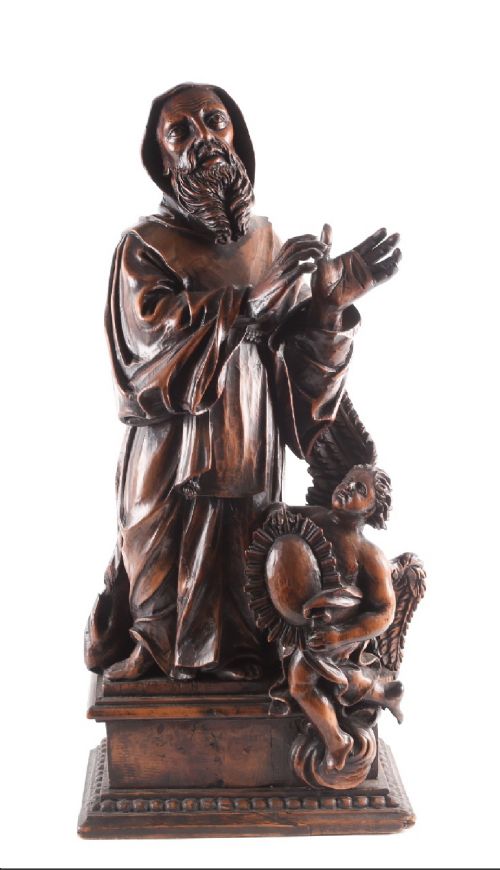
These dark oak saint statue pieces bring centuries of devotion into the room, carved from sturdy timber to command any corner.
Dark Oak Saint Statue
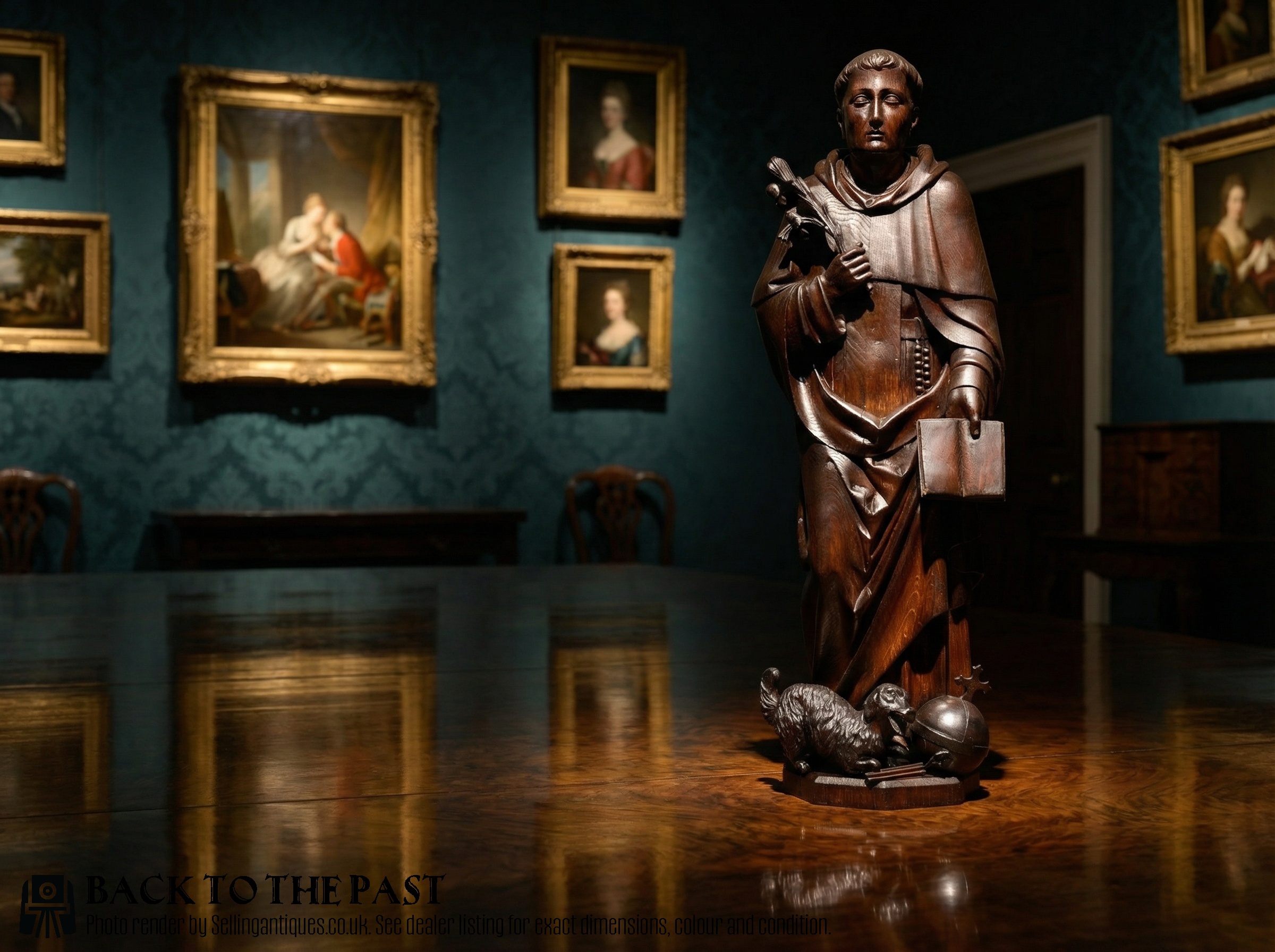
A dark oak saint statue represents centuries of religious devotion, taking the form of carved figures, donors, and ecclesiastical subjects. When buyers search for a dark oak saint statue, they encounter sculptures spanning several distinct historical epochs.
The selections available here range from Pre 16th century and 16th century pieces to 18th century and 19th century interpretations. Most examples appear as standalone wood carvings or paired figures originating from European workshops.
Makers shaped these devotional objects using durable hardwoods, often incorporating architectural styles such as Late Gothic, Renaissance, Baroque, and Gothic Revival. Each dark oak saint statue reflects the aesthetic priorities of its specific period.
Materials and construction
Certain surfaces received applications of gilded wood to highlight halos, vestments, or decorative trim on the vestments of the figures. Artisans relied on traditional joinery and block carving methods appropriate to the workshop traditions of the Rhine and broader European regions.
Sculptures and figures on this page encompass Gothic Revival, Baroque, Renaissance, and Late Gothic styles.
Judging quality and character
The distinction between standard and exceptional carvings lies in the depth of relief, the naturalism of the drapery folds, and the expressive handling of the hands and face. Superior examples demonstrate a confident command of anatomy and proportion by the carver.
Preservation of the original wood surface and the integrity of the carved details separate refined historical pieces from utilitarian or heavily weathered items. The clarity of the tool marks often reveals the skill level of the workshop behind the sculpture.
The Dark Oak Saint Statue Glossary
- Donor figure
- A sculpture depicting the patron or donor of a religious artwork, typically shown kneeling in prayer alongside a saint. These figures provide valuable evidence of historical costume and portraiture.
- Late Gothic
- An art historical style spanning the fifteenth and early sixteenth centuries, characterised by elaborate, flurrying drapery and emotional intensity. Figures from this period display distinct regional carving traits.
- Gilded wood
- Timber surfaces coated with a thin layer of gold leaf or gold paint, frequently utilised to accentuate sacred elements on religious statues. This technique added luminosity to dim ecclesiastical interiors.
- Relief carving
- A sculptural technique where figures project from a flat background or block of timber, maintaining attachment to the primary material. This method was standard for architectural elements and devotional panels.
Dark Oak Saint Statue: Frequently Asked Questions
How old are these statues?
The pieces span multiple centuries, ranging from pre 16th century and 16th century examples up to later 18th century and 19th century interpretations.
Each era brings distinct stylistic traits, from Late Gothic intensity to later Baroque and Revival aesthetics.
Where were they made?
These sculptures originated in European workshops, with specific regions such as the Upper Rhine noted for early carved figures.
Local timber traditions dictated the choice of oak and hardwood for these devotional works.
How do I display a wooden saint?
Place statues on stable surfaces away from direct heat sources and dramatic humidity fluctuations to protect the timber.
Ensure adequate clearance so the three dimensional carving can be appreciated from multiple angles.
What styles are represented?
The selection encompasses Gothic, Late Gothic, Renaissance, Baroque, and Gothic Revival styles.
These stylistic markers help distinguish between early devotional figures and later revivalist pieces.