

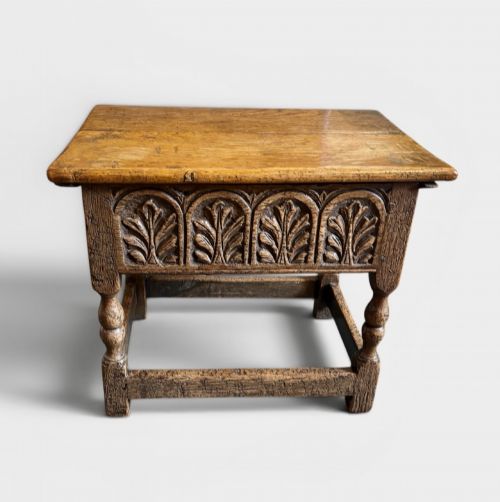


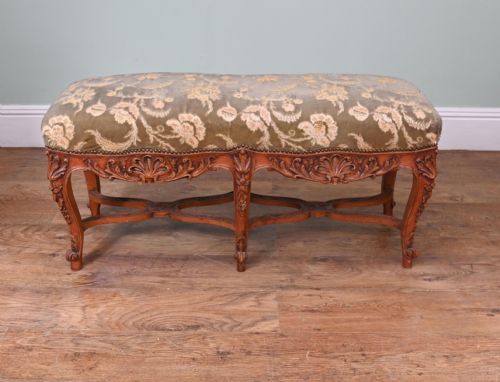
Carved Oak Ottoman Stool
A carved oak ottoman stool brings solid timber architecture and upholstered comfort into a room with genuine period presence.
Carved Oak Ottoman Stool
A carved oak ottoman stool combines dense native timber frames with upholstered seating surfaces, ranging from compact footstools to long benches and window seats. When you search for a carved oak ottoman stool, you encounter forms that span several centuries of revival design and traditional seating.
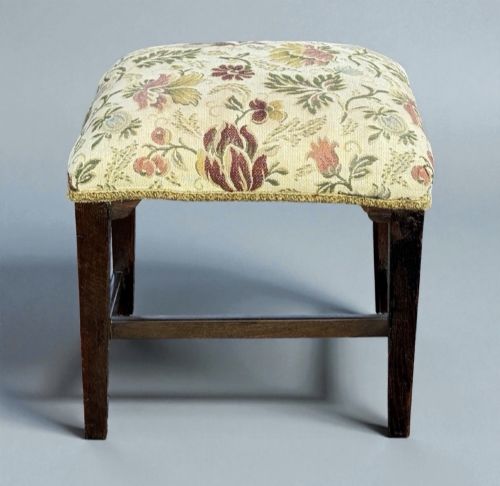
The pieces appearing on this page stretch from the eighteenth century through the Georgian era and across the nineteenth and early twentieth centuries. Alongside straightforward oak frames, you will find variants incorporating walnut, cane, brass hardware, and textile covers such as leather, velvet, linen, and fabric.
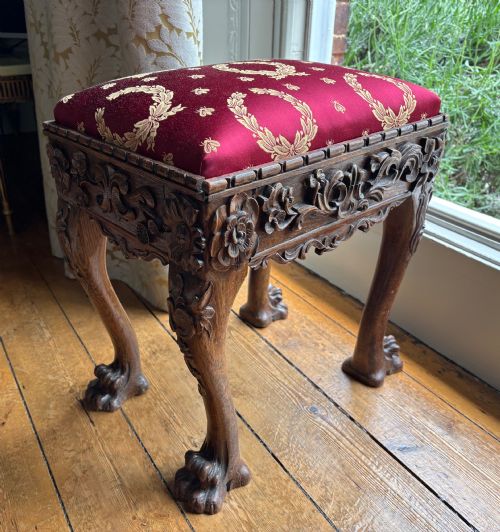
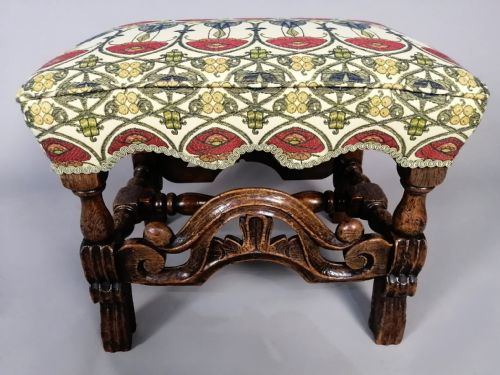
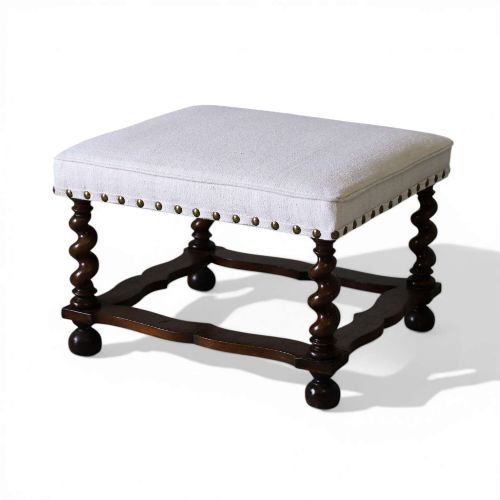
Makers drew on historical design languages including Gothic Revival, Jacobean Revival, Carolean, and Chippendale styles. These influences manifest in spiral legs, oyster-veneered stretchers, lion head carvings, and heavy box constructions.
Materials and construction methods
Carpenters built these frames predominantly from solid oak, sometimes pairing the timber with walnut components or brass details. Joinery relied on traditional framing methods to support the weight and daily use expected of domestic seating.
Upholstery layers utilise textile, velvet, linen, leather, and buttoned finishes secured over the wooden foundations. Decorative elements such as spiral barley-sugar turnings and deep relief carvings were worked directly into the timber framework.
A watchful Edwardian lion head peers from the woodwork on one particularly imposing oak stool.
Markers of distinction in construction and finish
The integrity of the timber frame and the depth of the hand-carving determine the standing of an individual piece. Crisply executed details in the oak reveal the skill of the original workshop.
The choice of secondary materials, from fine brass elements to high-grade textile or leather upholstery, separates standard utility seating from more ambitious revival pieces.
James Shoolbred
The Carved Oak Ottoman Stool Glossary
- Ottoman stool
- A padded seat designed for resting feet or sitting, often built with a sturdy wooden frame. These pieces function as versatile additions to living spaces.
- Barley-sugar twist
- A spiral turning carved into furniture legs or stretchers, resembling the twist of traditional confectionery. This decorative technique appears frequently on revival seating.
- Oyster veneer
- Slices of branch wood cut across the grain to produce circular patterns resembling oyster shells. Cabinetmakers applied this decorative surface to stretchers and panels.
- Gothic Revival
- An architectural and decorative style drawing inspiration from medieval design, featuring pointed arches and heavy timber framing. Pieces in this idiom display strong vertical lines and solemn carved details.
Carved Oak Ottoman Stool: Frequently Asked Questions
What defines a carved oak ottoman stool?
These items combine a wooden structural base with an upholstered top for domestic seating or foot support.
They draw on historical styles like Gothic and Jacobean Revival, utilising solid timber frames.
How were these stools used historically?
Households placed them in reception rooms, bedrooms, and window recesses for seating or resting feet.
Larger variations functioned as benches or window seats within formal interiors.
How do I care for antique oak furniture?
Keep wooden surfaces away from direct heat sources and sudden humidity changes to protect the timber.
Clean upholstery according to the specific textile type, whether leather, velvet, or linen.
How can I tell different revival periods apart?
Gothic Revival pieces often display architectural motifs like tracery and pointed arches.
Jacobean and Carolean pieces typically feature turned legs, spiral work, and dense foliate carvings.