

Jacobean Joint Stool
A jacobean joint stool is a sturdy wooden seat built with pegged mortise and tenon joints, offering solid historic character.
Jacobean Joint Stool
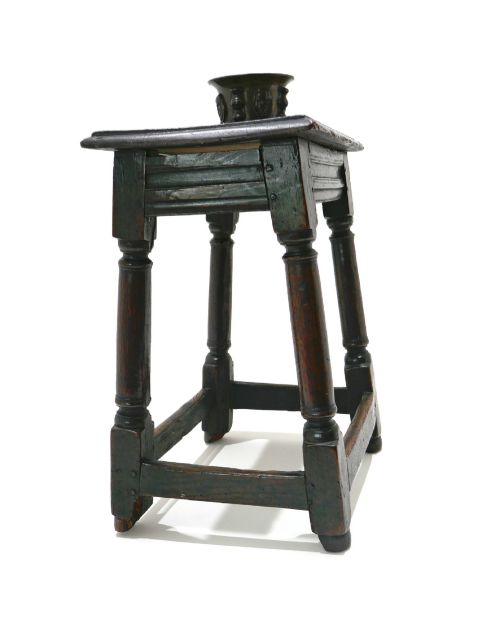
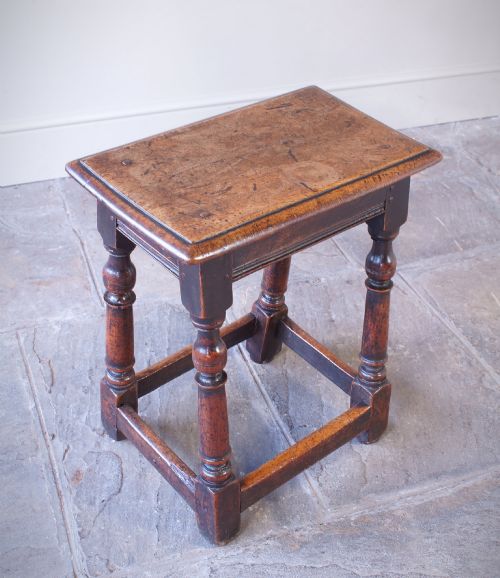
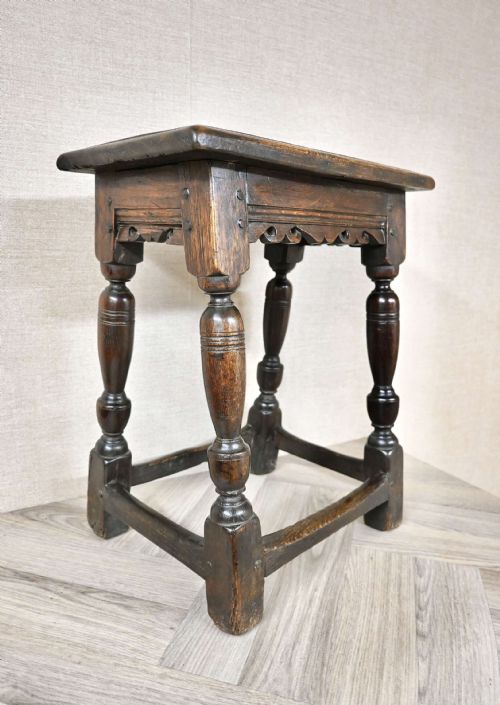
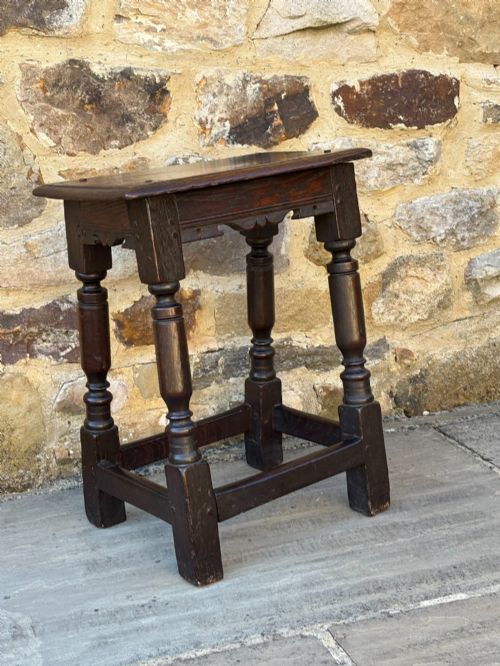
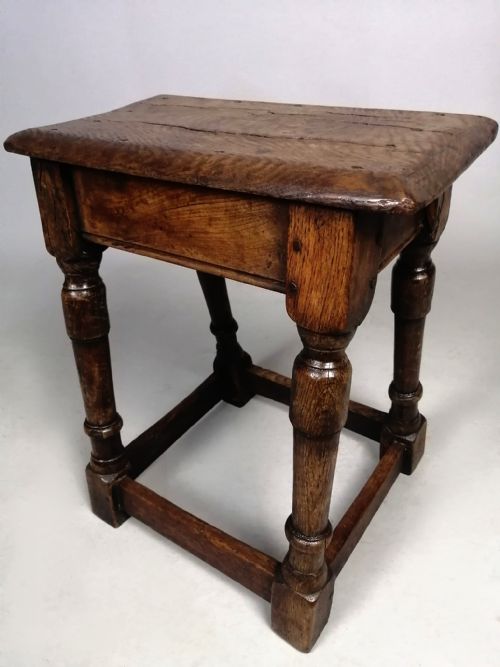
A jacobean joint stool is a low wooden seat constructed with mortise and tenon joinery secured by wooden pegs, designed originally for domestic use in the seventeenth century. These sturdy pieces served multiple household purposes, functioning as seats, small side tables, or steps.
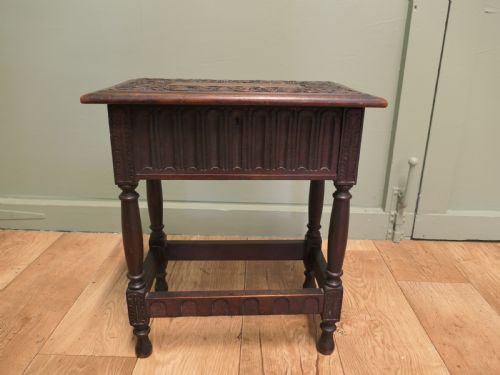
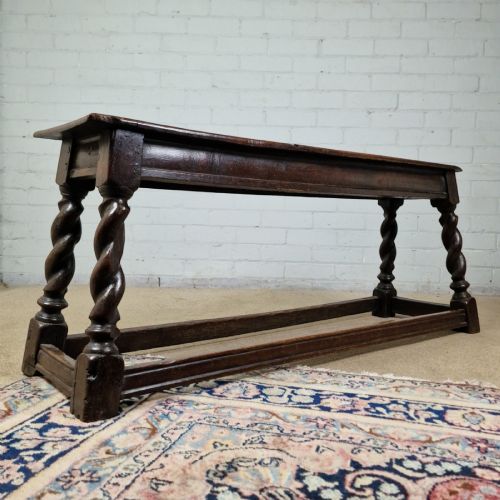
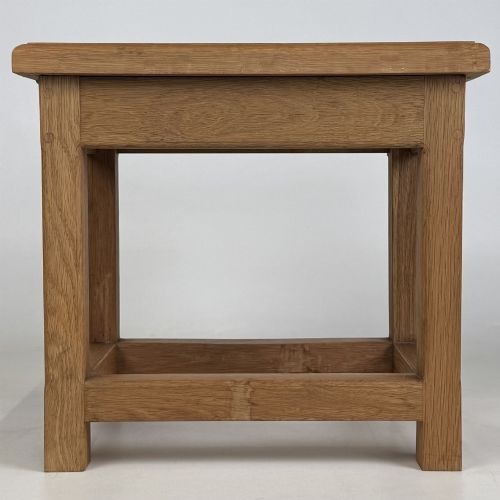
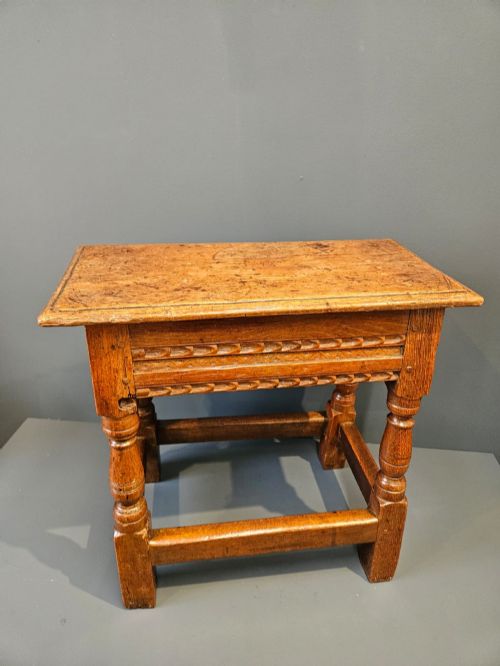
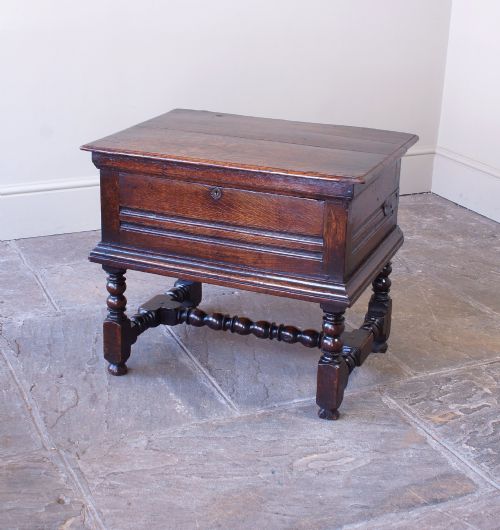
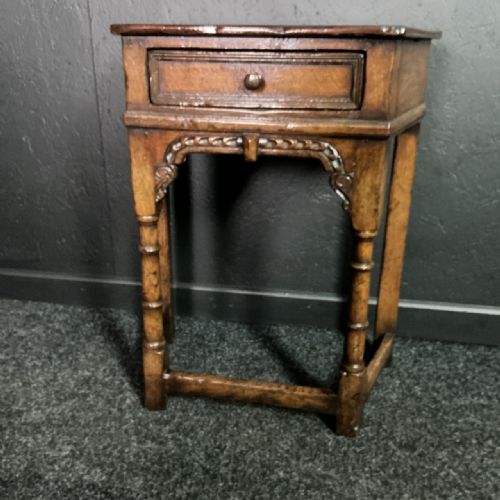
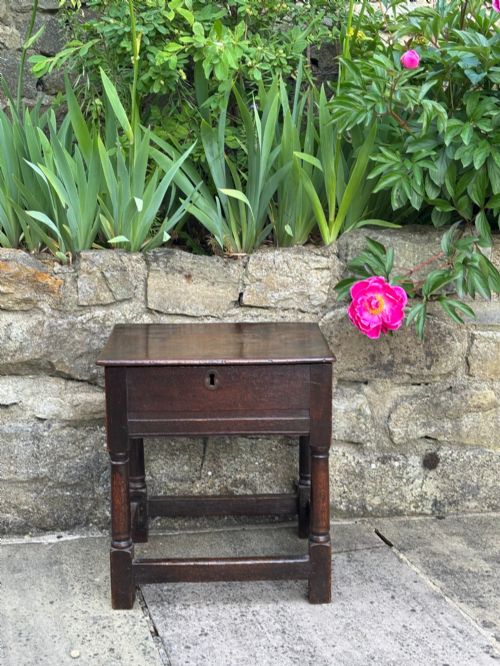
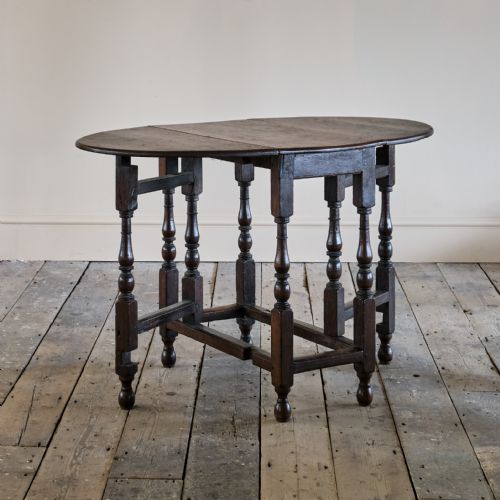
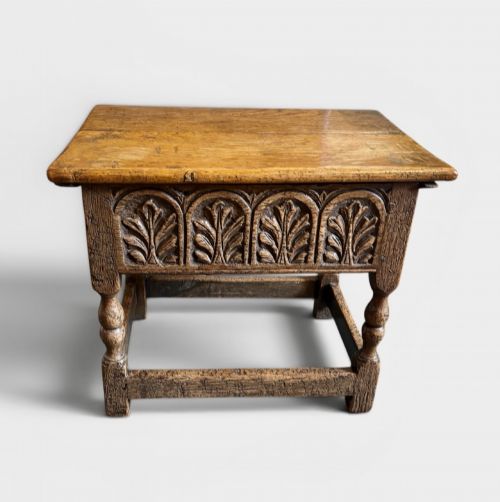
The versions met most frequently on this page span both authentic seventeenth-century examples and later revivals from the nineteenth and twentieth centuries. Alongside standard rectangular stools, the selection includes box stools, close stools, and low side tables sharing the same rigid timber framing.
How They Were Made
Joiners built these pieces primarily from solid oak, sometimes combining elm for specific components like seats, utilising pegged mortise and tenon joints instead of nails or glue. This tight skeletal framework gave the furniture its name, derived from joined stool.
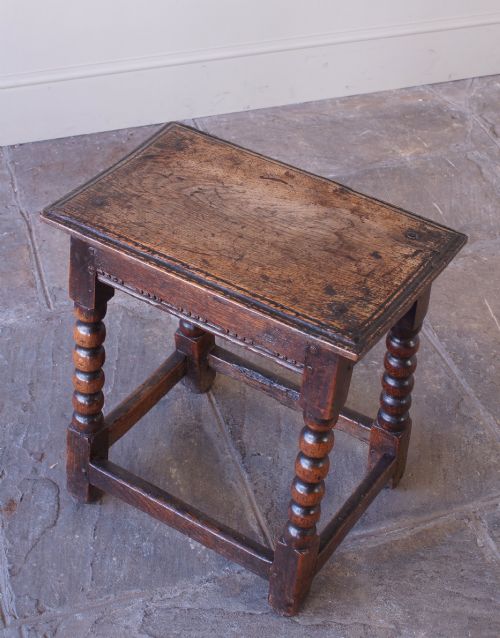
Decoration relied on hand carving, such as guilloche or nulling patterns along the rails, alongside turned legs shaped on a pole lathe. Iron or brass hardware occasionally appeared on box variants, while later revivals duplicated these traditional carpentry methods.
Miniature apprentice pieces appear alongside full-sized oak seats, offering diminutive proportions intended for dolls or display.
What Varies in Quality
Quality rests in the proportion of original timber surviving against later replacements, along with the crispness of the hand-carved detailing on the rails. Untouched surfaces retain a rich dry patina developed over centuries of handling, whereas over-cleaned wood loses its historical character.
The integrity of the pegged joints dictates structural firmness, distinguishing tightly fitted authentic frames from loose or heavily restored examples. Finer pieces demonstrate careful selection of quarter-sawn oak, displaying prominent medullary rays across the grain.
The Jacobean Joint Stool Glossary
- Joint stool
- A domestic seat constructed using pegged mortise and tenon joinery rather than traditional nailing. This method created a rigid frame capable of supporting heavy weight.
- Box stool
- A variant featuring a lidded seat compartment beneath the top board for storage. These items often doubled as close stools or locker seats.
- Quarter-sawn
- Timber cut radially from the tree log towards the centre, producing durable boards with decorative figuring. This cutting method minimises warping in oak furniture.
- Patina
- The surface sheen and colour developed by aged wood through handling, polishing, and oxidation. It serves as a key indicator of genuine age and continuous use.
- Turned leg
- A wooden support shaped on a lathe to create symmetrical decorative profiles such as baluster or reel shapes. Craftsmen utilised foot-powered pole lathes for early examples.
Jacobean Joint Stool: Frequently Asked Questions
What is a joint stool?
A joint stool is an early form of domestic seating made by specialist joiners using pegged mortise and tenon joints.
Unlike chairs, which were restricted to household heads, these sturdy items were common everyday seats for the wider household.
How were joint stools used?
These versatile pieces functioned primarily as dining seats around trestle tables or as portable platforms for reaching high shelves.
People also utilised them as small side tables to hold lighting or books in seventeenth-century interiors.
How do I date a joint stool?
Dating relies on examining the timber species, tool marks left by hand saws and adzes, and the wear patterns on the feet.
Later revival pieces from the nineteenth and twentieth centuries often display machine-cut marks and standardised peg placement.