


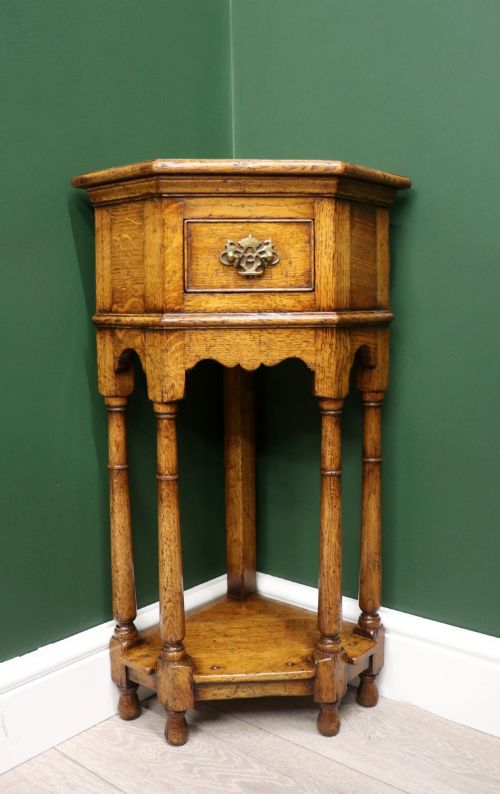
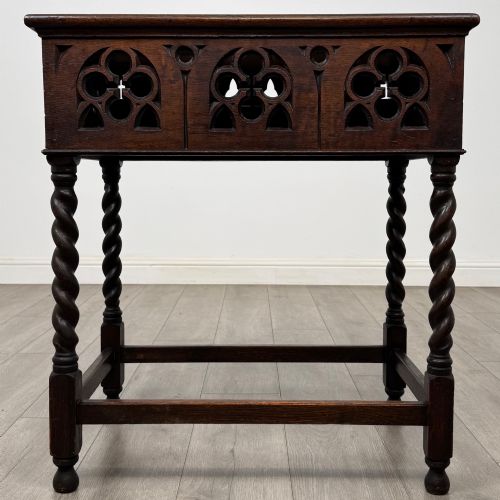
Carved Oak Hall Stand
A carved oak hall stand anchors an entrance hall with solid timber presence and practical provisions for hats, coats and umbrellas.
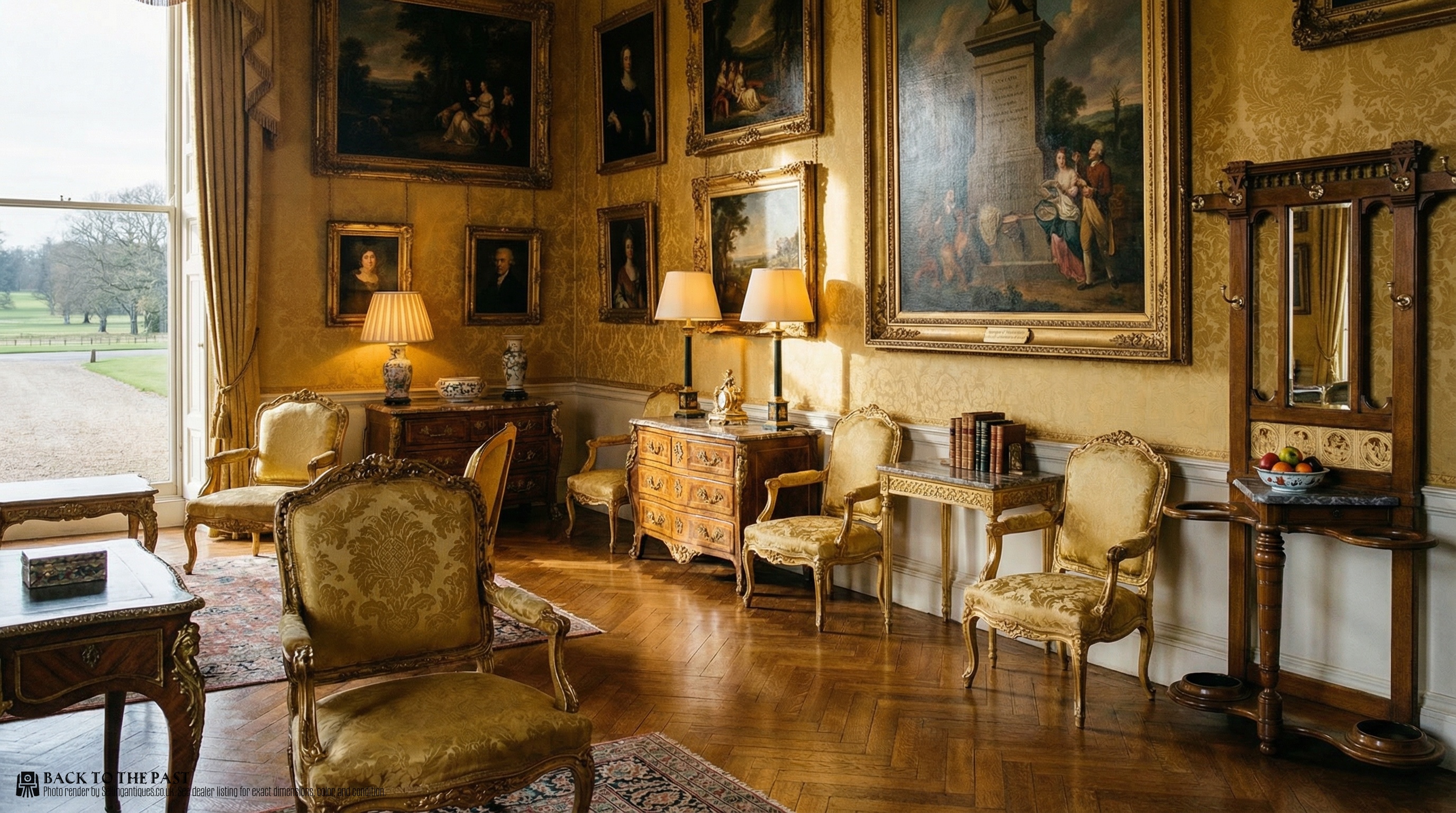
Carved Oak Hall Stand
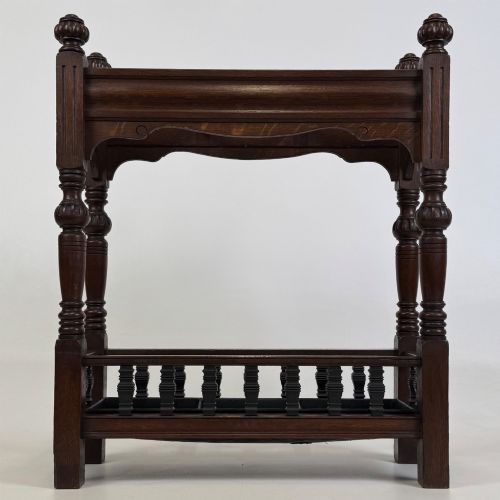
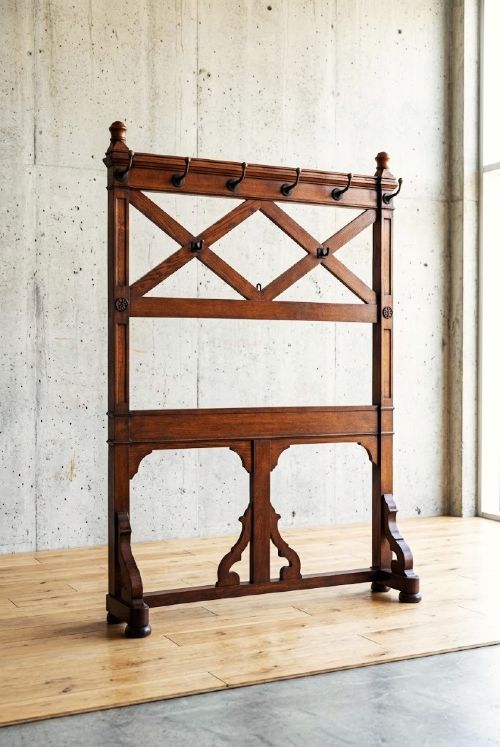
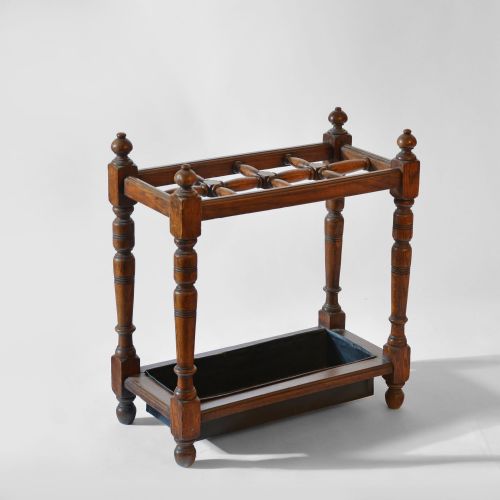
A carved oak hall stand is a substantial piece of entrance furniture designed to hold outdoor garments and walking gear. The pieces encountered on this page originate predominantly from the nineteenth and early twentieth centuries, spanning Victorian, Edwardian, and Arts and Crafts periods.
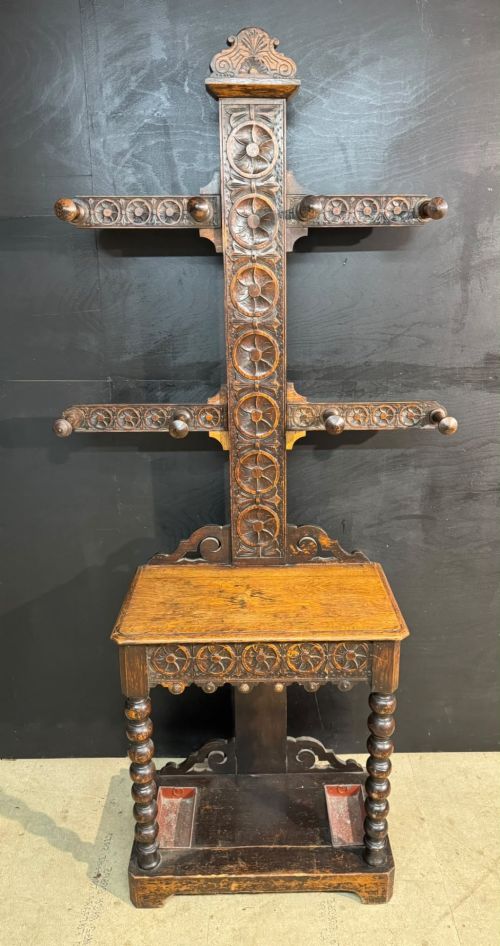
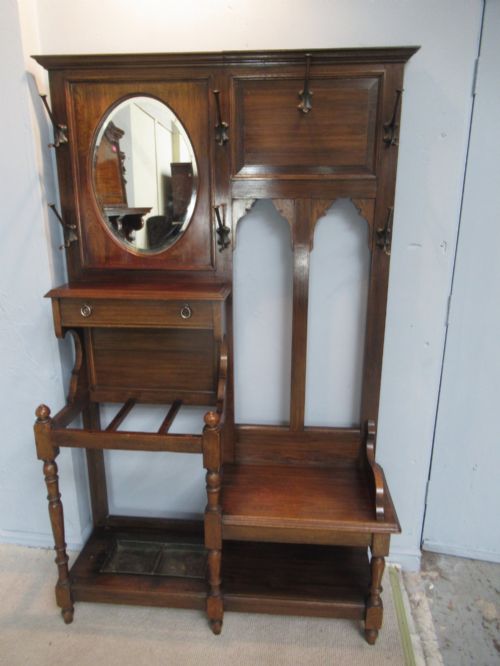
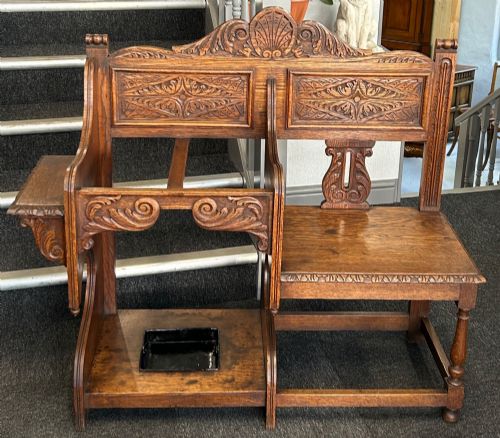
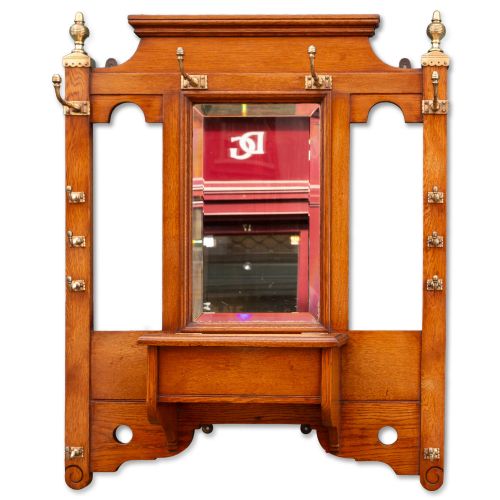
Most examples combine a panelled backboard with fitted coat hooks, a central mirror, and a lower section incorporating umbrella wells with metal drip pans. Some variations substitute the umbrella wells for a box seat or a hall settle, while others lean toward Gothic Revival or Aesthetic Movement design vocabularies.
Makers and designers of the period often integrated heavy relief carving, including foliate motifs and mythical masks, into the structural framework of the hall stand. The resulting forms range from compact Edwardian hall furniture to imposing country house stands featuring integrated umbrella stands.
Judging Quality
Quality in a carved oak hall stand is determined by the depth and crispness of the wood carving, the thickness of the solid oak timbers, and the integrity of the original metal hardware. Superior pieces display finely detailed relief work, such as distinct foliate scrolls or expressive green man masks, rather than shallow, machine-stamped decoration.
The architectural ambition of the frame also dictates grade, with finer examples incorporating turned barley twist columns, bevelled edge mirrors, and heavy brass drip pans. Originality of components, including matching coat hooks and untruncated umbrella wells, separates standard commercial production from workshop pieces of distinction.
Carved Oak Hall Stand Retail Price Guide 2026
Typical asking prices for carved oak hall stand among the pieces listed under this phrase on Sellingantiques today, from the lower quarter to the upper quarter. They describe what is for sale here now, not the wider market.
Listings feature solid oak across periods spanning the Victorian era, the Edwardian period, and the 1920s, incorporating brass, iron, and glass elements.
Liberty and Co·Shapland and Petter·J Parker of Woodstock·William Whiteley
The Carved Oak Hall Stand Glossary
- Green man
- A sculptural architectural motif depicting a human face emerging from or entwined with foliage. It appears frequently on Victorian and later carved oak hall furniture.
- Drip pan
- A removable metal tray housed at the base of an umbrella stand to catch moisture from wet walking sticks. These are often made from brass or galvanised iron.
- Gothic Revival
- An architectural and decorative style drawing inspiration from medieval design. Pieces often feature pointed arches, tracery, and heavy structural oak.
- Arts and Crafts
- A design movement prioritising traditional craftsmanship and honest construction over mass production. Furniture from this ethos utilises plain oak surfaces and exposed joinery.
- Barley twist
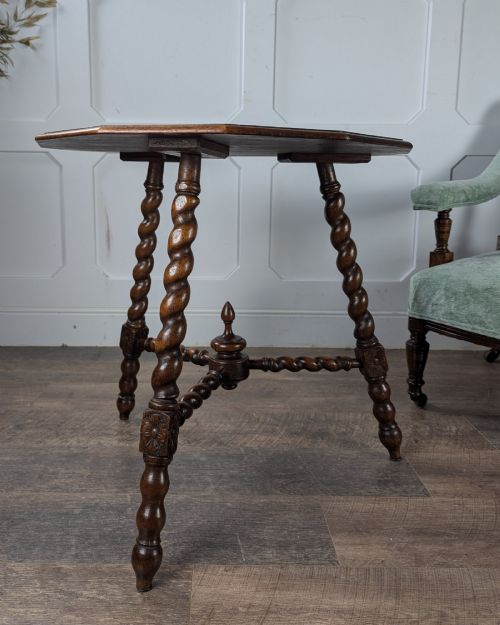
- A type of turning resembling a rope wound around a cylinder, used to shape wooden columns and legs. This technique is common on late Victorian supports.
Carved Oak Hall Stand: Frequently Asked Questions
How do I care for an oak hall stand?
Maintain the timber by applying a traditional beeswax polish periodically to nourish the dry oak surface. Avoid placing the piece in direct sunlight or near heat sources to prevent timber splitting.
Inspect the metal drip pans regularly and empty any accumulated moisture to protect the lower wooden framing from water damage. Keep the brass and iron hooks clean with a soft dry cloth.
Were these made for large country houses?
Hall stands were produced for various domestic settings, ranging from compact townhouses to expansive country estates. Grander versions with integrated seats and extensive umbrella storage were intended for spacious entrance halls.
Smaller Edwardian variants suited narrower hallways where floor space was limited. The scale of the stand usually reflects the architectural proportions of the domestic interior it originally inhabited.
How can I date a carved oak hall stand?
Examine the style of the carving and the construction methods used in the frame. Gothic Revival and heavy Victorian pieces date to the mid-to-late nineteenth century, while simpler linear designs often point to the Edwardian era.
The presence of bevelled mirror glass, specific brass hook designs, and the integration of Arts and Crafts motifs help narrow the manufacturing period further.
Can a hall stand be dismantled for transport?
Many hall stands are constructed in modular sections, separating the upper backboard and mirror from the lower umbrella base or box seat. The parts are typically joined by concealed bolts and wooden dowels.
Care should be taken when moving these items to protect projecting carved details and delicate mirror frames from accidental impact.