
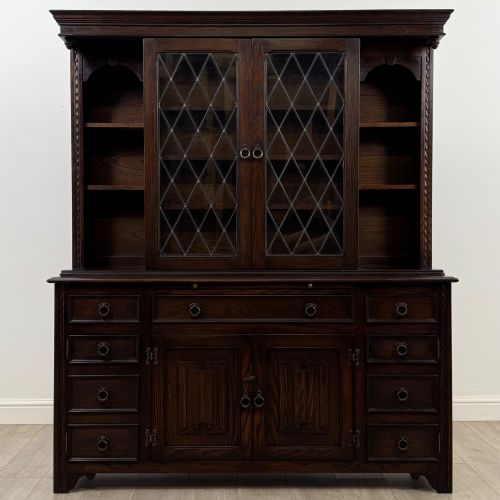
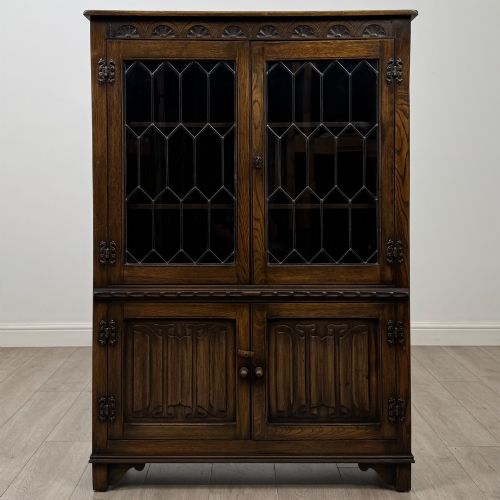
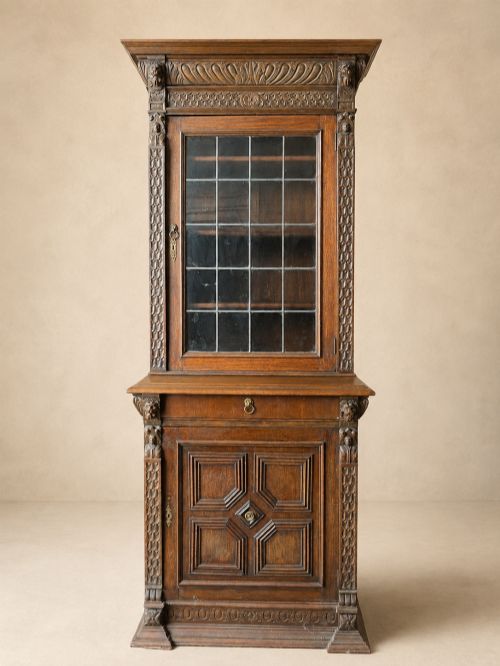
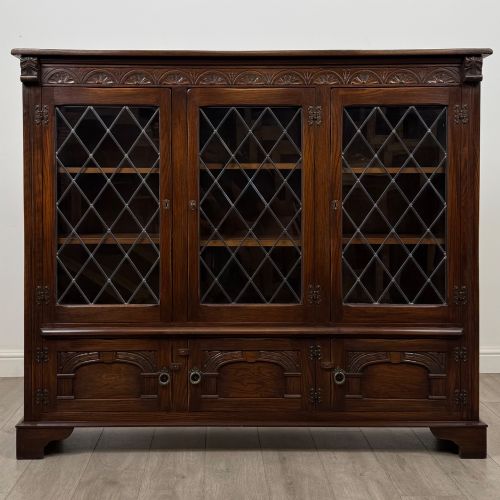
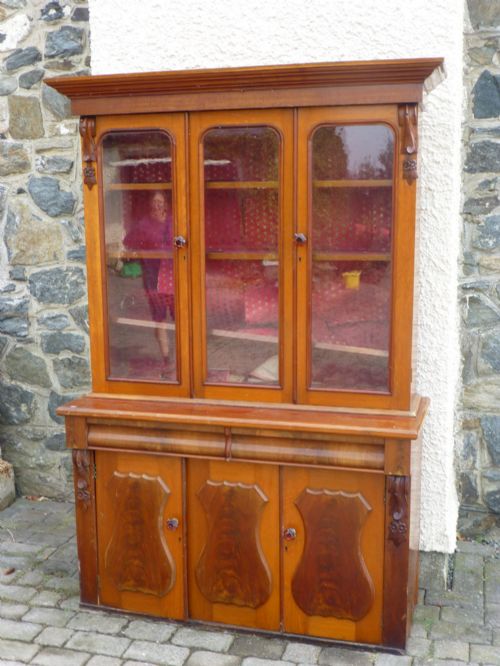
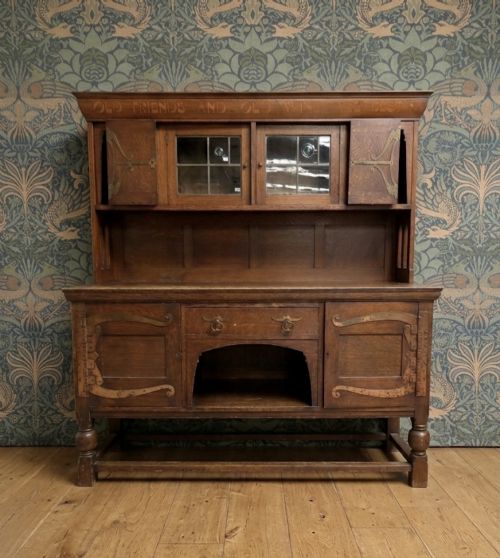
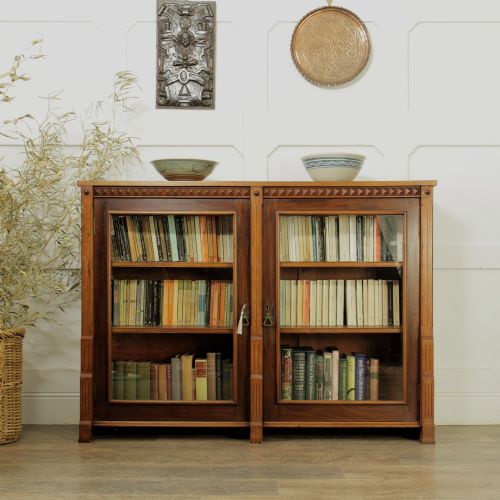
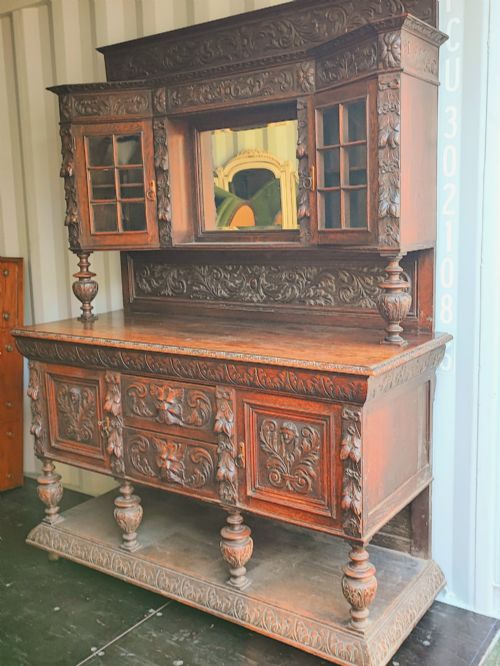

Carved Oak Glass Cabinet
A carved oak glass cabinet brings robust timber and clear viewing space together, holding books or treasured objects with solid presence.
Carved Oak Glass Cabinet
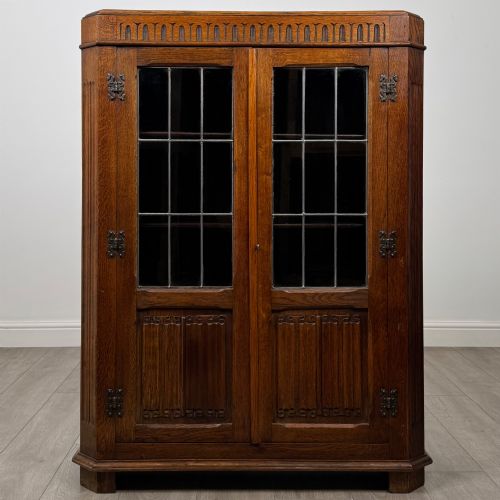
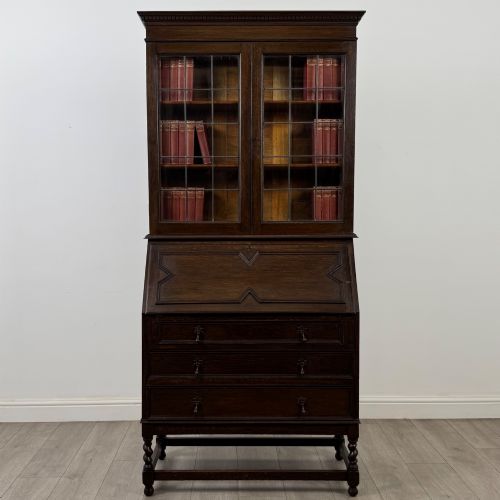
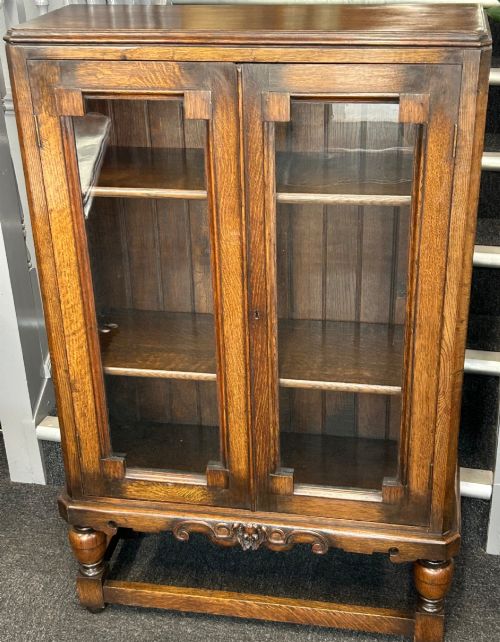
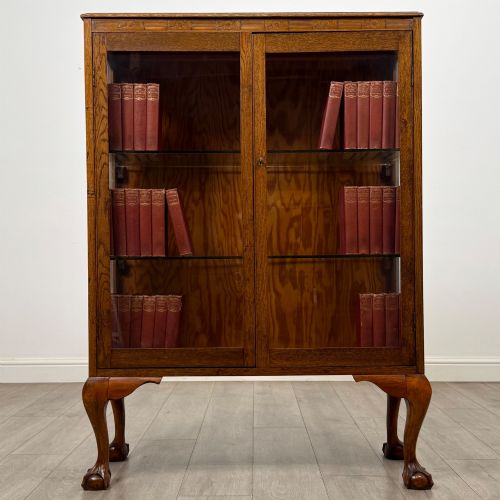
A carved oak glass cabinet typically appears across nineteenth-century and early twentieth-century periods, spanning Victorian, Edwardian, and Arts and Crafts eras. Buyers encounter tall library bookcases, glazed display cabinets, and smaller counter-top shop units.
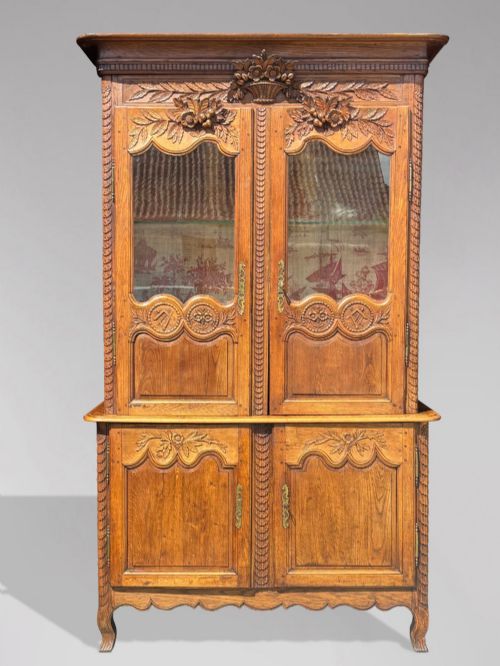
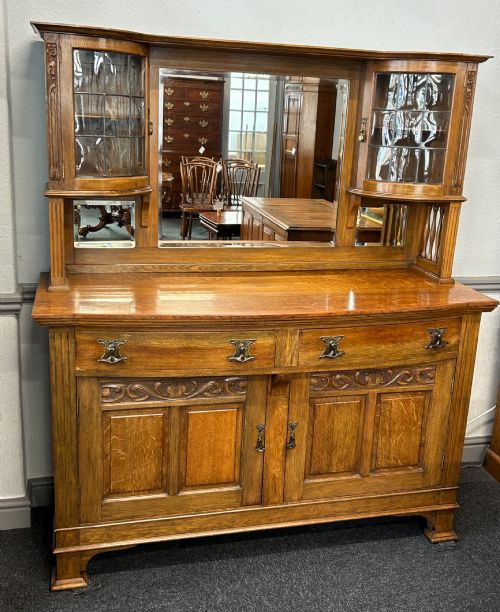
The pieces emerge from British and continental workshops, ranging from heavy Flemish revival designs to simpler Edwardian glazed double bookcases and bureau variants. Many incorporate leaded or stained glass panels alongside timber shelves.
Materials and Construction
Makers utilised solid oak alongside glass for doors and panels, often incorporating brass or iron hardware such as hinges, handles, and locks. Structural integrity relies on traditional joinery within heavy timber frames.
Surface enrichment involves hand carving, linenfold panelling, and leaded glazing techniques to secure individual glass panes within the doors.
Listings feature periods from the 18th Century through the Victorian and Edwardian eras up to the 1920s.
The Spectrum of Quality
Quality differentiates through the depth and crispness of the timber carving, the thickness of the solid oak boards, and the integrity of the glass panels. Finer examples display meticulous hand-chiselled ornamentation rather than shallow mechanical stamping.
Construction details such as dovetailed drawers, original brass or iron mounts, and undamaged leaded or stained glass sections distinguish superior pieces from utilitarian utility items.
Ambrose Heal for Heal & Son·Liberty & Co
The Carved Oak Glass Cabinet Glossary
- Linenfold
- A style of relief carving on wooden panels resembling folded linen fabric. This technique appears frequently on Edwardian cabinet doors.
- Tantalus
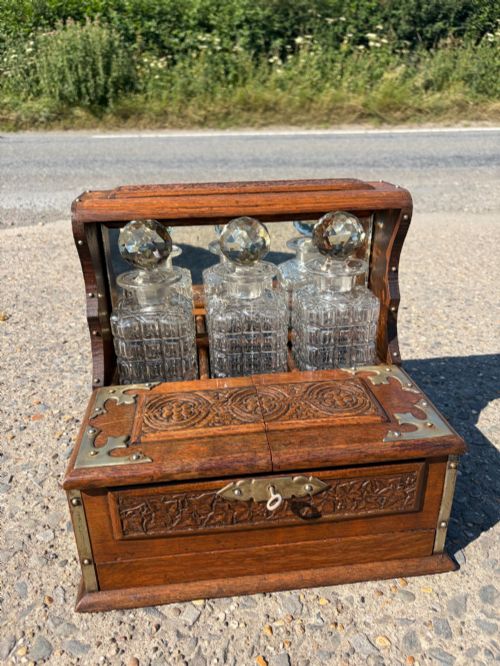
- A decorative wooden cabinet holding decanters securely behind a locked metal bar while keeping the contents visible. The mechanism prevents unauthorised access to the bottles.
- Bureau bookcase
- A combination of a sloping desk flap above shelving or enclosed display space. It provides both a writing surface and storage.
- Leaded glass
- Small panes of glass held together within lead cames to form geometric or decorative patterns. This method strengthens large viewing areas in cabinet doors.
- Vitrine
- A glass-fronted display cabinet designed specifically for showing porcelain or ornaments. French examples often feature lighter framing than heavy British equivalents.
Carved Oak Glass Cabinet: Frequently Asked Questions
How do I date a carved oak glass cabinet?
Dating relies on observing construction methods, hardware types, and stylistic indicators such as Victorian Gothic revival motifs or Edwardian proportions. Secondary wood usage and backboard construction also provide chronological clues.
Heavier, deeply carved timber often points to the nineteenth century, whereas lighter framing and simpler glazing bars frequently suggest the early twentieth century.
Are the glass panels usually original?
Many cabinets retain their original mouth-blown or early drawn glass, which exhibits subtle surface ripples and minor bubbles. Replacements are common due to accidental breakage over decades of use.
Inspect the edges and thickness of the panes to determine if the glass matches the age of the surrounding oak frame.
How should I care for the oak and glass?
Maintain the timber by applying traditional beeswax sparingly to nourish the grain without building up sticky residue. Avoid placing the cabinet near direct heat sources that could split the dry oak.
Clean the glass panels with a mild solution applied to a cloth rather than spraying liquid directly onto the wood or lead cames.