


Carved Oak Food Cupboard
A carved oak food cupboard is a sturdy domestic store for provisions, shaped by centuries of regional joinery and vernacular craft.
Carved Oak Food Cupboard
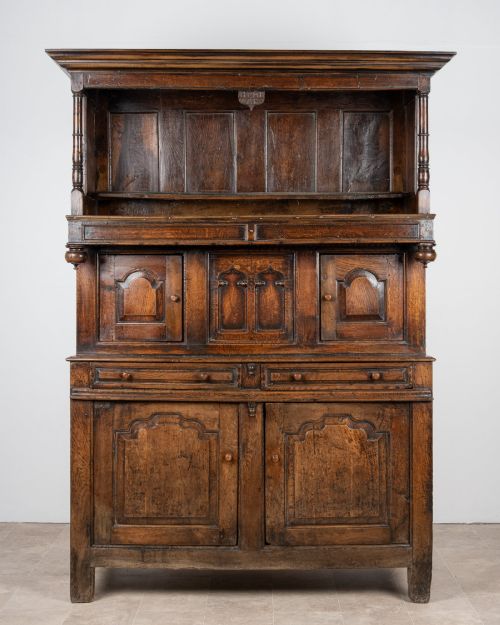
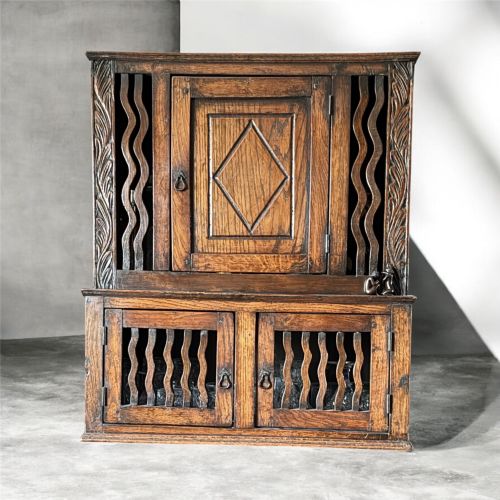
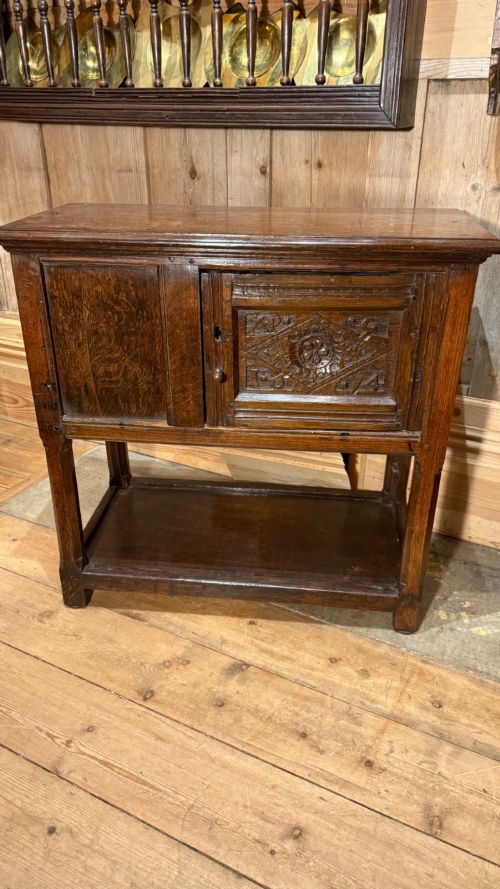
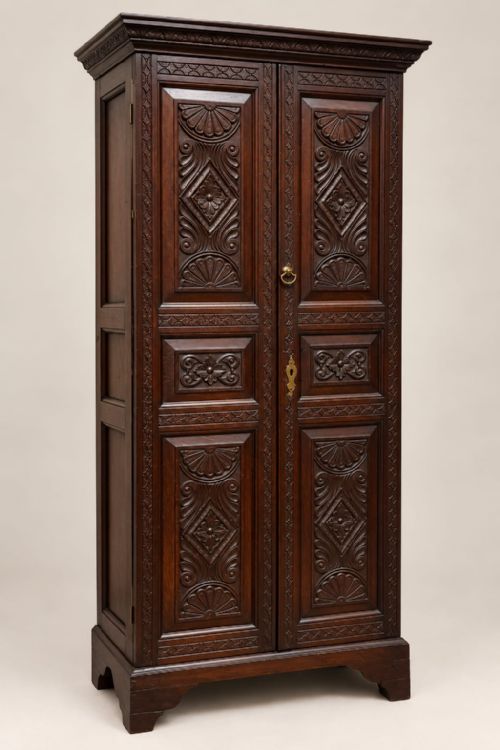
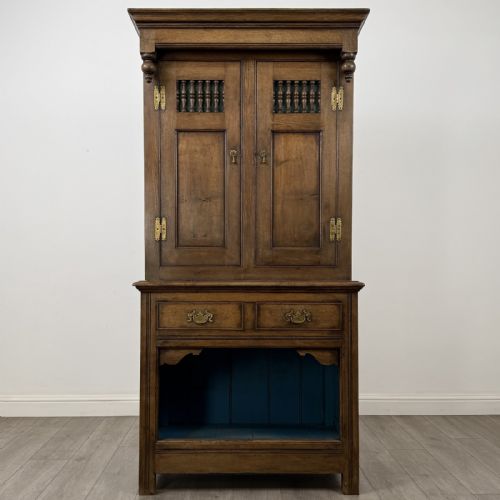
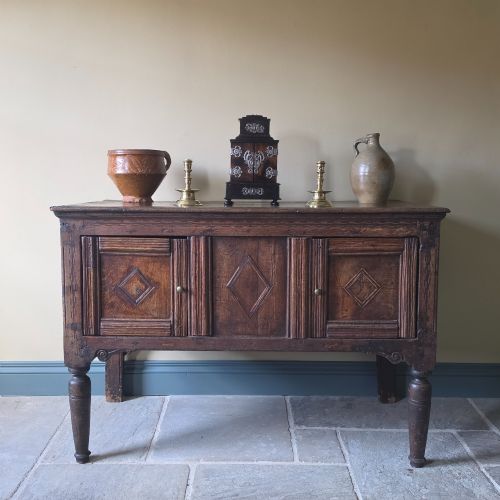
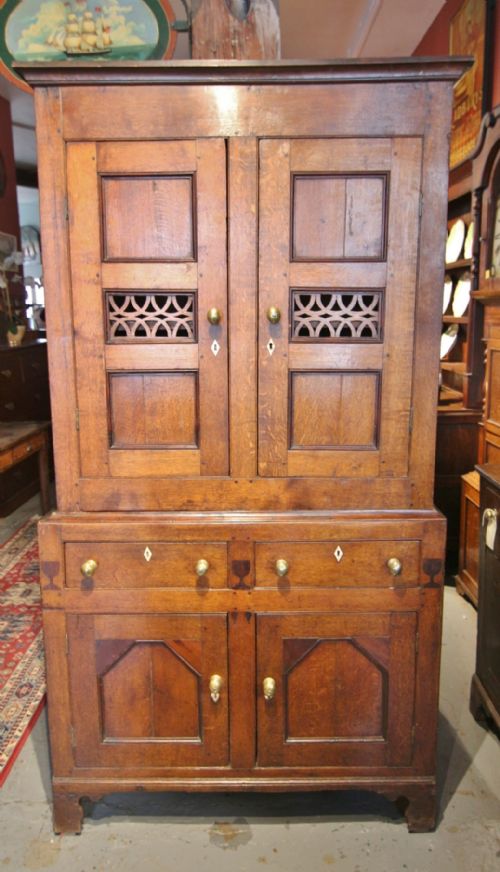
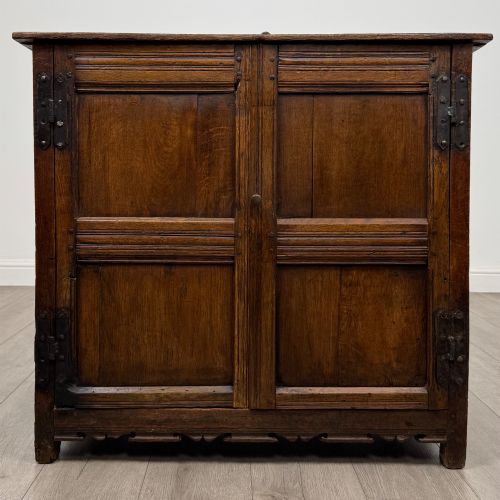
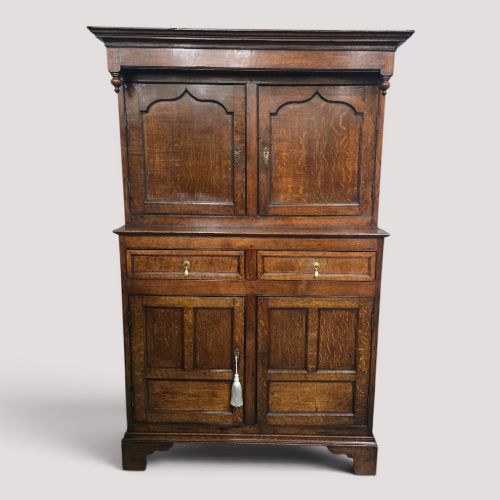
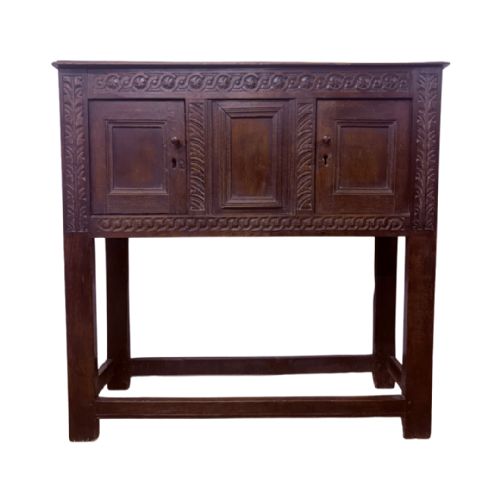
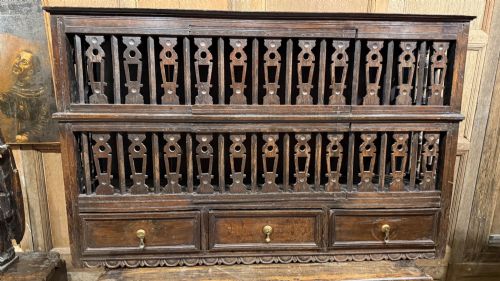
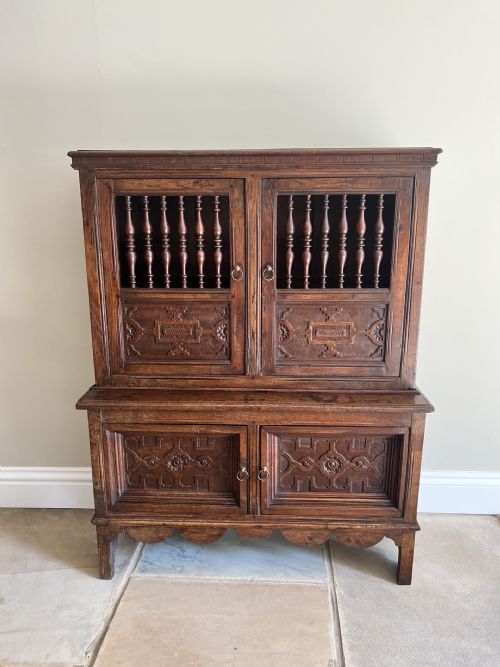
When buyers search for a carved oak food cupboard, they encounter robust storage pieces spanning several centuries of British and continental vernacular design. The selection includes court cupboards, press cupboards, livery cabinets, and hanging larders originating from periods such as the seventeenth and eighteenth centuries.
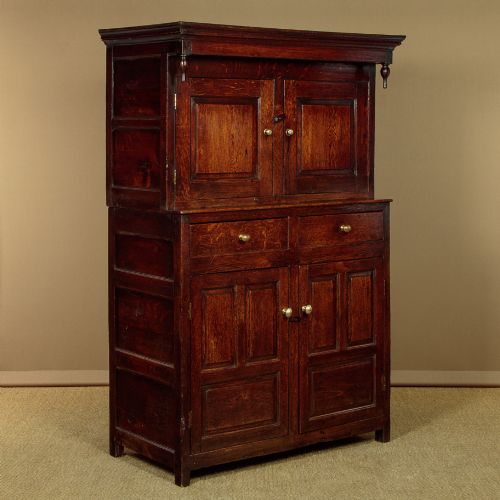
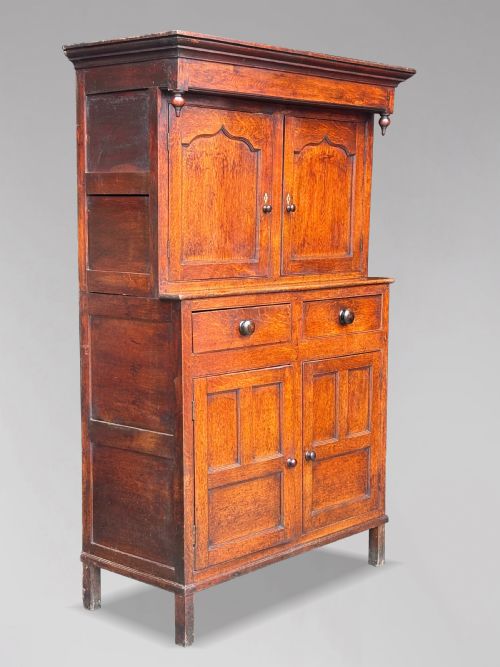
The most common forms on this page range from compact hanging wall cabinets to large Welsh deuddarns and tridarns. Regional variations highlight local domestic needs, utilising sturdy English and French timbers shaped into multi-tiered storage units.
Materials and construction methods
Makers built these pieces primarily from solid English and French oak, sometimes enriched with fruitwood inlay, bone, or contrasting inlaid wood. Structural integrity relied on joined timber frames held together by traditional pegs rather than modern fasteners.
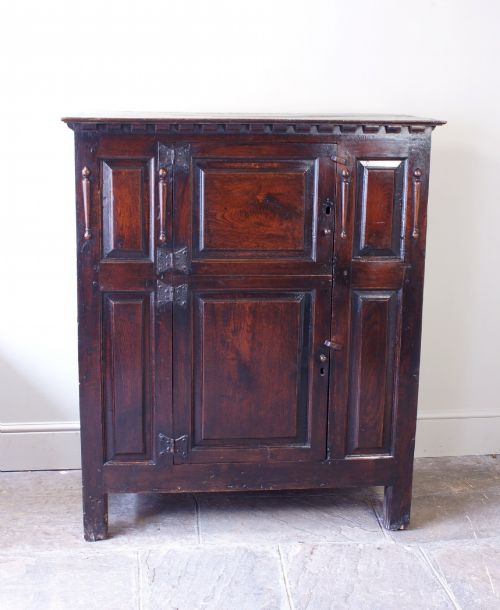
Hardware played an essential mechanical role, featuring hand-beaten iron, wrought iron, and brass hinges alongside original blacksmith locks. Surfaces often received carved ornamentation executed with handheld gouges and chisels directly onto the dense heartwood.
Carved Oak Food Cupboard Retail Price Guide 2026
Typical asking prices for carved oak food cupboard among the pieces listed under this phrase on Sellingantiques today, from the lower quarter to the upper quarter. They describe what is for sale here now, not the wider market.
Hardware details vary across the selection, featuring hand-forged iron locks and hinges alongside inlaid decorative accents of fruitwood and bone.
Assessing craftsmanship and survival
Quality rests in the crispness of the original carved details and the retention of primary structural timbers without extensive modern timber replacement. Pieces that preserve their initial surface texture and original blacksmith ironwork command greater respect from collectors.
Proportion and regional fidelity dictate the architectural success of each cabinet, distinguishing provincial workshop items from standard production. The preservation of early internal shelving, original panel backboards, and authentic locking mechanisms defines the superior examples.
The Carved Oak Food Cupboard Glossary
- Court cupboard
- A traditional open or enclosed two-tier sideboard used for displaying plate and storing provisions. These pieces frequently feature carved lower doors and supported upper recessed tiers.
- Deuddarn
- A traditional Welsh two-part cupboard featuring enclosed upper and lower storage sections. The form developed during the seventeenth and eighteenth centuries in rural workshops.
- Livery cupboard
- A small storage cabinet designed to hold rations or small items of food and drink. They often incorporated turned spindles or pierced panels to permit air circulation.
- Tridarn
- A three-tier Welsh cupboard representing the largest development of regional vernacular storage. They include an open middle display stage situated between enclosed upper and lower cabinets.
- Joined oak
- furniture constructed using mortise and tenon joints secured with wooden pegs. This technique preceded the widespread adoption of nailed or screwed assembly.
Carved Oak Food Cupboard: Frequently Asked Questions
How do I date a carved oak food cupboard?
Dating relies on examining the construction joints, tool marks, and carving styles characteristic of specific reigns and centuries. Seventeenth-century pieces typically display hand-split panels, peg joinery, and heavy geometric or floral carvings.
Later eighteenth and nineteenth-century examples often incorporate softer secondary woods, refined hinges, and different vernacular regional proportions. Comparing the lock mechanisms and panel construction helps narrow down the decade of manufacture.
Where were food cupboards used in the home?
These cupboards served primarily in kitchens, butteries, and great halls to store perishable rations, bread, cheese, and household stores. Hanging variants were positioned on walls to keep provisions away from household pests.
Larger court and press cupboards functioned as multi-purpose storage units in principal domestic rooms. Their surfaces also doubled as serving stages for food and display areas for pewter ware.
How should I care for antique oak furniture?
Maintain a stable indoor humidity and keep the timber away from direct heat sources such as radiators and open fires. Sudden environmental shifts cause old oak to shrink, warp, or split along the grain.
Apply a light application of traditional beeswax polish occasionally to nourish the dry wood surface. Avoid modern silicone sprays or heavy liquid cleaners that penetrate open grain pores and attract dust.
What is the difference between a deuddarn and a tridarn?
A deuddarn is a two-part cupboard consisting of an upper cabinet sitting directly upon a larger lower base. They represent traditional Welsh vernacular cabinet-making from the seventeenth and eighteenth centuries.
A tridarn adds an extra middle section featuring an open display canopy supported by turned posts. This creates a taller three-tiered structure designed for both secure storage and ceremonial display.