
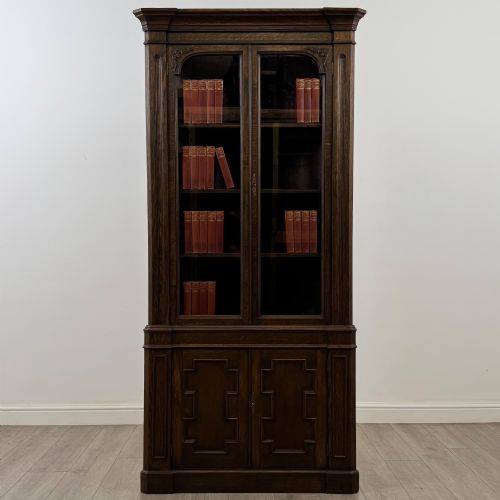
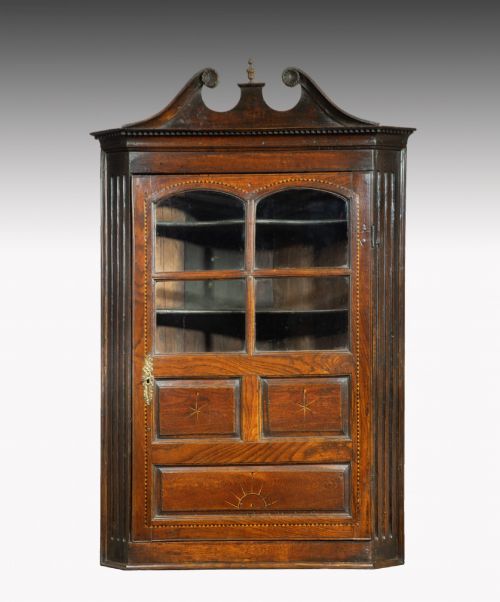
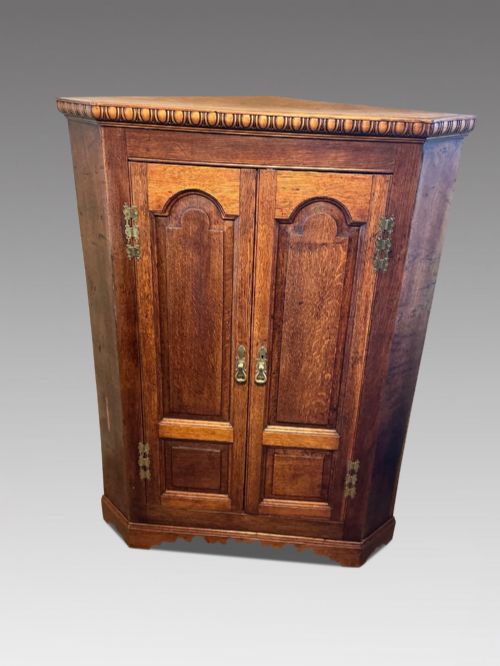

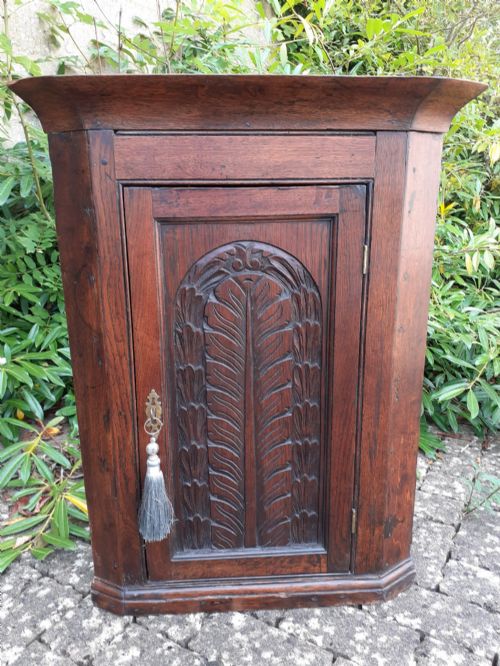

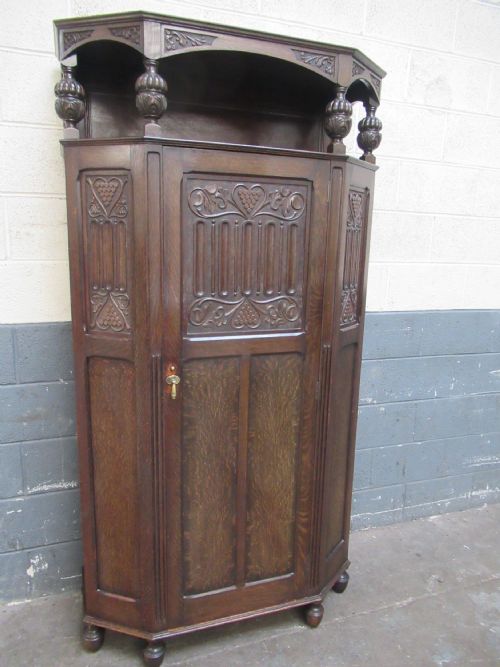


Carved Oak Corner Cupboard
These carved oak corner cupboards turn forgotten room angles into statement display spaces with rich period grain.
The carved oak corner cupboard
A carved oak corner cupboard provides ingenious storage by fitting snugly into room angles, making use of otherwise dead architectural space. These pieces serve as practical shelving units while offering panelled doors and decorative frontages that command attention.
Makers designed these cabinets to sit securely in domestic interiors, utilising the triangular footprint to house china, glassware or provisions. The combination of sturdy timber and fitted corner geometry makes them enduringly useful additions to period rooms.
Materials and construction
Makers selected solid oak for its durability and strong grain, occasionally pairing it with secondary woods for internal shelving. Panels were frequently raised and shaped by hand to create depth across the front elevation before being secured within sturdy frames.
Joinery relied on traditional methods such as mortise and tenon joints to bear the weight of heavy timber doors. Metal hardware including brass hinges and iron latches secured the cabinetry while adding functional contrast to the warm wood tones.
Retail Price Guide 2026
Typical UK retail prices for carved oak corner cupboard, calculated from the Sellingantiques database of over a million retail prices indexed since 2003. This retail price guide relies exclusively on Sellingantiques data; no external sources or auction records are used, so the figures do not describe the wider market.
Listings span several distinct eras including Georgian, Victorian, and Arts and Crafts periods.
Distinctions in quality
The distinction between ordinary and exceptional examples rests in the depth and crispness of the hand carving. Skilled artisans rendered foliage, tracery and figurative details with sharp relief, whereas lesser pieces show softer, more mechanical execution.
Proportion and timber selection further separate standard items from finer works. Superior cabinets exhibit richly figured oak boards matched carefully across the door panels, complemented by robust original brass or iron hardware that remains well-fitted to the frame.
The Carved Oak Corner Cupboard Glossary
- Bowfront
- A convex curved cabinet front that projects outward from the corner walls. This styling softens the geometric angles of the room.
- Raised panel
- A central wood panel with bevelled edges fitted into a grooved frame. This technique allows the timber to expand and contract with humidity changes.
- Standing corner cupboard
- A tall floor-resting cabinet designed to occupy a room intersection. These units often feature upper and lower storage sections.
- Hanging wall cabinet
- A smaller cupboard built to be mounted directly onto wall studs above floor level. These pieces save valuable floor space in compact rooms.
- Green man
- A sculptural architectural motif depicting a human face entwined with foliage. It symbolises rebirth and appears carved into various Victorian surfaces.
Frequently Asked Questions
How do I hang a wall cupboard?
Wall-hanging models require secure attachment to structural studs behind plaster using appropriate brackets.
Because solid timber cabinets carry significant weight, professional installation ensures the piece remains safely supported over time.
Can these cabinets stand on carpets?
Standing versions sit directly on floors, though thick carpets may require small levelling shims beneath the base plinth.
Ensuring the cabinet rests evenly prevents door warping and keeps the frame square against the walls.
How do I distinguish Georgian from Victorian pieces?
Georgian examples tend to feature restrained classical mouldings and cleaner architectural lines.
Victorian and revival pieces often display heavier, deeper carving with Gothic or floral motifs and darker surface patination.
What is the best way to clean oak?
Maintenance requires only a soft, dry cloth to remove dust from carved recesses and flat panel surfaces.
A light application of traditional beeswax occasionally helps nourish the timber without building up heavy chemical residues.