






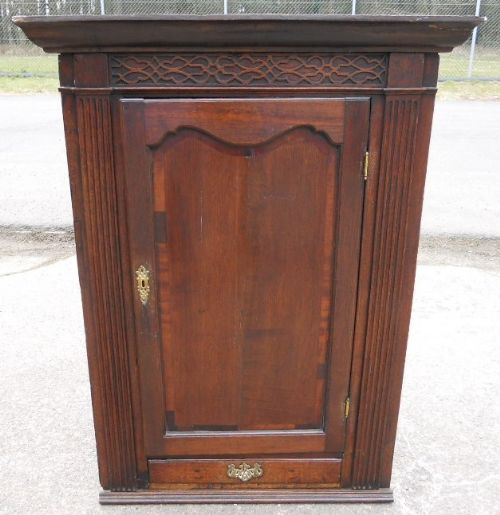

Carved Panel Corner Cupboard
A carved panel corner cupboard turns dead room space into useful display, bringing timber texture and historical form directly into an interior.
Carved Panel Corner Cupboard
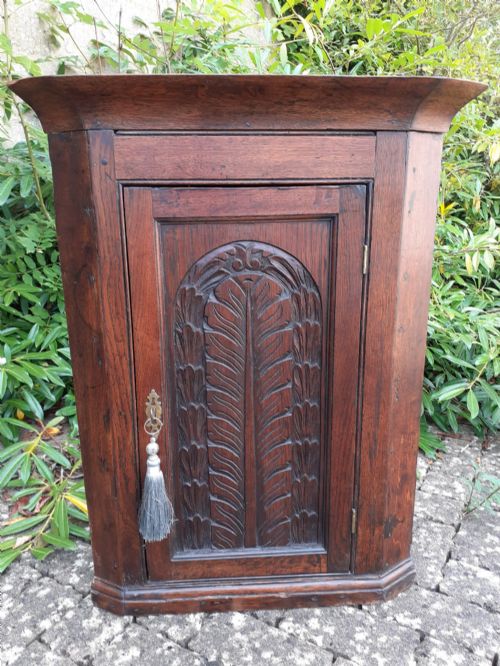
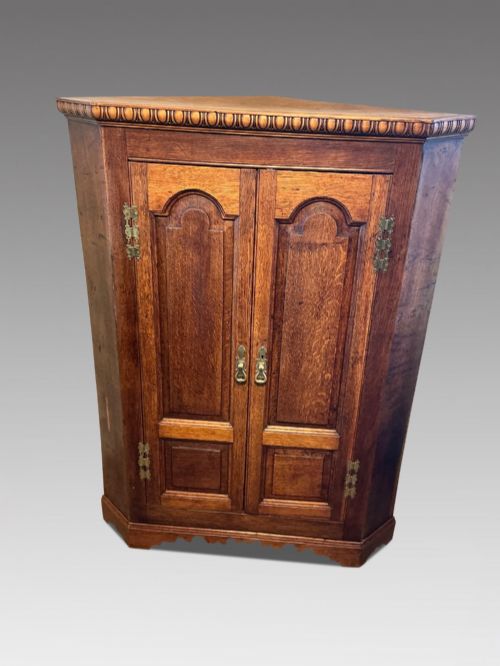
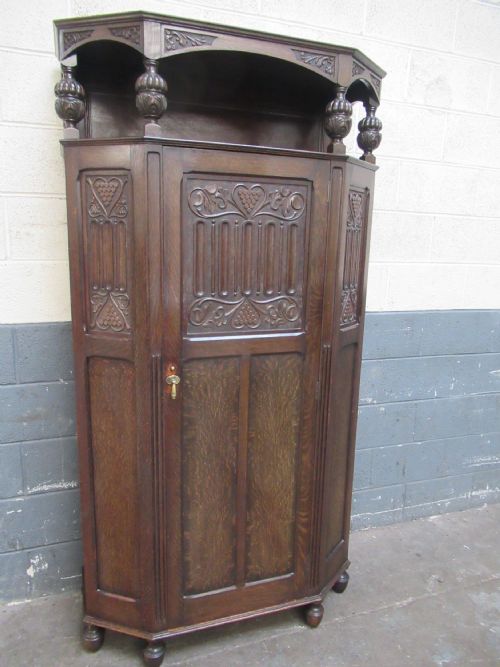
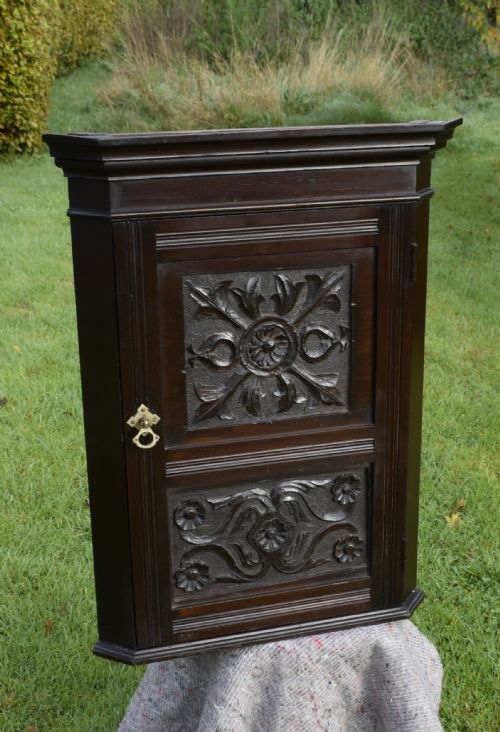
A carved panel corner cupboard is a triangular or canted storage piece designed to fit tightly into the junction of two walls, making practical use of awkward architectural angles. Most examples found here date from the Georgian and eighteenth-century periods, constructed primarily as hanging wall cabinets or floor-standing units.
The defining feature across these pieces is the solid wooden door, often styled with raised or carved panels that display period joinery techniques. Makers built these predominantly from oak, though variations stretch from the seventeenth-century revival styles down to Edwardian adaptations.
Buyers searching for a carved panel corner cupboard encounter everything from small Welsh hanging cupboards to large late Georgian double-door cabinets. The common thread is the clever use of fitted interior shelving to house domestic items out of the main traffic of a room.
Materials and construction
Oak dominates the construction of these cupboards, chosen for its durability and responsiveness to hand-carving and panel work. Secondary timbers such as pine sometimes appear on internal elements or backboards, while brass provides the metal hinges and escutcheons.
Joinery methods rely on pegged mortise and tenon frames surrounding heavy raised panels, allowing the timber to expand and contract naturally without splitting. Surface finishing involves hand-waxing directly onto the oak grain rather than applying heavy modern varnishes.
Carved Panel Corner Cupboard Retail Price Guide 2026
Typical asking prices for carved panel corner cupboard among the pieces listed under this phrase on Sellingantiques today, from the lower quarter to the upper quarter. They describe what is for sale here now, not the wider market.
Listings for this phrase feature oak timber almost exclusively, spanning the Georgian period down to Edwardian revivals.
Evaluating quality and craftsmanship
Quality in a carved panel corner cupboard rests on the crispness of the timber carving and the integrity of the original joints. Pieces that retain their early brass hardware and original hanging brackets stand apart from those altered or refitted later.
The thickness and selection of the oak timber dictate the visual weight and stability of the cabinet. Finer examples display carefully matched grain across the raised panels and proportioned shelving inside the shaped interior.
The Carved Panel Corner Cupboard Glossary
- Raised panel
- A wooden panel with bevelled edges that fits into a grooved frame, adding depth and shadow to the door front. This traditional method allows the solid timber to move with humidity changes.
- Hanging corner cupboard
- A wall-mounted version fitted with structural brackets at the back to secure it safely to room corners. These typically lack a floor base and are built lighter for elevation.
- Canted
- Having angled or bevelled corners rather than a sharp right angle, softening the profile of the cabinet where it meets the wall. It is a common geometry in eighteenth-century case furniture.
- Escutcheon
- A protective metal plate surrounding the keyhole of a cabinet door, often cast in brass. It shields the surrounding oak from wear caused by the repeated insertion of a key.
- Chippendale Revival
- A later stylistic movement reproducing the mid-eighteenth-century proportions and carved ornamentation popularised by Thomas Chippendale. Pieces bearing this style date to the Victorian or Edwardian eras.
Carved Panel Corner Cupboard: Frequently Asked Questions
How do I hang a wall cabinet?
Hanging corner cupboards rely on sturdy internal fixing points and iron brackets screwed directly into solid wall studs or masonry. Professional installation is recommended given the weight of dense oak timber.
Ensure the wall fixings match the vintage of the cabinet brackets to distribute the load evenly across the corner junction.
How do I clean antique oak?
Dust the surfaces regularly with a dry, lint-free cloth and apply a quality bees-wax periodically to nourish the dry timber. Avoid silicone sprays or modern wet polishes that can degrade the aged finish.
Gentle buffing brings out the natural lustre of the oak grain without stripping the historical patina built up over centuries.
Were these made for kitchens?
These cupboards served multiple domestic roles across parlours, halls, and dining spaces to store tableware, dry goods, or valuables. Their enclosed shelving protected items from dust and pests in older homes.
Their placement in room corners maximised floor space in smaller period properties where every square foot mattered.
How do I spot an 18th century piece?
Eighteenth-century examples display hand-cut peg joints, irregular adze marks on internal boards, and timber shrinkage consistent with age. Iron hardware and hand-bevelled panels point towards earlier hand-tool methods.
Later revival pieces often use machine-cut uniformity and different secondary woods like pine on visible structural elements.