



Traditional Oak Corner Cabinet
A traditional oak corner cabinet makes use of neglected space, bringing period character and practical storage to any room.
Traditional Oak Corner Cabinet
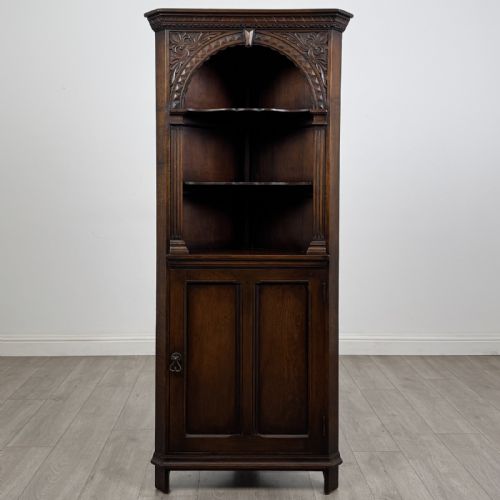
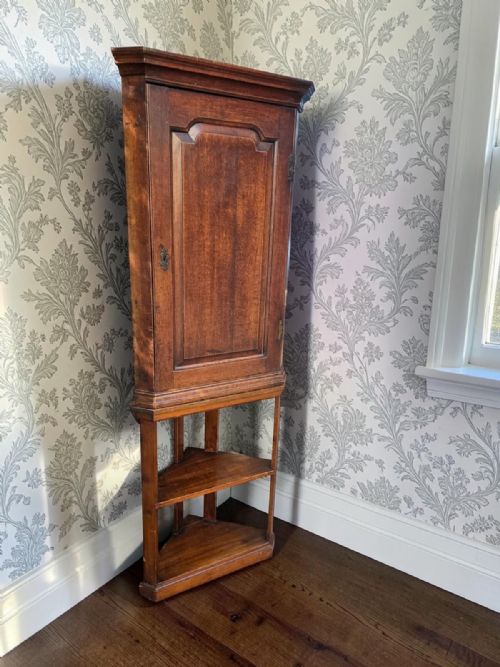
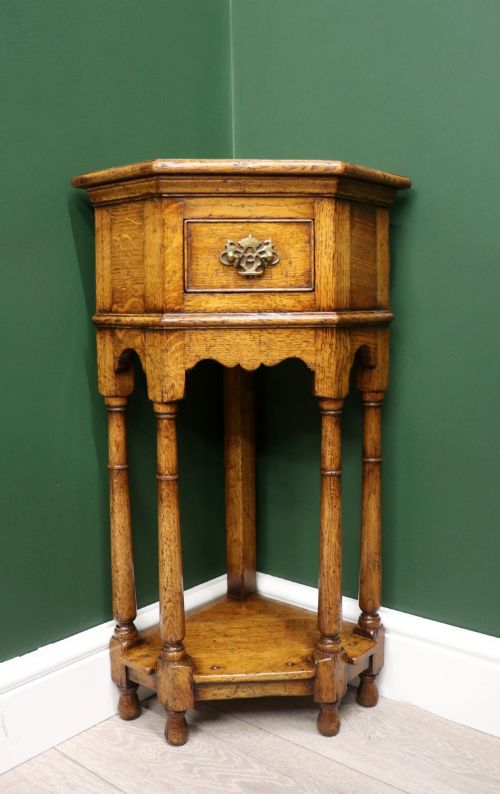
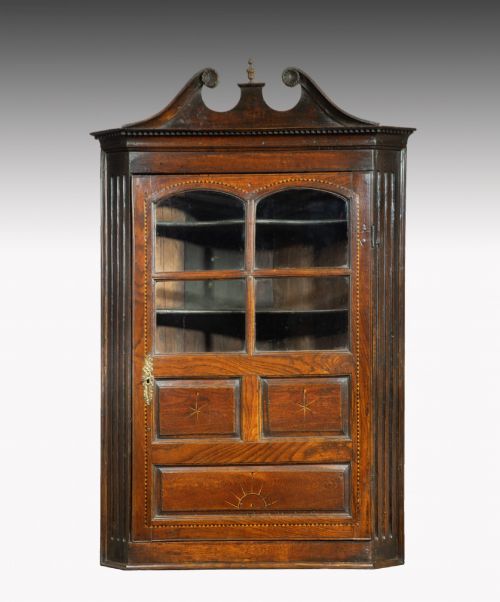
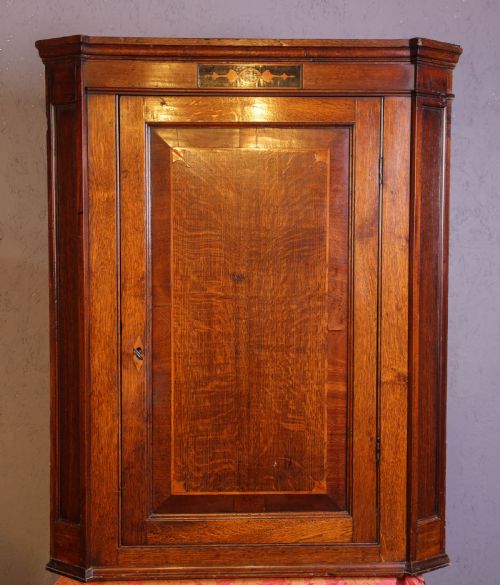
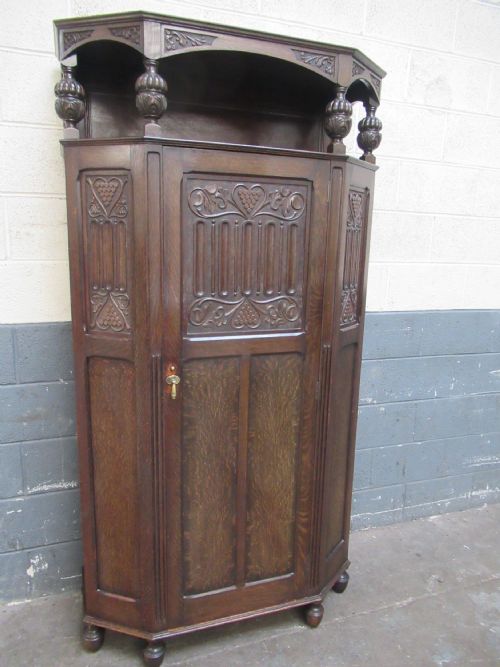
When you search for a traditional oak corner cabinet, you find fitted and freestanding storage furniture designed specifically to slot into ninety-degree wall junctions. The selections on this page range from small hanging cupboards to large floor-standing examples and pieces raised on stands.
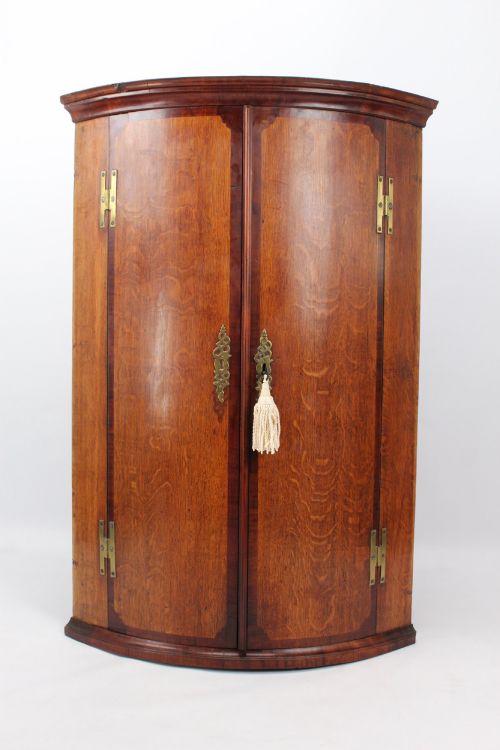
Most entries belong to the Georgian and eighteenth-century periods, alongside Victorian interpretations and later revivals. Common formats include bow front designs and single door cupboards, sometimes incorporating interior shaped shelves or base drawers.
While the core of the inventory stays true to English and French country styles, variations like the Jacobean Revival and occasional mahogany crossbanding show how makers adapted the form across different decades.
How they were made
Carpenters built these cabinets primarily using solid oak, occasionally combining it with mahogany for contrasting crossbanding or secondary timbers like satinwood and wood inlay for decorative detailing. Panels were frequently hand-planed and fitted into frame structures to accommodate the natural seasonal movement of timber.
Functional metalware such as brass hinges and escutcheons secured the doors, while glass panels appeared in later or more formal iterations to display contents inside. Surface finishes relied on traditional wax and polish applied directly to the bare wood.
Traditional Oak Corner Cabinet Retail Price Guide 2026
Typical asking prices for traditional oak corner cabinet among the pieces listed under this phrase on Sellingantiques today, from the lower quarter to the upper quarter. They describe what is for sale here now, not the wider market.
Some eighteenth-century carvers hid small secret drawers behind the main shelves to guard family treasures.
What varies in quality
The distinction between standard and superior pieces rests on the choice of timber and the precision of the joinery. Finely figured grain, well-executed panel construction, and crisp carving elevate a cabinet above plain utilitarian builds.
Attention to detail in secondary elements, such as internal shaped shelving, harmonious wood inlay, and original brass hardware, separates simpler regional items from more ambitious workshop productions.
The Traditional Oak Corner Cabinet Glossary
- Bow front
- A cabinet door or front that curves outward in a convex shape. This profile requires skilled joinery to bend or shape the timber accurately.
- Crossbanding
- A decorative border of veneer laid around the edges of a panel so the grain runs perpendicular to the centre. It provides a neat visual frame to the primary wood.
- Escutcheon
- A protective metal plate surrounding a keyhole. Brass examples are typical on period furniture and often double as decorative accents.
- Veneer
- A thin layer of choice wood applied over a base timber to create decorative surfaces. It allowed makers to utilise fine grain patterns without using solid costly boards.
Traditional Oak Corner Cabinet: Frequently Asked Questions
How do I hang a wall cabinet?
Wall-hanging corner cupboards require secure fixing to solid masonry or internal wall studs using appropriate brackets.
Because solid oak cabinets carry considerable weight, check that the backboards and hanging points remain structurally sound before installation.
Where should I place a corner cabinet?
These pieces fit neatly into unused room junctions, turning dead angles into display or storage space.
They work well in dining rooms for tableware or in hallways where floor area is at a premium.
How do I date an oak cabinet?
Dating relies on construction methods, timber choice, and hardware styles visible across the piece.
Hand-cut joints, pegged tenons, and eighteenth-century proportions point to earlier eras, while later revivals often feature machine-cut elements.
How do I maintain oak furniture?
Keep wooden surfaces away from direct heat sources and strong sunlight to prevent the timber from splitting.
Apply traditional beeswax occasionally to nourish the grain and maintain a soft protective sheen.