



Chippendale Revival Cupboard
These chippendale revival cupboard pieces bring genuine eighteenth-century elegance into modern rooms through thoughtful late nineteenth and early twentieth-century cabinetmaking.
Chippendale Revival Cupboard
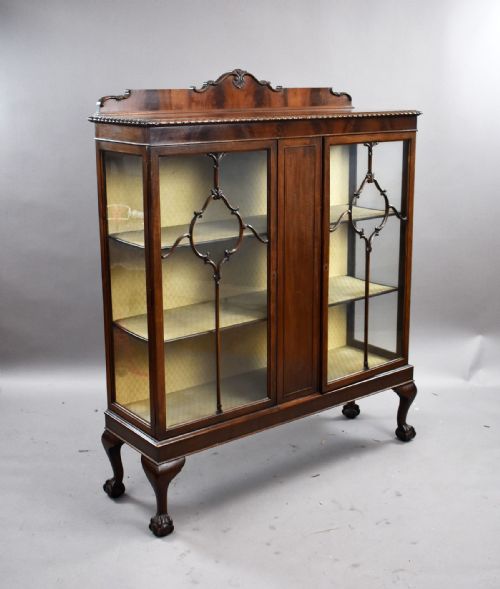
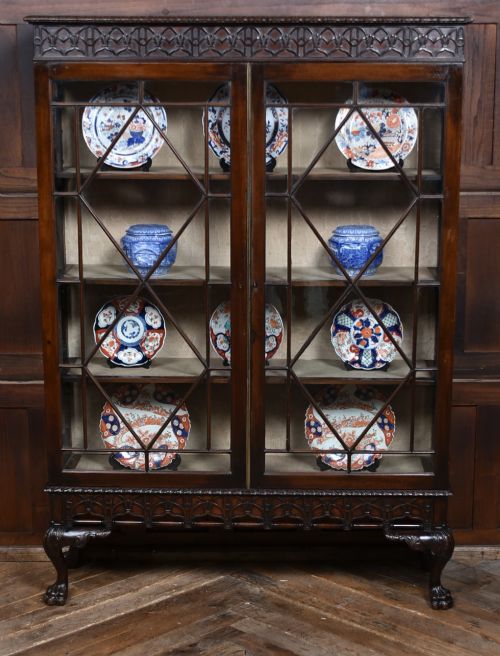
A chippendale revival cupboard brings together forms inspired by classic Georgian design, appearing primarily as display cabinets, side cabinets, and corner cupboards from the late nineteenth and early twentieth centuries. Buyers search for these pieces to add period character and practical storage to a room using items made during the Victorian, Edwardian, and 1920s eras.
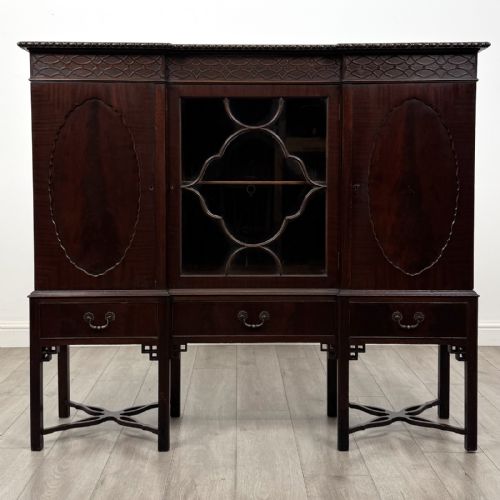
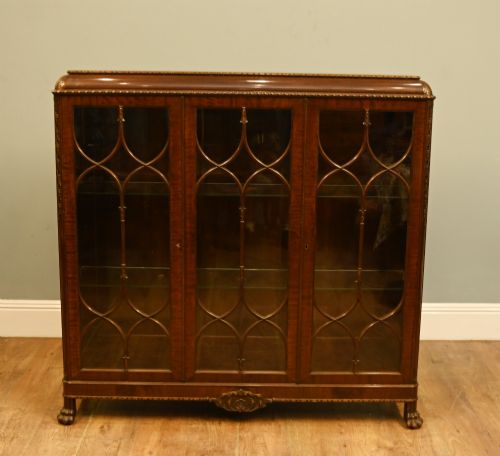
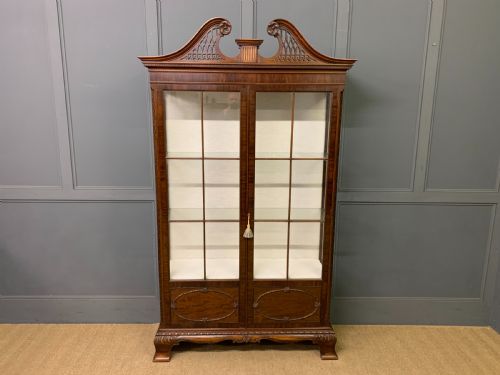
The versions most commonly met on this page span the 1880s through to the 1920s, with a strong representation of Edwardian and late Victorian pieces. These range from glazed china display cabinets on stands to freestanding side cabinets and wall-mounted corner cupboards.
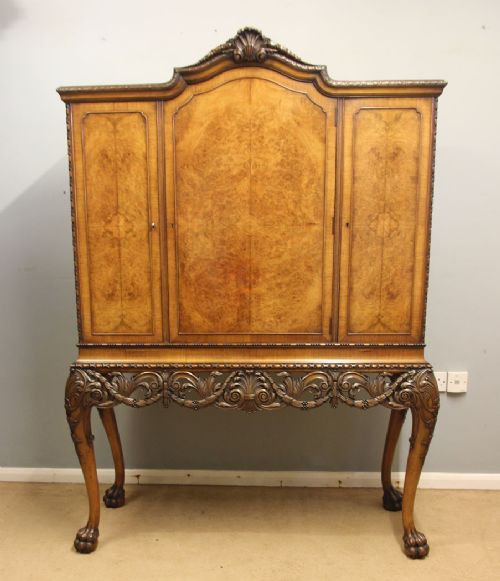
Makers working in the Chippendale style utilised rich timbers like mahogany and burr walnut veneer, frequently applying glass panels and brass hardware. The resulting furniture merges traditional silhouettes with the interior display needs of later Victorian and Edwardian homes.
How They Were Made
Makers built these cabinets using solid mahogany and burr walnut veneer over sturdy secondary woods, applying glass for display doors and mirror backs to catch the light. Brass fittings provide functional pulls and hinges, while occasional fabric or velvet linings accent the interior display spaces.
Construction techniques rely on traditional joinery paired with decorative carving, astragal glazing bars, and sometimes intricate Chinoiserie motifs. Cabinetmakers shaped the timber to echo eighteenth-century proportions while employing the machinery and production methods available around 1900.
Chippendale Revival Cupboard Retail Price Guide 2026
Typical asking prices for chippendale revival cupboard among the pieces listed under this phrase on Sellingantiques today, from the lower quarter to the upper quarter. They describe what is for sale here now, not the wider market.
Several music cabinets in the selection suggest earlier owners kept their sheet music safely locked behind glazed mahogany doors.
What Varies in Quality
The distinction between ordinary production and finer work rests on the crispness of the wood carving and the depth of figure in the mahogany or burr walnut veneer. Superior examples show careful attention to proportions, precise astragal glazing joints, and substantial brass hardware.
Workshop origin also influences standing, as pieces bearing signatures or stamps from recognised makers like Edwards & Roberts command particular attention for their superior timber selection and refined cabinetmaking details.
Edwards & Roberts·Warings
The Chippendale Revival Cupboard Glossary
- Astragal glazed
- Glass doors divided into smaller panes by narrow wooden bars called glazing bars. This treatment derives from eighteenth-century bookcase design and lightens the visual weight of large timber doors.
- Burr walnut veneer
- Thin slices of highly figured walnut timber applied to a stable base wood. The resulting surface displays swirling grain patterns prized by cabinetmakers for decorative panels.
- Chinoiserie
- European decorative style imitating Chinese artistic traditions. It appears on select cabinets through painted motifs or specialised carving.
- Bijouterie
- A low display cabinet or table designed specifically for small valuables and curiosities. These pieces often feature glazed tops and glass sides.
- Pier display cabinet
- A cabinet designed to fit narrow wall spaces between windows. They typically incorporate mirror glass to reflect light around the room.
Chippendale Revival Cupboard: Frequently Asked Questions
What is a chippendale revival cupboard?
These items are display cabinets, side cabinets, and corner cupboards produced during the late nineteenth and early twentieth centuries. They imitate the timber forms and decorative motifs popularized by Thomas Chippendale in the eighteenth century.
Cabinetmakers of the Victorian and Edwardian periods adapted these classic proportions to suit contemporary homes, creating practical storage and display furniture using mahogany and walnut.
How do I date a cabinet?
Dating relies on observing construction methods, timber choices, and secondary woods used inside the carcass. Late nineteenth-century pieces often display heavy Victorian carving, while Edwardian examples tend toward lighter proportions.
Makers' marks, brass hardware styles, and the type of glass utilised also offer clear indications of whether a piece dates from the 1880s or the 1920s.
Where should I place a corner cupboard?
Wall-mounted and freestanding corner cupboards make efficient use of unused room angles in dining rooms or living spaces. They provide secure display space for ceramics and glassware without taking up floor area.
Pairing a corner cupboard with other mahogany furniture helps integrate the piece into a room decorated with traditional or revival periods.
How do I care for mahogany?
Maintaining mahogany involves keeping the timber away from direct heat sources and strong sunlight to prevent the wood from drying out or fading. Regular dusting with a soft, dry cloth preserves the finish.
A light application of appropriate furniture wax every few years helps nourish the grain without building up heavy residues on carved details.