
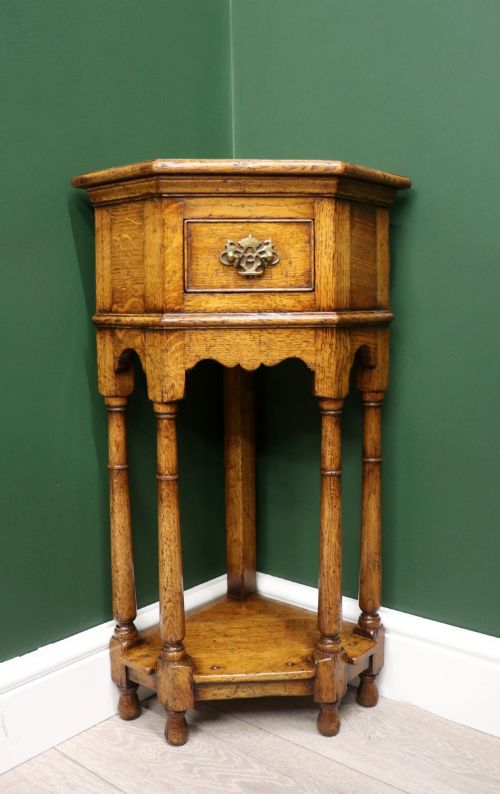
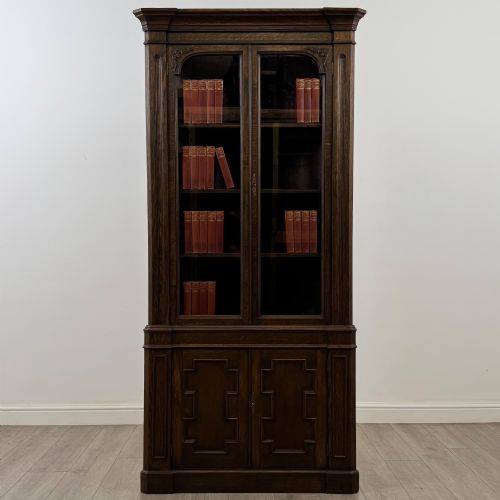
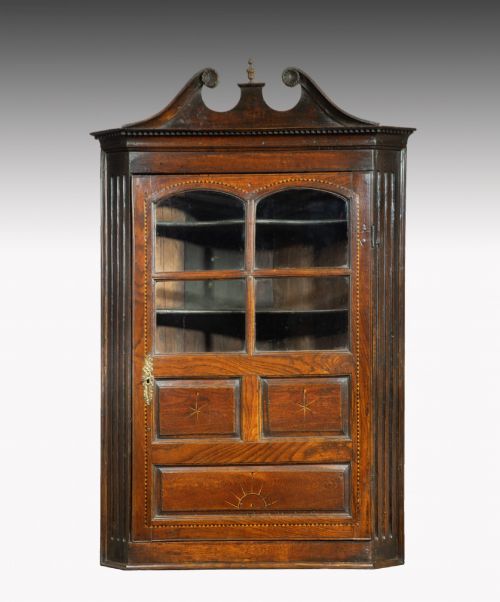
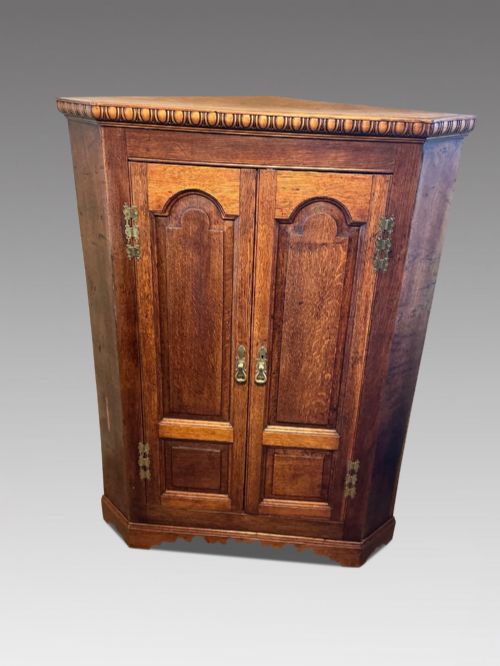

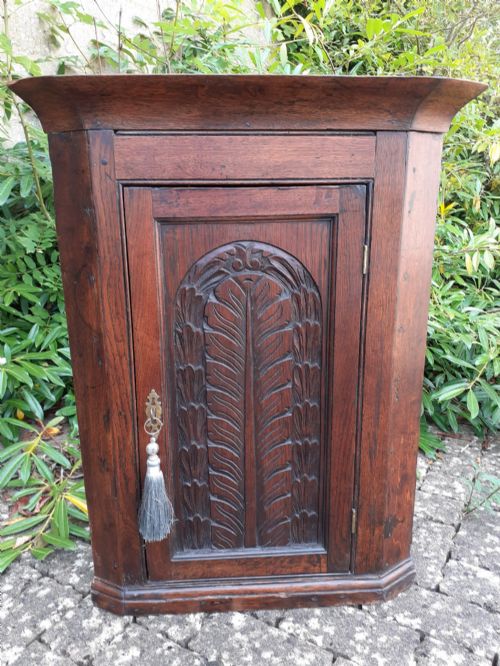

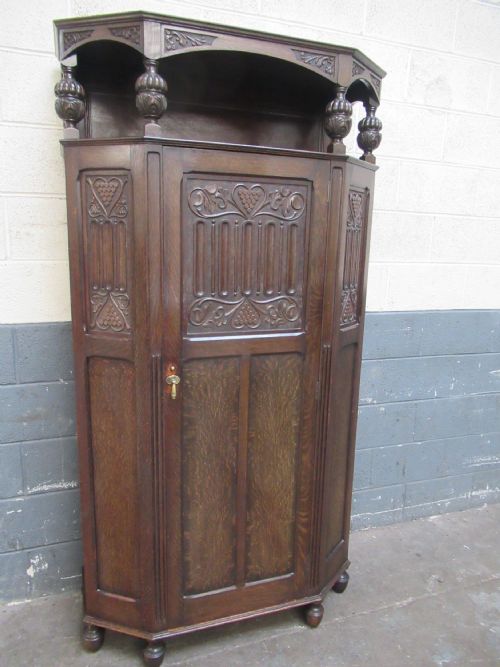


Carved Oak Corner Cabinet
A carved oak corner cabinet turns an awkward room junction into a functional display space.
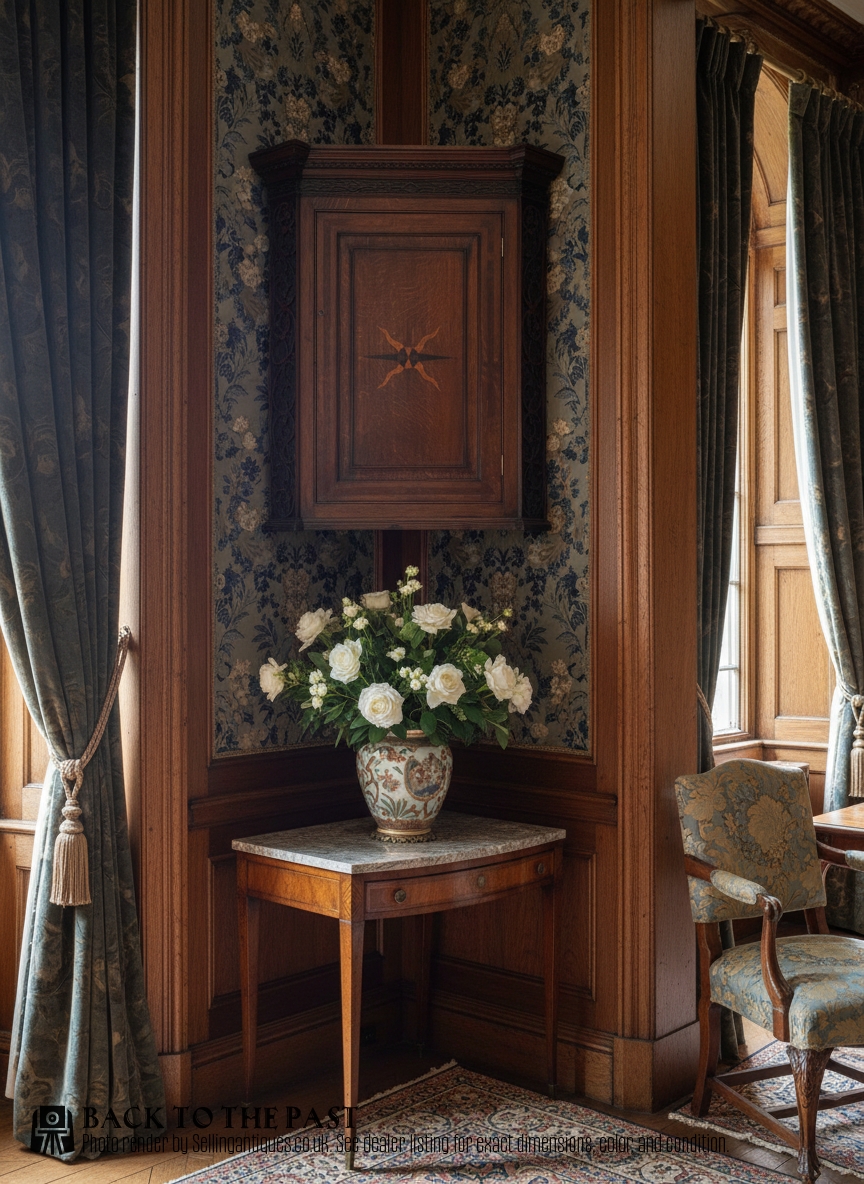
Forms and Periods
The carved oak corner cabinet appears in various iterations across the Georgian, Victorian, and Edwardian periods, functioning primarily as a hanging or standing wall cupboard. You are most likely to meet Georgian hanging cupboards or Victorian revival pieces that utilise the right angle of a room efficiently.
Makers produced these cabinets in both modest country workshops and more elaborate urban styles, incorporating fruitwood inlay or Gothic tracery. The architectural silhouette ranges from simple panelled doors to bowfronted profiles designed to fit snug against plaster walls.
Materials and Technique
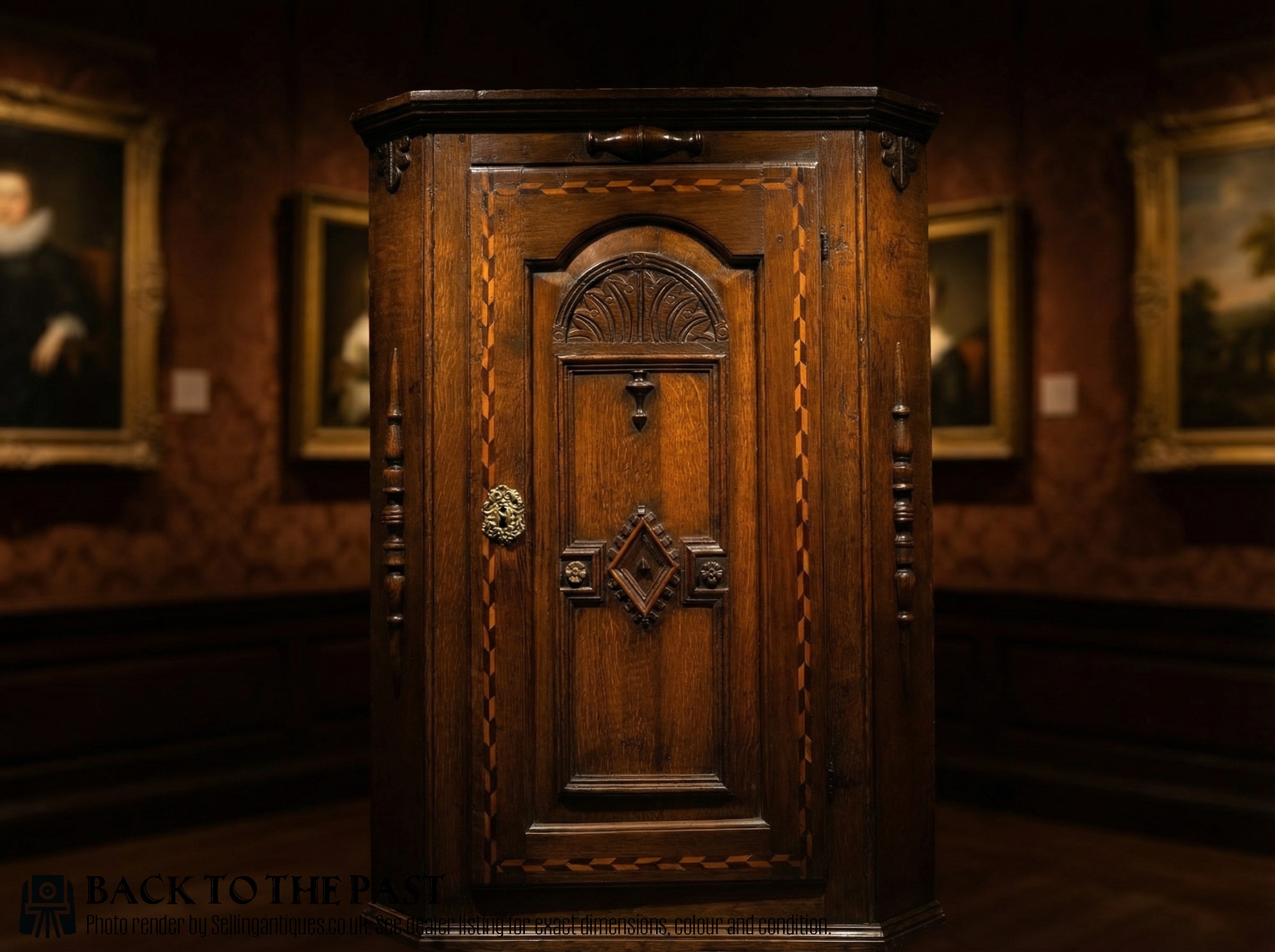
Carpenters constructed these pieces using solid oak, frequently paired with brass hardware, iron hinges, and occasionally copper fittings. Internal elements sometimes include fruitwood inlay, glass panels, and shaped shelves.
Techniques relied on traditional joinery to build rigid frames capable of supporting heavy doors. Carving was executed directly into the timber to create relief patterns, architectural mouldings, and decorative motifs such as Green Man faces.
Retail Price Guide 2026
Typical UK retail prices for carved oak corner cabinet, calculated from the Sellingantiques database of over a million retail prices indexed since 2003. This retail price guide relies exclusively on Sellingantiques data; no external sources or auction records are used, so the figures do not describe the wider market.
Listings feature oak corner cabinets spanning the eighteenth, nineteenth, and twentieth centuries, incorporating brass, glass, iron, and fruitwood inlay.
Assessing the Pieces
Quality rests in the crispness of the timber carving and the architectural balance of the corner unit. Pieces with refined fruitwood inlay or sophisticated tracery demonstrate superior craftsmanship compared to plain utility cupboards.
The integration of original brass or copper hinging and the condition of the interior shaped shelves dictate the overall integrity of the cabinet. Finer examples maintain structural harmony between the heavy oak body and the wall fixings.
The Carved Oak Corner Cabinet Glossary
- Hanging corner cupboard
- A wall-mounted cabinet built with a flat back that fits directly into the meeting of two walls. These pieces save floor space in smaller domestic rooms.
- Tracery
- Openwork or interlaced patterns carved into wood or stonework, frequently seen on Gothic revival cabinet doors. This decorative technique echoes ecclesiastical architecture.
- Bowfronted
- A cabinet profile featuring a convex, curved front rather than a flat or angled panel. This shape softens the hard lines of a standard corner unit.
- Green Man
- A sculptural architectural ornament depicting a human face carved with leaves or vines issuing from the mouth. It appears frequently on revival and Victorian oak carvings.
Frequently Asked Questions
How do I hang a heavy oak corner cabinet?
These cabinets require secure fixing into wall studs or masonry using appropriate heavy-duty brackets. The weight of the solid timber demands stable anchor points to prevent pulling away from the corner.
Professional installation is recommended for older hanging cupboards to ensure the structure bears the load safely.
What is the difference between standing and hanging models?
Hanging models attach directly to the walls of a room to float above the floor. Standing models possess a base or plinth that rests firmly on the floorboards.
Both versions utilise the ninety-degree junction of a room, but standing cabinets generally offer greater internal storage capacity.
How do I date an oak corner cabinet?
Dating relies on examining the construction methods, handle types, and decorative styles such as Georgian moulding or Victorian Gothic tracery. Secondary woods and hinge styles also provide clues to the era of manufacture.
Cabinet makers often utilised regional carving traditions that align with specific decades between the eighteenth and twentieth centuries.
Can these cabinets hold heavy items?
The interior shaped shelves are built from solid oak and support standard display items like china or glassware. The sturdiness depends on the condition of the internal shelf supports and overall joinery.
Overloading older wooden shelves should be avoided to preserve the integrity of the original timber.