


Carved Oak Coffer Box
When you search for a carved oak coffer box, you seek a sturdy historical storage chest shaped by centuries of domestic use.
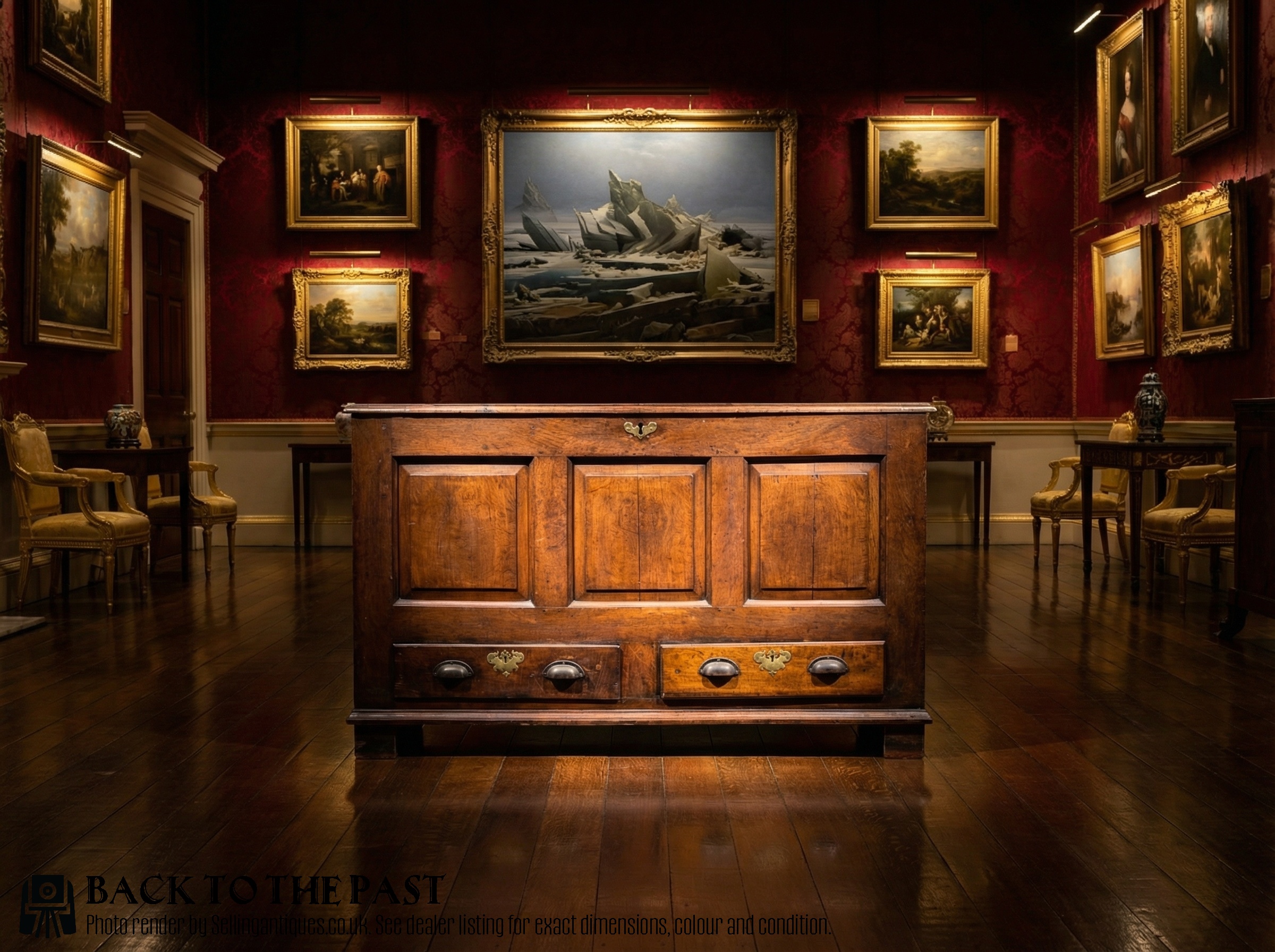
Carved Oak Coffer Box
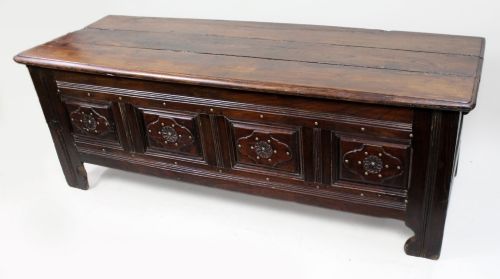
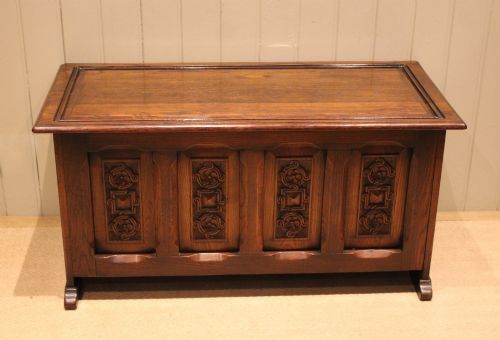
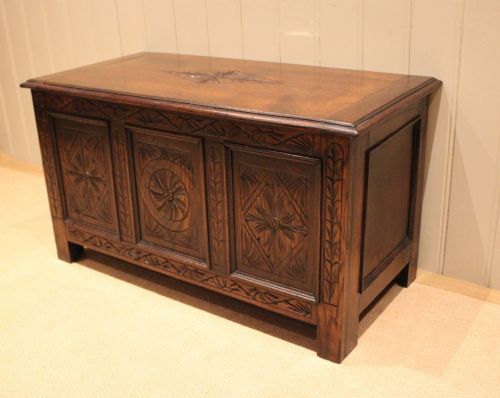
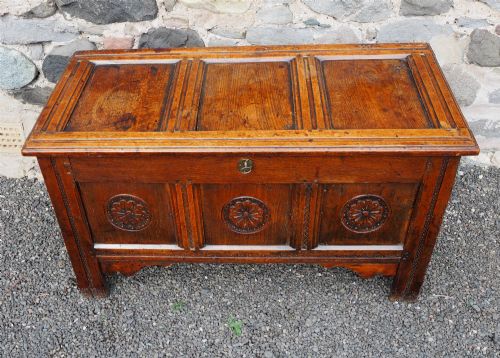
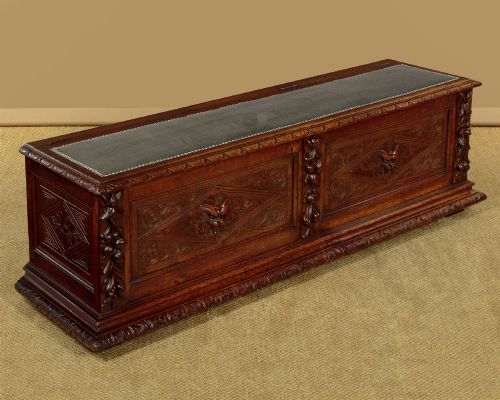
A carved oak coffer box is a heavy timber chest designed for storing textiles, documents, and household valuables. These pieces span from the medieval and Tudor eras through the seventeenth and eighteenth centuries, with later revivals appearing in the twentieth century.
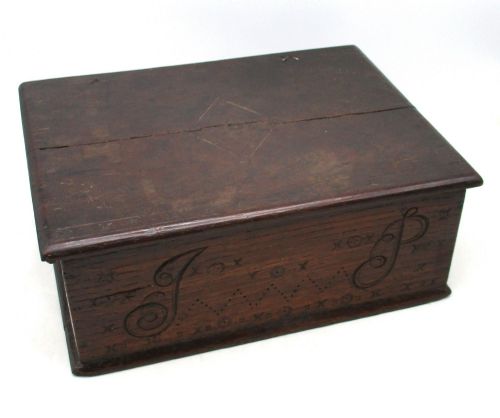
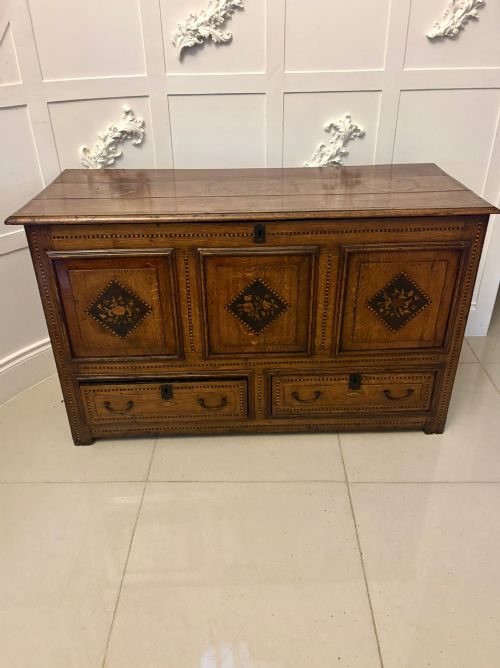
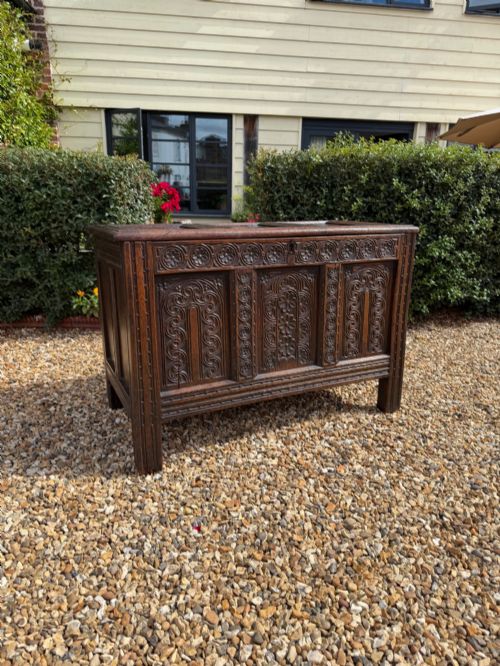
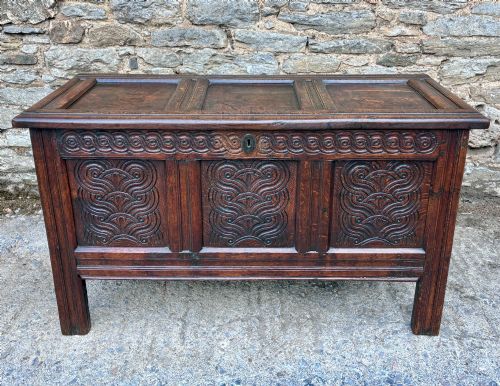
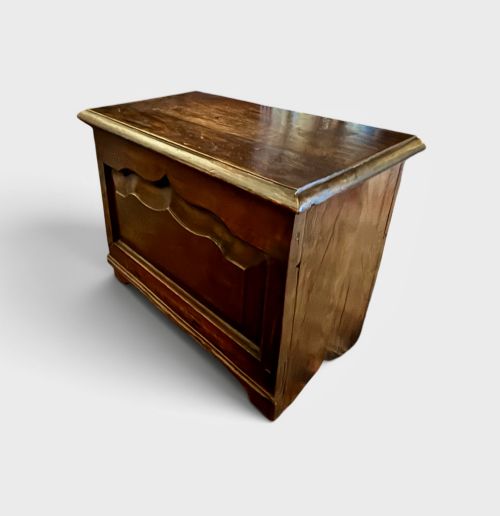
The version most commonly encountered on this page originates in the seventeenth century, often featuring panelled construction and distinct regional carving traditions. Alongside standard blanket chests, the listings include mule chests fitted with lower drawers, small document boxes, and seat variants like monks benches and hall settles.
Materials and Construction
Makers built these pieces primarily from solid English or European oak, utilising heavy planks joined by mortise and tenon frames. Iron and brass hinges, locks, and brackets frequently secure the heavy lids and provide functional reinforcement.
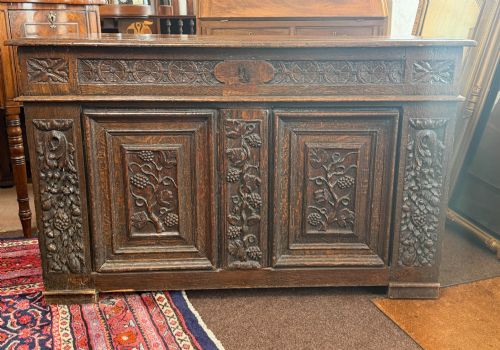
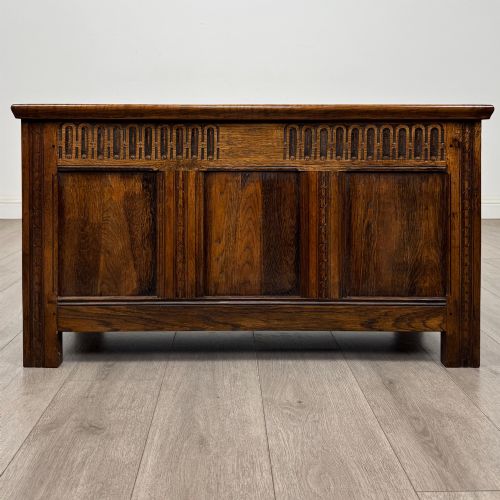
Surface ornamentation relies on hand-carved geometric patterns, scrolling foliage, and arcading across the structural panels. Some examples incorporate marquetry inlay using mixed woods to create contrasting pictorial designs.
Listings feature solid oak construction paired with iron and brass hardware, spanning periods from the sixteenth century through the Edwardian era.
Assessing Quality
Quality in these pieces depends on the depth and crispness of the hand carving and the integrity of the original timber frame. Pieces retaining their early hinges, locks, and internal candle boxes hold greater historical interest.
Proportions and balance also dictate distinction, as smaller scaled or regional examples demonstrate finer cabinetmaker skill than standard utility boxes. The integration of dovetail joints and untouched patinated surfaces further elevates an individual piece.
The Carved Oak Coffer Box Glossary
- Cofer
- A heavy wooden chest used for storage, typically fitted with a hinged lid. Early examples served as both furniture and travel trunks.
- Mule chest
- A traditional storage chest featuring one or more drawers built beneath the main compartment. This form bridges the evolution between the simple box and the modern chest of drawers.
- Panelled construction
- A method of framing where thin central boards float within grooved vertical stiles and horizontal rails. This technique allows the solid wood to expand and contract naturally with humidity changes.
- Candle box
- A small internal compartment built into the interior side of a chest. It kept fragile wax tapers separate from heavier stored textiles.
- Marquetry
- The art of applying decorative veneer pieces in wood to form intricate patterns and pictures. Craftsmen utilise contrasting timber tones to achieve visual depth.
Carved Oak Coffer Box: Frequently Asked Questions
What were carved oak coffer boxes used for?
These chests originally served secure storage purposes for valuable household goods, linens, and legal documents. In domestic spaces, households also utilised them as benches, tables, or sleeping platforms.
Over generations, their robust construction made them reliable repositories for family heirlooms and winter blankets. Today, owners continue to use them as functional coffee tables or bedroom storage units.
How do I date a carved oak coffer?
Dating relies on examining the construction methods, tool marks left on the timber, and the style of the surface carving. Sixteenth and seventeenth-century pieces typically display pegged frame-and-panel assembly with hand- split boards.
Later nineteenth and twentieth-century revivals often incorporate machine-cut elements, standardised fixings, and softer secondary timbers. Comparing the lock plate and hinge types against known historical styles provides further chronological clues.
How do I care for an antique oak chest?
Protect the wood by placing the chest away from direct heat sources, fireplaces, and strong sunlight which can dry out the ancient timber. Maintaining a stable room temperature prevents the oak panels from splitting or warping.
Apply occasional applications of traditional beeswax to nourish the dry grain and preserve the historic surface patina. Avoid modern silicone polishes that can permanently penetrate and darken the open pores of the oak.
What is the difference between a coffer and a mule chest?
A standard coffer consists of a single deep top-opening compartment enclosed by solid timber sides or panels. These units focus purely on open top-access storage.
A mule chest adds one or more pull-out drawers beneath the main upper box section. This design allowed users to access smaller garments without needing to lift the heavy lid and clear items off the top.