



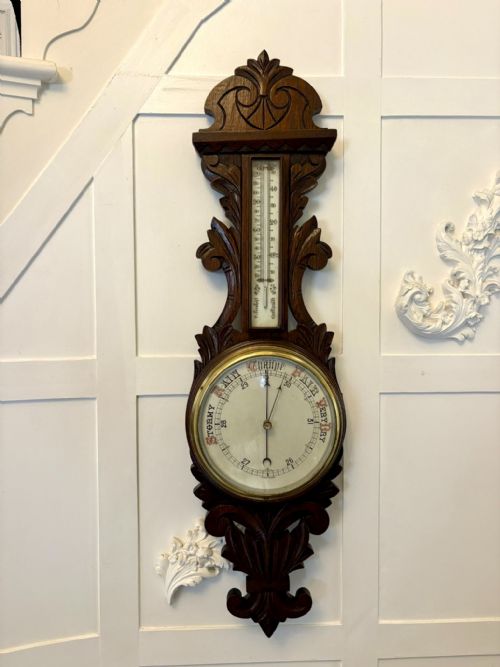


Carved Oak Aneroid Barometer
A carved oak aneroid barometer brings reliable domestic weather-tracking and robust nineteenth-century craftsmanship into a modern interior.
Carved Oak Aneroid Barometer
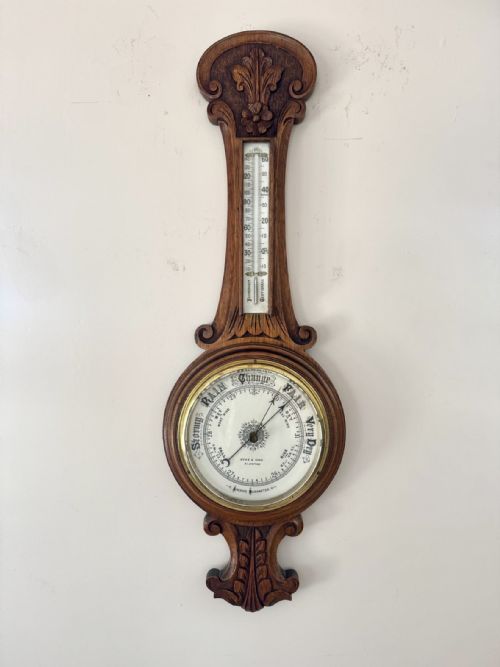
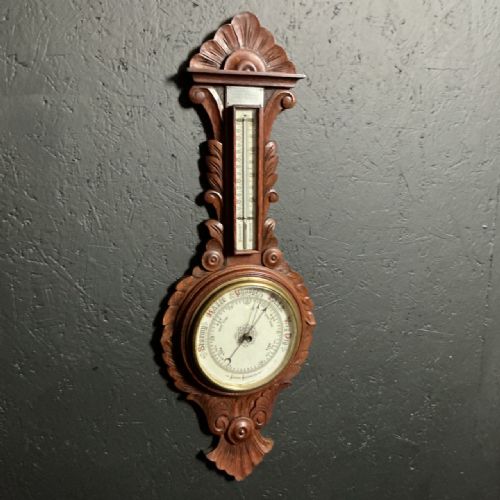
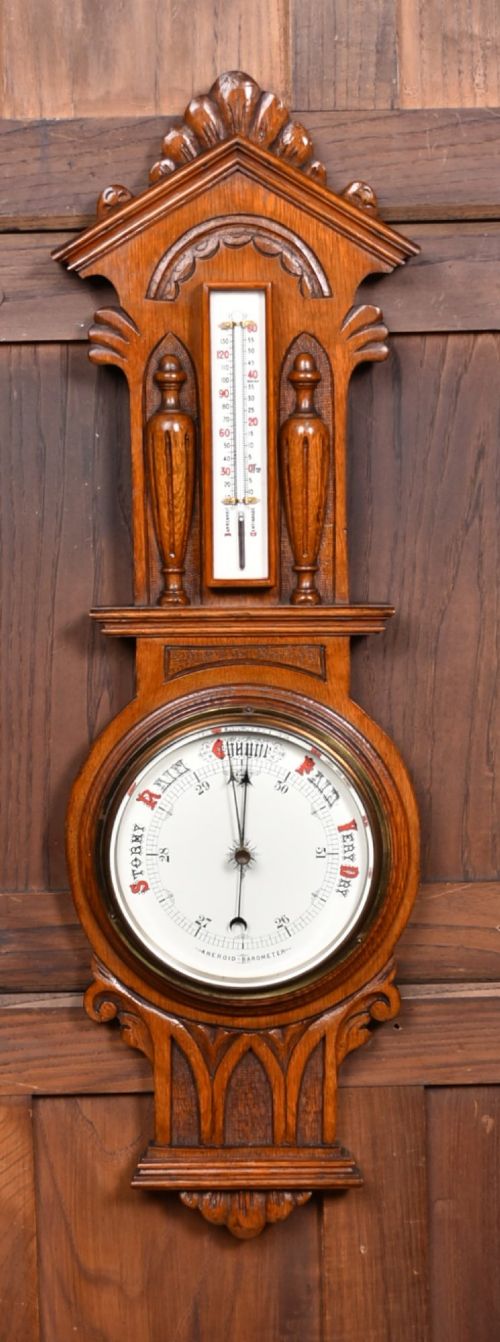
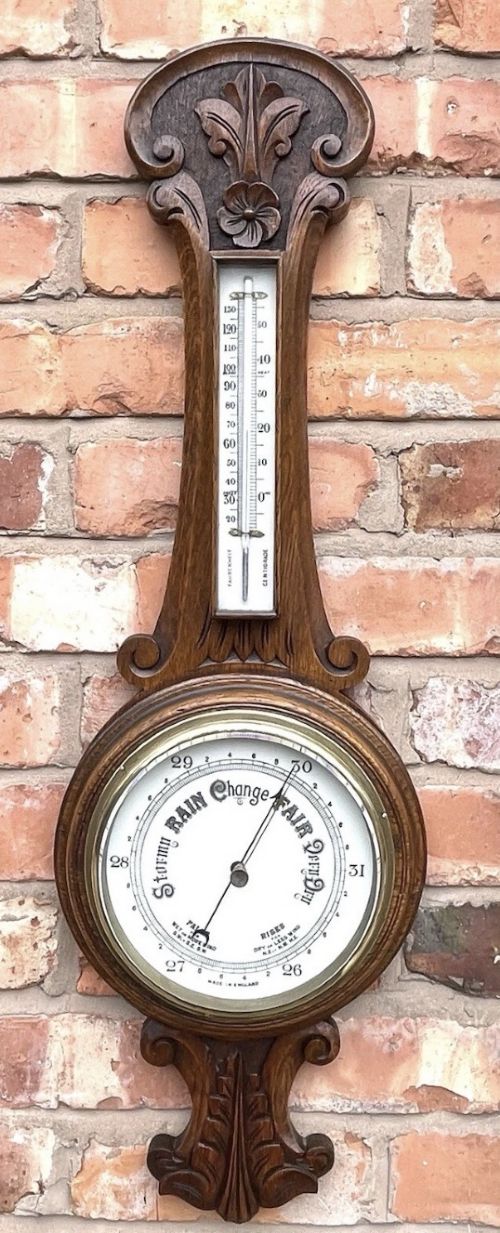
A carved oak aneroid barometer is primarily encountered as a wall-hanging banjo instrument, combining a circular dial at the base with an elongated upper shaft that often incorporates a thermometer. These domestic scientific instruments date predominantly from the Victorian and Edwardian eras, alongside pieces from the nineteen-thirties.
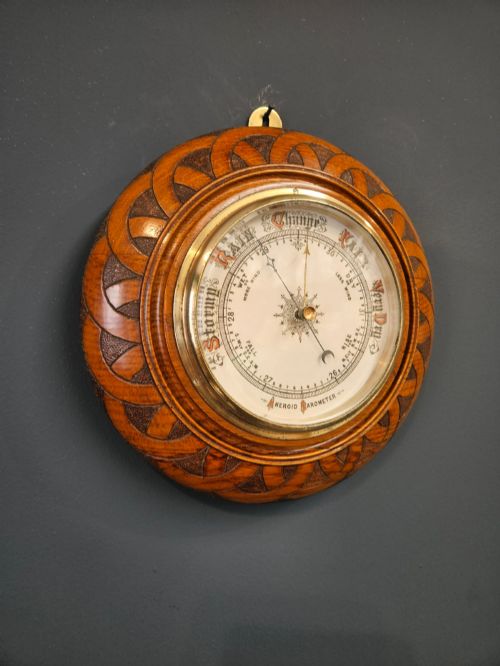
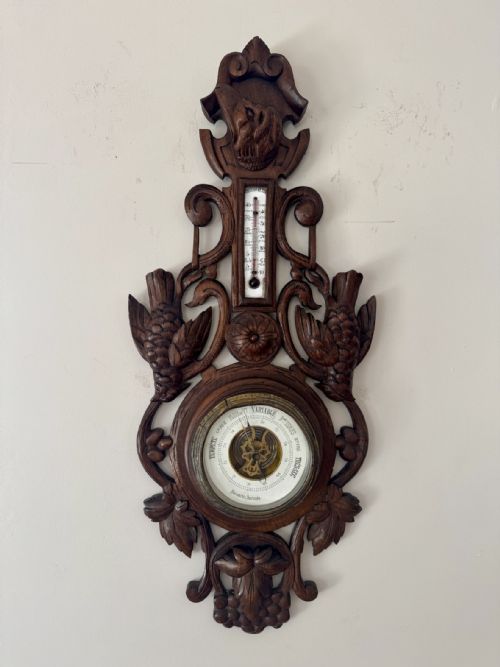
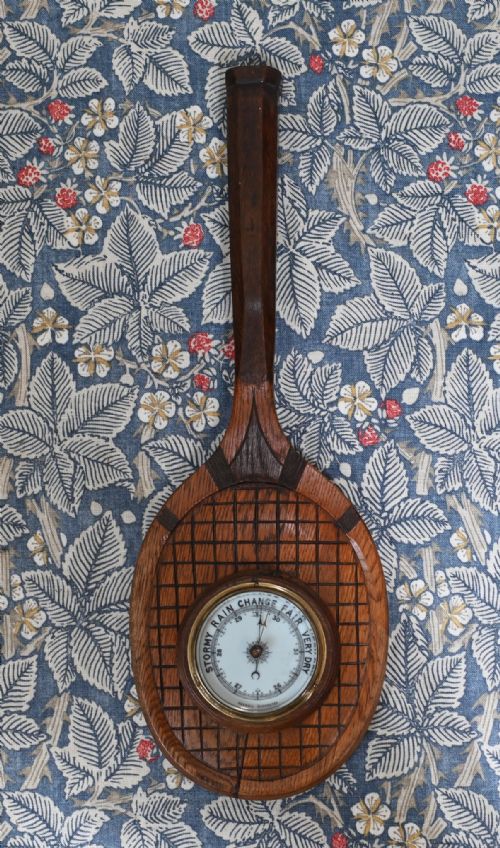
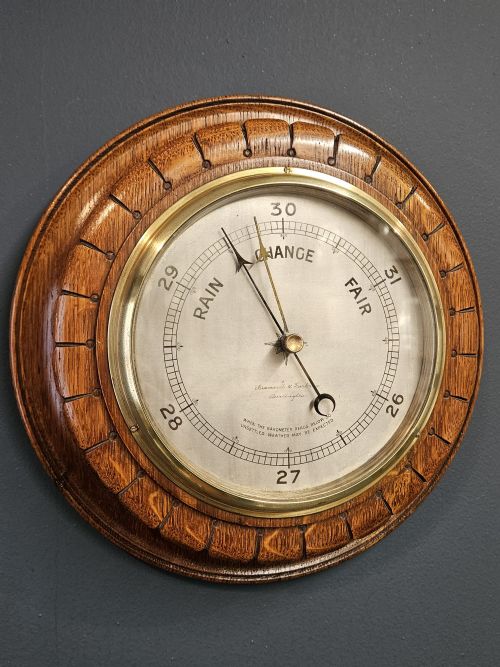
The aesthetic vocabulary spans simple turned or geometric oak surrounds to deeply carved Black Forest motifs, floral leaf patterns, and nautical themes featuring anchors or birds. While standard wall barometers dominate the selections, variations include circular frames, architectural desk clocks, and combined coat racks.
Origins vary between provincial English makers, London instrument houses, and continental workshops, particularly from the Black Forest region in Germany. Buyers will find both compact domestic versions and massive, impressive wall pieces designed as principal hallway furnishings.
Materials and Construction
The structural housing relies heavily on solid oak and carved wood, sometimes designated as golden oak, shaped through turning, geometric carving, and high-relief naturalist ornamentation. Surrounds frequently house mechanical aneroid movements driven by an internal vacuum capsule rather than liquid mercury.
Faces and dials incorporate contrasting materials such as silvered metal, white ceramic, or porcelain, protected beneath bevelled glass bezels. Additional brass fittings, bezels, and thermometer scales complete the assembly, alongside makers' plaques engraved into the metalwork.
Listings feature oak cases from the Victorian and Edwardian eras, alongside nineteen-thirties pieces incorporating brass, ceramic, and silvered metal dials.
Judging Quality and Craftsmanship
Quality reveals itself in the crispness and depth of the woodcarving, distinguishing flat, machine-finished mouldings from hand-carved high-relief foliage, birds, or rope twists. The selection of the timber grain, particularly in golden oak or figured walnut variants, dictates the visual weight of the piece.
The reputation of the original retailer or maker, such as Negretti and Zambra or James Pitkin, elevates certain barometers above anonymous workshop output. Furthermore, the legibility of the silvered or porcelain dial and the presence of matching mercury thermometers define the upper tier of surviving examples.
Hyde & Sons Sleaford·Bramwell & Harbron of Darlington·W Watson & Sons·Maple & Co·James Pitkin London·Chadburns Castle St Liverpool·Negretti & Zambra·Frederick Cox London·J Hicks London
The Carved Oak Aneroid Barometer Glossary
- Aneroid Barometer
- A device that measures atmospheric pressure using a flexible metal vacuum capsule rather than liquid mercury, indicating weather changes on a dial.
- Banjo Barometer
- A domestic wall barometer shaped like a banjo, featuring an elongated upper stem for a thermometer and a bulbous lower section for the main dial.
- Silvered Metal
- A brass or copper dial plate treated to achieve a silvery, matte finish, usually engraved with weather forecasts and barometric scales.
- Black Forest
- A style of deeply carved wooden decorative items originating from the German region, famous for realistic depictions of flora, fauna, and naturalistic motifs.
- Bezel
- The brass or metal ring that holds the protective glass face securely over the barometer dial.
Carved Oak Aneroid Barometer: Frequently Asked Questions
How do aneroid barometers work?
An aneroid barometer measures changes in atmospheric pressure through a sealed, flexible metal capsule that expands or contracts as pressure shifts. This microscopic movement is transferred via mechanical levers to the pointer on the dial.
Unlike mercury barometers, these instruments contain no liquid, making them stable and straightforward to hang safely on domestic walls without risk of spills.
Where should I hang my barometer?
These wall-hanging instruments suit hallways, studies, and living rooms where interior temperature remains relatively stable. Avoid mounting them in direct sunlight or directly above active heat sources to protect the wooden casework and internal calibration.
Ensure the wall fixing is secure, as larger carved oak banjo models possess considerable weight and require proper structural support.
How do I date an oak barometer?
Dating relies on stylistic clues, such as the heavy geometric carvings and Gothic influences of the Victorian period compared to the cleaner circular frames of Edwardian pieces or nineteen-thirties Art Deco designs. Maker signatures, dial typography, and registration marks also provide reliable chronological markers.
Examining the construction methods of the oak case, backing boards, and glass bezels helps differentiate mid-nineteenth-century items from later Edwardian reproductions.
Can antique barometers be recalibrated?
Most aneroid barometers feature a small adjustment screw accessible on the back or through the dial face, allowing them to be set to local barometric pressure using a reliable modern reference. Mechanical movements can drift over decades due to metal fatigue or transport vibrations, but professional horologists can often restore accuracy.
Even if calibration proves difficult, the barometer remains an authentic decorative wall piece reflecting historical meteorological instruments.