


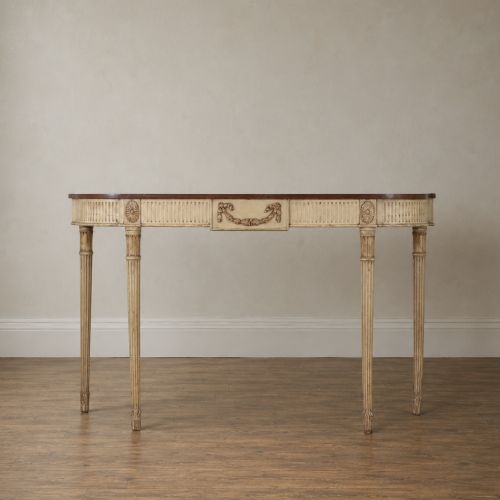
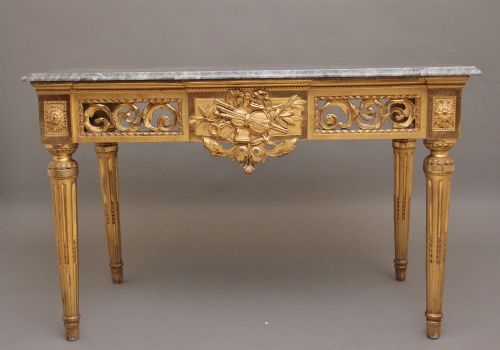
Carved Neoclassical Table
A carved neoclassical table brings structural balance and classical ornament to a room, drawing on eighteenth and nineteenth-century design traditions.
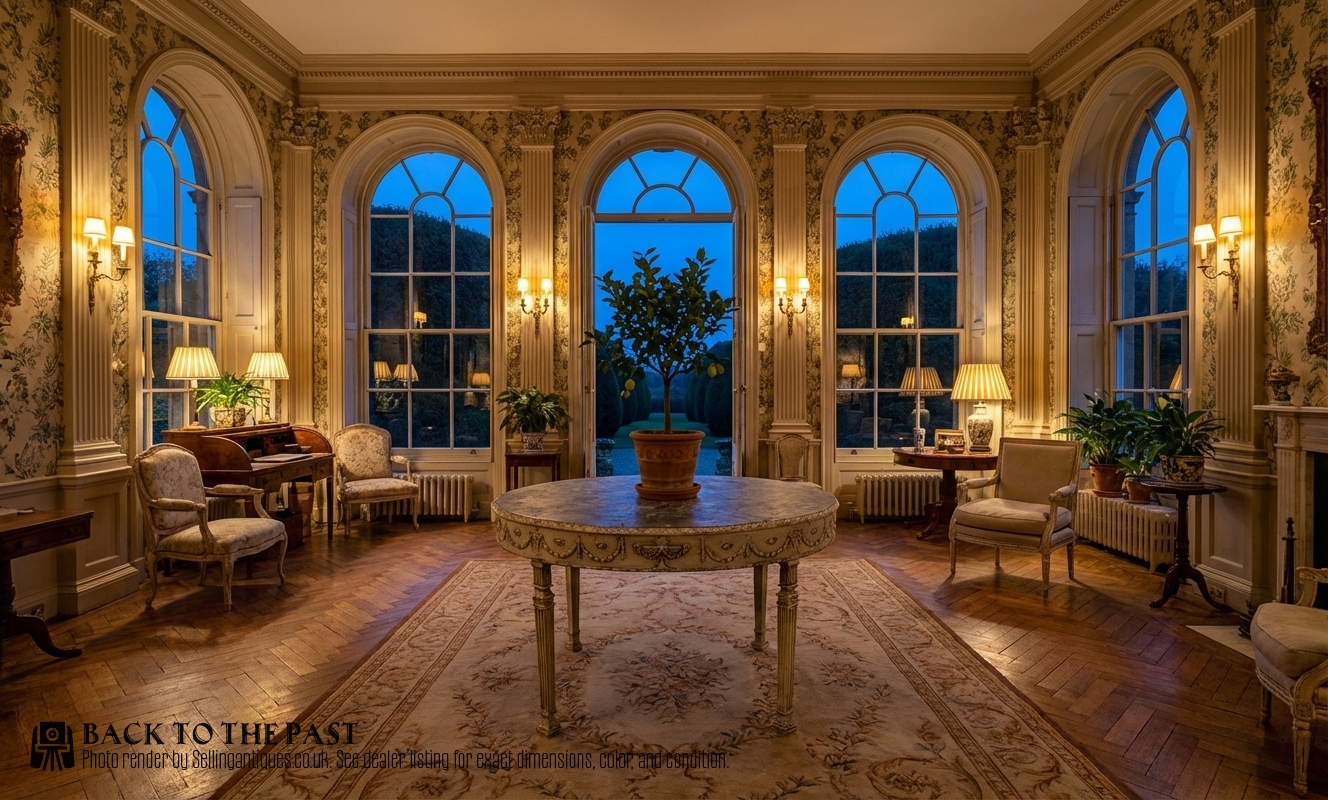
Carved Neoclassical Table
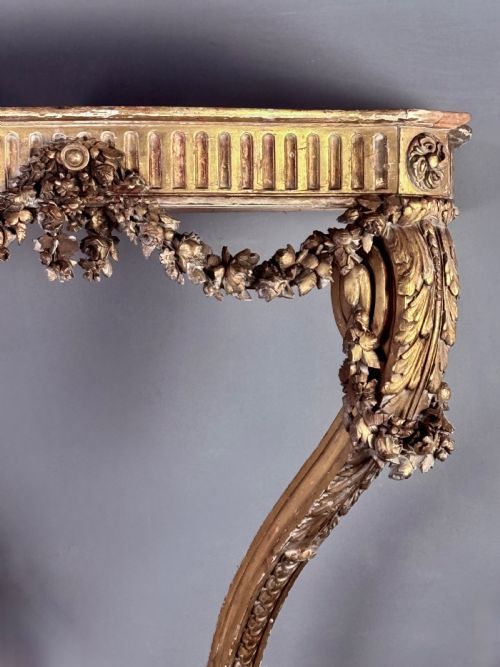
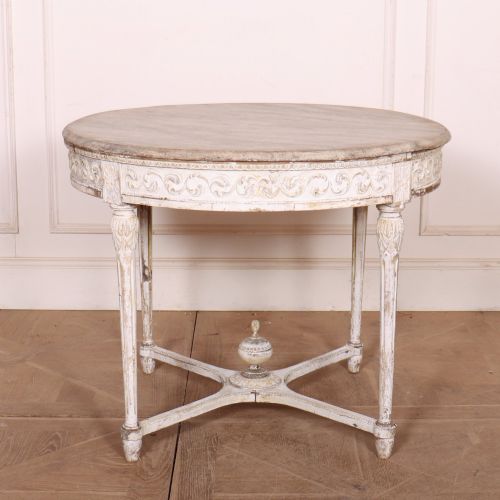
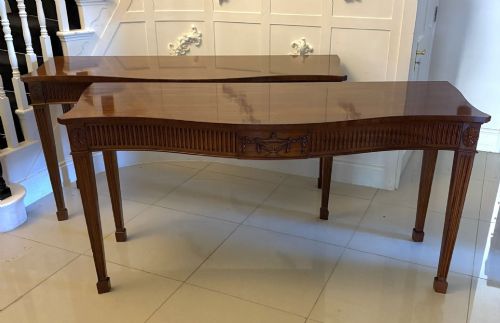
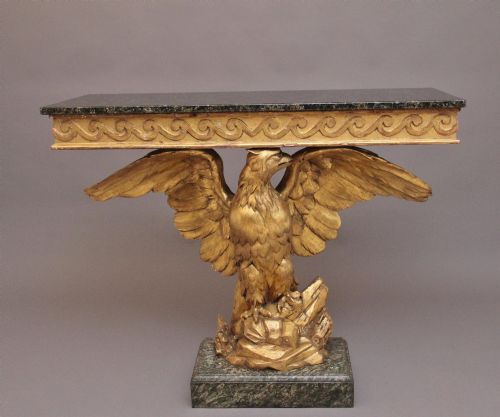
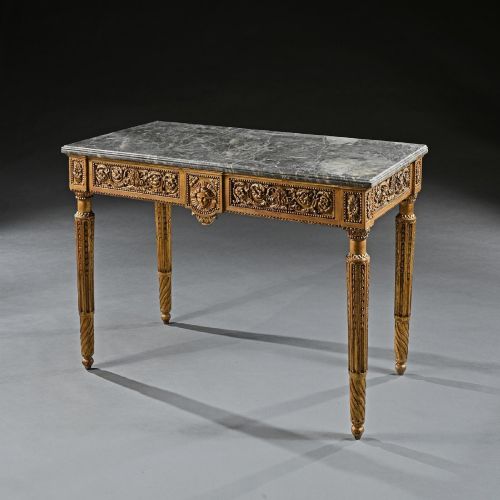
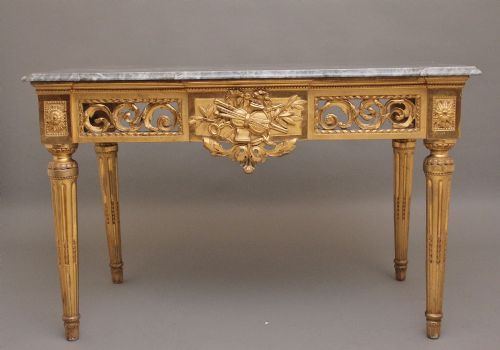
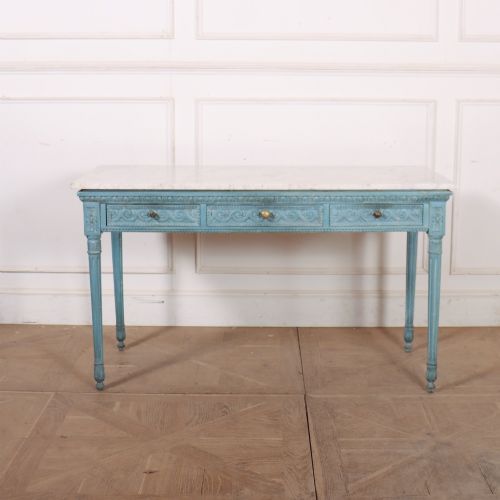
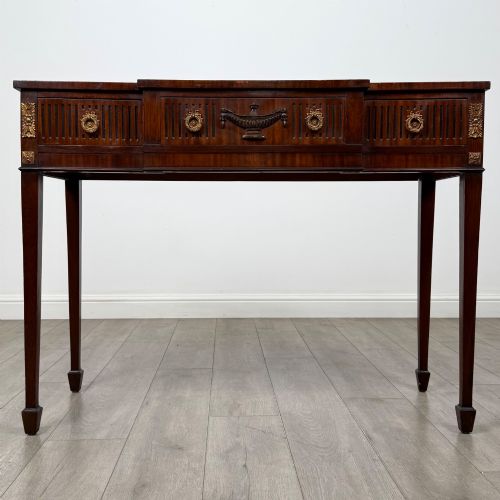
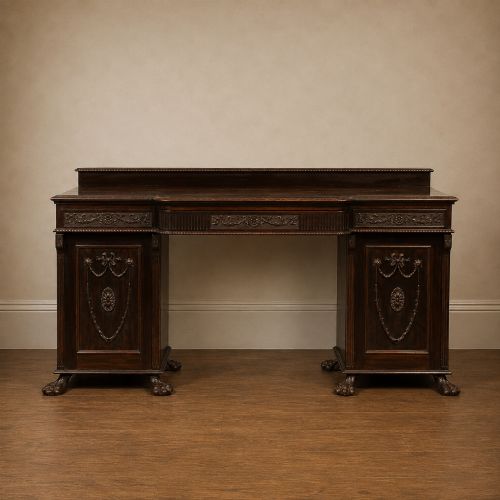
A carved neoclassical table represents a distinct tradition of decorative furniture, taking the form of console tables, side tables, coffee tables, and serving tables. These pieces emerge across the eighteenth, nineteenth, and early twentieth centuries, with Italian, French, Gustavian, and English regional interpretations appearing regularly.
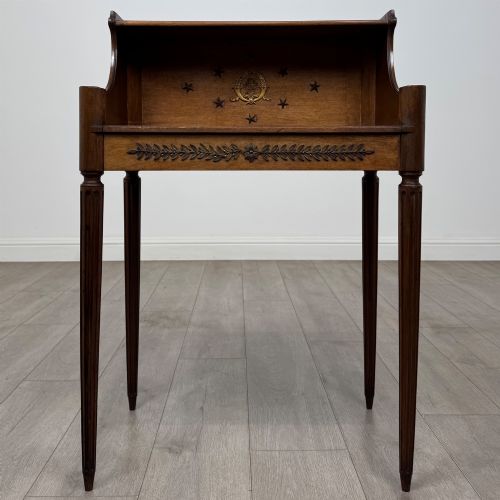
Console tables form the most common format within this category, frequently paired with contrasting marble tops and elaborate gilded or painted wooden frames. Alongside these, side tables and serving tables in mahogany or painted finishes provide alternative forms of support surface within domestic interiors.
The style draws directly on classical antiquity, translating architectural motifs into domestic furniture through symmetrical proportions and carved details. Pieces span periods from the late eighteenth century through the Edwardian era and the 1920s, reflecting sustained revivals of neoclassical design.
How they were made
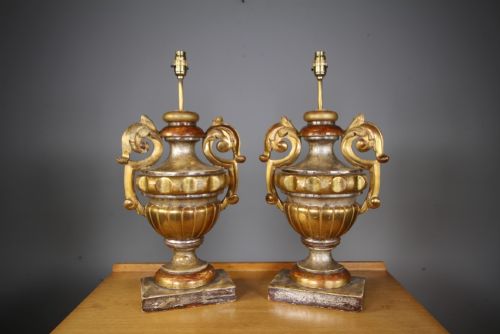
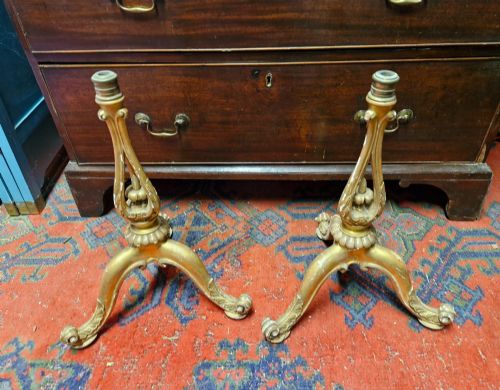
Construction relies upon traditional timber framing in mahogany, pine, and walnut, often enhanced with gesso layers to prepare surfaces for detailed carving and gilding. Artisans applied layers of gold leaf or paint over prepared wooden substrates to achieve the finished decorative sheen seen on Italian and French examples.
Inlaid and applied components incorporate materials such as marble, brass, or bronze, secured to wooden carcasses for durability and visual contrast. Tables frequently combine carved wooden friezes with stone slabs, uniting masonry and cabinetry skills.
Tables occasionally double as sphinxes or dolphins, proving that neoclassical restraint could still include a peculiar mythical beast.
What varies in quality
The precision and depth of the carved ornament distinguish different tiers of manufacture, separating mechanically finished surfaces from hand-chiselled detail. Crisp lines in wooden foliage and drapery indicate higher standards of craftsmanship during the production process.
The selection of primary and secondary materials dictates the structural integrity and visual weight of a piece, from dense native hardwoods to high-grade imported marbles. Uniformity in gilding application and the retention of original surface treatments further establish the standing of individual tables.
The Carved Neoclassical Table Glossary
- Console table
- A table designed to stand against a wall, traditionally fixed with brackets or supported by front legs. These items often feature decorative front aprons and stone tops.
- Giltwood
- Timber coated with gold leaf or gold dust laid over a prepared gesso ground. This treatment creates a brilliant reflective surface popular in formal European reception rooms.
- Gesso
- A plaster mixture applied to wood surfaces to provide a smooth base for painting or gilding. It allows craftsmen to carve intricate relief details before applying metallic leaf.
- Marble top
- A solid stone slab fitted to the upper surface of a table frame. These slabs provide durable, cool surfaces often patterned with natural veining.
Carved Neoclassical Table: Frequently Asked Questions
Where should a console table sit?
These tables traditionally stand flat against a hallway or reception room wall, often positioned beneath a mirror or painting.
Their shallow depth allows them to occupy narrow passages without obstructing movement through the interior space.
How do I care for a giltwood surface?
Giltwood requires gentle dusting with a soft, dry cloth to protect the delicate metallic leaf from abrasion.
Moisture and harsh cleaning agents damage the underlying gesso and gold layers, so liquids should stay away from the wood.
What defines neoclassical furniture design?
Neoclassical design draws inspiration from archaeological discoveries in Greece and Rome, favouring symmetry and restrained geometric forms.
Ornamentation includes motifs like urns, swags, fluted columns, and acanthus leaves carved into the wooden structure.
Are marble tops removable?
Marble slabs usually rest unattached within the wooden frame of the table, held in place purely by their own substantial weight.
Lifting the stone requires care during transport to prevent chipping the edges or straining the supporting apron underneath.