


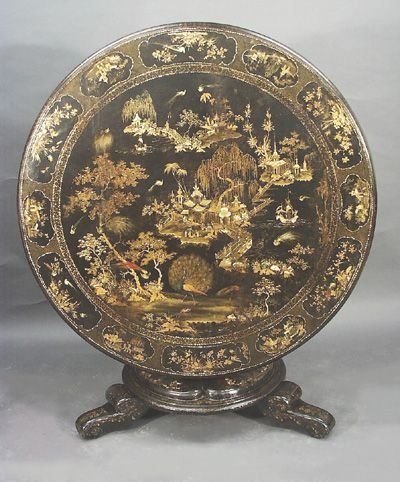
Victorian Painted Centre Table
A victorian painted centre table brings decorative surface work to the middle of a room, uniting period joinery with hand-applied colour.
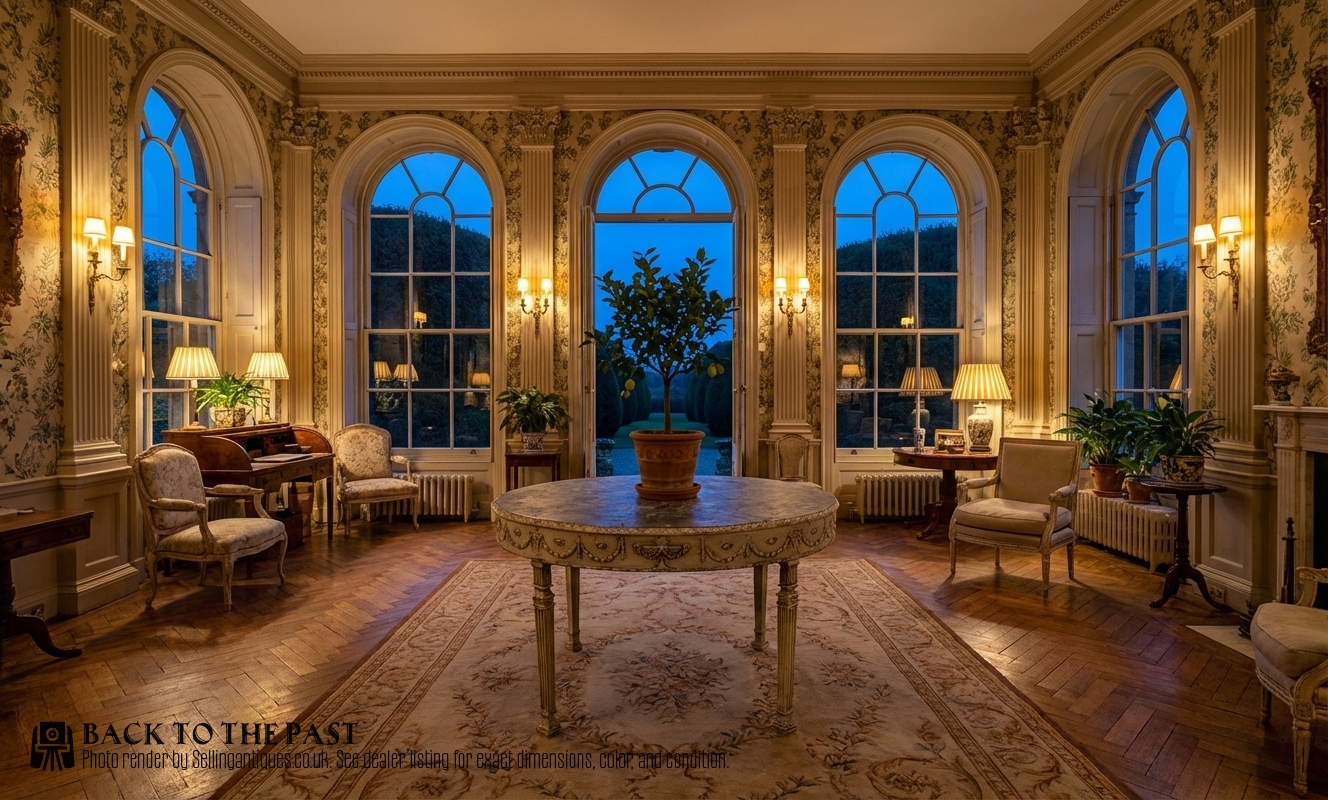
Victorian Painted Centre Table
A victorian painted centre table combines freestanding form with decorative surface finishes, designed to sit prominently in a room. These pieces span standard occasional and dining formats, tilt-top mechanisms, and vernacular country tables.
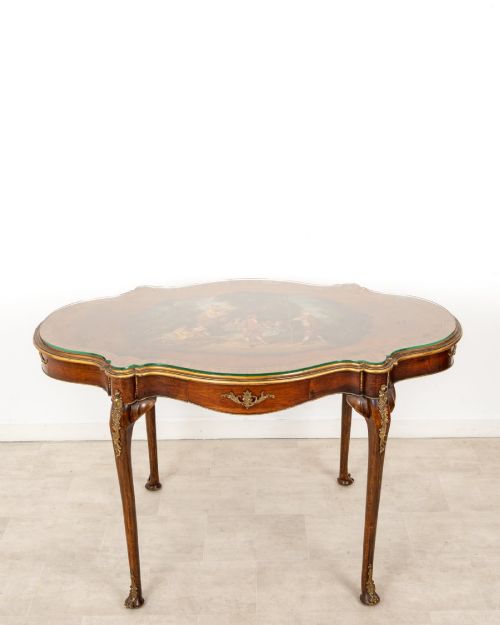
The material palette recorded across these pieces relies on wood as the primary carcase, complemented by paint, gold leaf, porcelain, and ormolu. Styles draw heavily on French Rococo Revival, Louis XV, Louis XVI Revival, and rustic country aesthetics.
Origins include English workshops and continental makers, with dates clustering in the nineteenth century, alongside later Edwardian and 1920s interpretations. Buyers encounter circular, oval, and rectangular tops supported by pillars or shaped legs.
Materials and construction
Timber carcases in oak, pine, satinwood, and various hardwoods provide the structural foundation for these tables. Joinery techniques secure the tops to pedestals or four-leg frames, accommodating tilt-top mechanisms where present.
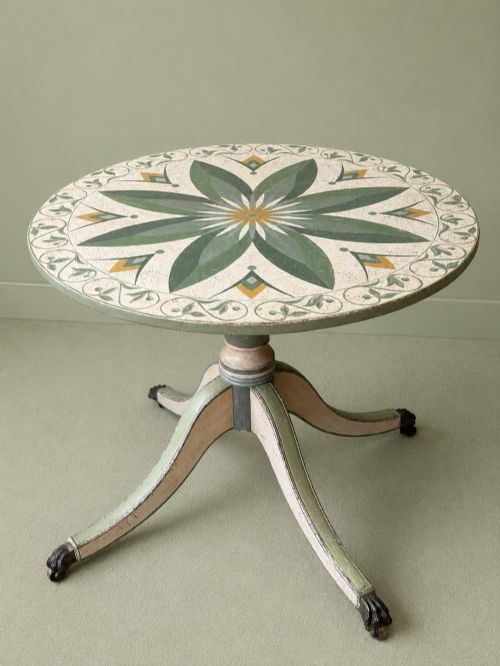
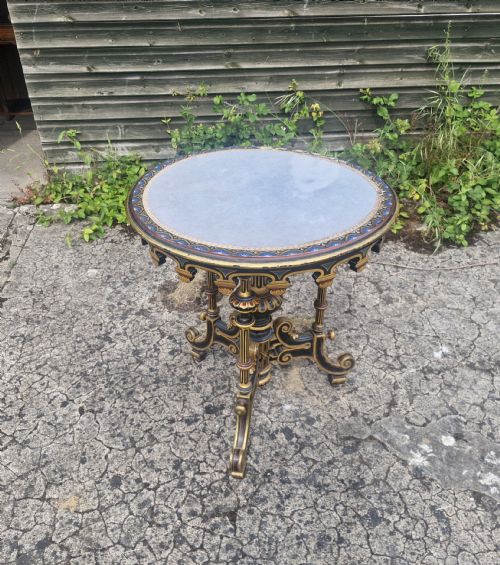
Surface decoration relies on applied paint, gold leaf, and hand-decorated motifs, occasionally paired with inset porcelain plaques and ormolu mounts. Finishing varnishes protect the delicate painted and gilded layers from daily wear.
Several tables include tilting mechanisms designed to save space when tea was finished.
Evaluating the standard
Quality reveals itself in the execution of the painted decoration and the precision of the timber joinery. Hand-decorated surfaces with refined detail sit above simpler utilitarian finishes.
The integration of decorative elements such as porcelain inserts, ormolu mounts, and gold leaf distinguishes more ambitious continental and revival pieces from straightforward country tables.
The Victorian Painted Centre Table Glossary
- Centre table
- A freestanding table finished on all sides to stand in the middle of a room rather than against a wall. These pieces function as decorative focal points.
- Tilt-top table
- A table featuring a mechanism that allows the top to hinge vertically for storage or clearance when not in use. The pivot mechanism requires stable locking components.
- Ormolu
- Gilded bronze mounts applied to furniture for decorative enrichment. This technique was favoured in French revival styles during the nineteenth century.
- Vernis Martin
- A simulated Japanese lacquer finish developed in France, utilised on decorative furniture to achieve a glossy, translucent surface. It appears on revival pieces.
- Satinwood
- A dense, lustrous timber with a golden sheen, frequently used as a fine veneer or solid surface on decorative tables. It provides a pale ground for painted details.
Victorian Painted Centre Table: Frequently Asked Questions
Where should I place a centre table?
These tables are designed to stand free in the middle of a room, allowing access from all sides. They serve as display surfaces for decorative objects rather than heavy dining use.
Positioning one away from walls highlights the painted decoration and finished underside or pedestal construction characteristic of the form.
How do I care for painted wood surfaces?
Painted and gilded surfaces require gentle dusting with a dry, soft cloth to prevent abrasion. Avoid liquid cleaners and modern polishes, which can degrade historic paint layers.
Keep these tables away from direct sunlight and excessive temperature fluctuations to protect the timber carcase and decorative finish from cracking.
What is a tilt-top mechanism?
A tilt-top allows the table surface to rotate from horizontal to vertical via a central catch. This design historically saved space in domestic interiors.
When examining these tables, check that the pivot block and latch secure the top firmly in its flat position without excessive wobble.
How do I distinguish French revival styles?
French revival pieces, such as Louis XV or Rococo Revival designs, feature curved cabriole legs, asymmetrical ornament, and often incorporate ormolu mounts or painted porcelain plaques.
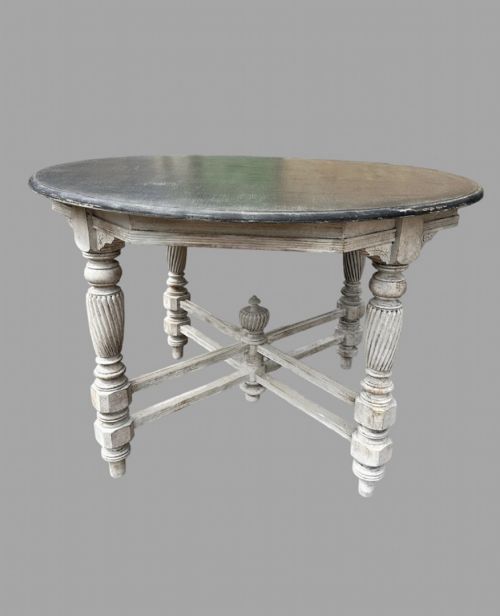
In contrast, rustic country or standard Victorian examples rely on simpler turned legs, straightforward timber construction, and less ornate hand-painted motifs.