
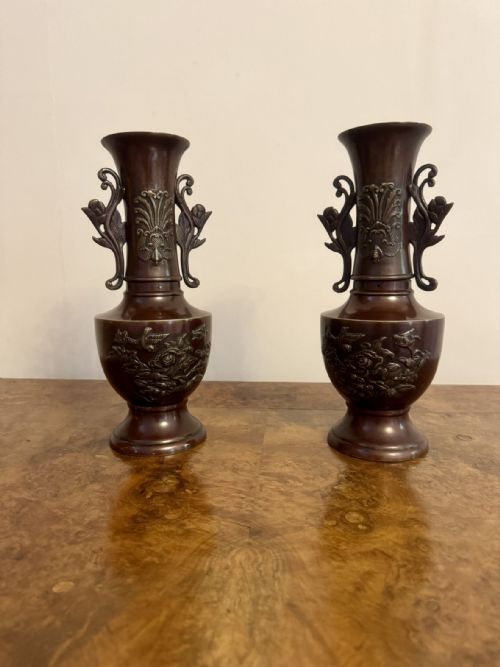


Carved Metal Vase
A carved metal vase brings tactile depth and weight to a room, showing the enduring craft of Victorian and Meiji period metalworkers.
Carved Metal Vase
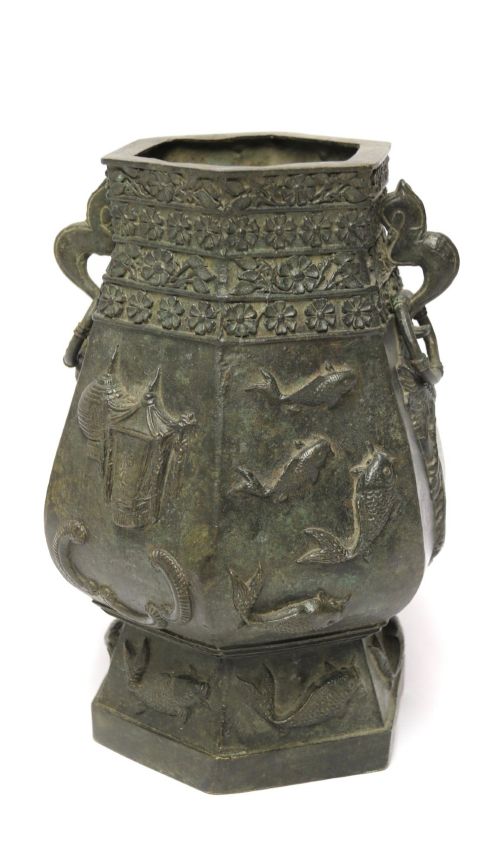
A carved metal vase in these listings typically appears as a solid bronze, brass, copper alloy, or silver vessel originating from the 19th century or early 20th century. Buyers will frequently encounter Japanese Meiji period pieces alongside Chinese export items and Victorian European works.
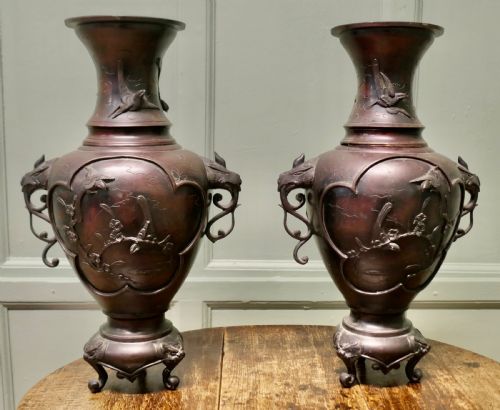
The forms range from baluster urns and stem vases to decorative ewers, jardinieres, and garniture sets. Many of these objects feature pairs designed for mantlepieces or display tables during the Victorian era and the Edwardian period.
Origins span across Japanese workshops, Chinese dynasties, and Italian Grand Tour iterations. The prevalent aesthetic relies on heavy cast metal surfaces ornamented with relief work, engraving, and chasing.
Materials and techniques
Metalworking methods centre on casting bronze, brass, and copper alloys into robust foundational shapes before applying surface decoration. Artisans utilised high-relief casting, embossing, and deep hand-chasing to carve intricate motifs directly into the metal.
Certain vessels incorporate patinated finishes, enamel inlay, or contrasting materials such as cherry wood and marble. Pierced brass work and signed elements demonstrate the specialised labour involved in finishing each piece.
Materials span from bronze and brass to copper alloy, silver, marble, and cherry wood.
Quality differences
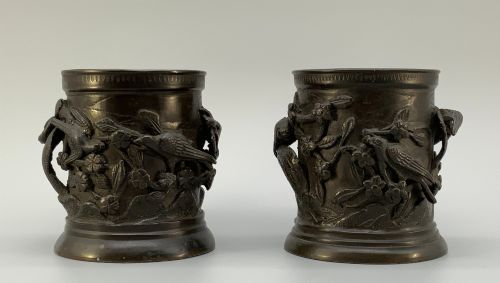
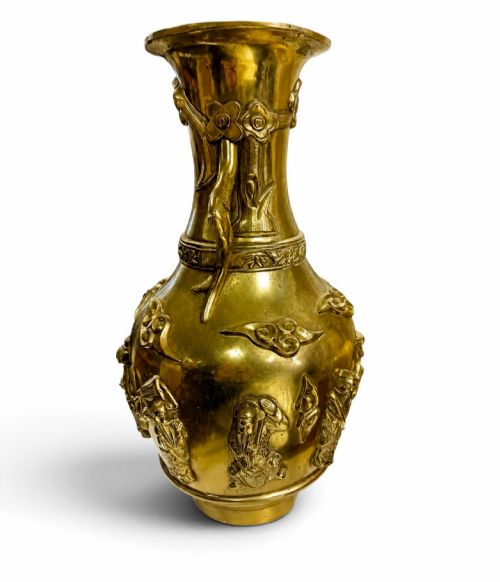
Superior examples distinguish themselves through the precision of their high-relief casting and the depth of their hand-chased ornamentation. Finer specimens display crisp detailing in figural subjects such as birds, blossoms, and immortals rather than flat or generalised surface stamping.
Weight and structural integrity also separate standard production from exceptional work, with heavier baluster urns and signed pieces showing superior artistic intent. The harmonious integration of twin handles, patination, and secondary materials like cherry wood or marble indicates higher tier production.
Genryusai Seiya
The Carved Metal Vase Glossary
- Baluster
- A vertical architectural form with a rounded lower body tapering to a narrow neck. This shape provides a stable and classic silhouette for many antique metal vessels.
- Chasing
- A metalworking technique where the artisan pushes metal down with a hammer and punch to create raised surface designs. This method defines the carved surface details seen on many period pieces.
- Patinated Bronze
- Bronze treated with chemicals or heat to produce a specific surface coloration and aged appearance. This finish protects the metal while enhancing visual depth.
- Garniture Set
- A coordinated group of ornamental vases or urns designed to be displayed together on a mantelpiece or sideboard. These matching sets were popular decorative arrangements in the nineteenth century.
- Meiji Period
- The era in Japanese history spanning from 1868 to 1912 noted for the export of exceptional bronze metalwork to Western markets. Pieces from this time frequently display naturalistic bird and floral motifs.
Carved Metal Vase: Frequently Asked Questions
How do I clean a carved metal vase?
Dust gently with a soft dry cloth to preserve the historical patina and avoid abrasive polishes that strip surface finishes. Chemical cleaners can damage patinated bronze and copper alloys.
For pieces with intricate chased decoration, use a soft brush to remove debris from recessed areas. Keeping the vessel in a stable environment prevents moisture damage.
What periods do these metal vases come from?
The inventory consists largely of nineteenth century items, spanning Victorian, Edwardian, and Meiji period eras. Production dates stretch from the eighteen-fifties through the early nineteen-tens.
Chinese export items and Italian Grand Tour pieces sit alongside Japanese bronzes from the late nineteenth century. These dates reflect international trade and manufacturing periods recorded in the titles.
Were these vases made for display or flowers?
Many examples function as decorative urns, posy vases, or garniture sets intended primarily for visual display on mantels and tables. Their weight and sculptural form often suited formal interior decoration.
Some pieces, such as stem vases and flower urns, accommodated botanical arrangements. Others served as solid bronze vessels or decorative ewers without functional water-holding intent.
How can I tell Japanese from Chinese pieces?
Japanese pieces from the Meiji era frequently feature signature plaques, patinated bronze finishes, and naturalistic subjects like birds and blossoms. Chinese examples often utilise heavier copper alloys, archaic forms, or base marks.
Stylistic cues such as Daoist immortals point towards Chinese export origins, while specific foundry signatures and dragon motifs help identify Japanese workshop output.