


Carved Marble Girl
A carved marble girl brings nineteenth-century portraiture into a room through stone, capturing youthful subjects in Carrara marble, alabaster, and ormolu.
Carved Marble Girl
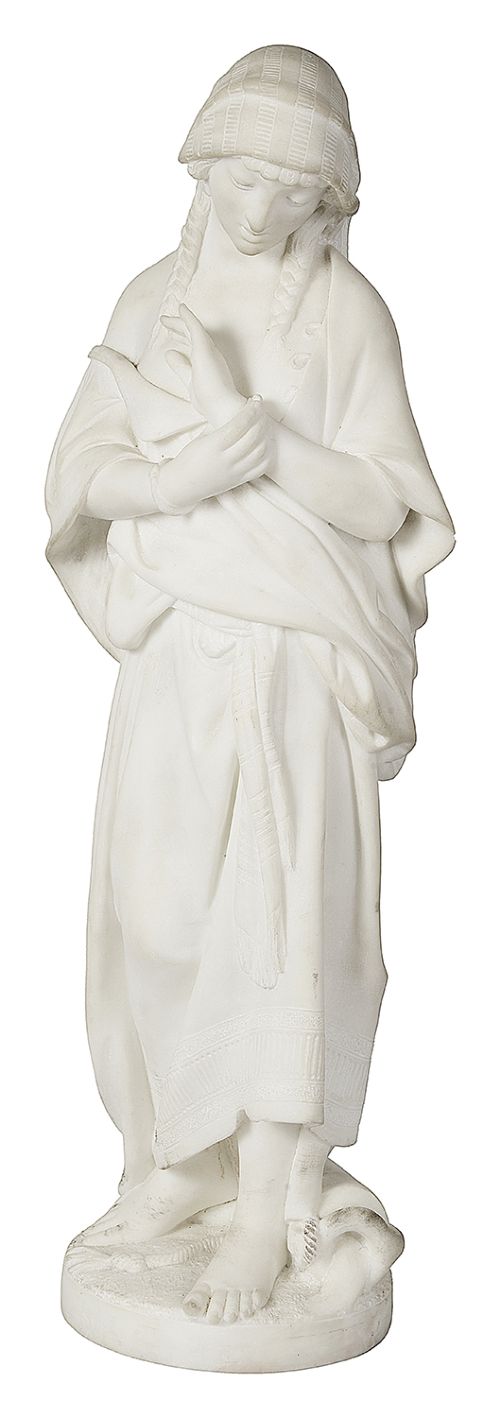
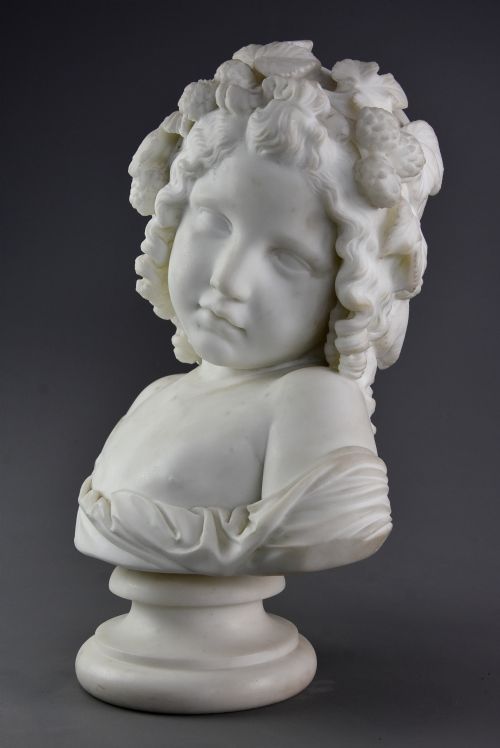
A carved marble girl encompasses nineteenth-century European sculptures, busts, and statues depicting young female subjects. These pieces range from Neoclassical and French Beaux-Arts interpretations to Black Forest and Italian school works.
The most common formats on this page are cabinet busts and full sculptures created during the nineteenth century, often depicting subjects holding flowers, instruments, or traditional garments.
Originating largely from Italian, French, and Germanic workshops, these carvings record the likenesses of young girls through European academic traditions of the 1800s and early 1900s.
Distinctions in craftsmanship
The integration of secondary materials, such as finely chased ormolu or carved wooden elements, influences the character of the piece. The choice of unblemished stone without intrusive mineral veins determines the visual harmony of the finished sculpture.
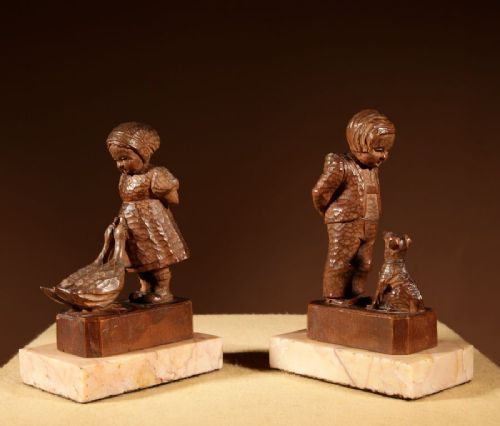
Object forms span full-length statues, single portrait busts, and paired sculptures depicting young boys and girls.
Barranti Florence·Eduardo Giolli·P Della Vedova·G V Vaerenbergh
The Carved Marble Girl Glossary
- Carrara marble
- A white or blue-grey stone quarried in Tuscany, prized by European sculptors for its uniform crystalline structure and subtle translucency. It forms the primary medium for many nineteenth-century portrait busts.
- Alabaster
- A softer mineral stone related to gypsum, utilised for detailed figural sculptures due to its ease of carving and warm, light-permitting surface. It yields a softer tactile quality than harder marbles.
- Ormolu
- Gilded bronze mounted onto furniture and sculpture bases, providing a bright metallic contrast to carved stone. This decorative technique was prevalent in French and Italian nineteenth-century works.
- Bust
- A sculptural representation of a person from the chest or shoulders up, focusing attention entirely on the facial expression and hairstyle of the subject. It is the dominant format for portrait sculptures on this page.
- Neoclassical
- An artistic style drawing inspiration from the classical art and culture of ancient Greece and Rome, emphasising restraint, proportion, and idealized human forms in nineteenth-century sculpture.
Carved Marble Girl: Frequently Asked Questions
Where were these marble and alabaster sculptures made?
The pieces originate predominantly from nineteenth-century European workshops, with strong representation from Italian schools in Florence, French studios, and Germanic regions. Artisans in these centres produced decorative figures for domestic interiors.
Many works reflect academic training centres where sculptors mastered the translation of living models into stone and alabaster.
How do I display a marble bust at home?
These sculptures require stable surfaces such as heavy wooden pedestals, sturdy sideboards, or dedicated console tables that can support significant stone weight. Placing them away from direct heat sources protects the integrity of the material.
Good ambient lighting helps reveal the subtle contours of carved hair and drapery that define nineteenth-century portraiture.
What is the difference between marble and alabaster figures?
Marble is a hard, metamorphic stone capable of taking a high polish, whereas alabaster is a softer, gypsum-based mineral with a warm, translucent quality. Alabaster pieces often exhibit a softer surface texture and a more diffuse interaction with light.
Both materials were carved using similar chisel and rasp techniques during the 1800s.
What do attributes like flowers and instruments signify?
Objects such as mandolins, harps, and floral garlands draw on allegorical traditions of the nineteenth century, representing music, innocence, or seasonal themes. Young girls holding these items were a popular subject for sentimental and decorative art.
These additions allowed sculptors to demonstrate their skill in carving delicate wooden or botanical elements alongside human anatomy.