
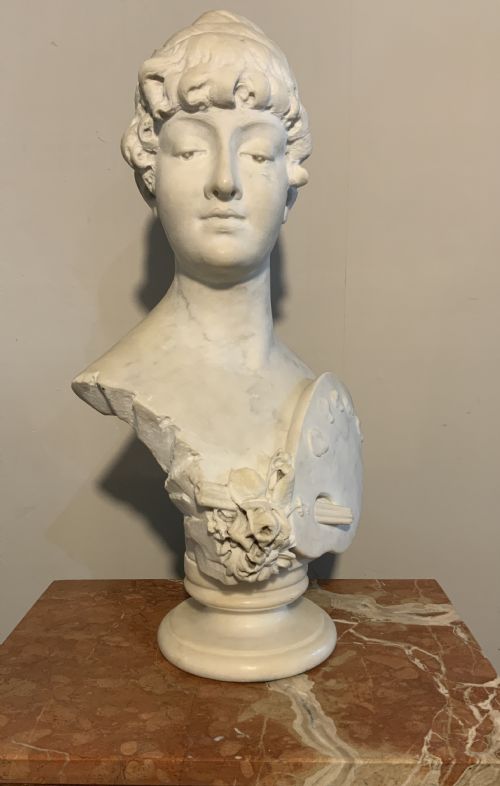
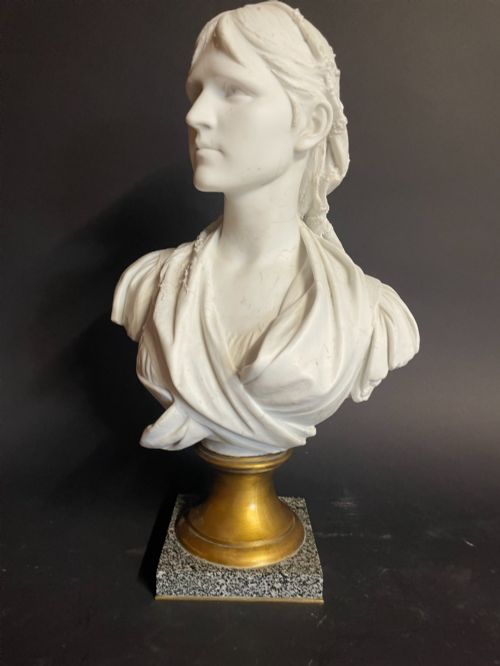

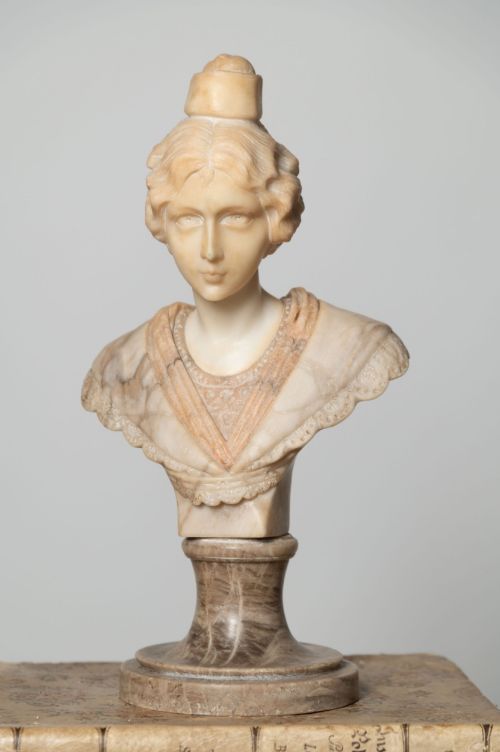
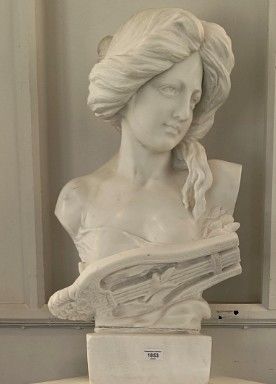
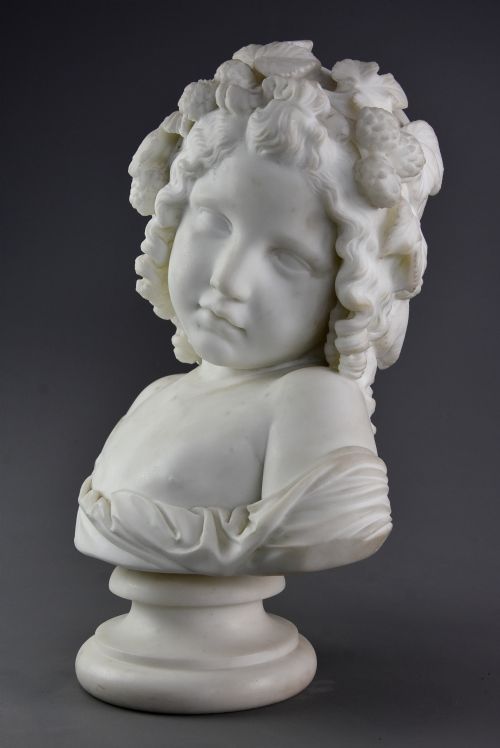
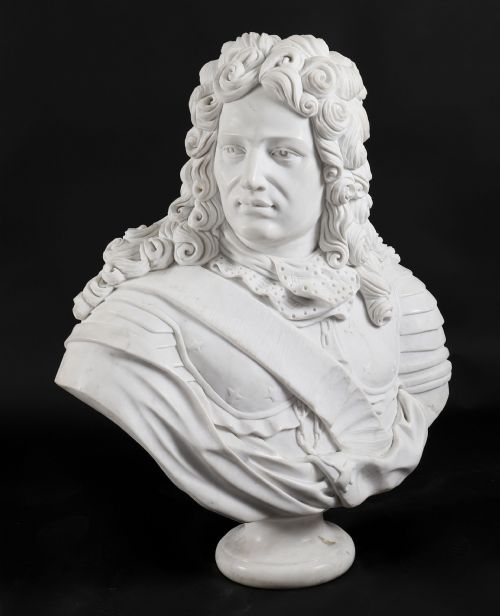
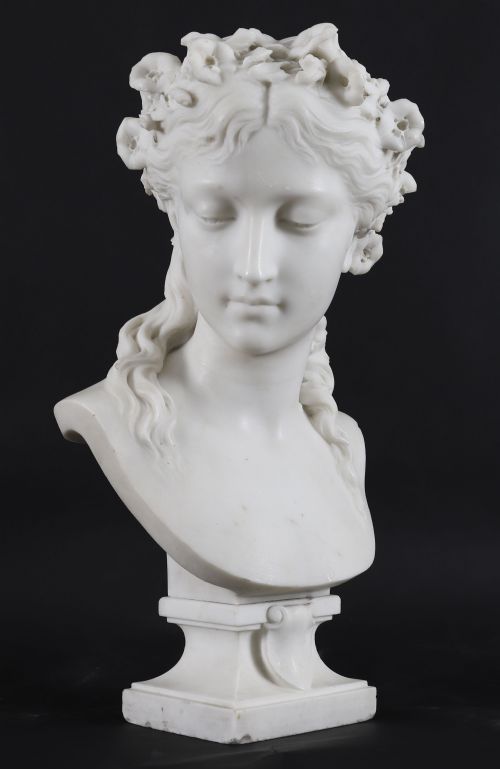
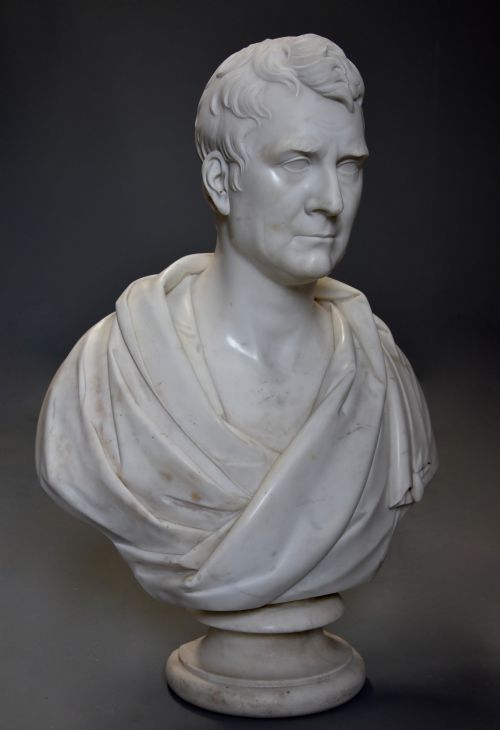

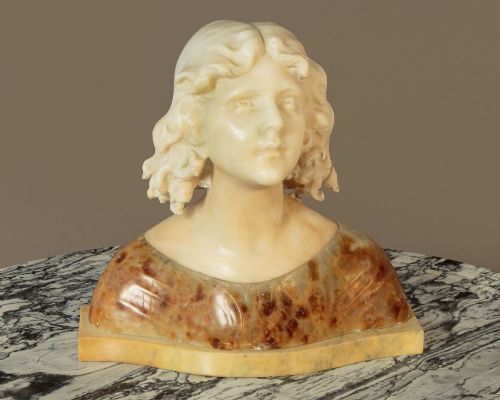

Carved Marble Bust
A carved marble bust brings the quiet dignity of classical portraiture into an interior through patient hand-chiselling in stone.
Carved Marble Bust
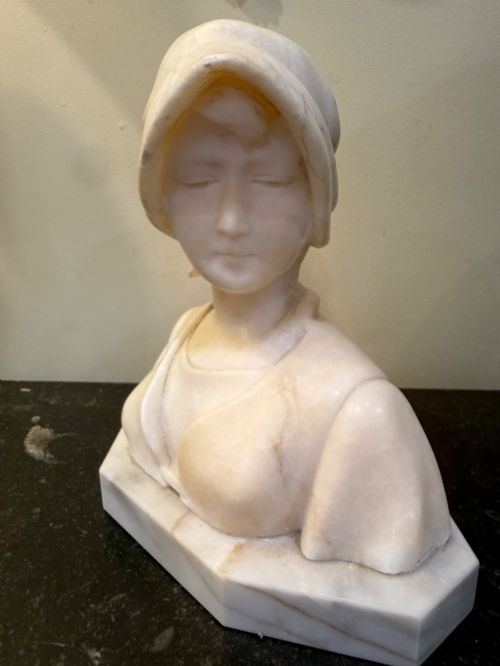
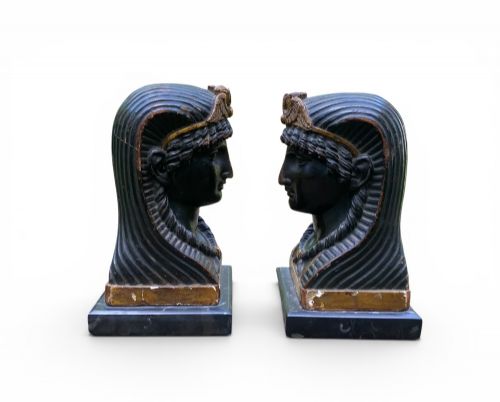
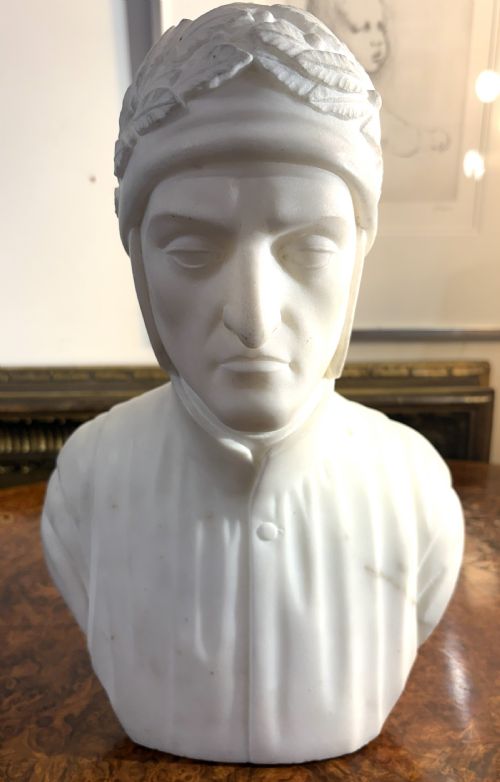
A carved marble bust portrays historical figures, classical deities, literary icons, or anonymous subjects from the nineteenth century and earlier eras.
Makers shaped these portrait sculptures from solid blocks of stone, frequently placing them upon matched pedestals or columns.
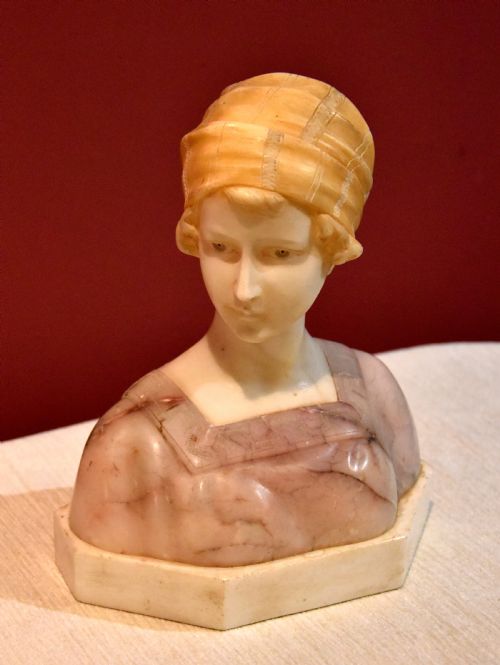
The selections span grand neoclassical depictions, Victorian library pieces, and delicate French studies of women and children.
Materials and Construction
Sculptors carved these pieces primarily from white statuary marble, Carrara marble, and translucent alabaster, sometimes mounting them on bases of contrasting stone like vert de mer or serpentine.
Makers utilised chisels and rasps by hand, occasionally incorporating signed bronze plaques, brass mounts, or ormolu details to accent the stone form.
Portraits often emerged from workshops through a combination of carved stone and fitted wooden or scagliola columns.
Listings feature works in white marble, alabaster, and stone, spanning from the seventeenth century through the Art Deco period.
Distinctions in Quality
The distinction between ordinary and exceptional works lies in the subtlety of the facial expression, the depth of the undercut, and the lifelike rendering of drapery and hair.
A signed piece by a documented sculptor or a known workshop commands greater attention than an anonymous studio study.
The purity of the stone, the absence of distracting natural fissures in the face, and the integration of a period base determine the standing of the piece.
Houdon·Eugene Aizelin·J Francis·Auguste Henri Carli·John Wenlock Rollins·R Mattei·Mieczyslaw Leon Zawiejski·Cavaceppi Workshop·Giuseppe Carnevale·S KITSON·A Cipriani·Peter Hollins
The Carved Marble Bust Glossary
- Carrara marble
- A fine-grained, white or blue-grey stone quarried in Tuscany, widely favored by European sculptors for its smooth texture.
- Alabaster
- A softer, translucent stone often used for nineteenth-century portrait studies of women and children to capture a lifelike glow.
- Neoclassical
- A style drawing inspiration from the classical art and culture of ancient Greece and Rome, prevalent during the eighteenth and nineteenth centuries.
- Ormolu
- Gilt bronze mounts applied to furniture or sculpture bases to provide decorative contrast against the carved stone.
Carved Marble Bust: Frequently Asked Questions
How do I clean a marble bust?
Dust the stone gently with a dry, soft microfiber cloth to prevent surface grime from settling into the pores.
Avoid using water, soap, or household cleaning solutions, as moisture can stain or damage untreated alabaster and marble.
Were these always meant for indoors?
Most portrait busts were created for interior display in libraries, drawing rooms, and grand entrance halls during the nineteenth century.
Only pieces specifically designated as garden statuary were intended for external placement where weather could affect the stone.
How can I date a marble bust?
Examine the style of the clothing, the rendering of the hair, and any signatures or foundry marks inscribed on the truncation.
Comparing the base material and mounting techniques to documented nineteenth-century examples helps confirm the period of production.
What is the difference between marble and alabaster?
Marble is a hard, metamorphic rock that resists scratching and holds sharp sculptural details over long periods.
Alabaster is a softer, gypsum-based stone that allows light to pass slightly beneath the surface, creating a warm, translucent quality.