



Carved Mahogany Wingback
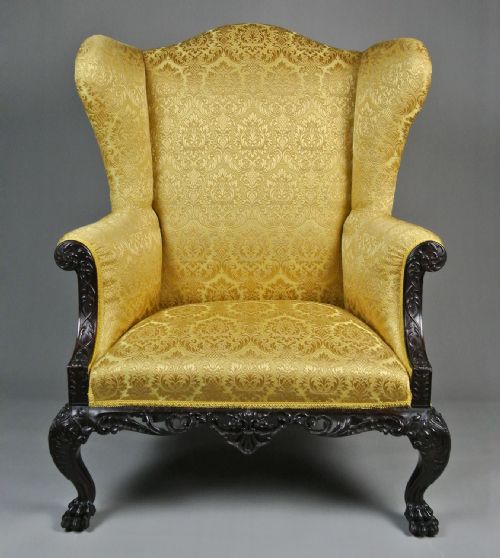
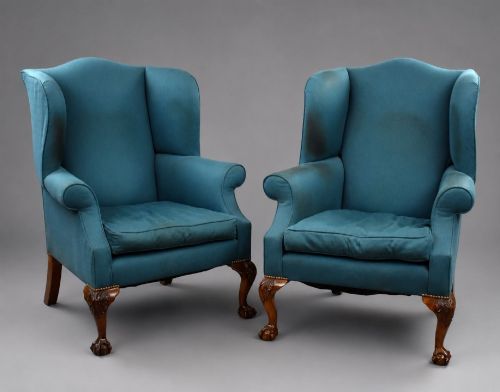
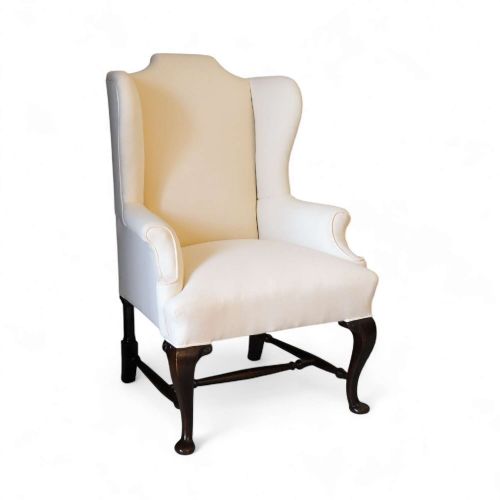
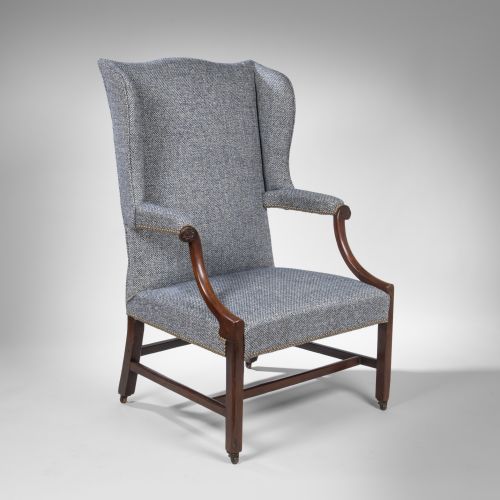
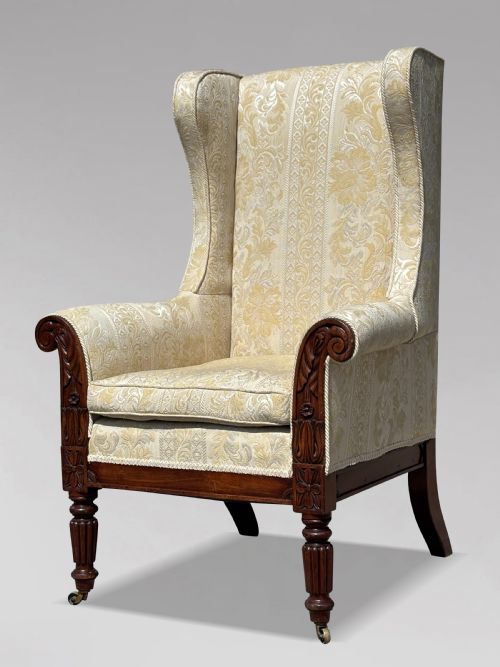
A carved mahogany wingback offers robust timber frames and draught-excluding side panels, bringing substance and rich red-brown grain to a traditional library or study.
Carved Mahogany Wingback
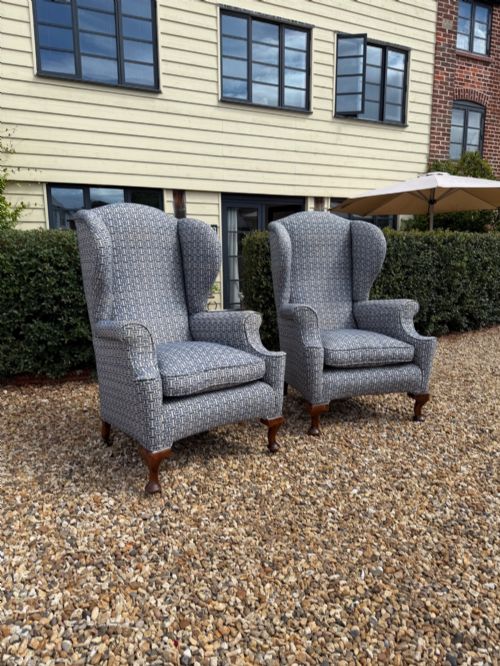
A carved mahogany wingback combines a high upholstered back with protective side wings designed to shield the sitter from draughts, supported by dense tropical hardwood frames. These seating pieces appear in various forms, from straightforward George II and George III adaptations to expansive Victorian interpretations and later revival pieces.
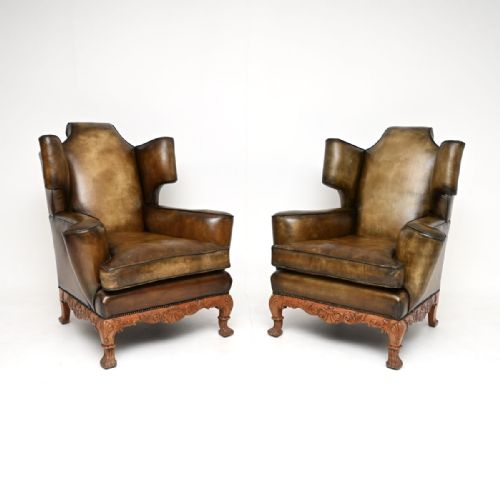
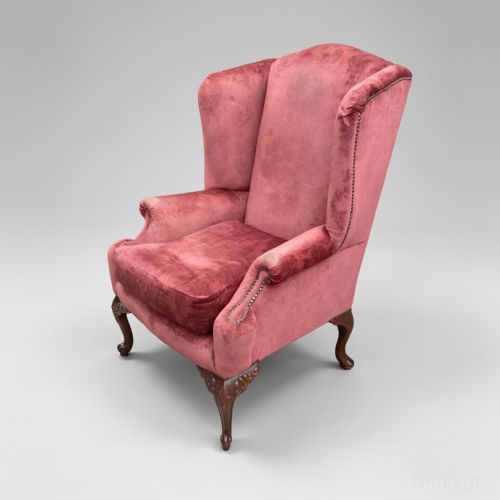
Most examples found here date across the eighteenth, nineteenth, and early twentieth centuries, reflecting changing domestic fashions in British and continental seating. Buyers encounter both single library armchairs and matched pairs, often finished in calico ready for final top-covering or fitted with aged leather and velvet upholstery.
Materials and construction
Makers utilised solid mahogany for structural framework and visible carved components, capitalising on the timber's strength and stability. Secondary woods sometimes reinforced internal bracing, while brass castors and tacks provided functional and decorative accents.
Traditional upholstery methods relied on webbing, springs, and stuffing layered beneath calico, hessian, and top covers such as leather or heavy textiles. Carved details on legs and arms were hand-chisel worked directly into the dense mahogany substrate.
The wings were originally engineered to catch hearth warmth while blocking chilly hallway draughts, effectively creating a personal microclimate for the seventeenth-century sitter.
Judging quality and proportion
Quality rests primarily in the crispness of the hand-carving and the integrity of the timber framing rather than mere surface ornament. Stronger examples exhibit balanced proportions, authoritative stance, and substantial scale without heavy or clumsy joinery.
The refinement of the wing sweep and the execution of the cabriole or straight legs distinguish ambitious workshop output from standard commercial production. Preservation of original timber surfaces and authentic structural framing elevates the standing of any piece.
Howard And Sons·Thomas Chippendale
The Carved Mahogany Wingback Glossary
- Mahogany
- A durable tropical hardwood prized for its rich reddish-brown colour and stability under carving tools. It serves as the primary structural and decorative material for these chairs.
- Wingback
- An armchair featuring protective lateral flaps flanking the upper back. This traditional design originally trapped radiant heat from a fireplace and kept out cold room draughts.
- Calico
- A plain-woven cotton fabric used as an under-upholstery layer. Many antique frames are sold in this unfinished stage so buyers can apply their own choice of top textile.
- Cabriole leg
- A furniture leg that curves outward at the knee and tapers inward toward the foot, often ending in a claw and ball or pad. It is a defining feature of mid-eighteenth-century design.
- Hessian
- A coarse woven fabric, typically made from jute fibres, utilised inside upholstery construction for webbing and foundation support.
Carved Mahogany Wingback: Frequently Asked Questions
How do I identify a Georgian period wing chair?
Look for hand-carved mahogany frames displaying restrained proportions, characteristic stretchers, and traditional joinery methods typical of eighteenth-century workshop practices.
Examine the contour of the wings and the treatment of the arm terminals for period-specific design cues that separate authentic eras from later nineteenth-century revivals.
Can I use these chairs in a modern room?
Their strong timber frames and classic silhouettes anchor contemporary interiors, adding historical contrast and structural warmth to minimalist spaces.
Many examples upholstered in plain calico allow interior decorators to select custom fabrics that complement existing colour palettes.
What is a calico stage chair?
A calico stage chair has been stripped and rebuilt with new internal webbing, stuffing, and an unprinted cotton outer cover, leaving the final decorative textile choice open.
This intermediate state gives buyers complete freedom to match their own interior scheme without disturbing historical woodwork.
How should I care for antique mahogany frames?
Maintain stable indoor humidity levels and keep the timber away from direct heat sources to prevent wood splitting or shrinkage.
Apply occasional professional wax polish to nourish the grain and protect the aged surface patina from everyday wear.