
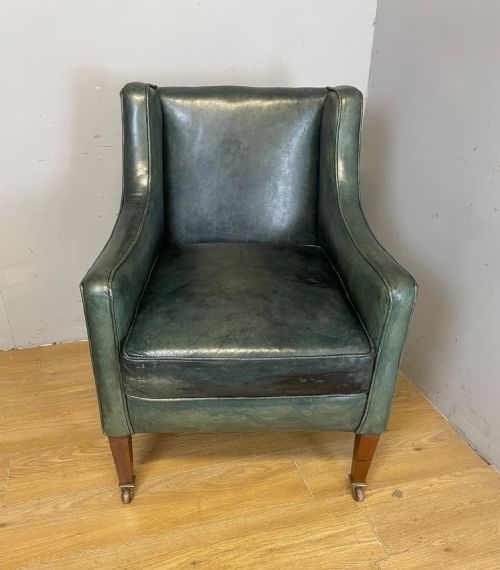
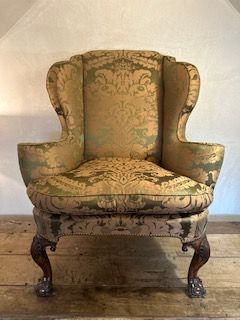
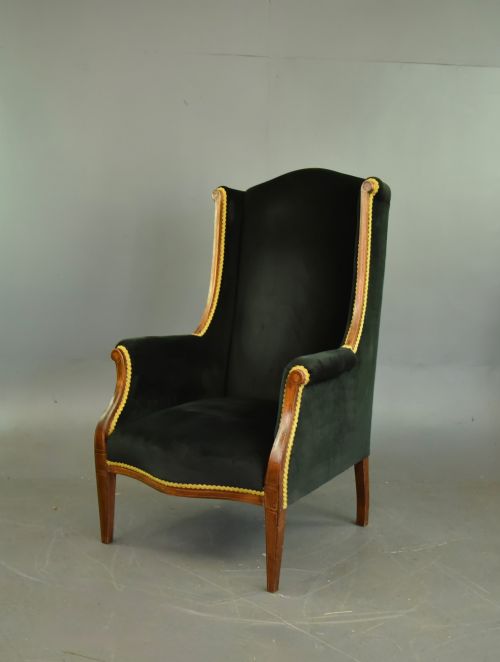
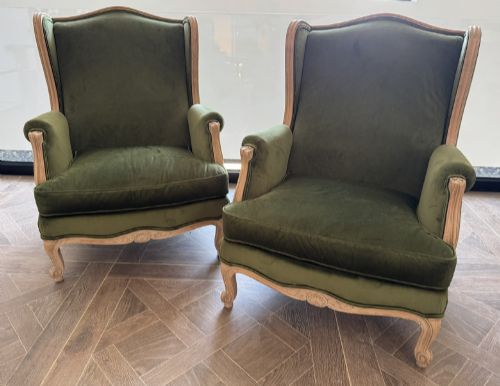


Green Upholstered Wing Chair
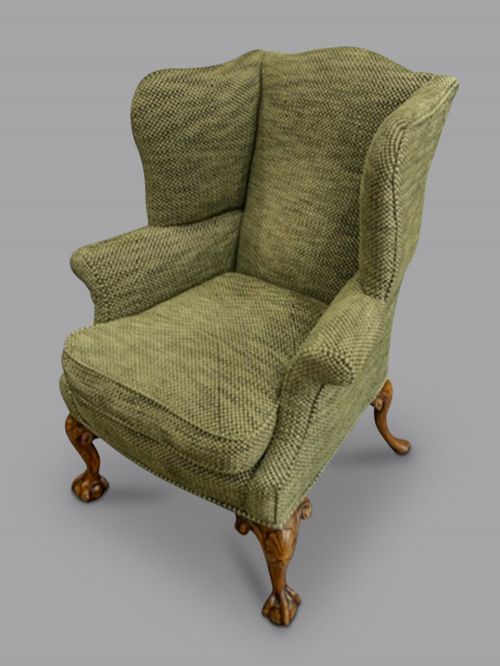
A green upholstered wing chair brings instant warmth to a room while offering a draught-free seat by the hearth.
Green Upholstered Wing Chair
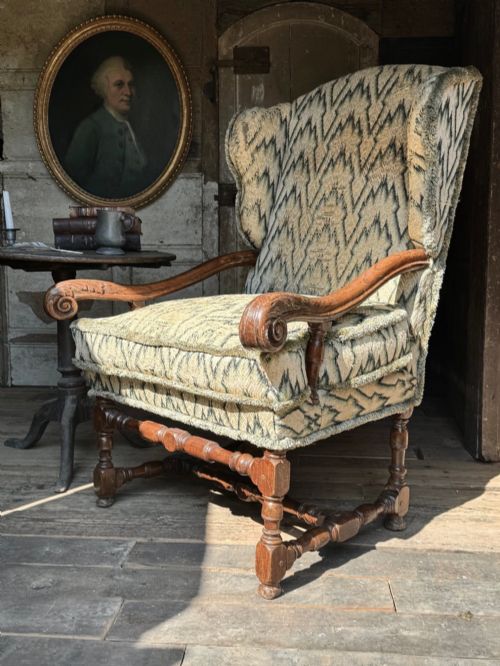
A green upholstered wing chair offers a traditional seating form designed to shield the sitter from cold draughts. These pieces range from early eighteenth-century walnut and oak examples to later Victorian, Edwardian, and twentieth-century revivals.
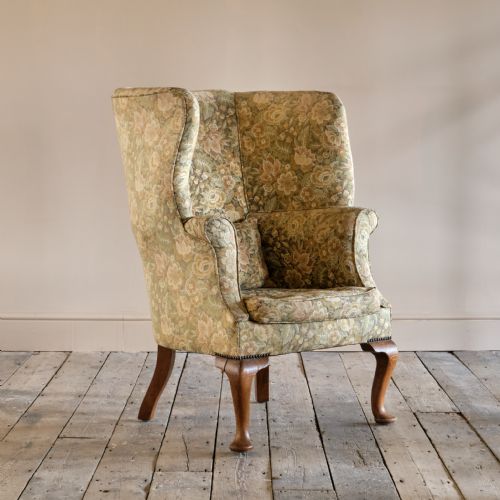
The materials and styles seen on this page span several centuries, including Queen Anne revival, George II style, and Edwardian interpretations. Frameworks appear in mahogany, walnut, oak, and hardwood, paired with green velvet, hide, cotton, and tapestry fabric.
Buyers will encounter various proportions, from deep barrel backs to classic high wings. Some pieces arrive ready for interior use, while others require re-upholstery to suit a specific room.
Materials and construction
Frames are constructed from sturdy timbers such as mahogany, walnut, oak, and hardwood, providing a strong structural skeleton for the upholstered body. Joinery techniques vary by period, supporting the deep seat and characteristic side wings.
Upholstery relies on traditional textiles including velvet, cotton, tapestry fabric, and leather hide, secured to the frame. Brass details sometimes accent the woodwork or upholstery edges on period pieces.
Upholstery choices recorded across the selections include green velvet, green hide, cotton, and tapestry fabric.
Distinctions in quality
Quality depends upon the timber selection and the purity of the stylistic revival, whether following George II or Queen Anne proportions. Finer examples maintain crisp lines in the woodwork and balanced proportions in the wings.
The integrity of the frame and the execution of the upholstery dictate the longevity of the piece. Superior construction ensures the armchair supports sitting comfortably without structural compromise.
Howard and Sons
The Green Upholstered Wing Chair Glossary
- Wingback
- An armchair featuring protective side panels attached to the arms or back to block draughts. These panels also served to trap heat from a fireplace.
- Walnut
- A dense, dark timber frequently utilised for furniture frames during the seventeenth and eighteenth centuries. It offers a rich grain that ages with deep character.
- Mahogany
- A durable hardwood introduced extensively to cabinet making during the Georgian period. Its stability made it suitable for carved legs and structural frames.
- Queen Anne style
- A design movement characterised by curved lines, pad feet, and graceful cabriole legs. Chairs from this tradition often feature a spooned back and distinct wings.
- Tapestry fabric
- A heavy, woven textile featuring pictorial or patterned designs used for traditional upholstery. It adds texture and historical weight to period seating.
Green Upholstered Wing Chair: Frequently Asked Questions
How do I date a wing chair?
Dating relies on examining the timber species, leg profiles such as cabriole or straight legs, and the internal framing methods. Earlier pieces often display oak or walnut construction with hand-turned stretchers.
Later Edwardian and twentieth-century revivals adopt lighter hardwoods and machine-cut components while mimicking earlier Georgian or Queen Anne aesthetics.
Are these chairs comfortable for daily use?
These armchairs are built with deep seats and high backs designed for relaxation by the fireside. The enclosed wings provide natural head and shoulder support.
Comfort levels can vary depending on the firmness of the internal padding and whether the piece requires modern re-upholstery.
What is the purpose of the wings?
The side panels originally functioned to shield the occupant from cold draughts in large, poorly heated rooms. They also trapped radiant heat from the hearth.
Over time, this practical architectural feature evolved into a distinct stylistic hallmark of traditional fireside seating.
Can I buy a chair needing re-upholstery?
Listings occasionally include frames sold specifically for re-upholstery, allowing buyers to select their own fabric. This option suits those wanting to match a particular interior colour scheme.
Inspect the exposed woodwork and frame stability carefully before committing to a restoration project.
What wood types should I look for?
Walnut and oak typically indicate earlier eighteenth-century origins, while mahogany became prominent during the Georgian period. Edwardian and later pieces frequently utilise general hardwood frames.
Each timber carries a distinct visual weight and patina that anchors the chair in its respective era.