

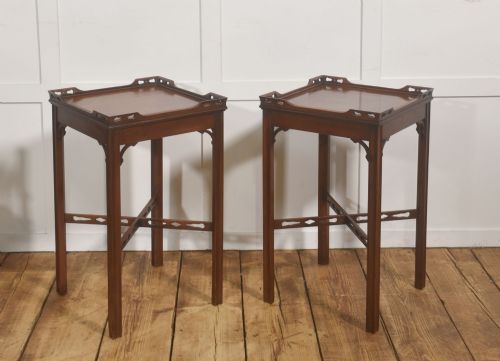
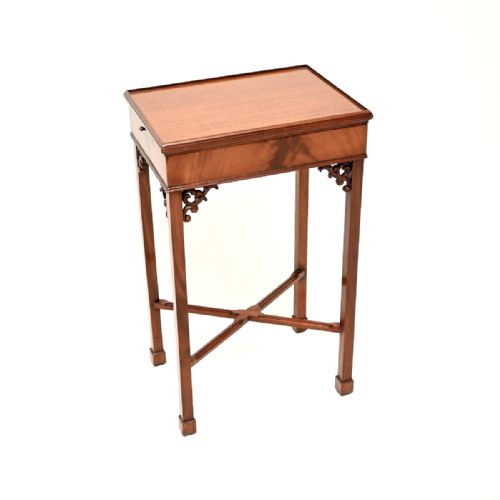
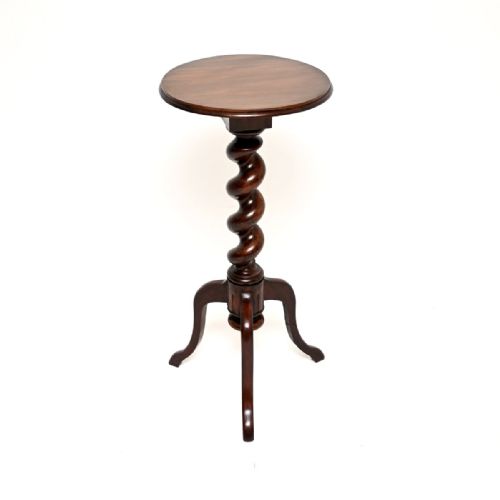
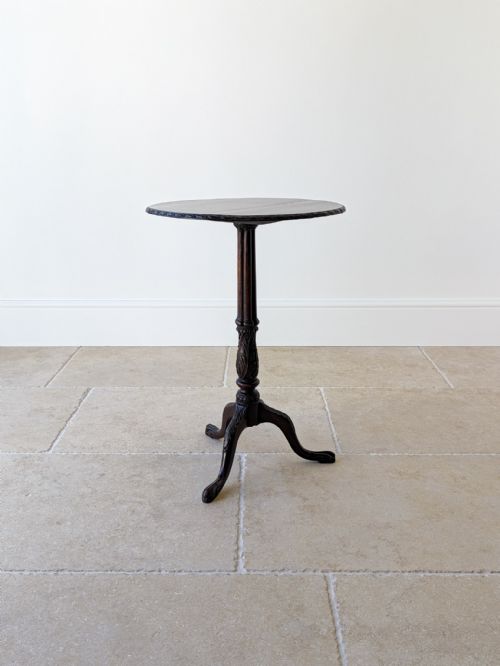
Carved Mahogany Wine Table
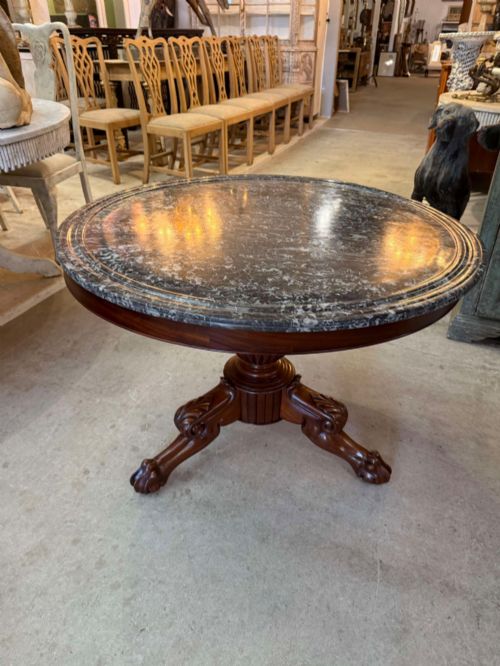
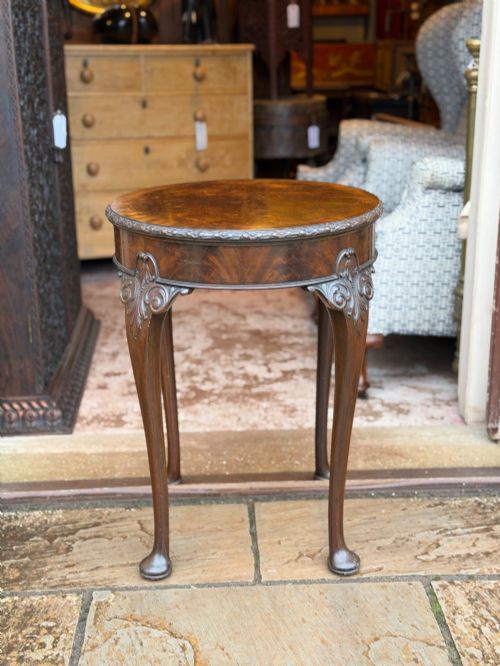
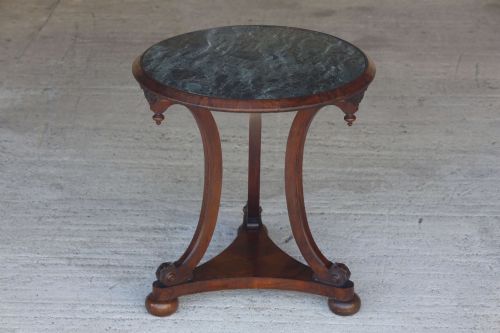
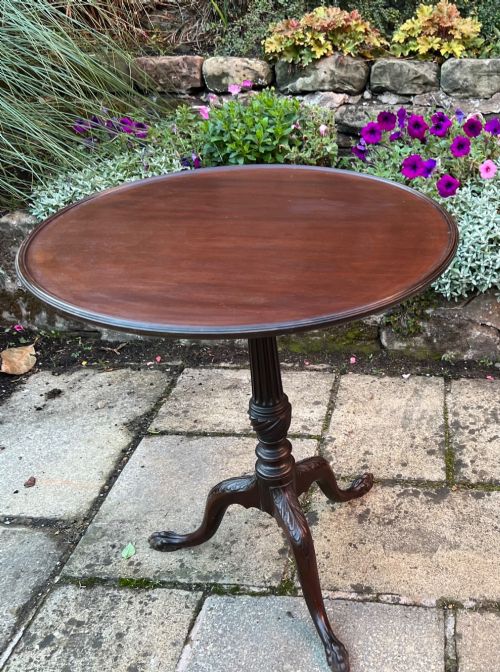
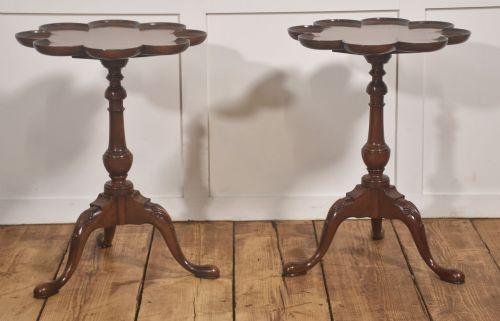
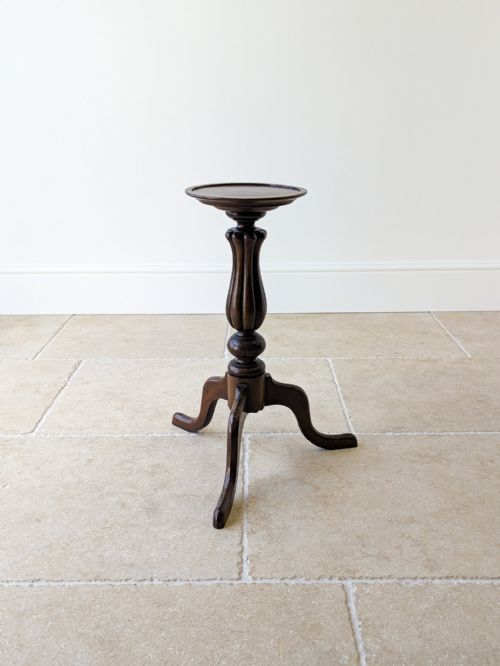
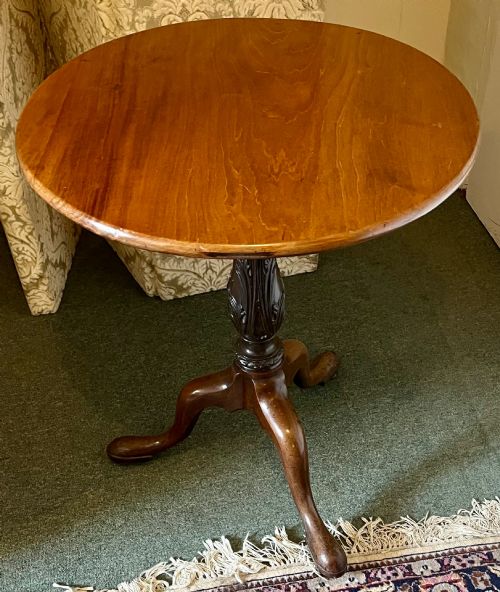
A carved mahogany wine table stands ready to hold a glass or a lamp, bringing compact elegance from the eighteenth, nineteenth, and early twentieth centuries into a room.
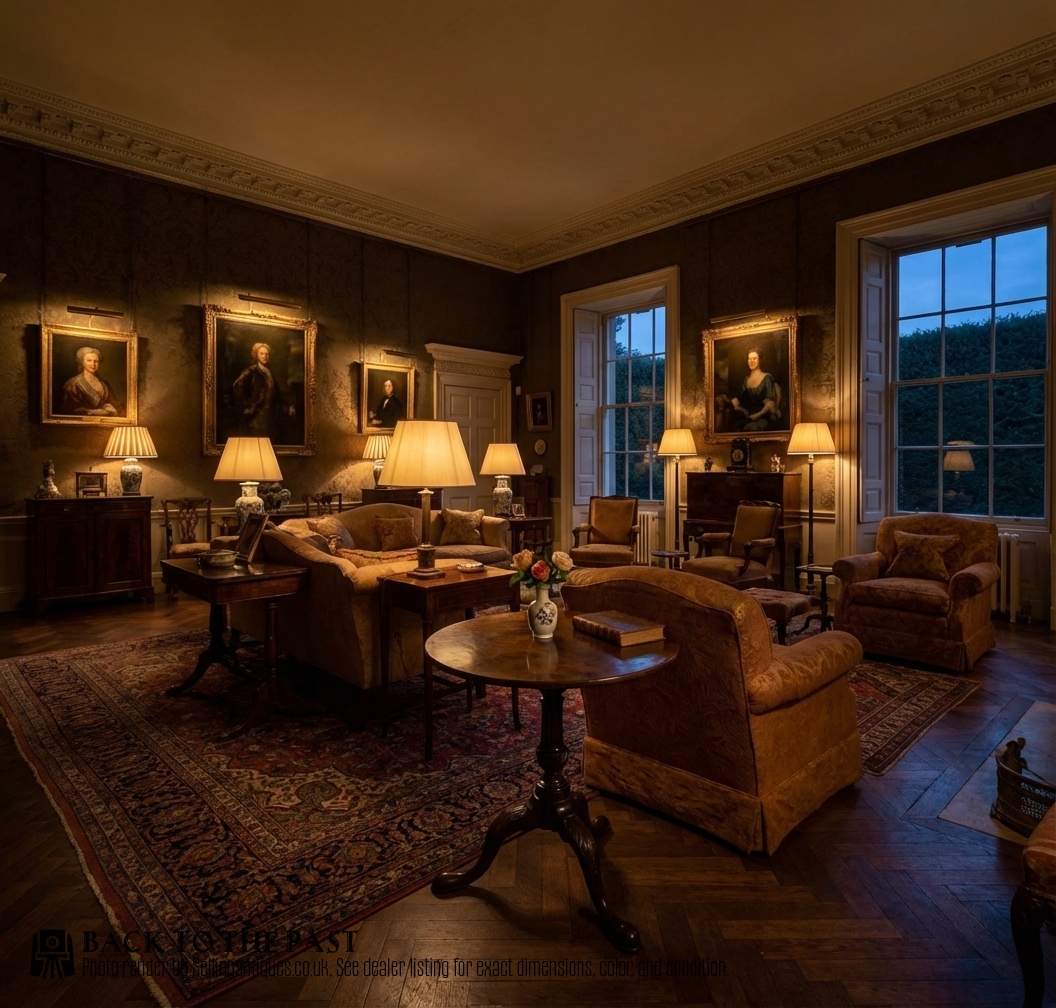
Carved Mahogany Wine Table
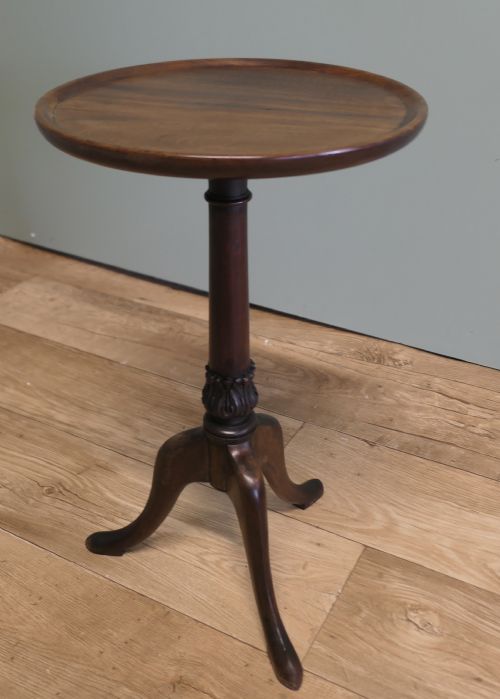
A carved mahogany wine table is a small, portable piece typically supported by a central pillar and three legs, designed to sit beside a chair or sofa. These tables appear in Georgian, Victorian, and Edwardian forms, with origins spanning the eighteenth century through to the early twentieth century.
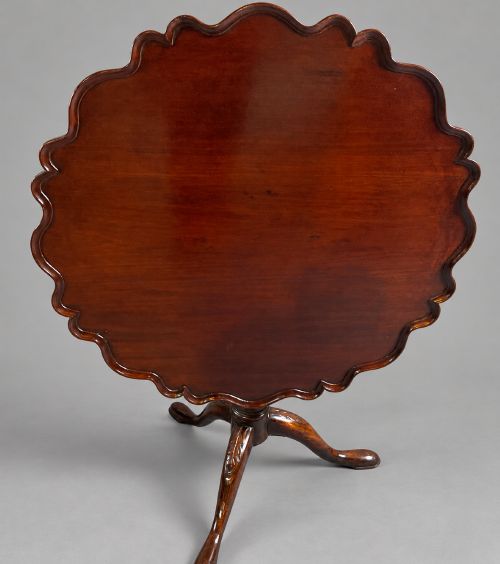
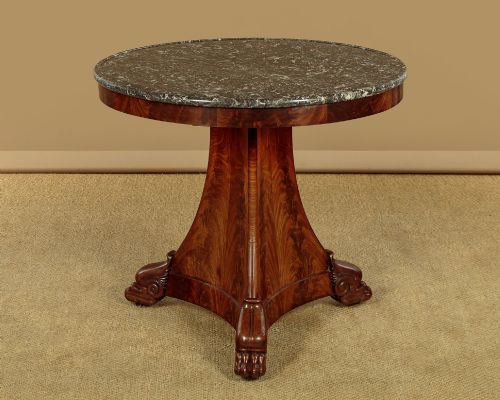
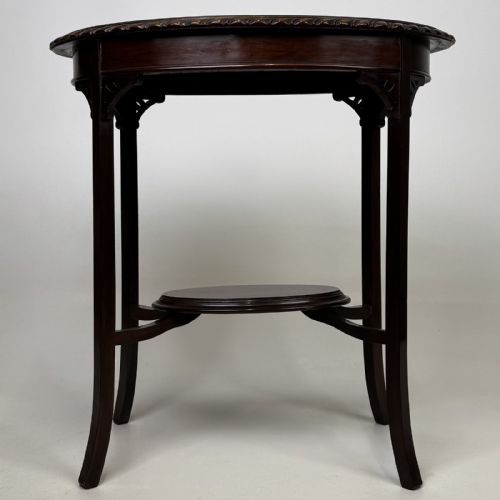
The most common version met on this page is the tripod wine table, often featuring a circular top with a raised edge and carved details on the pedestal base. Pieces from this selection range from simple nineteenth-century examples to elaborate Chippendale revival interpretations.
Makers and designers drew on historical George III styles, producing compact lamp tables, kettlestands, and tilt-top surfaces. The structural variety includes fixed tops, tilt tops with birdcage mechanisms, and occasional side tables adapted for modern living spaces.
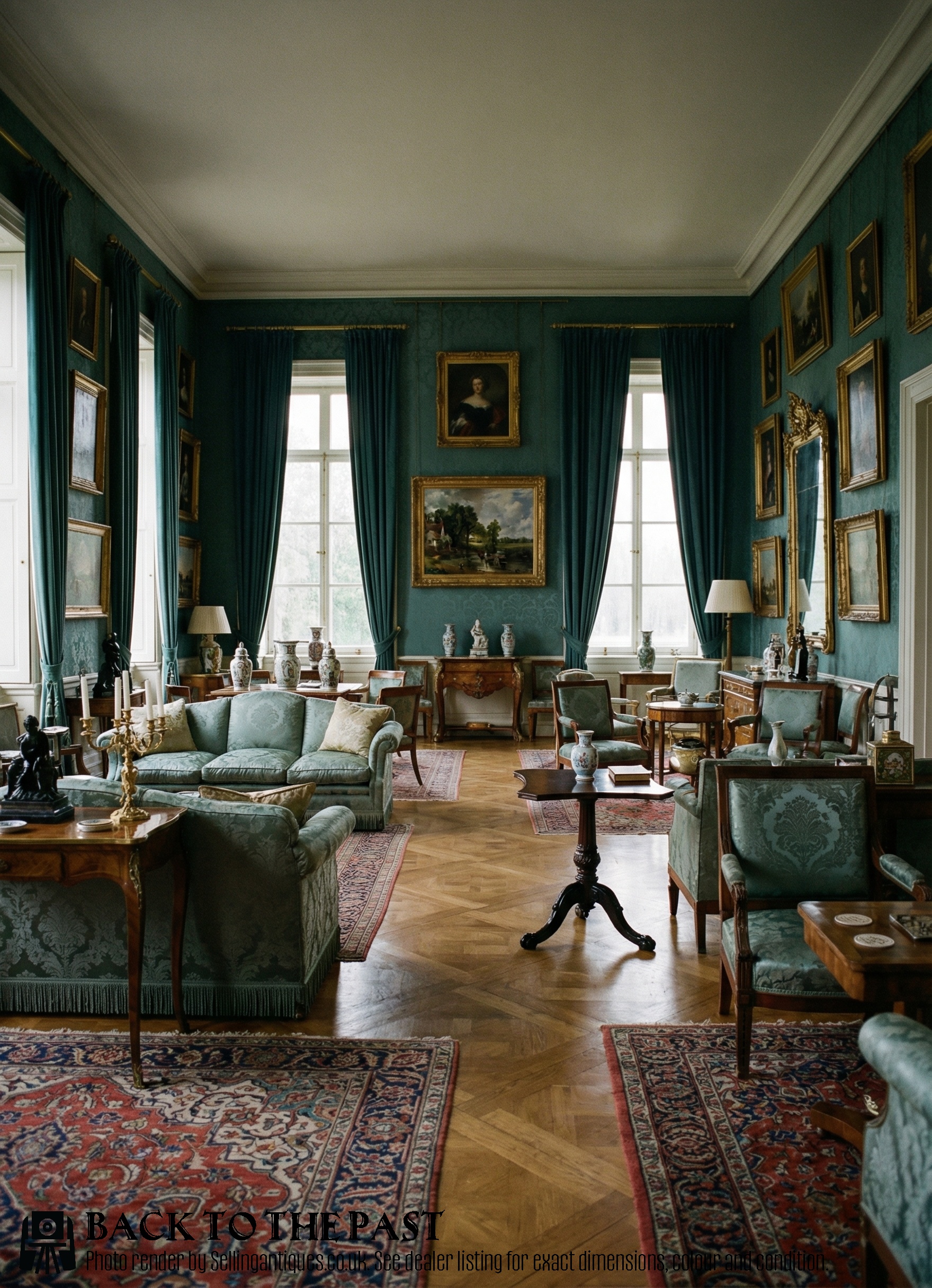
How they were made
Cabinetmakers utilised dense mahogany timber, sometimes pairing it with burr wood veneers or walnut accents to add visual depth to the surface top. Structural elements often incorporate turned wooden pillars and hand-carved tripod legs terminating in pad, claw, or scroll feet.
Advanced mechanisms such as tilt-top catches and birdcage supports allowed the top to pivot and fold flat for storage against a wall when not in use. Joinery relied on precise turning, mortise and tenon joints, and subtle brass hardware where hinges or catches were required.
Carved Mahogany Wine Table Retail Price Guide 2026
Typical asking prices for carved mahogany wine table among the pieces listed under this phrase on Sellingantiques today, from the lower quarter to the upper quarter. They describe what is for sale here now, not the wider market.
Listings span the eighteenth, nineteenth, and early twentieth centuries, featuring mahogany, burr wood, walnut, and brass elements.
What varies in quality
The crispness and depth of the hand-carving on the knees, pillar, and pie crust edge separate standard production from superior examples. Finely executed pieces display sharp chisel work and smooth rotations in their tilt-top mechanisms without looseness in the central column.
Gillow·Shapland and Petter
The Carved Mahogany Wine Table Glossary
- Tripod table
- A small occasional table supported by a central pillar resting on three legs. This construction remained popular throughout the Georgian and Victorian periods for stability on uneven floors.
- Tilt-top mechanism
- A hinge system beneath the table surface allowing the top to pivot to a vertical position. This design saved floor space in smaller historic rooms.
- Pie crust edge
- A decorative raised border carved into the perimeter of the table top with undulating curves. Master carvers shaped this profile directly from the solid timber of the top.
- Kettlestand
- A diminutive table historically used to hold a tea kettle next to the hostess. These pieces share the tripod base and small circular top characteristic of wine tables.
- Birdcage
- A wooden revolving box framework beneath a tilt top that allows the table surface to both tilt and rotate. This complex joinery appears on superior eighteenth and nineteenth-century examples.
Carved Mahogany Wine Table: Frequently Asked Questions
What was a wine table used for?
These small surfaces held wine glasses, bottles, or lamps close to seating areas during evening gatherings in historic homes.
Their portable nature allowed servants to move them easily around a drawing room as guests shifted position.
How do I identify a Georgian period table?
Georgian pieces display timber with a rich, patinated surface and hand-carved tripod bases without modern machine tooling marks.
Look for traditional joinery methods and proportions typical of the eighteenth century rather than later revival styles.
Can I use a wine table daily?
These sturdy tables function well as lamp stands or drink holders beside modern armchairs and sofas.
Use coasters to protect the polished mahogany surface from moisture rings and excessive heat.
What is a tilt-top mechanism?
A pivot block beneath the top lets the surface flip vertically when turned against a wall.
This historic feature made storage straightforward in crowded rooms.