


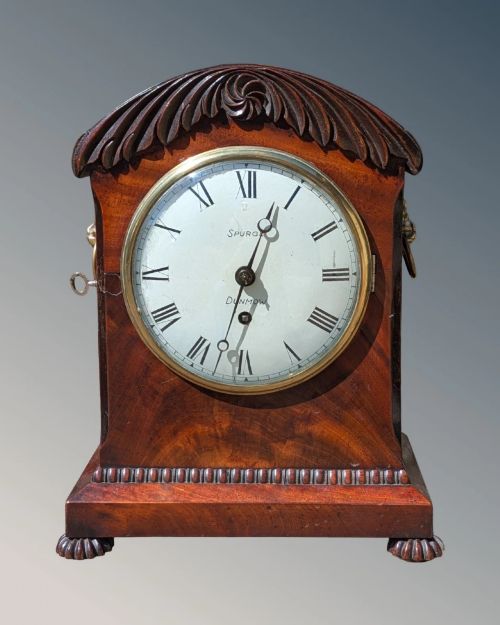

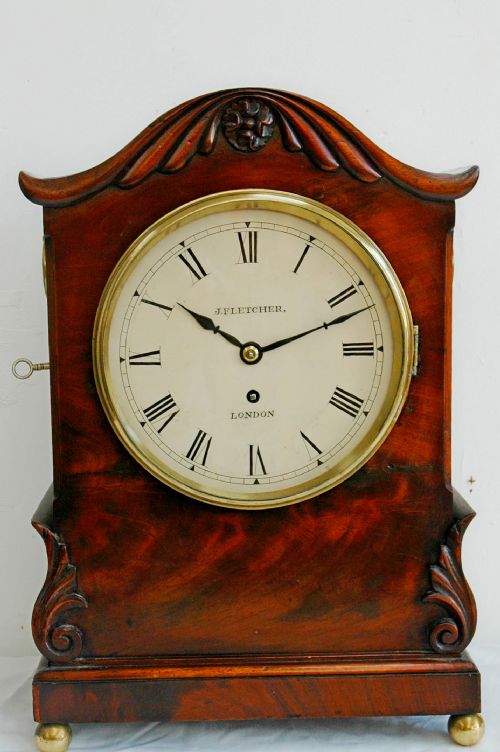


Carved Mahogany Table Clock
A carved mahogany table clock brings substantial presence to a room, combining architectural timber cases with precise mechanical movements.
Carved Mahogany Table Clock
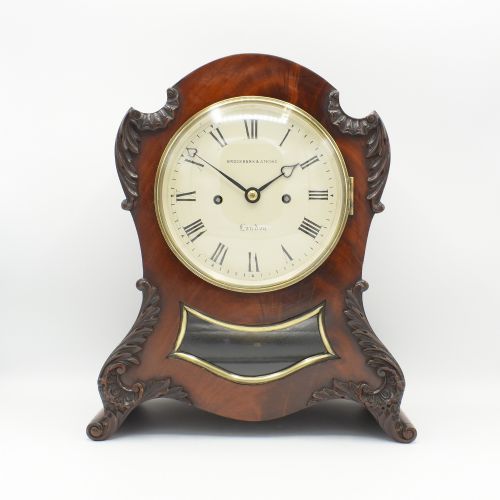
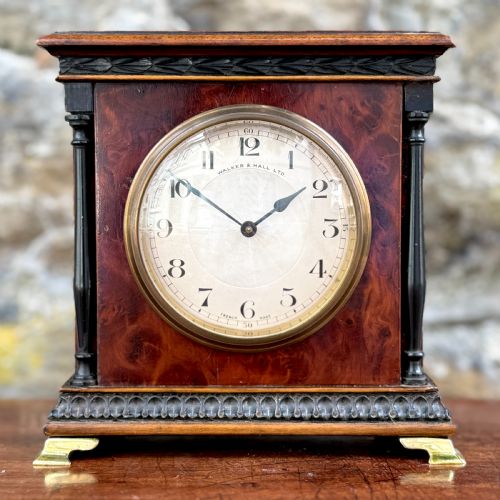
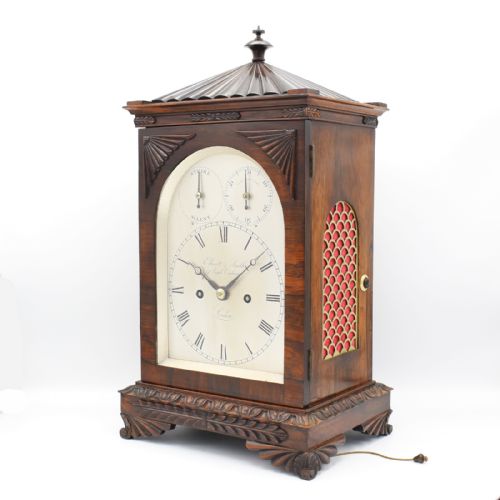
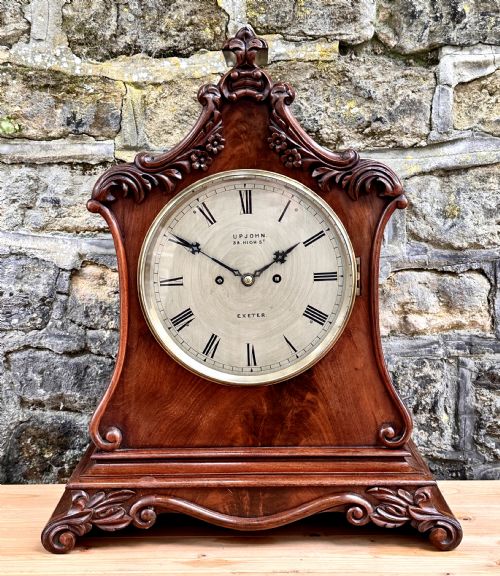
A carved mahogany table clock is a solid timber timepiece designed for domestic or institutional interiors, appearing predominantly in nineteenth-century Victorian, Regency, and Georgian forms. Buyers encounter these pieces as mantel clocks, library clocks, and bracket clocks housed in rich brown timber cases. Most examples seen on this page date from the nineteenth century, ranging from simple library timepieces to complex fusee movement pieces.
The architectural silhouettes vary from pad tops and pagoda tops to Gothic designs and French-influenced inlaid cases. Regional English makers and London firms produced the majority of these domestic timekeepers. The forms serve both functional timekeeping and decorative display across desks, sideboards, and mantelpieces.
Materials and construction methods
Makers constructed these clock cases using solid mahogany timber, frequently incorporating brass dial bezels, glazed doors, and silvered or white enamel dials. Movement plates, gears, and chains rely on brass and steel, while select examples feature boxwood stringing, burr walnut veneers, or gilded bronze mounts. The timber was selected for grain pattern and warm colour before being carved, polished, and fitted with protective glass elements.
Internal engineering utilised fusee movements driven by cords, chains, or springs to regulate power delivery to the escapement. Twin and triple fusee configurations allowed for striking mechanisms and musical chiming alongside standard timekeeping. Cabinetmakers joined the timber cases with precision joinery to support heavy brass movements without warping.
Listings span periods from the Georgian era through the Edwardian period, utilising mahogany, brass, glass, and enamel materials.
Distinguishing quality across examples
The distinction between standard and exceptional pieces rests upon the precision of the timber carving and the complexity of the internal movement. Clocks featuring double or triple fusee movements, intricate dial engraving, and signed backplates by known makers stand apart from simpler timepieces. Crisp moulding profiles and well-preserved surface patination indicate superior original cabinetwork.
Engraved brass dials, fire-gilded bronze mounts, and secondary woods such as boxwood inlay elevate the status of individual items. The integration of robust striking or repeating mechanisms demonstrates higher standards of horological craftsmanship. Overall architectural harmony between the mahogany case and the dial layout governs the standing of each piece.
Brockbanks and Atkins·Walker and Hall·Ellicott and Smith·Bush of London·Webster Cornhill London·Spurge Dunmow·Mappin and Webb·Piggin Norwich·Geo Carter Hackney·Barrett London·J Kingerley Manchester·Hampson and Son·Funnell of Brighton·Purvis of London·Goldsmiths and Silversmiths London·Osborn of Bognor Regis·Edwards Of London·Christie of Perth
The Carved Mahogany Table Clock Glossary
- Fusee
- A conical pulley used in spring-driven clocks to maintain equal force on the gear train as the mainspring unwinds. This mechanism ensures consistent timekeeping accuracy throughout the power reserve.
- Bracket clock
- A portable domestic clock originally designed to sit on a wall bracket or table surface. These pieces typically feature mechanical movements with striking or chiming capabilities.
- Mantel clock
- A decorative clock built to stand upon the mantelpiece above a fireplace. These domestic timepieces span various nineteenth-century continental and English styles.
- Enamel dial
- A clock face created by fusing powdered glass onto a copper or metal base at high temperatures. This technique provides a smooth, durable, and legible surface for painted numerals.
- Ormolu
- Gilded bronze ornamentation applied to clock cases for decorative contrast. The technique involves treating bronze with a mercury and gold amalgam before heating.
Carved Mahogany Table Clock: Frequently Asked Questions
How do I wind a fusee bracket clock?
Winding requires inserting a key into the dial winding holes and turning gently until resistance meets the spring. Care must be taken not to overwind the chain or cord mechanism.
Most nineteenth-century movements require weekly attention to maintain accurate timekeeping. Keeping the key in a consistent place prevents loss during regular maintenance routines.
Where should I place a mahogany table clock?
These clocks require stable, level surfaces such as heavy sideboards, desks, or mantelpieces away from direct heat sources. Environmental stability protects the mahogany timber and internal brass movements from temperature fluctuations.
Positioning the piece at eye level allows clear viewing of the dial and easy access for winding. Solid placement ensures the pendulum or balance wheel operates without interference.
What is the difference between a timepiece and a clock?
In horological terms, a timepiece is a clock that measures hours and minutes without incorporating striking or chiming mechanisms. These simpler models focus purely on visual design and base timekeeping.
Clocks with striking trains sound the hours or quarters using bells or gongs. The added complexity alters the internal layout and requires additional winding arbours on the dial.
How do I identify a Regency mahogany clock?
Regency pieces often display classical architectural proportions, brass inlay, and clean geometric lines reflecting early nineteenth-century taste. Cases frequently incorporate brass ring handles and distinctive bracket feet.
Makers working in this era balanced restraint with rich mahogany grain. Comparing case silhouettes against documented Regency design books helps confirm the period.