


Vintage Fusee Mantel Clock
A vintage fusee mantel clock brings mechanical precision and rich timber cases into a room, driven by a tapered drum and chain.
Vintage Fusee Mantel Clock
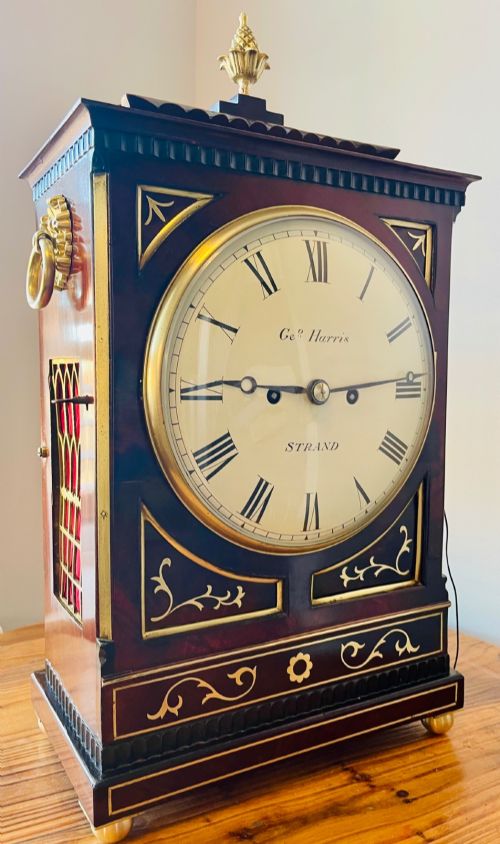
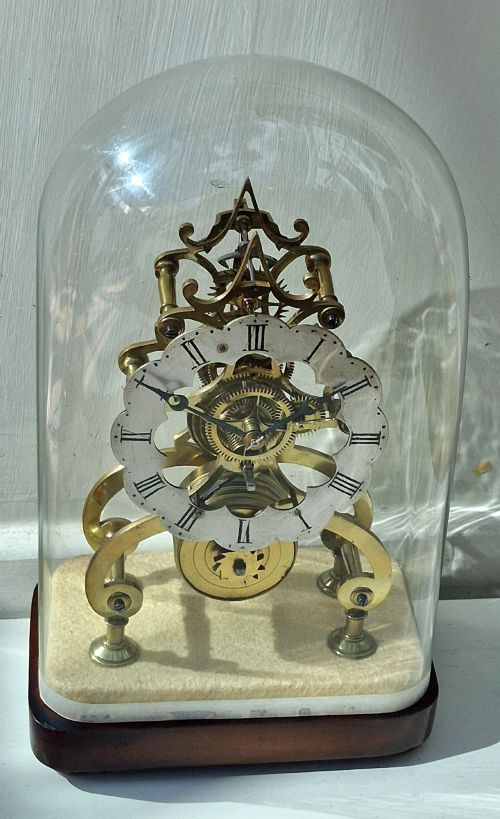
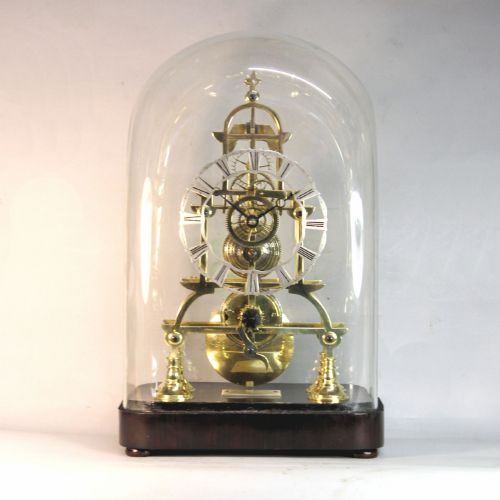
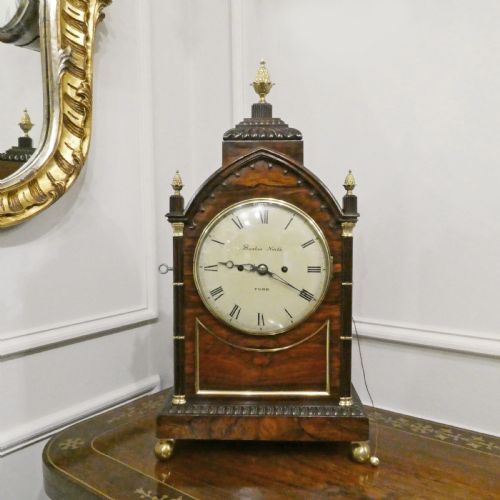
A vintage fusee mantel clock is a self-contained timepiece designed to sit on a shelf, table, or mantelpiece. The pieces seen here span the 18th, 19th, and early 20th centuries, taking forms such as bracket clocks, library clocks, skeleton clocks, and balloon-cased mantel clocks. The version you are most likely to encounter on this page is a mahogany or rosewood bracket clock driven by a single or double fusee movement from the Regency or Victorian period.
Makers housed these movements in architectural timber cases, sometimes incorporating brass, glass, marble, oak, or ormolu. Styles range from Georgian and Regency to Victorian Gothic, Edwardian, and French Rococo Revival. Each example relies on the fusee mechanism to equalise the declining power of the mainspring as it unwinds, ensuring steady timekeeping.
How they were made
Clockmakers constructed the movements with brass plates, wheels, and escapements, pairing them with a conical fusee pulley connected to the spring barrel by a fine chain or gut line. This mechanical arrangement smooths out the varying torque of the mainspring. Cases were built from dense hardwoods like mahogany, rosewood, and pollard oak, often shaped into lancet, balloon, pad, or chamfer top forms.
Dials were typically formed from silvered metal, painted iron, or brass, frequently signed by the maker and protected behind a glass bezel. Finer versions added decorative elements such as gilt ormolu mounts, carved wood details, or protective glass domes over skeleton movements.
One exceptional library clock keeps running for an entire year on a single wind, demanding patience with the key.
What varies in quality
The standard of a vintage fusee mantel clock rests on the crispness of the movement engraving, the quality of the brass work, and the stability of the timber case. Maker signatures from known London or provincial workshops often elevate a piece, as do complex movements offering quarter striking, repeat mechanisms, or year-going power.
Case selection and proportion dictate visual presence. Solid or richly figured mahogany, pollard oak, and rosewood retain their structural integrity and aesthetic appeal better than heavily altered or poorly restored examples.
Barwise London·Richard Winter of Chieveley·Barber and North of York·Thomas Cole and James Cole·Joseph Jump of London·Pennington of Camberwell·Budgen Croydon·Thomas Connold of Alysham·James Evans·Payne London
The Vintage Fusee Mantel Clock Glossary
- Fusee
- A conical grooved pulley that equalises the pull of the mainspring. It ensures the clock receives an even force as the spring runs down.
- Bracket clock
- A portable table or mantel clock originating from an era when such timepieces sat upon wall brackets. They frequently feature arched or pad tops and sturdy carrying handles.
- Skeleton clock
- A timepiece with an open framework that exposes the gear train and movement plates to view. They are often displayed beneath a glass dome.
- Silvered metal dial
- A metal clock face treated to produce a satin silver finish, typically engraved with Roman or Arabic numerals. It provides a clear, high-contrast surface for the hands.
- Anchor escapement
- A mechanical linkage that controls the release of the gear train and drives the pendulum. It regulates the rotation of the wheels to keep accurate time.
Vintage Fusee Mantel Clock: Frequently Asked Questions
What is a fusee movement?
A fusee is a conical pulley with a spiral groove that holds a chain linked to the mainspring barrel. As the mainspring unwinds and loses tension, the chain pulls on a wider part of the cone, maintaining constant power to the clockwork.
This ingenious mechanism compensates for the drop in spring force, allowing the clock to keep much more reliable time throughout its running cycle.
How do I wind the clock?
Wind the clock using the appropriate key inserted into the winding square on the dial face. Turn it gently in the direction specified by the movement until you feel firm resistance, taking care not to over-wind.
Most single or double fusee clocks require winding once a week, though some specialised movements run for longer periods between visits from the key.
Where should I place a bracket clock?
Position the clock on a stable, level surface away from direct sunlight, draughts, and damp walls. A heavy mantelpiece, a sturdy sideboard, or a dedicated wall bracket works best to prevent vibrations from disrupting the pendulum.
Because these clocks rely on gravity for the pendulum and escapement to function correctly, an uneven surface will cause the movement to stop.
How do I date a Regency clock?
Dating a Regency piece involves examining the case architecture, dial materials, and movement characteristics typical of the early nineteenth century. Look for classical proportions, flame mahogany veneers, brass bracket feet, and distinct signature styles on the dial.
Maker records and engraved details on the brass backplate often provide a narrower timeframe, pointing directly to the active years of the workshop.