
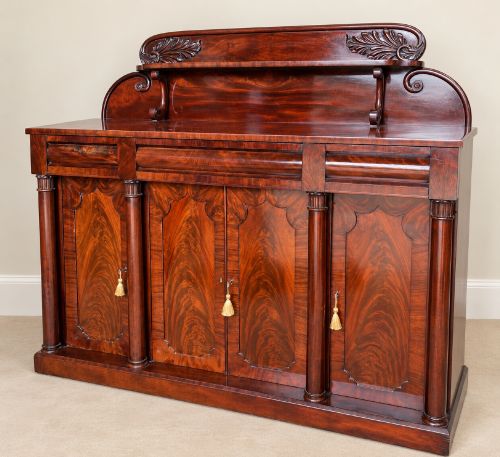
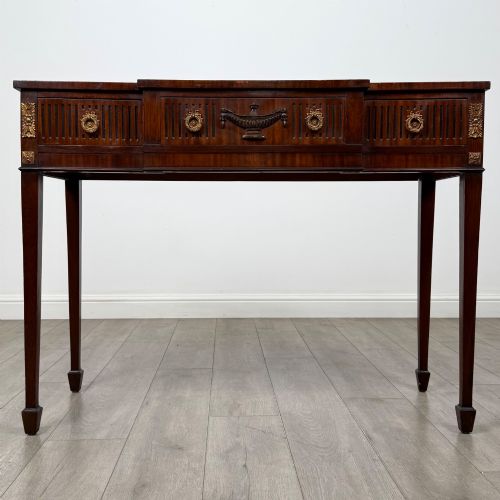
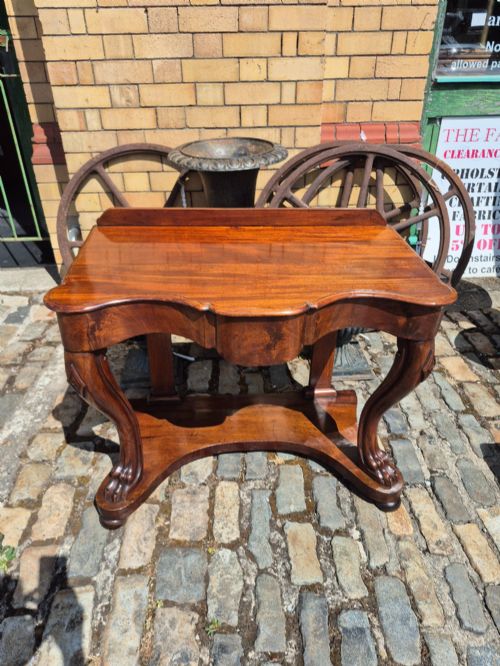
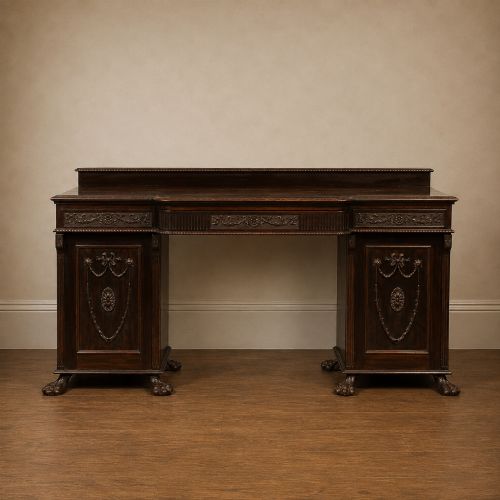
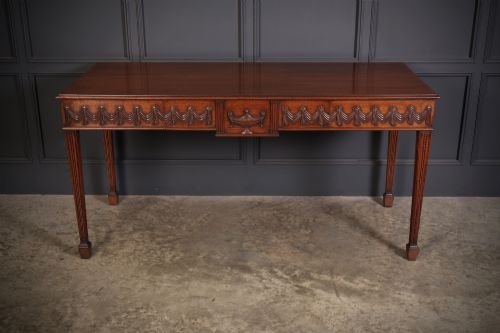
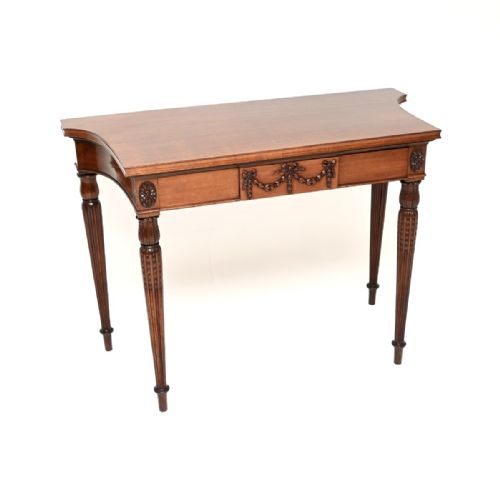
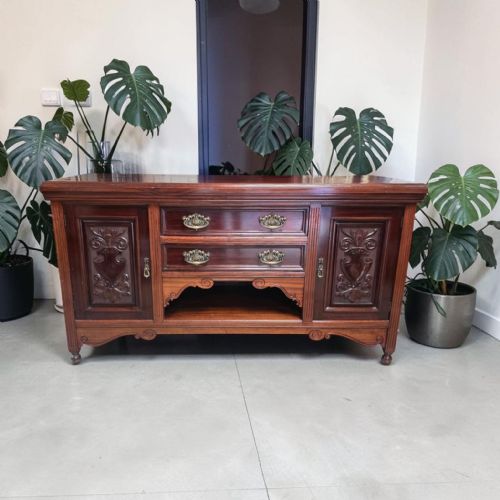
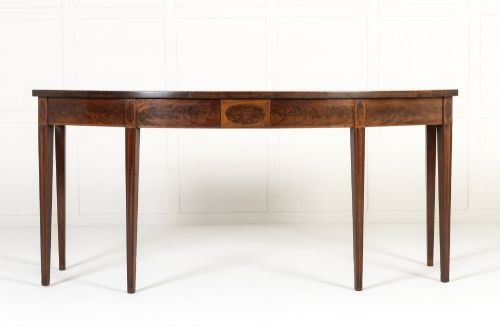
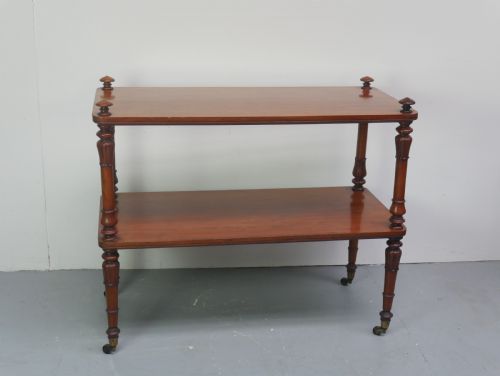
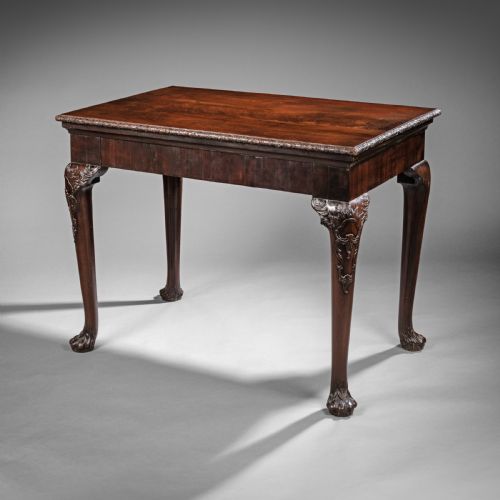
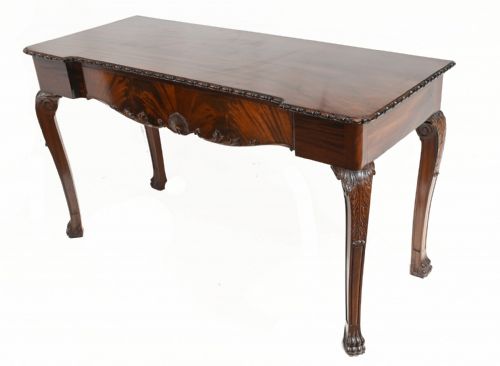

Carved Mahogany Server Table
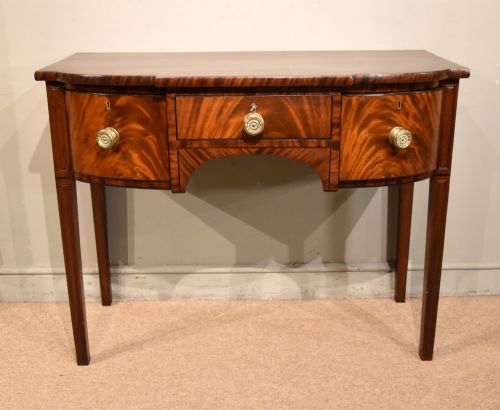
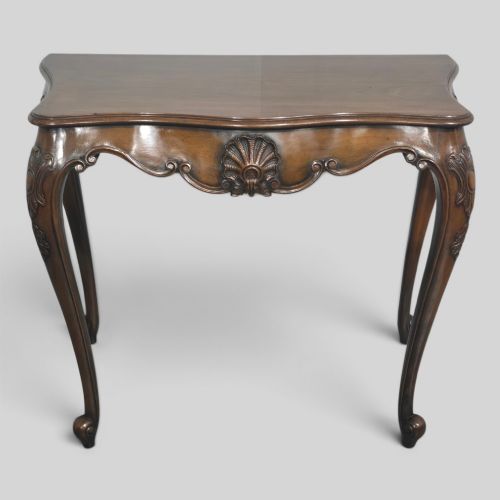
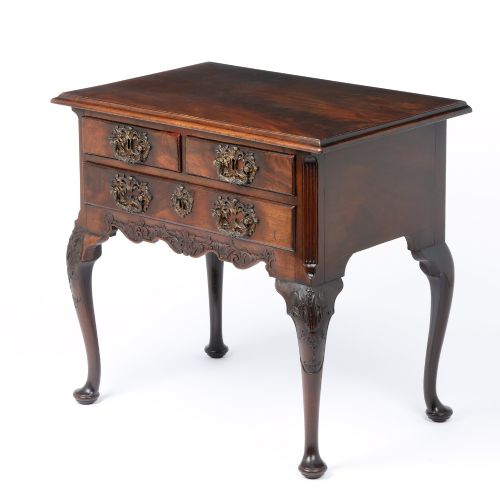
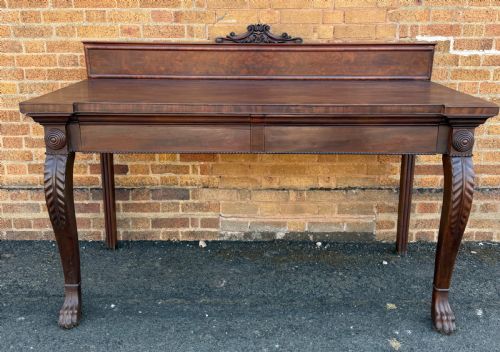
These carved mahogany server table examples combine robust timber with classical proportion to anchor a dining room.
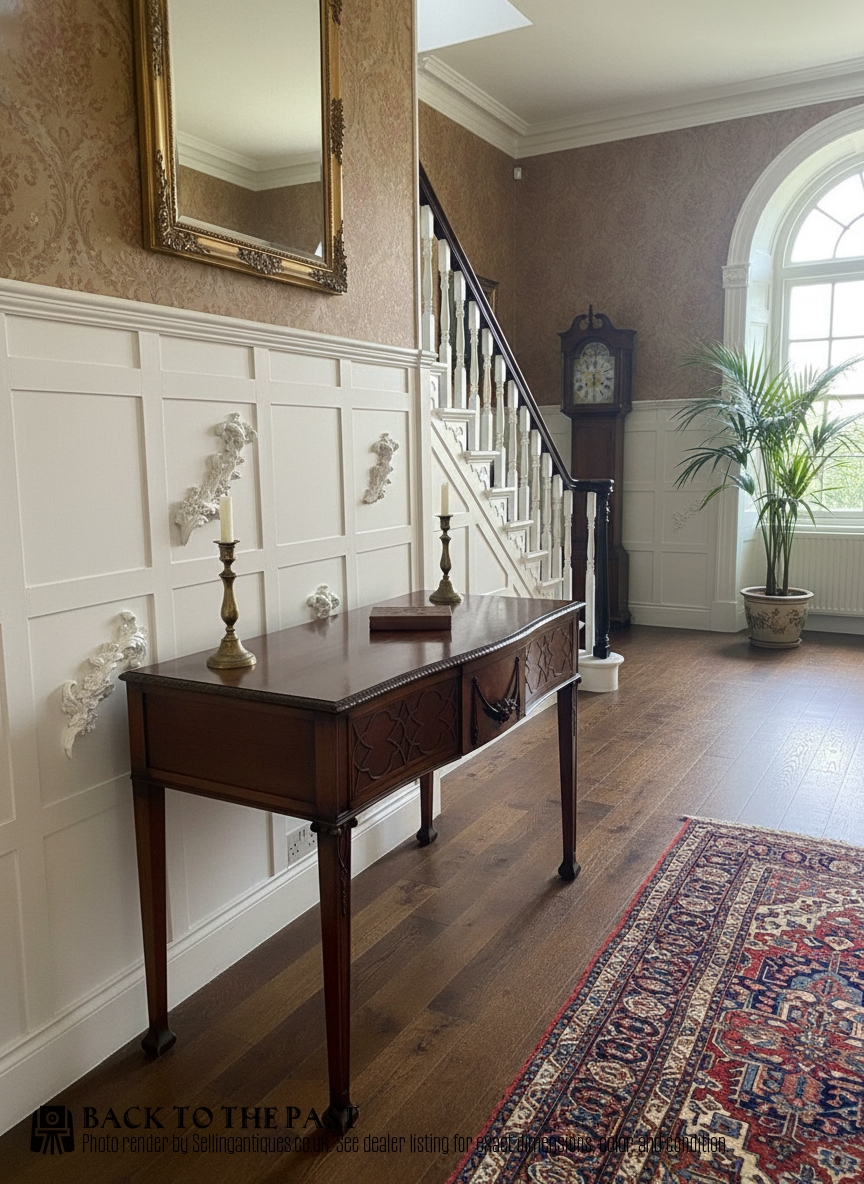
Carved Mahogany Server Table
A carved mahogany server table brings substantial presence to a dining space, originating primarily across the Georgian, Regency and Victorian eras. You will encounter formats ranging from monumental Irish serving tables to refined console tables and pedestal sideboards.
The pieces on this page span several stylistic revivals alongside true period items, including Chippendale, Sheraton and Adam designs. Makers often adapted these forms into sideboards, buffets and two-tier revolving dumb waiters.
Originating largely from English and Irish workshops, these tables served practical dining functions while displaying distinct regional carving traditions. The selection includes both compact hall tables and broad breakfront serving pieces.
Materials and Technique
Cabinetmakers built these serving tables predominantly from solid mahogany, frequently selecting flame mahogany veneer to create dramatic figuring across broad drawer fronts and tabletops. Secondary woods supported structural frames whilst retaining stability over centuries.
Decorative surface work relied upon contrasting elements such as boxwood and satinwood inlay, brass mounts and mirror glass panels. Carved details like paw feet and edge moulding emerged from direct hand chisel work rather than mass production.
Listings feature mahogany, brass, boxwood and satinwood across multiple centuries of craftsmanship.
Distinction in Craft
Quality rests upon the depth and crispness of the hand carving, where superior examples exhibit sharp relief rather than softened contours. The selection of timber also dictates standard, with highly figured flame mahogany or fiddleback grain commanding greater visual weight.
Structural integrity and the retention of original brass hardware or inlay separate utilitarian furniture from exceptional workshop pieces. Maker attributions, such as those linked to Gillows or Robert Strahan, elevate the standing of a server.
M. D. Miller & Sons·Gillows·Robert Strahan & Co·Mack Williams and Gibton·Elkington & Co
The Carved Mahogany Server Table Glossary
- Flame mahogany veneer
- A thin slice of timber cut from the fork of the tree to produce a fiery, swirling pattern across the surface. This technique maximised visually striking grain on prominent table faces.
- Breakfront
- A piece of furniture featuring a central section that projects forward from the flanking cabinets. This architectural layout creates depth and shadow across large sideboards.
- Console table
- A table designed to stand flat against a wall, frequently supported by decorative legs or brackets. Earlier versions often relied on the wall for balance before becoming freestanding.
- Dumb waiter
- A tiered serving stand fitted with revolving trays on a central column and tripod base. These allowed diners to access dishes without constant servant intervention.
- Inlay
- The technique of embedding contrasting strips of wood such as boxwood or satinwood into the primary mahogany surface. This created geometric borders and classical motifs.
Carved Mahogany Server Table: Frequently Asked Questions
Where did a server table sit in a dining room?
These tables traditionally stood against the dining room wall to hold heavy dishes, silver and wine before service. Their linear proportions ensured they occupied minimal floor space while offering a wide surface.
Larger serving pieces doubled as display units for ceramic collections and silver plate canteens during grand dinner parties.
How do I distinguish a Regency piece from a Victorian one?
Regency items generally lean towards classical restraint, drawing inspiration from Greek and Roman archaeology with clean lines and restrained brass detailing. Mahogany from this period often exhibits rich figuring without excessive ornamentation.
Victorian pieces frequently display heavier proportions, bolder relief carving, and darker finishes that reflect industrial expansion and changing domestic tastes.
What is the difference between a sideboard and a server?
A traditional server focuses purely on tabletop space and occasional drawer storage for dining linen and cutlery. They often present an open base with slender legs.
Sideboards usually incorporate enclosed cupboards, pedestal cabinets or extensive drawer banks beneath the top surface for heavier storage.
Can I use a console table as a server?
Console tables share similar shallow depths and wall-mounted formats, making them suitable for smaller dining rooms needing extra surface area. Their decorative legs and inlaid tops provide the same aesthetic presence.
Ensure the height matches your existing dining furniture for comfortable use during meal service.