


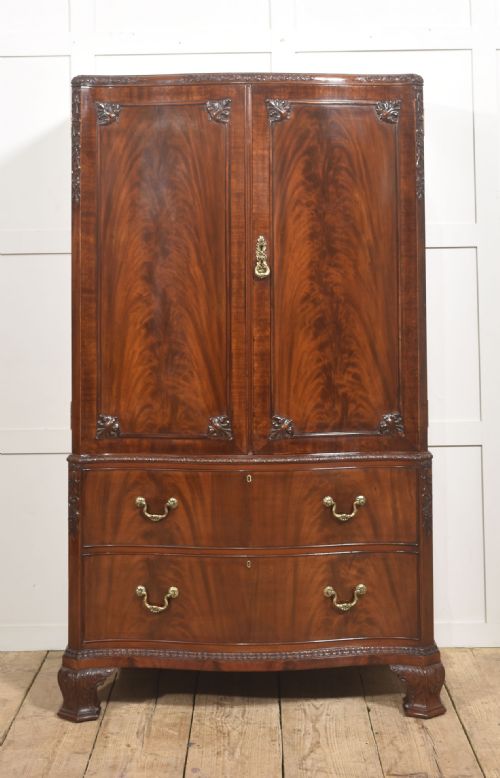


Carved Mahogany Press
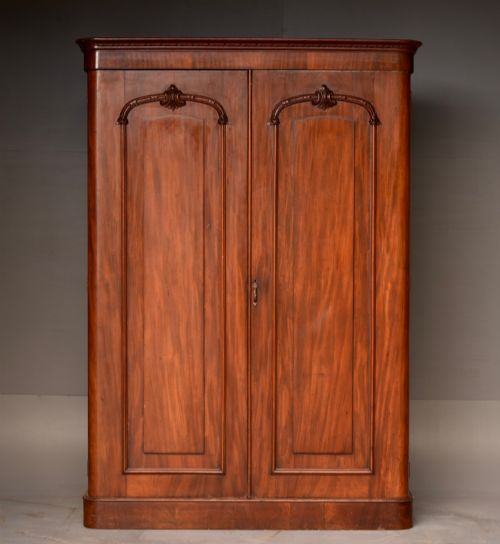
A carved mahogany press offers substantial storage for textiles and garments while bringing rich timber grain and period presence into a room.
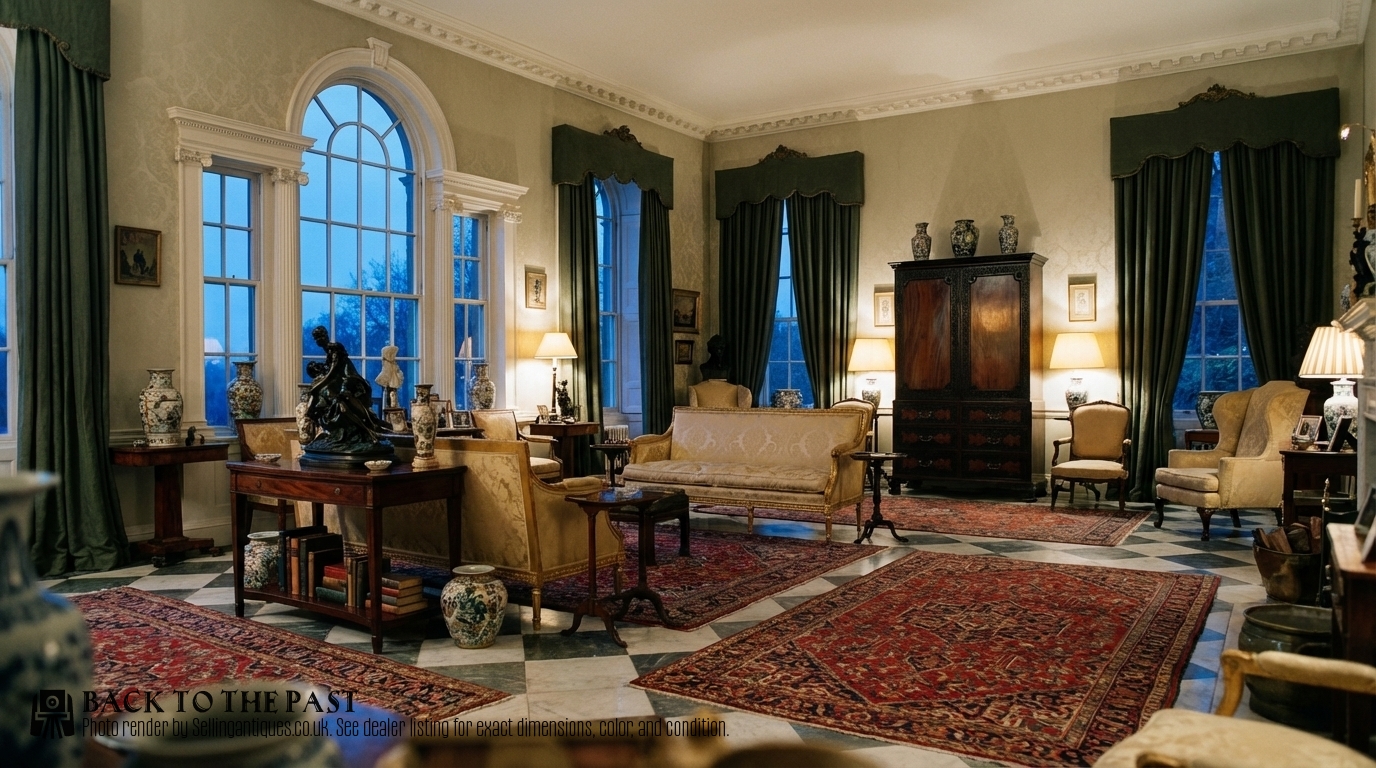
Carved Mahogany Press
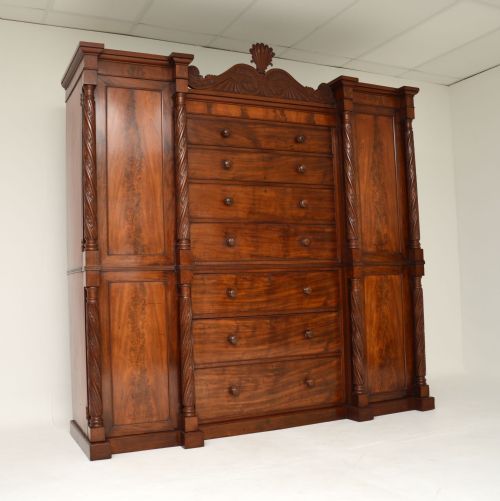
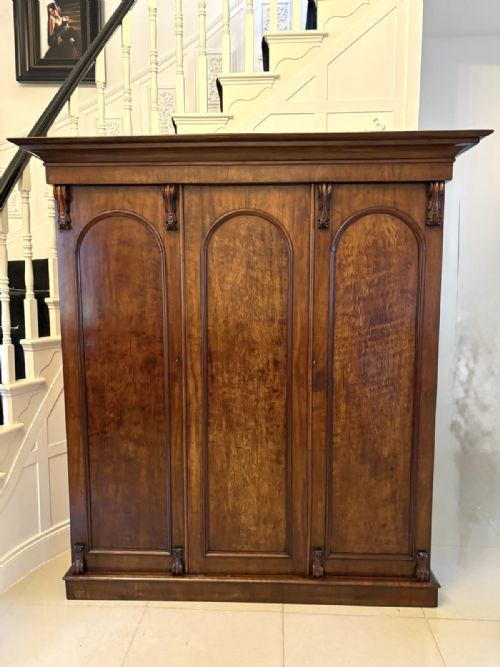
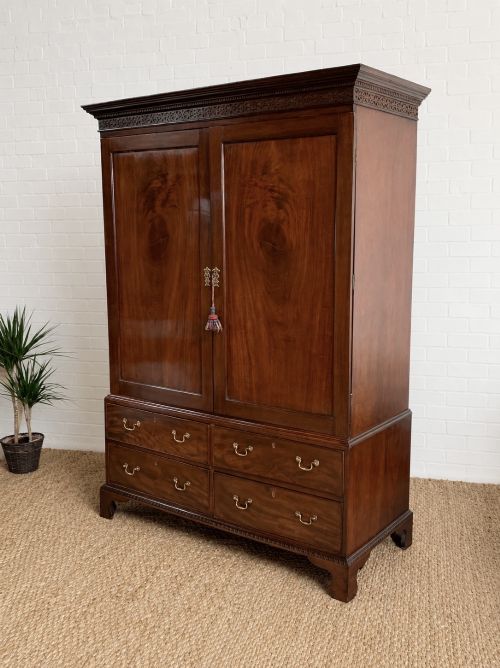
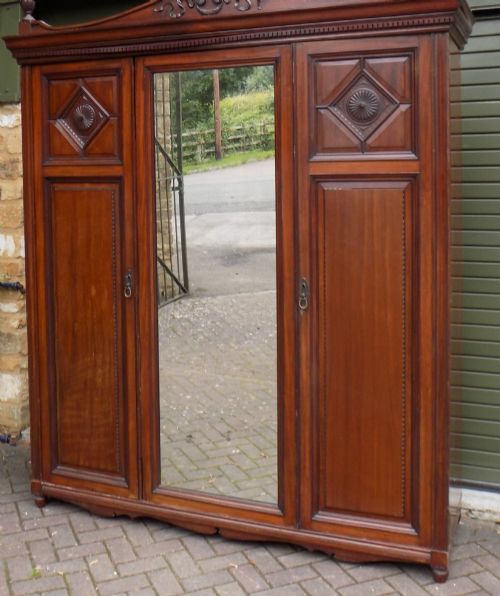
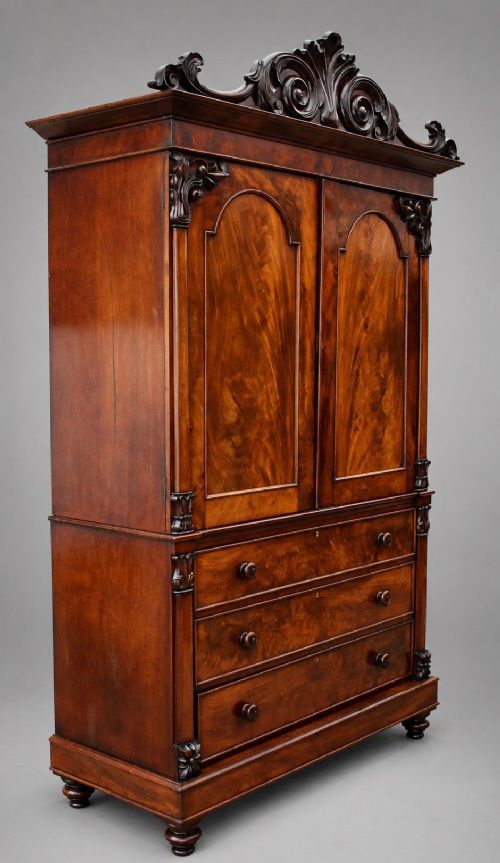
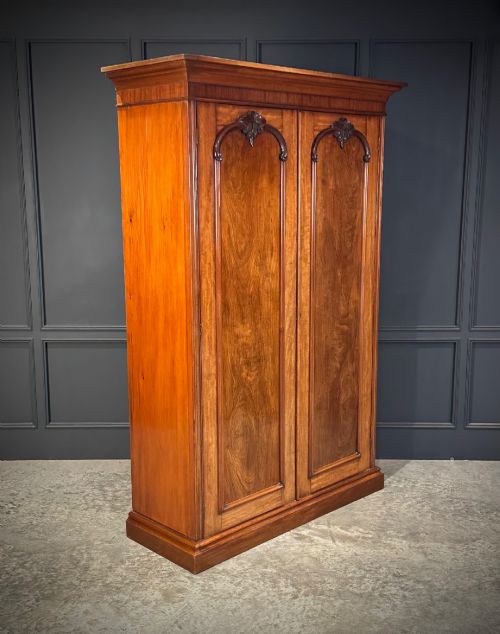
A carved mahogany press combines upper cupboard space for hanging or sliding linen trays with lower drawer storage, functioning as a commanding focal point in a traditional bedroom. These pieces range from compact single-door examples to expansive triple-door and breakfront wardrobe configurations.
The most common iterations encountered originate from the Victorian and William IV periods, alongside Georgian and Edwardian examples. Makers often utilised rich flame mahogany veneers and dense Cuban mahogany timbers, integrating carved details and blind fretwork cornices.
Beyond traditional linen presses, the selection encompasses related forms such as compactums, gentleman's chests, and combination wardrobes. Each piece reflects the functional storage demands of its respective period, adapting deep timber shelves and sliding trays to domestic organisation.
Materials and Construction Techniques
Cabinet makers constructed these presses using solid mahogany and flame mahogany veneers applied over secondary timbers, occasionally incorporating satinwood, oak, and brass hardware. The choice of dense Cuban mahogany provided stability and a deep reddish-brown tone that aged richly over decades.
Joinery techniques relied on traditional hand-cut dovetails for drawer construction and precise framing to support heavy panelled doors. Carved details, blind fretwork, and inlay were executed by hand, defining the stylistic influence of Chippendale revival, Regency, and Victorian aesthetics.
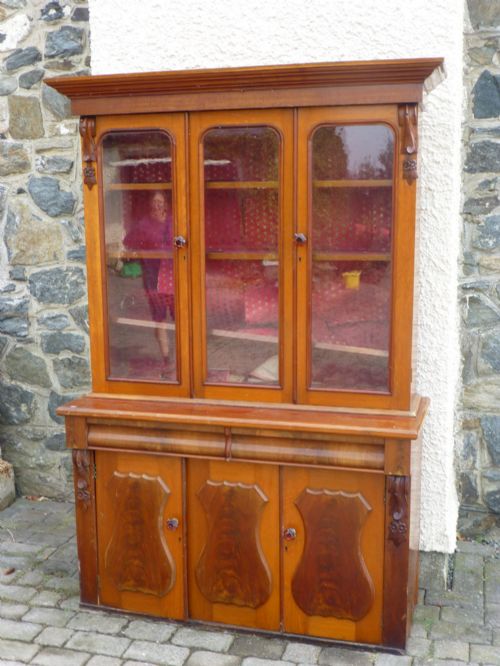
Interior arrangements frequently feature adjustable wooden shelves, sliding linen trays, or hanging compartments designed to accommodate textiles and tailored garments securely. Glass panel doors appear on glazed bookcase variants, combining display capability with enclosed storage.
Early nineteenth-century linen presses often preserve the faint scent of old cedar and lavender locked into their sliding trays for generations.
Assessing Craftsmanship and Material Quality
Quality separates pieces through the selection of timber figures, particularly the symmetry and depth of flame mahogany veneers across large door panels. Superior examples display carefully matched grain patterns that create a harmonious visual rhythm.
The crispness and depth of hand carving indicate the skill level of the original workshop, where fluid foliage or precise fretwork remains sharp and well-defined. Lesser examples feature repetitive or shallow machine stamping.
Internal construction standards reveal the maker's thoroughness, evident in solid secondary drawer linings, smoothly operating sliding trays, and robust brass fittings that endure centuries of daily use.
Maple and Co·Edwards and Roberts·Thomas Chippendale
The Carved Mahogany Press Glossary
- Compactum
- A multi-functional wardrobe combining hanging space, drawers, and linen shelves within a single integrated piece of furniture. This format maximised bedroom storage efficiency during the nineteenth century.
- Flame Mahogany
- A highly figured veneer cut from timber where the grain creates a distinctive flame-like pattern. Cabinet makers reserved this material for prominent exterior door and drawer surfaces.
- Linen Press
- A tall case piece featuring upper doors enclosing sliding trays for folded textiles, positioned above a chest of base drawers. They predated modern wardrobes and served to protect linens from dust.
- Blind Fretwork
- Carved ornamentation applied to a solid background rather than pierced right through. This technique added geometric or gothic texture to cornices and friezes.
- Sliding Trays
- Shallow internal shelves housed within the upper section of a press for organising folded garments. They allowed easy access to textiles before hanging spaces became standard.
Carved Mahogany Press: Frequently Asked Questions
What is the difference between a press and a wardrobe?
A traditional press typically houses sliding trays behind its upper doors for folded linens, while a wardrobe is designed primarily with hanging space for garments.
Many nineteenth-century pieces combine both functions into a single cabinet, often termed a compactum or combination wardrobe.
How do I care for a mahogany press?
Keep the timber away from direct sunlight and heat sources to prevent the mahogany veneer from drying out or splitting over time.
Apply a traditional beeswax polish occasionally to nourish the grain and maintain the deep natural lustre of the wood.
How can I date a carved mahogany press?
Examine the secondary woods inside the drawers, the style of the cornice carving, and the overall proportions to determine the period of origin.
Georgian and Regency pieces lean towards architectural classical lines, whereas Victorian examples often showcase heavier proportions and elaborate flame veneers.
Will a large press fit into a modern room?
Most large presses were designed to dismantle into modular sections, including a heavy cornice, central carcase, and base drawers, to ease transport.
Checking ceiling height and floor clearance beforehand ensures the piece accommodates modern domestic room dimensions comfortably.