
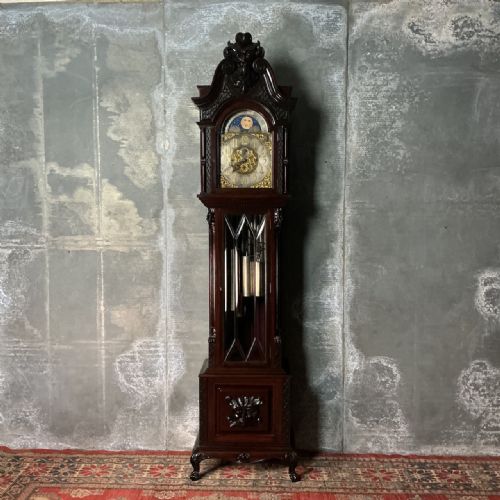

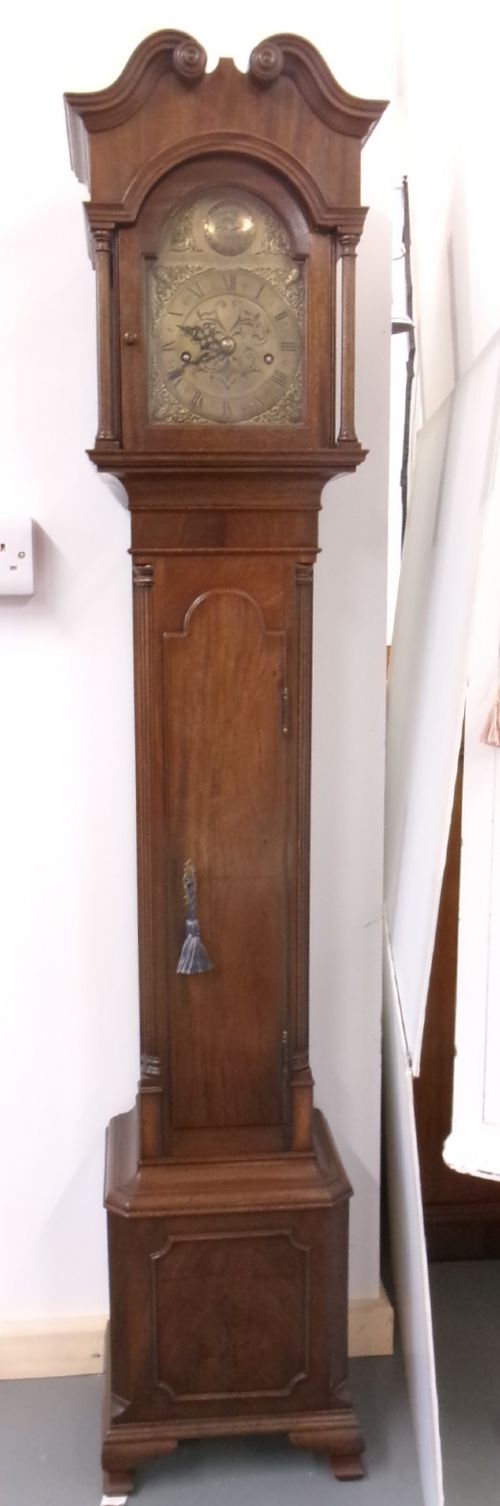
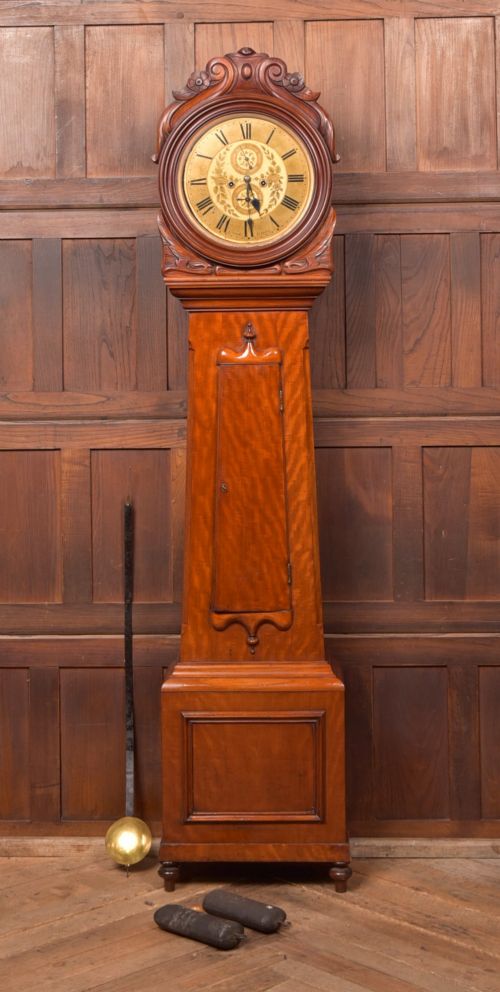


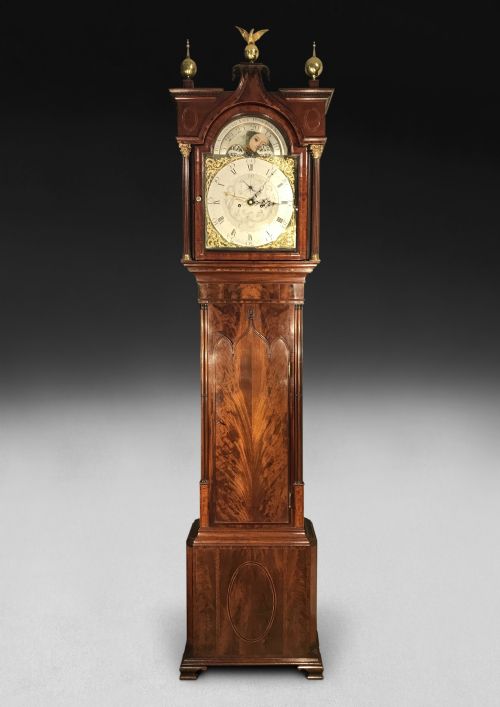


Carved Mahogany Longcase Clock
A carved mahogany longcase clock stands as a masterwork of timber and time, bringing stately presence and mechanical harmony to any room.

Carved Mahogany Longcase Clock
The versions you meet most frequently on this page range from robust Georgian and Victorian examples to later revival pieces and smaller grandmother or granddaughter formats. These smaller variants offer the classic proportions of a full-size grandfather clock scaled down for modern ceiling heights, whilst retaining the same mechanical depth.
Makers from various regional British centres signed these dials, creating distinct local variations in hood design, dial decoration, and chime complexity. Whether housing an eight-day movement or a quarter-chiming train, each piece combines cabinet-making skill with horological engineering.
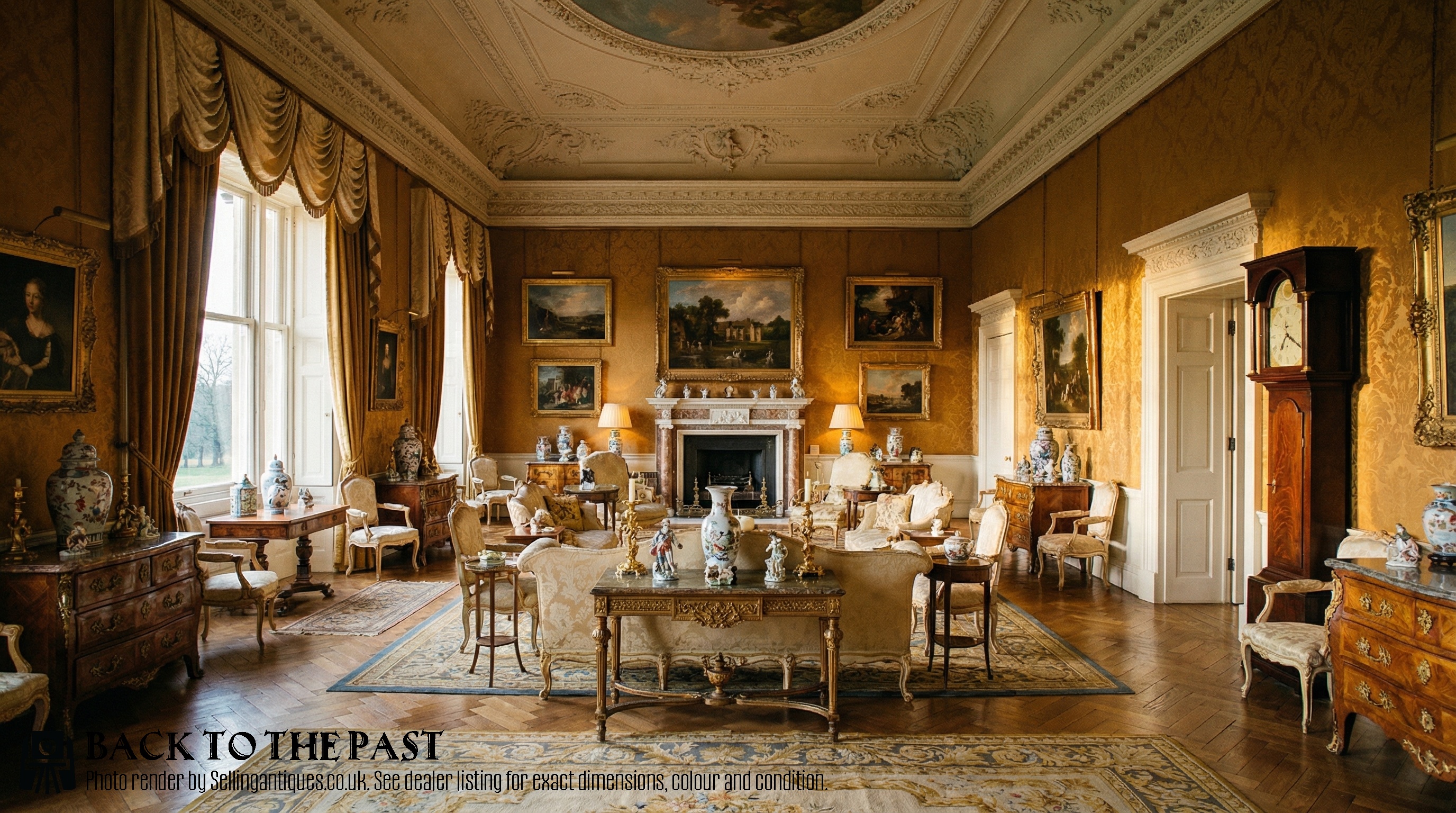
How they were made
Cabinet-makers constructed these tall cases primarily from solid mahogany and oak, often selecting timber with rich grain patterns and applying hand-carved decorative motifs such as scrolling foliage, fretwork, or classical columns. The wood was seasoned, joined with traditional joinery methods, and polished to a warm lustre that protected the structure while accentuating the natural figure of the mahogany.
Inside the case, intricate brass, steel, and painted metal components formed the gear trains, escapements, and dial faces that kept accurate time and drove musical or chiming mechanisms. Dials featured engraved brass chapters, painted moon phases, and subsidiary seconds hands, powered by hanging lead or iron weights suspended by cords or chains.
Some dials feature painted moons that smile benignly across the centuries while keeping track of the tides.
What varies in quality
The distinction between standard examples and exhibition pieces lies in the crispness of the hand-carving, the complexity of the movement, and the quality of the timber selection. Superior cases display deeply undercut carving and book-matched mahogany veneers, whereas simpler versions rely on plain surfaces and minimal ornamentation.
Movement sophistication also defines the hierarchy, ranging from standard time-and-strike eight-day mechanisms to elaborate three-train musical setups with multiple tubes or bells. The integration of dials featuring subsidiary automation, moonphase displays, and signed backplates elevates the horological significance of the piece.
Andrew Thom·Henry Smith·King of Ratcliff Highway·G Brown Edinburgh·Fenwick South Shields·Price Evans of Salop
The Carved Mahogany Longcase Clock Glossary
- Longcase clock
- A tall pendulum clock enclosed in a wooden case designed to stand directly on the floor. These pieces are frequently called grandfather clocks.
- Grandmother clock
- A smaller version of the traditional longcase clock, typically standing under six feet tall. They provide the aesthetic of a full-size floor clock in a more compact format.
- Fusee
- A conical pulley used in clock movements to maintain equal power as the mainspring unwinds. This device ensures more consistent timekeeping across the duration of the wind.
- Penny moon
- A painted rotating disc showing the phases of the moon through an arched aperture on the dial face. It tracks the lunar cycle over approximately twenty-nine and a half days.
Carved Mahogany Longcase Clock: Frequently Asked Questions
How do I wind the clock?
Most eight-day movements require the use of a winding key inserted into holes on the dial face to draw the weights back up. You turn the key slowly and evenly until the internal weights reach their upper limit near the top of the trunk.
Care should be taken not to overwind the mechanism, stopping as soon as resistance increases. If the clock has three trains for chimes, each train requires its own separate winding slot.
Where should I place it?
Position your clock against a solid interior wall where it will not be subjected to heavy vibrations from doors or heavy foot traffic. A stable surface prevents the cabinet from rocking and helps keep the pendulum swinging evenly.
Avoid placing the timber case in direct sunlight or near active heat sources such as radiators, as fluctuations in temperature and humidity can cause the mahogany to dry out and split.
Why does the clock stop?
A stopped pendulum usually indicates that the case is no longer standing plumb or that the beat is out of alignment. You can adjust the leveling feet or use the suspension spring to restore an even tick-tock rhythm.
Changes in household humidity can also cause the wooden case to shift slightly over the seasons, altering the alignment of the internal movement and requiring minor adjustments.