
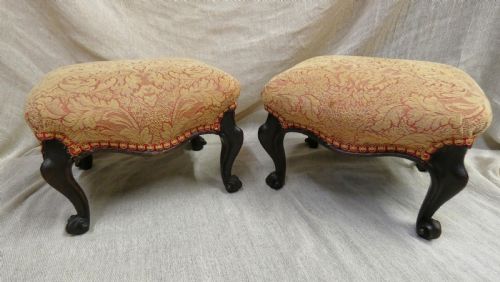
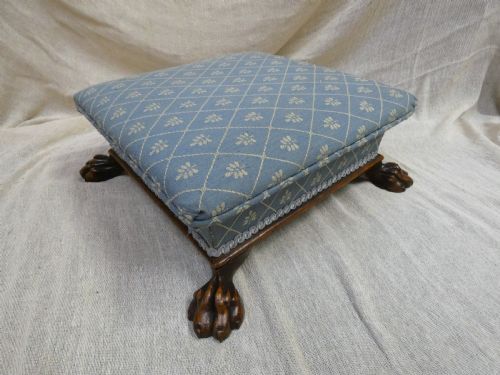


Carved Mahogany Footrest
A carved mahogany footrest grounds a room with dense timber and traditional upholstery, offering solid support for tired feet after a long day.
Carved Mahogany Footrest
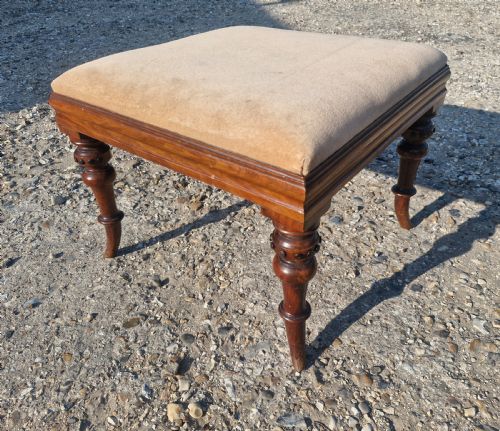
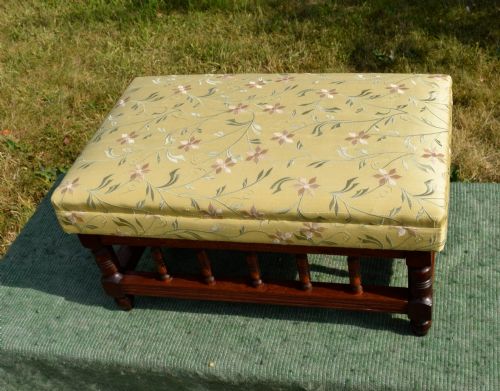
A carved mahogany footrest is a low timber support designed to elevate the feet while sitting in an armchair or chair. These pieces appear across various eras, with Victorian and early twentieth-century examples dominating the selection alongside revival pieces.
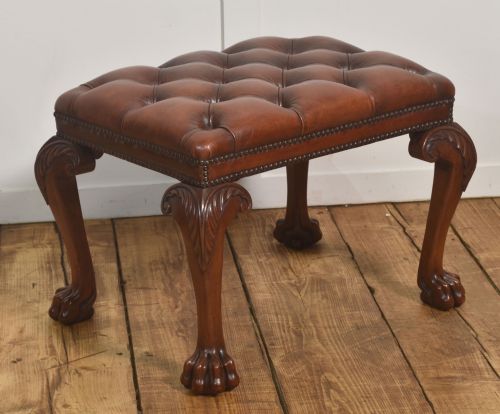
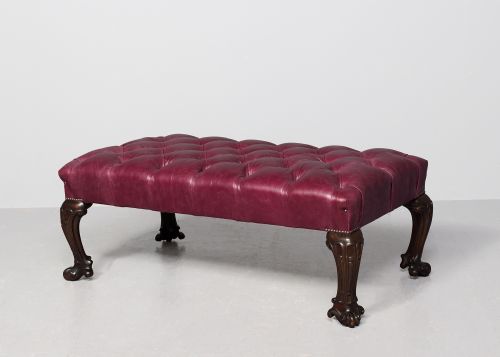
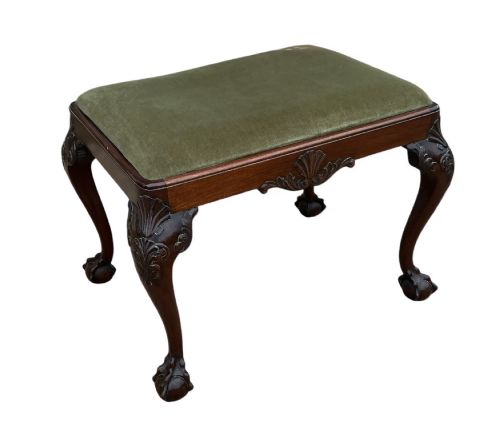
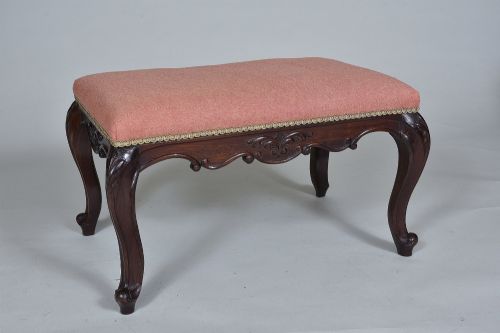
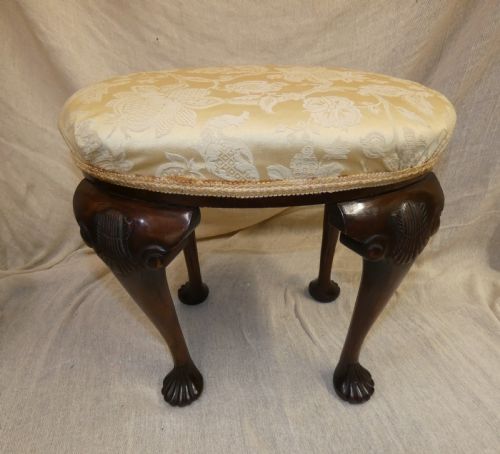
Makers shaped these supports in diverse forms, from simple frames to elaborate designs featuring cabriole legs, brass details, and scrolled supports. Buyers encounter long footstools, pairs, and compact versions suitable for daily sitting rooms.
The phrase carved mahogany footrest encompasses traditional stools paired with leather, tapestry, wool, or damask fabric tops. They reflect changing tastes from Regency elegance to the heavier proportions of the Victorian period and later revivals.
How they were made
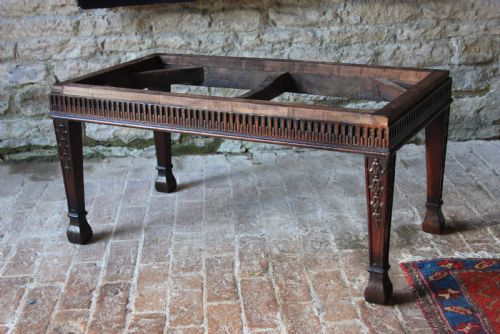
Craftsmen shaped dense mahogany into structural frames, applying hand-carved details along cabriole legs, edges, and corners. This heavy timber provided the necessary weight and durability for daily foot support.
Upholstery completed the pieces, using materials such as leather, hide, wool, velvet, needlepoint, and damask fabric stretched over internal padding. Brass accents and lion's paw feet occasionally reinforced the wooden structure at key contact points.
Listings feature mahogany frames paired with fabrics including velvet, wool, leather, and damask across Victorian and Regency periods.
What varies in quality
The crispness of the timber carving distinguishes finer examples from simpler workshops, with deep relief work showing sharper definition. Well-executed cabriole legs and balanced proportions reveal greater care in the original joinery.
The choice of upholstery material and the integrity of the underlying padding influence the overall finish. Pieces retaining high-grade leather, needlepoint, or damask fabric demonstrate a higher tier of original commissioning.
The Carved Mahogany Footrest Glossary
- Cabriole leg
- A furniture leg that curves outward at the knee and tapers inward toward the foot, mimicking animal limbs. This form appeared frequently on Victorian and revival stools.
- Mahogany
- A durable, reddish-brown tropical hardwood prized for its stability and suitability for detailed carving. It forms the primary structural material for these footrests.
- Needlepoint
- A type of canvas embroidery worked with wool yarn to create decorative top covers. This textile technique appears on numerous period stool cushions.
- Ottoman
- A low, upholstered seat or footstool without a back or arms, designed for resting feet. Examples in the listings range from compact footstools to longer forms.
- Chippendale style
- A revival design aesthetic drawing on eighteenth-century cabinet-making traditions, characterised by ornate wooden carving. It influences many of the listed mahogany stools.
Carved Mahogany Footrest: Frequently Asked Questions
What periods do these footrests come from?
The listings span the Victorian era, the nineteenth century, the Regency period, and early twentieth-century revivals. Dates stretch from eighteenth-century survivals up to nineteen-twenty.
Most pieces belong to the nineteenth and early twentieth centuries, reflecting popular revival styles like Chippendale and George II.
How were these footrests used?
They served primarily to elevate the feet while relaxing in a drawing room or sitting room. Some larger examples doubled as low ottomans for extra seating.
Sturdier models provided functional support by firesides, while smaller dressing stools accompanied bedroom furniture.
What upholstery materials are common?
Original and replacement coverings include leather, red hide, wool, velvet, and textile damask. Needlepoint and tapestry tops also appear frequently on period examples.
These fabrics were chosen for durability and to complement the dark tones of the carved mahogany frames.
How do I identify a revival style?
Revival pieces copy earlier aesthetics like Chippendale, Regency, or George II designs using nineteenth and twentieth-century manufacturing methods. Look at the crispness of the mahogany carving and the joinery.
Date markers in the titles often help distinguish a true Victorian interpretation from a later twentieth-century homage.