
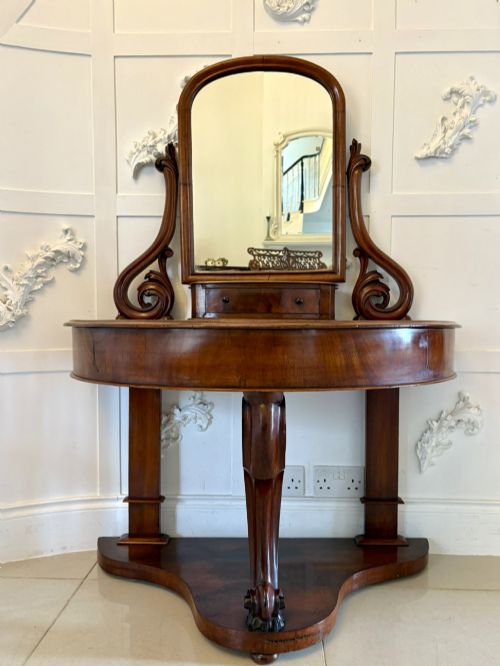
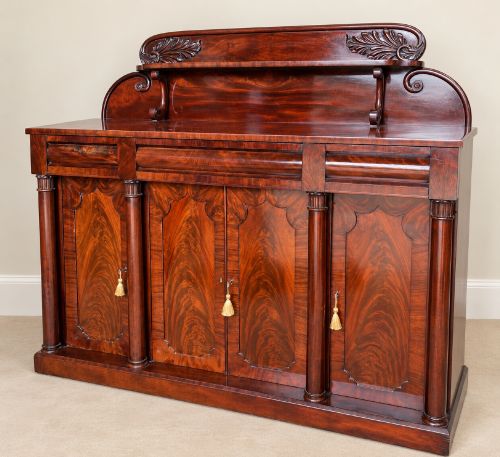
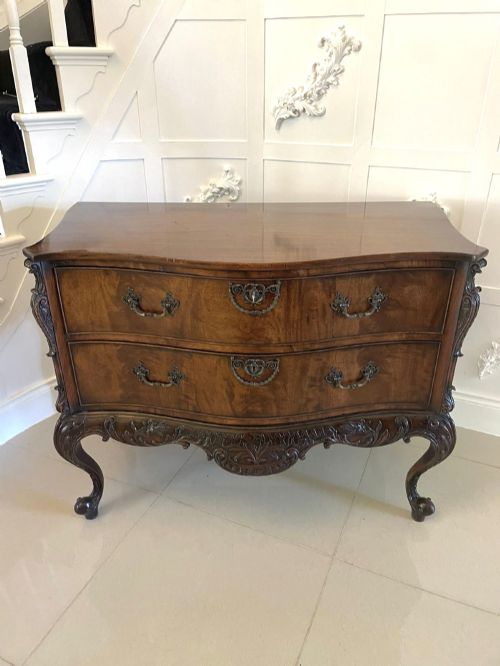
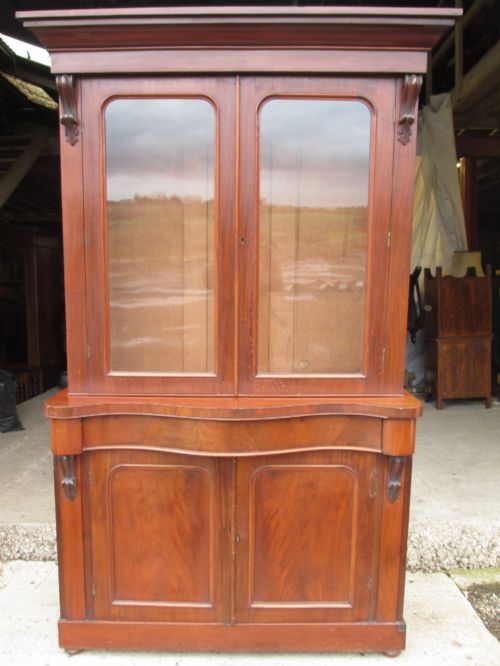
Carved Mahogany Dresser
Carved mahogany dresser pieces span formal 18th-century forms to robust Victorian designs, offering sturdy storage built from rich timber.
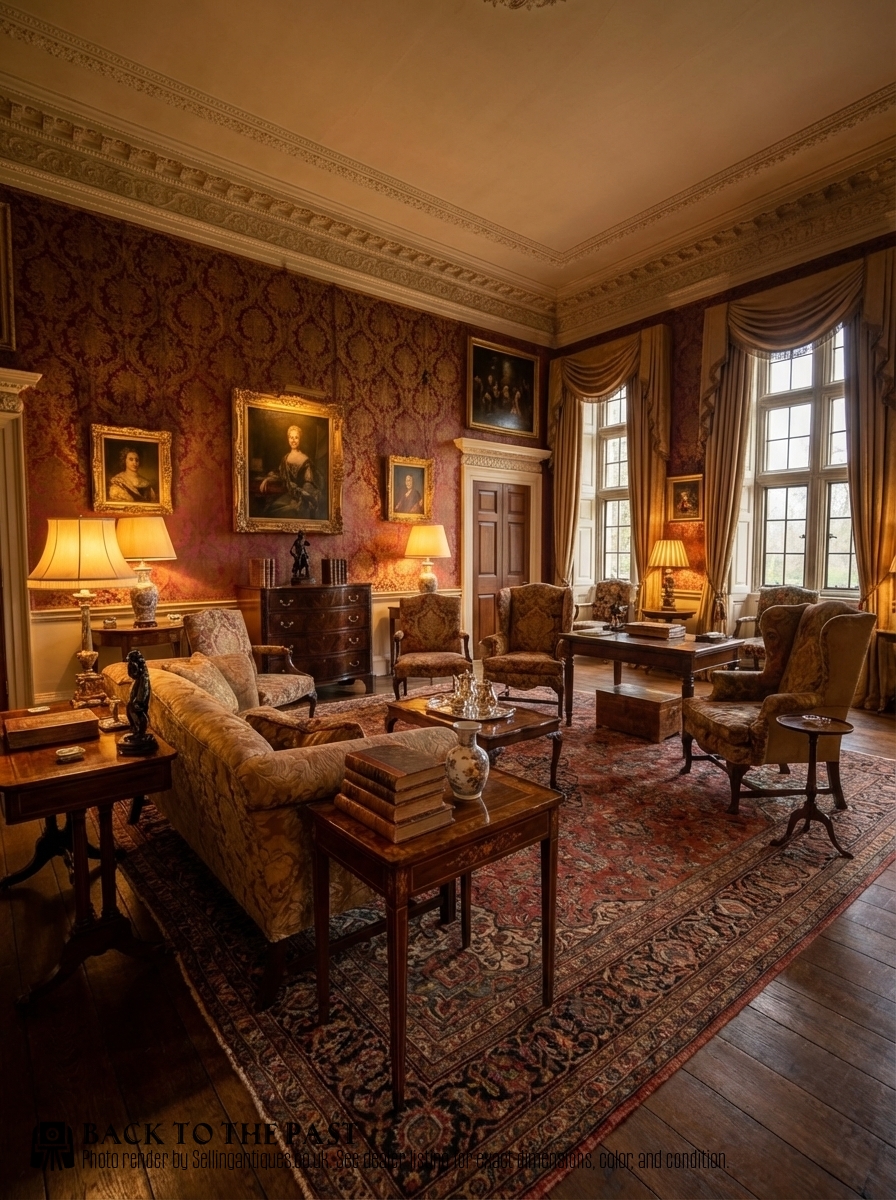
Carved Mahogany Dresser
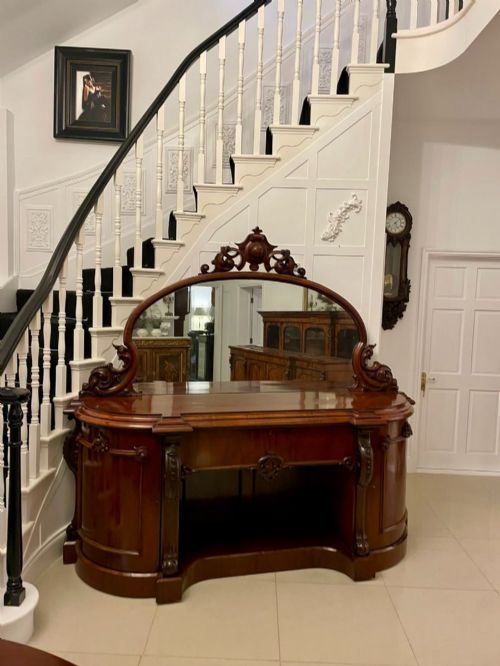
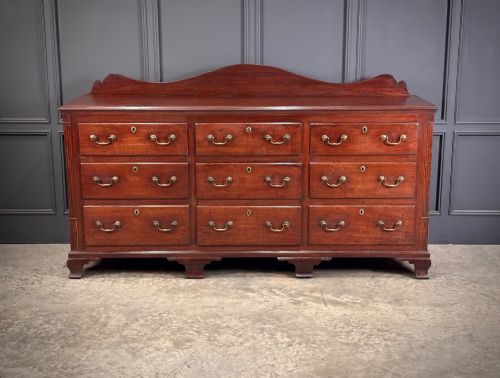
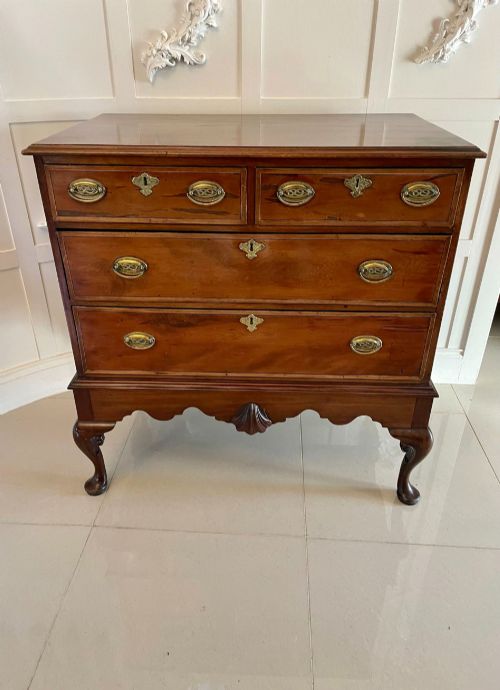
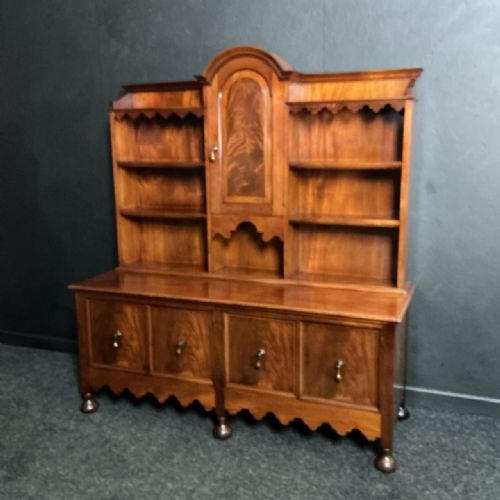
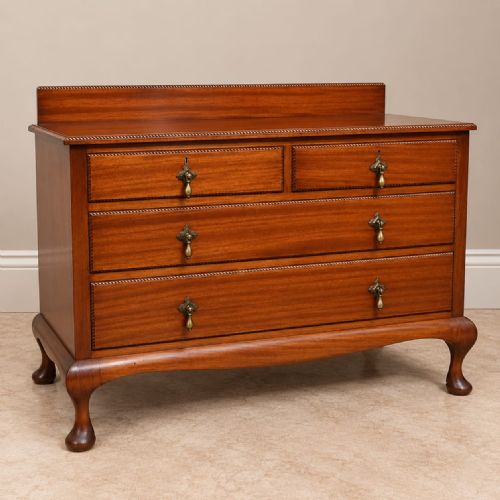
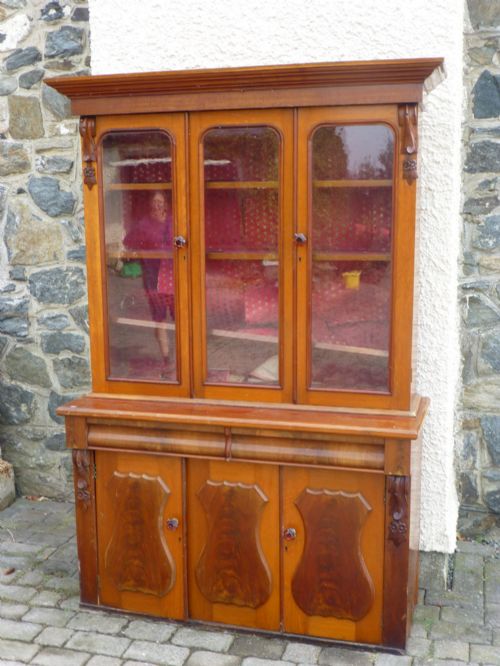
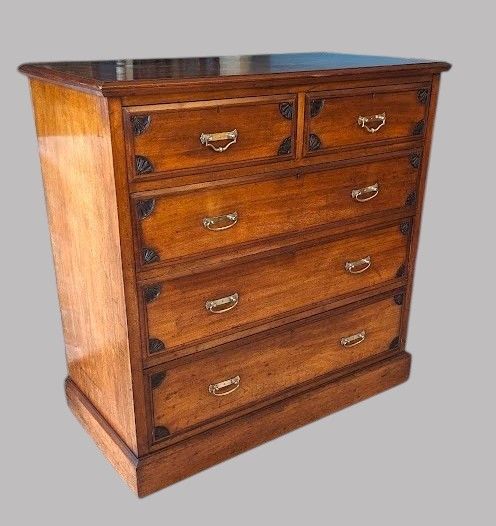
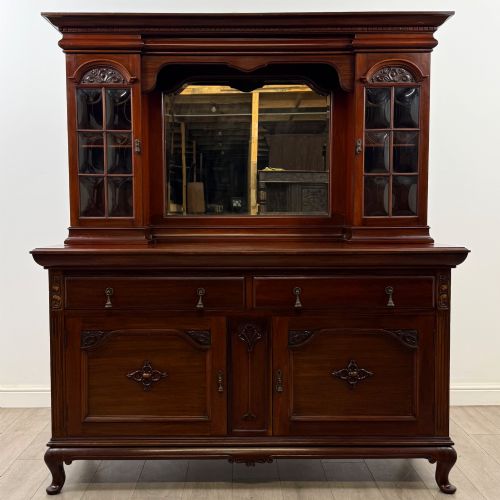
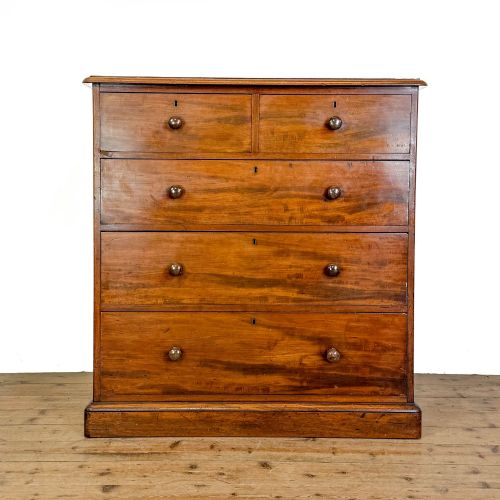
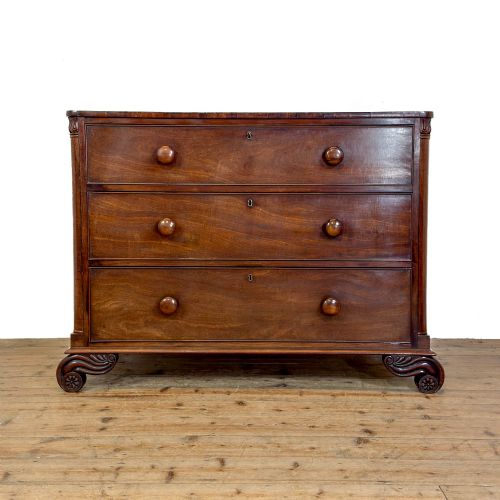
A carved mahogany dresser encompasses practical storage furniture spanning the 18th, 19th, and early 20th centuries, including sideboards, chests of drawers, and kitchen cupboards. These items served dining rooms and bedrooms alike, combining functional compartments with decorative woodwork.
Victorian and Edwardian examples dominate the selection, often featuring deep drawers, brass hardware, and mirror glass. Buyers also encounter Georgian and Regency interpretations alongside French provincial and Arts and Crafts influences.
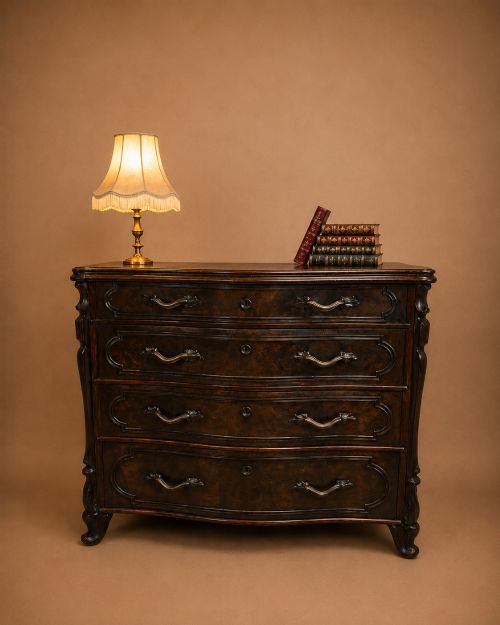
Formations range from tall chests and serpentine shapes to sideboard buffets and glazed bookcase cabinets. Oak, pine, and glass frequently accompany the primary mahogany framework.
How they were made
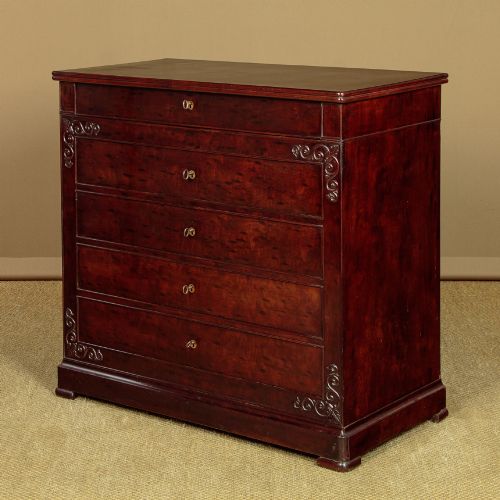
Craftsmen utilised solid mahogany and flame mahogany veneer applied over secondary timbers like pine and oak. The dense grain allowed for sharp carving and smooth polished surfaces.
Makers integrated brass handles, mirrored glass panels, and occasionally contrasting oak elements. Construction relied on traditional joinery methods suited to heavy daily domestic use.
Carved Mahogany Dresser Retail Price Guide 2026
Typical asking prices for carved mahogany dresser among the pieces listed under this phrase on Sellingantiques today, from the lower quarter to the upper quarter. They describe what is for sale here now, not the wider market.
Listings feature mahogany alongside glass, brass, mirror glass, pine, and oak across Victorian, Edwardian, and 18th-century periods.
What varies in quality
The choice of timber creates a distinct visual hierarchy, where highly figured flame mahogany veneer or solid mahogany boards elevate the presence of a piece compared to plain stock. Figured grains demand superior selection and matching by the cabinetmaker.
Execution of carved details and serpentine shaping sets finer examples apart from simpler utility items. Crisp lines in the woodwork and balanced proportions indicate greater skill in construction.
The Carved Mahogany Dresser Glossary
- Flame mahogany
- A distinctive wood veneer featuring a flamelike pattern caused by divergent grain growth. It creates dramatic visual movement across drawer fronts.
- Serpentine
- A curved shape defined by a convex centre flanked by concave ends. This contour adds elegance to drawer fronts and sideboards.
- Campaign
- A style of portable furniture designed for travel, typically featuring recessed brass handles and reinforced corners. These pieces separate into modular sections.
- Breakfront
- A large cabinet or sideboard whose central section projects forward from the flanking wings. This architectural arrangement creates depth and shadow.
- Galleried back
- A raised wooden border along the rear top edge of a chest or dressing table. It prevents items from sliding off the surface.
Carved Mahogany Dresser: Frequently Asked Questions
How do I date a mahogany chest?
Dating relies on observing construction methods, hardware styles, and timber selection across different periods. Georgian pieces often display different proportions compared to later Victorian or Edwardian iterations.
Secondary woods like oak or pine inside drawer construction also help determine the era. Stylistic markers such as bracket feet versus paw feet further narrow down the decade of origin.
What is a flame mahogany veneer?
Flame mahogany veneer uses timber cut from the fork of the tree where branches meet the main trunk. This specific angle produces an intense, rippling grain pattern resembling tongues of flame.
Cabinetmakers carefully matched these veneers across multiple drawer fronts to achieve a symmetrical design. The technique maximises visual impact using relatively thin slices of expensive wood.
Are these pieces suitable for modern homes?
These items provide substantial storage capacity combined with traditional aesthetic warmth. Chests and sideboards integrate easily into contemporary bedrooms and living spaces for daily organisation.
Their solid construction ensures they withstand everyday use while serving as focal points. Maintenance involves regular dusting and occasional polishing to preserve the timber finish.
What is the difference between a sideboard and a dresser?
Sideboards generally function as low dining room storage units equipped with cupboards and drawers for tableware. Dressers historically incorporate upper shelving or display cabinets for kitchenware.
Listing descriptions sometimes overlap these terms depending on regional terminology and specific cabinet configurations. Examining the elevation and internal layout clarifies the exact furniture type.