

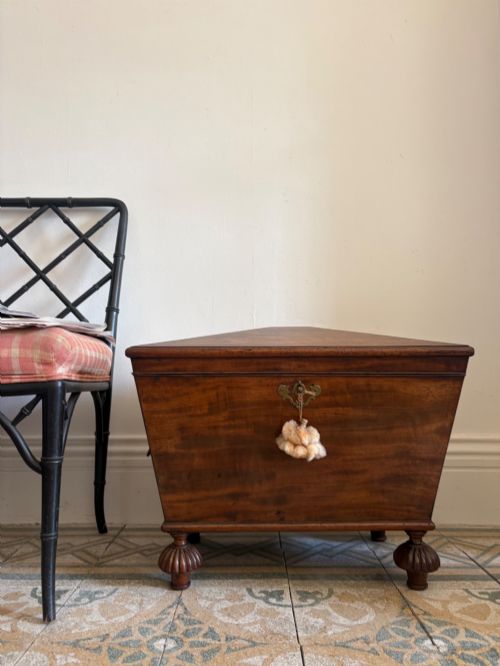


Carved Mahogany Cooler
A carved mahogany cooler holds wine bottles or functions as a planter, uniting practical dining service with formal architectural timber work.
Carved Mahogany Cooler
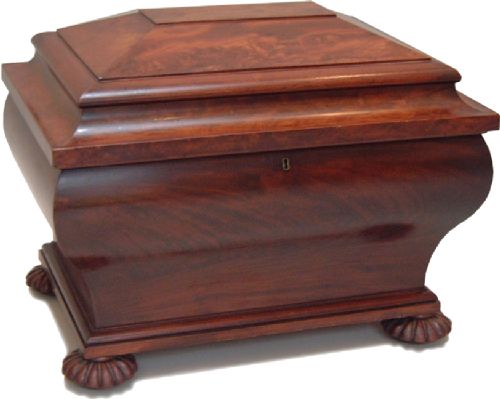
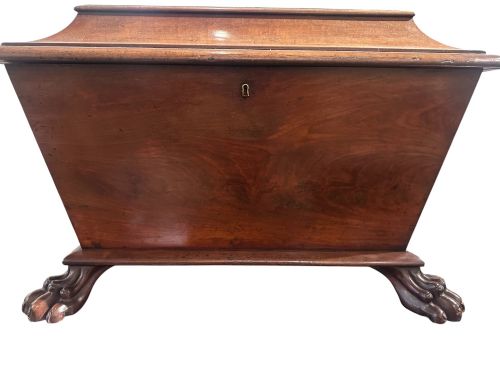
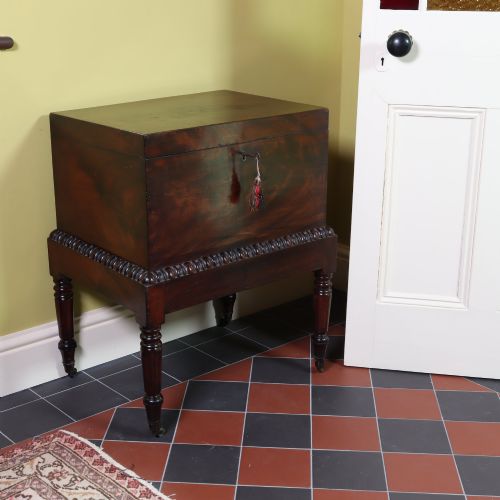
A carved mahogany cooler serves to chill wine or hold plants within formal dining spaces, appearing primarily in sarcophagus, oval, or serpentine forms. The pieces span Georgian, Regency, William IV, and Victorian periods, often taking the shape of low lidded receptacles supported on paw feet or plinth bases.
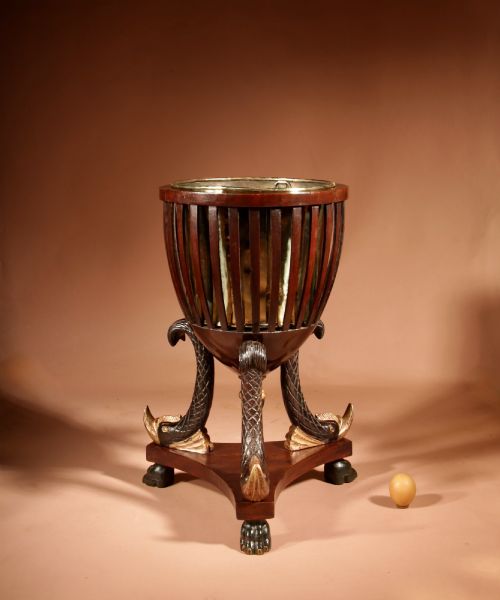
Buyers meet variations ranging from plain English cellarettes with brass bands to French Empire and Dutch style jardinieres in flame mahogany veneer. Many examples retain interior lead or zinc liners designed to hold ice and water alongside bottles.
How they were made
Cabinet makers utilised solid mahogany and flame mahogany veneer applied to a secondary timber frame, often incorporating ebonised wood details. Metal components such as brass bands, swing handles, and lead or zinc linings provided structural reinforcement and waterproof interiors for ice.
Carved decoration relied on hand chiselling applied to feet, mouldings, and lion paw supports, following classical architectural vocabularies seen in Regency and William IV design.
Secret cellar compartments once locked away the best vintages from thirsty household staff.
What varies in quality
The distinction between standard utility items and top tier pieces rests on the choice of timber figure, such as richly marked flame mahogany veneer, and the depth and crispness of the hand carving on paw feet and mouldings.
Integrity of the interior metal elements, including original lead or zinc liners, alongside maker attribution stamps from workshops like Gillows or Freemans of Norwich, elevates the standing of an individual piece.
Freemans of Norwich·Maples and Co·Robert Strahan and Co·T Feetham·Gillows
The Carved Mahogany Cooler Glossary
- Cellarette
- A lockable container used for storing wine bottles near the dining table. They frequently double as wine coolers in period inventories.
- Sarcophagus form
- A monumental burial chest shape with a steep lid and tapering sides, adapted during the Regency period for dining room storage.
- Flame mahogany veneer
- A thin slice of wood timber cut from the fork of a tree to produce a flickering, flamed grain pattern. It distinguishes high style Regency and Georgian cabinet work.
- Jardiniere
- An ornamental stand or receptacle designed to hold growing plants or flowers. Examples in this category take the form of heavy timber buckets with metal liners.
Carved Mahogany Cooler: Frequently Asked Questions
How were carved mahogany coolers used?
These vessels stood beneath sideboard tables during formal meals to keep wine bottles cold in ice and water. Servants retrieved bottles from the locked or lidded interior as courses progressed.
Over later generations, many examples lost their interior wine compartments and transitioned into planters or log bins for domestic hearths.
Are interior metal liners original?
Many surviving coolers retain their fitted lead or zinc linings, which protected the timber from melting ice and moisture. Finding an intact original liner adds historical completeness to the piece.
Replacements occur frequently because the original metal corroded over decades of damp service.
Where should I place a cooler at home?
These large vessels sit comfortably as freestanding statement pieces in dining rooms, hallways, or living spaces. Their substantial presence suits placement beside sideboards or beneath tall windows.
When fitted with waterproof trays, they function effectively as indoor plant stands or umbrella holders.