
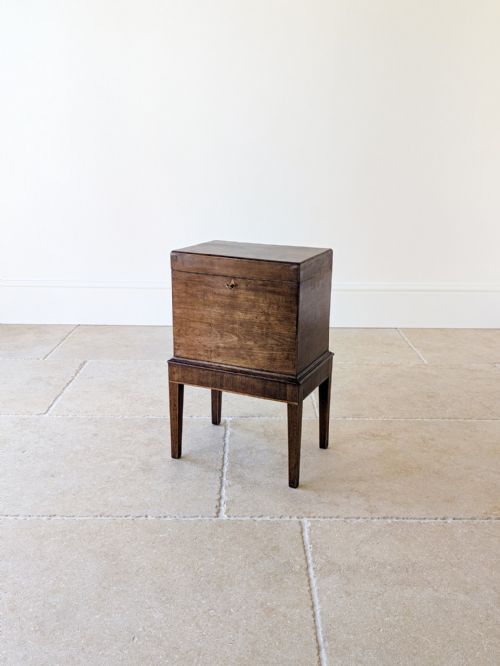
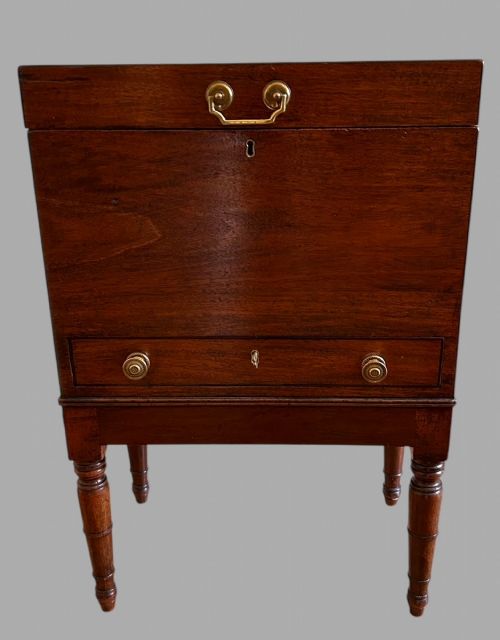
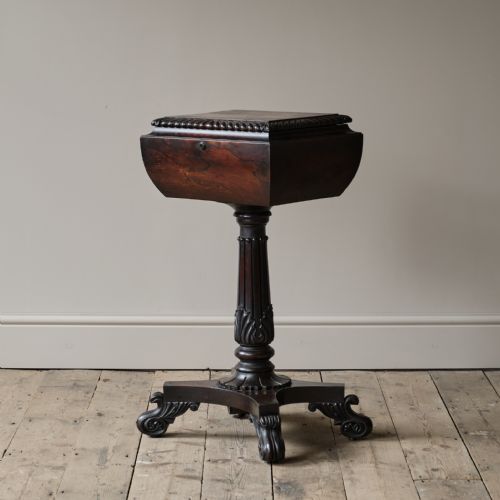
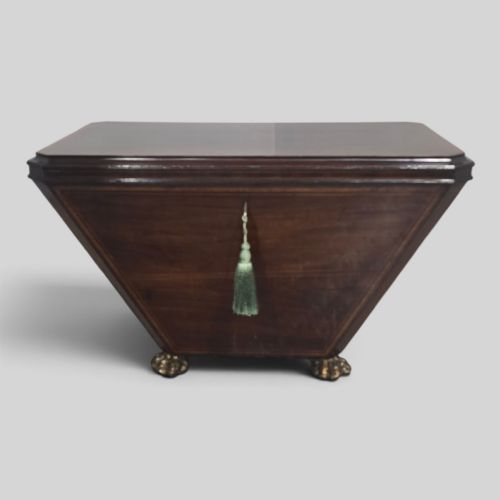
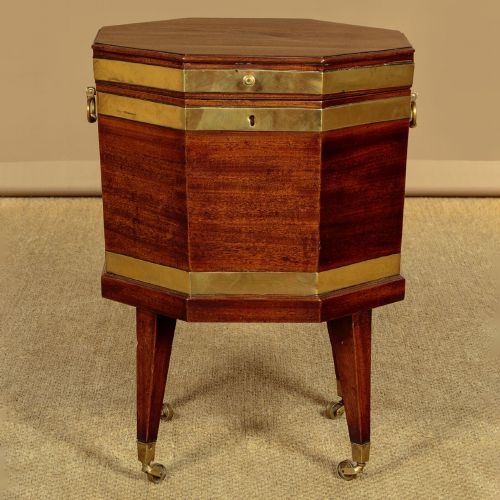


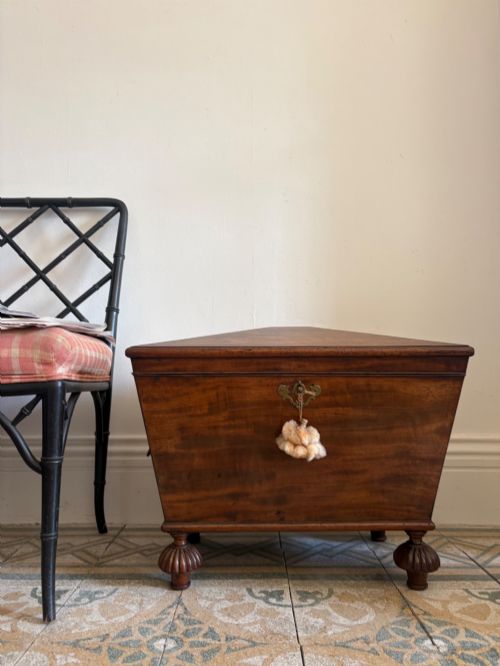


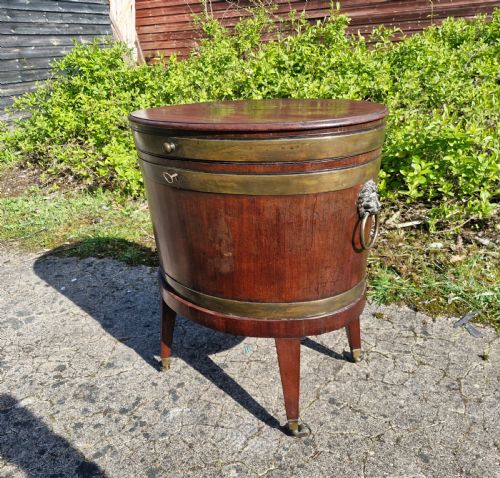
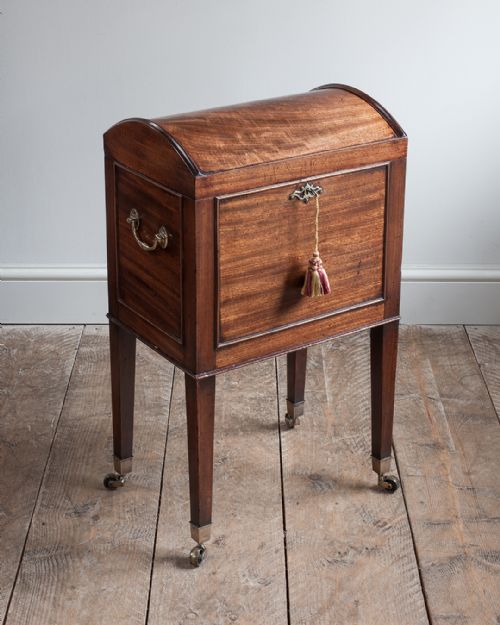


Dark Mahogany Sarcophagus
A dark mahogany sarcophagus provides a commanding architectural presence in a room while serving its original purpose of holding wine or tea.
Dark Mahogany Sarcophagus
Buyers seeking this phrase encounter substantial storage containers designed to hold bottles or tea leaves, often resting on plinth bases or carved feet.
The form draws directly from classical antiquity, interpreted by cabinetmakers working in mahogany during the eighteenth and nineteenth centuries.
Materials and construction
Cabinetmakers utilised solid mahogany and flame mahogany veneer over supportive secondary timbers, sometimes incorporating brass banding, satinwood inlay, and ormolu mounts.
Interior construction frequently included lead liners to hold ice and water for cooling wine, or partitioned compartments for storing tea caddies.
Listings span the eighteenth, nineteenth, and early twentieth centuries, encompassing Georgian, Regency, William IV, and Edwardian periods.
Quality factors
The grade of timber and the choice of figured flame mahogany veneer set finer examples apart from plainer utilitarian boxes.
Quality rests in the crispness of classical carving, the retention of original brass fittings and lead linings, and the structural integrity of the heavy carcase.
Edwards and Roberts·Gillows·Freemans of Norwich·T.Feetham
The Dark Mahogany Sarcophagus Glossary
- Sarcophagus
- A monumental tomb-like container shape with sloping sides, adapted during the Regency period for domestic storage.
- Cellarette
- A lockable container used for storing wine bottles safely in the dining room.
- Teapoy
- A small stand or box designed to hold tea, often taking a sarcophagus form in nineteenth-century examples.
- Ormolu
- Gilt-bronze mounts applied to furniture for decorative enrichment.
- Flame mahogany
- A highly figured veneer cut from the branch junction of the mahogany tree, producing a distinctive flickering flame pattern.
Dark Mahogany Sarcophagus: Frequently Asked Questions
What is a dark mahogany sarcophagus used for?
These pieces served historically as wine coolers or cellarettes to keep bottles chilled near the dining table, or as tea caddies for storing valuable dry tea leaves.
Today, they function as striking freestanding storage boxes or decorative focal points in traditional interiors.
How do I date a dark mahogany sarcophagus?
Dating relies on observing the stylistic markers of the Georgian, Regency, or Victorian eras, such as brass feet, classical carved motifs, and construction methods.
Earlier pieces from around eighteen hundred tend to feature restrained classical lines, while later nineteenth-century examples often display bolder ormolu mounts and richer veneer patterns.
Did these pieces always have lead linings?
Wine coolers and cellarettes frequently contained fitted lead compartments designed to hold melting ice alongside bottles.
Survival of an original lead liner adds historical interest, though many examples have lost these interiors over time.
Where should I place a sarcophagus cellarette at home?
Because these pieces are substantial and finished on all sides as freestanding furniture, they sit well in dining rooms or entrance halls.
They work effectively as low side tables or as standalone sculptural objects that conceal modern items.